Szimpla Kert is the ruin bar that defined a neighbourhood and, for better or worse, exported a concept to cities across Europe. Located on Kazinczy utca in Budapest's seventh district, it occupies a crumbling pre-war apartment block whose decay is the design. Come for the layered visual chaos, stay for the unfiltered street-level energy that still outpaces every imitation.
Pearl is the En Primeur Club membership app — saves, bookings, and concierge access live there. Same editors, same standards.
- Address
- Budapest, Kazinczy u. 14, 1075 Hungary
- Website
- szimpla.hu
- Directions
- Get directions
 Saves & bookings on Pearl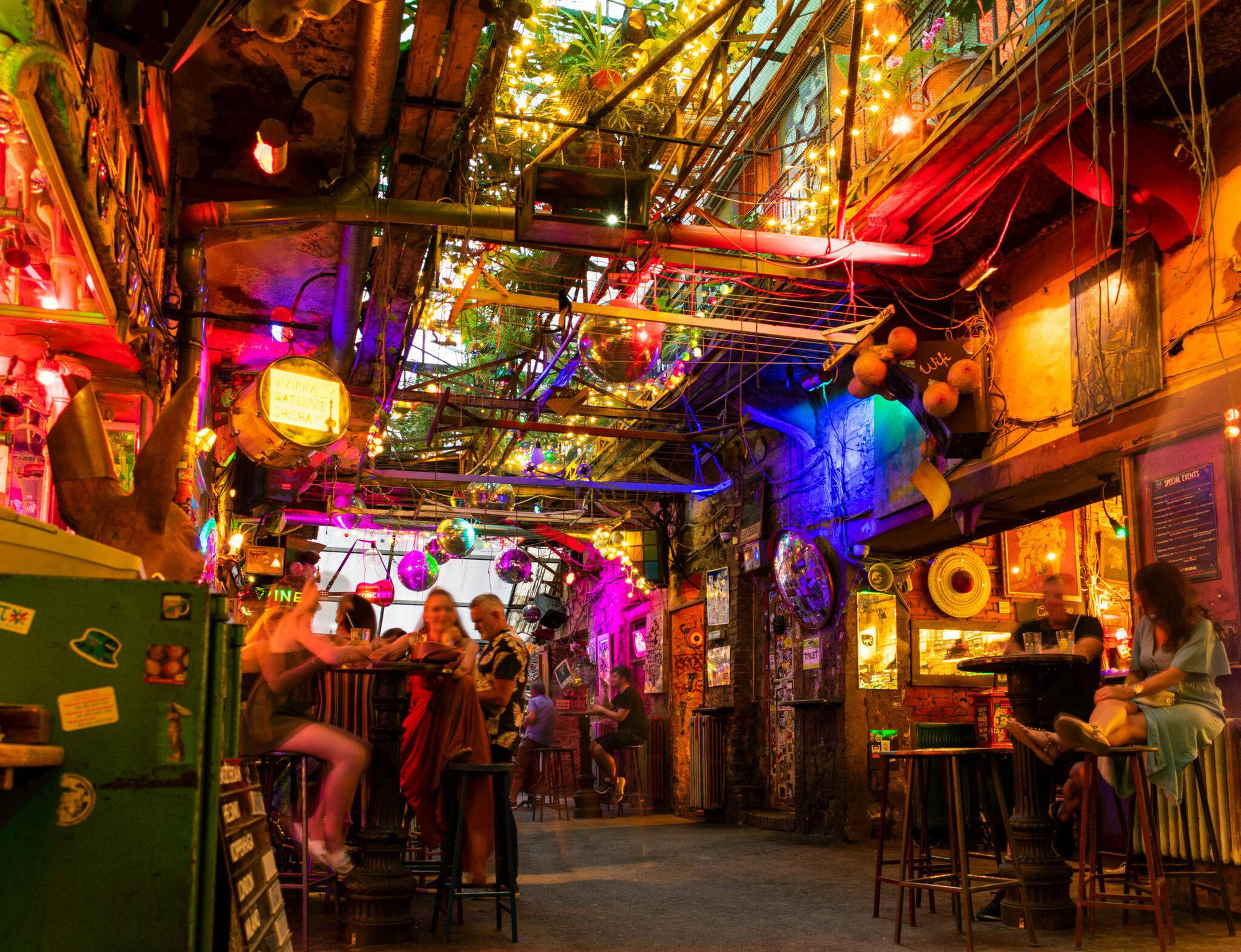
What a Ruin Bar Actually Feels Like From the Inside
Kazinczy utca in Budapest's seventh district operates at a frequency most European nightlife streets have long since abandoned. The buildings are unrestored, the signage is handmade, and the crowds on a Friday evening in summer spill from doorways onto cobblestones without any of the velvet-rope choreography found elsewhere. Szimpla Kert sits at number 14, occupying a derelict apartment block whose interior courtyard has been converted into among the more spatially complex drinking environments on the continent. Approaching from the street, the entrance offers no dramatic reveal. The experience assembles itself slowly once you are inside.
The ruin bar format, which Budapest pioneered in the early 2000s by colonising abandoned Jewish quarter buildings, has since been replicated in Warsaw, Berlin, Prague, and beyond. None of those replications quite capture the original condition, because the condition was never just aesthetic. It emerged from a specific post-communist moment when derelict space was accessible and cheap, and when the city's creative class needed somewhere to exist. Szimpla Kert opened in 2004, making it one of the oldest surviving examples of the format, and the accumulated layering of its interior reflects years of addition rather than any single curatorial act.
The Physical Environment: Sight, Sound, and Scale
The interior courtyard is the dominant spatial experience. Open to the sky in warmer months, it is surrounded on multiple levels by rooms, alcoves, and semi-enclosed spaces that each carry a different visual register. Salvaged furniture, painted walls, hanging objects, vintage signage, and repurposed industrial equipment fill corners and ceilings in a density that reads as chaotic on first encounter but reveals an underlying logic on longer inspection. Nothing matches, and that dissonance is the consistent element.
Sound behaves differently across the space. The courtyard carries ambient noise and music at a level that permits conversation. The enclosed rooms, each serving a different function, compress sound and crowd in ways that shift the atmosphere from communal gathering to something closer to a late-night club. In winter, glazed and heated areas contain the experience; in summer, the full courtyard opens and the character of the place changes considerably. Visiting in late spring or early autumn, when the outdoor spaces operate at capacity but before peak tourist season intensifies, positions you to read the venue at its most legible. By mid-July, the crowd composition shifts significantly toward international visitors, which changes the social texture the format was built around.
Where Szimpla Fits in Budapest's Bar Scene
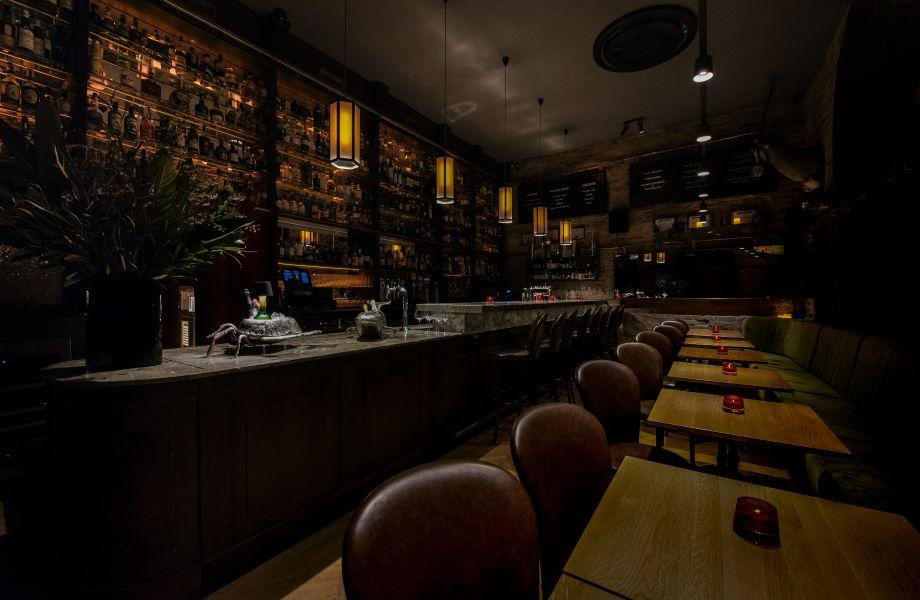
Budapest's bar scene has diversified substantially since the ruin bar format first brought international attention to the seventh district. The city now supports a range of formats that operate at different points on the craft-to-casual axis. Boutiq'bar and Black Swan Lab represent the technically oriented end of the spectrum, where the focus sits on cocktail precision and sourcing. 360 Bar and BRKLYN operate with a different emphasis, trading on refined views and curated atmosphere. Szimpla Kert occupies a separate category from all of them: it is not primarily a cocktail bar, not a hotel rooftop, and not a concept venue. It functions as a social infrastructure point for the district, drawing a mix of locals, long-term residents, and visitors across an evening without the filtering that a cover charge or a dress code would impose.
That positioning is worth understanding before you arrive with specific expectations. Craft spirits and elaborate preparation are not the draw here. The drink offer is accessible and priced to allow long evenings rather than considered single pours. If the technically detailed cocktail programs at venues like Kumiko in Chicago or Bar Leather Apron in Honolulu represent one end of the contemporary bar spectrum, Szimpla sits comfortably at the other end, and deliberately so. Jewel of the South in New Orleans, Julep in Houston, Superbueno in New York City, The Parlour in Frankfurt, and 1806 in Melbourne each represent the kind of program-led bar culture that has grown in parallel to the ruin bar tradition. The formats serve different needs, and the distinction matters when planning a bar evening in Budapest.
Beyond the Bar: Programming and Daytime Use
The bar operates across a broader time range than a conventional bar, which is worth noting for planning purposes. Weekend daytime hours bring a farmers' market to the courtyard, drawing a neighbourhood crowd distinct from the evening demographic. Film screenings, exhibitions, and occasional live performances have been part of the programming across the venue's lifetime. This range reflects the original model: the space was designed for multiple uses rather than a single curated experience, and that plurality has survived. For first-time visitors arriving in the evening, the programming detail is secondary, but it explains why the space reads as lived-in rather than themed. It has been used for too many different things to present a single face.
Planning a Visit
The bar is located at Kazinczy utca 14 in Budapest's seventh district, within walking distance of the Dohány Street Synagogue and the Astoria metro station. No booking is required for standard evening visits, and entry is generally free, though this can vary with programming. The courtyard operates seasonally, with full outdoor capacity running from late spring through early autumn; visiting between May and September gives access to the complete spatial experience. Weekend evenings from around 9pm are the peak period, at which point the venue absorbs large numbers without losing its structural character, though the social mix shifts accordingly.
Peers You’d Cross-Shop
Comparable venues nearby, for context on price, style, and recognition.
| Venue | Cuisine | Price | Notes |
|---|---|---|---|
| Szimpla KertThis venue — the venue you are viewing | dive_bar | $ | Not listed |
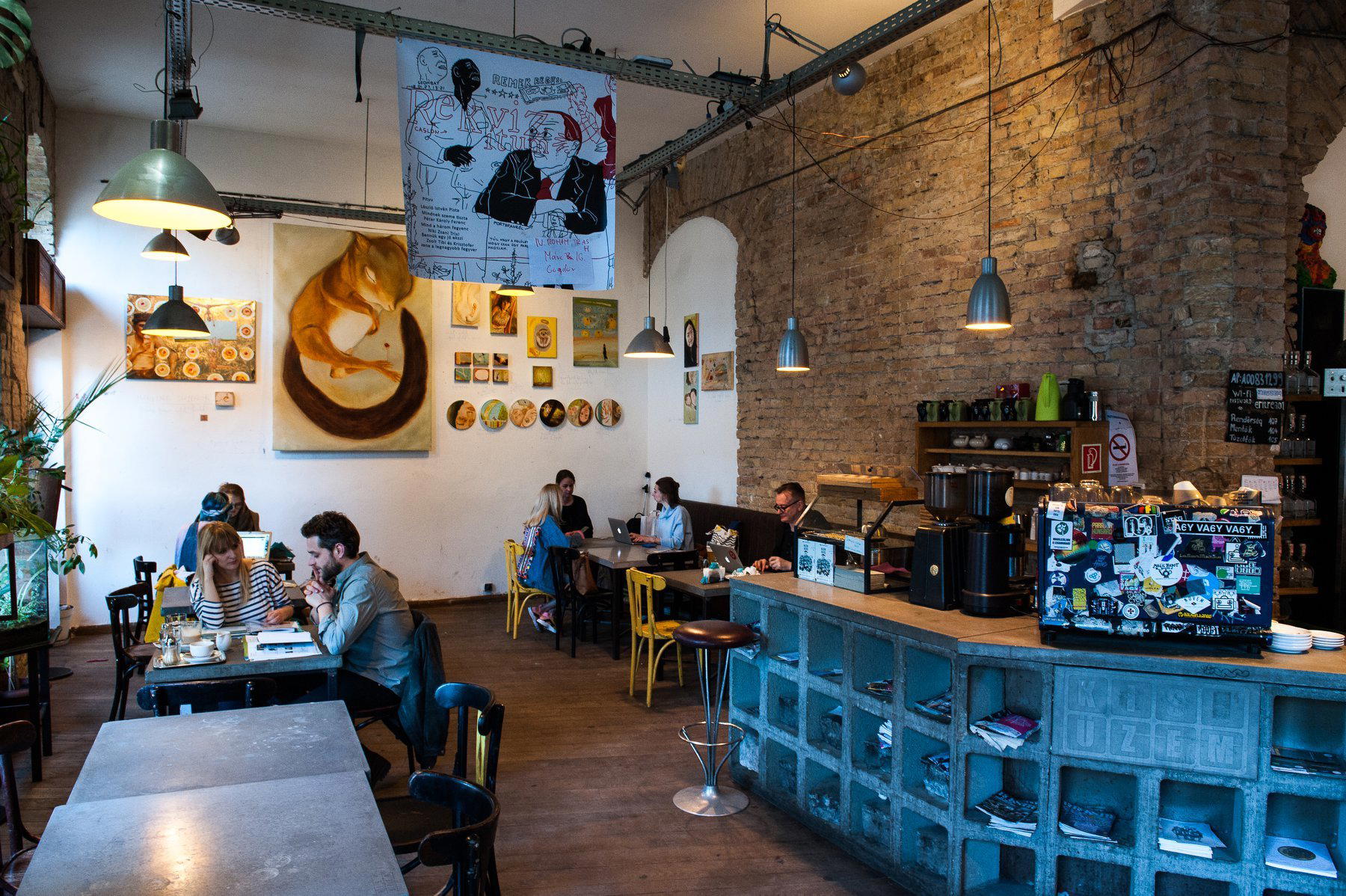
| Kisüzem | pub | $$ | Belvaros |
| Muzsa | cocktail_bar | $$$ | Varhegy |
| Hotsy Totsy | speakeasy | $$$ | Belvaros |
| BRKLYN | cocktail_bar | $$ | Belvaros |
| Kadarka Bar | wine_bar | $$ | Terézváros |
Continue exploring
More in Budapest
Bars in Budapest
Browse all →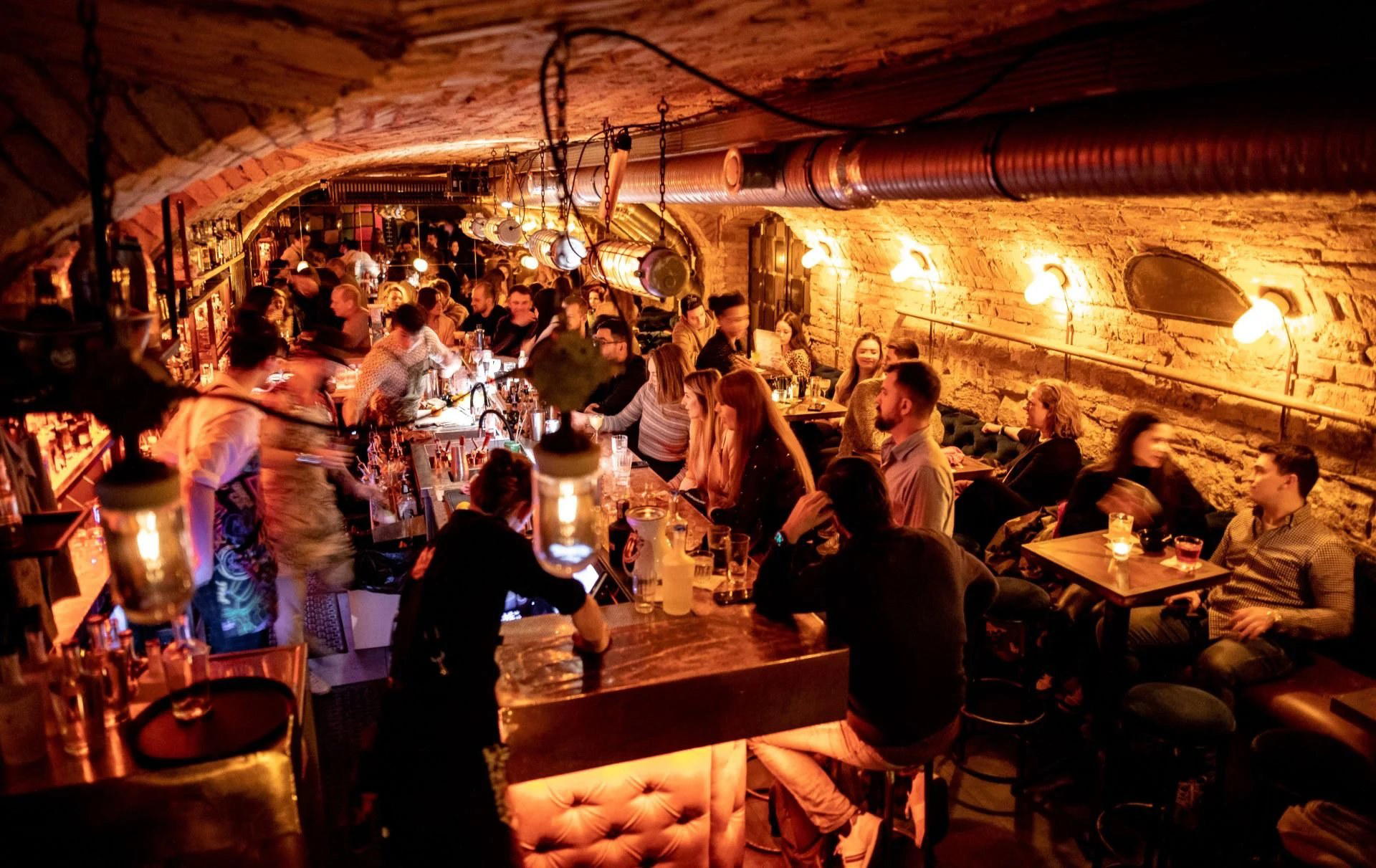
Restaurants in Budapest
Browse all →
Hotels in Budapest
Browse all →

At a Glance
- Lively
- Well Known
- Bohemian
- Energetic
- Whimsical
- Late Night
- Group Outing
- Casual Hangout
- Live Music
- Courtyard
- Standing Room
- Lounge Seating
- Communal Tables
- Outdoor Terrace
- Craft Beer
- Craft Cocktails
Current opening hours
- Monday
- 3 PM–4 AM
- Tuesday
- 3 PM–4 AM
- Wednesday
- 3 PM–4 AM
- Thursday
- 3 PM–4 AM
- Friday
- 3 PM–4 AM
- Saturday
- 12 PM–4 AM
- Sunday
- 9 AM–4 AM
Hours can change for holidays and private events. Last verified .
Eclectic and artsy with mismatched furniture, graffiti-covered walls, lush greenery, and fairy lights creating a lively, chaotic atmosphere.