La Pizza Del Lupo occupies a specific address in Onga, a small settlement in northeastern Hungary's Borsod region, where pizza culture operates far outside the Budapest dining circuit. The restaurant sits at Petrovics Ferenc u. 1, placing it in a town where a dedicated pizza kitchen is a genuine local institution rather than a category statement. For travellers moving between Miskolc and the surrounding countryside, it functions as a reliable stop in a part of Hungary where standalone dining options are sparse.
Pearl is the En Primeur Club membership app — saves, bookings, and concierge access live there. Same editors, same standards.
- Address
- Onga, Petrovics Ferenc u. 1, 3562 Hungary
- Phone
- +3646794554
- Website
- pizzalupo.hu
- Directions
- Get directions
 Saves & bookings on Pearl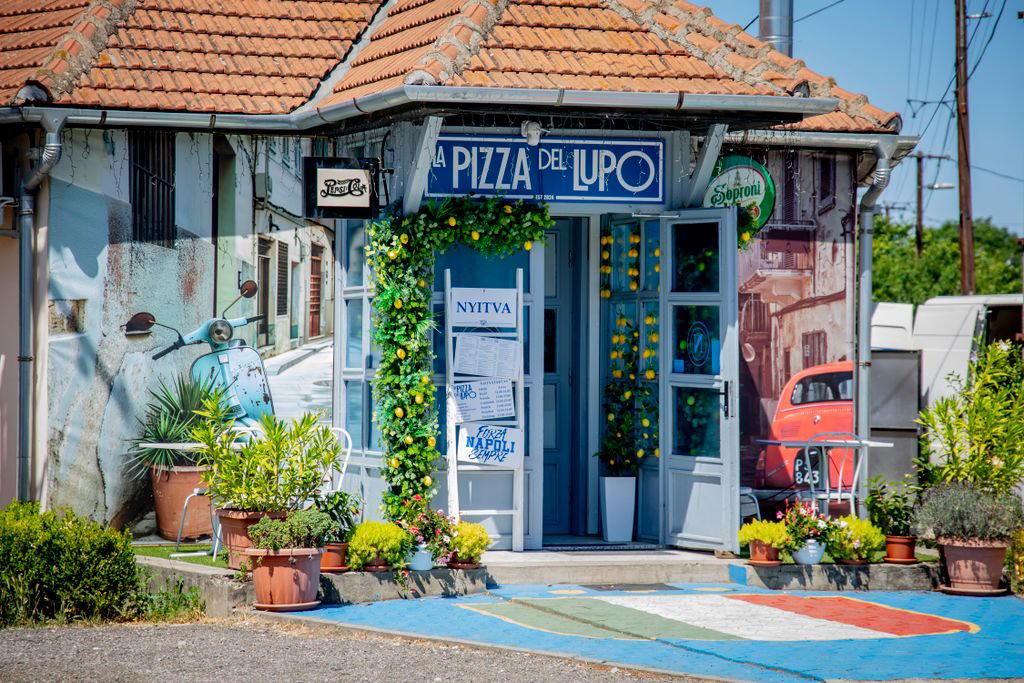
Pizza in the Hungarian Northeast: What It Means to Cook Outside the Capital
Hungary's serious restaurant conversation concentrates in Budapest, where establishments like Stand in Budapest define the upper tier of Hungarian cooking and Platán Gourmet in Tata demonstrates what provincial ambition looks like when it has critical mass behind it. The further you move from the capital, the more a single reliable kitchen matters, not as a consolation prize, but as the anchor of local food culture in towns where dining out is a practical act rather than a leisure category. Onga, a settlement of a few thousand people in the Borsod-Abaúj-Zemplén county, sits in precisely that position: close enough to Miskolc to exist in its gravitational pull, small enough that a dedicated restaurant at Petrovics Ferenc u. 1 functions as a genuine community fixture.
Pizza as a format has found particular traction in smaller Hungarian towns over the past two decades, filling a gap between traditional vendéglő cooking and the kind of casual international dining that medium-sized cities have absorbed more easily. It requires a focused supply chain, flour, cheese, tomato, and lends itself to operations that prioritise consistency over complexity. In a county where the dining infrastructure runs toward Dűlő Étterem in Miskolc at the more ambitious end, a neighbourhood pizza kitchen like La Pizza Del Lupo represents a different kind of value proposition: proximity, familiarity, and a format that works reliably for a broad cross-section of the local population.
The Source Question: Ingredients in Provincial Contexts
Ingredient sourcing in small-town Hungarian kitchens follows a different logic than the farm-to-table frameworks that define premium dining in Budapest or the wine-country restaurants of Villány, where operations like Halasi Pince Panzió in Villány can build menus around regional produce with established supply relationships. In a town like Onga, the sourcing conversation is more pragmatic: what arrives reliably, what the local wholesale market offers, and how a kitchen balances cost against quality within a format that has specific material requirements.
Pizza dough depends on flour protein content and fermentation time more than on geographical origin, which means a kitchen's choices about hydration, rest periods, and oven temperature often matter more to the final result than where individual ingredients were sourced. Hungarian dairy production is regionally distributed, and the northeastern counties have access to domestic cheese production that, while not carrying the specificity of Italian DOP products, can deliver consistent results when a kitchen knows what to ask for. The tomato supply question is more variable in inland Hungary, where the distance from Mediterranean growing regions makes seasonal fresh tomato quality unpredictable and tinned imports from Italian producers the more technically reliable base for pizza sauce year-round.
These are not small details. They define the difference between a pizza kitchen that produces structurally coherent results and one that doesn't, and they matter more in a provincial setting where the competitive frame is local expectations rather than a category benchmark set by Neapolitan practitioners. For context on what the alternative looks like at the higher end of the Hungarian spectrum, the creative kitchens at Pajta in Őriszentpéter and Kővirág in Köveskál show how western Transdanubia has developed a more ingredient-narrative-driven dining culture, a different tradition from the northeastern counties, where the food conversation remains closer to the ground.
Onga in Context: Where This Fits the Regional Map
The Borsod region is not a conventional dining destination. Miskolc is its urban centre, with a modest restaurant scene that includes a handful of places worth a deliberate visit, but the surrounding towns and villages function primarily as residential communities for people who work in the region's industrial and agricultural sectors. Dining out in this context is less about destination eating and more about what a town can sustain given its population size and economic base.
That framing matters for understanding La Pizza Del Lupo's position. It is not competing with Aranysárkány Vendéglő in Szentendre or the creative Serbian-influenced cooking at Classic Grill Serbian Restaurant Underground in Szeged. Its comparable set is the range of local options available to Onga residents on a Tuesday evening or a weekend lunch, where the alternative is likely a drive to Miskolc or cooking at home. In that frame, a pizza kitchen with a fixed address and consistent opening patterns is a meaningful local resource, not a category also-ran.
Travellers passing through the region, between Miskolc and Szerencs, or making their way through the Zemplén foothills, will find Onga a practical stopping point if the timing aligns. It is not the kind of detour that warrants rerouting, but if the route already runs through Borsod county, a known address at Petrovics Ferenc u. 1 removes the uncertainty of arriving in an unfamiliar small town without a plan. For a broader map of where to eat across Hungary, our full Onga restaurants guide provides the regional picture. Comparison options in other parts of the country include BoriMami in Gyöngyös, Forst-Ház Étterem és Kávézó in Eger, and Astro Tea & Kávéház in Gyor for those building a wider itinerary through Hungary's provincial towns. At the more ambitious end of the country's food culture, Apicius Étterem és Kávéház in Herend, Almalomb in Hosszúhetény, Guri Serház Szombathely in Szombathely, and Fiume Étterem in Bekescsaba District each represent different regional approaches to sitting-down dining in Hungary outside the capital. For reference points at the global end of the spectrum, Le Bernardin in New York City and Atomix in New York City show what category-defining precision looks like at scale.
Planning a Visit
La Pizza Del Lupo is located at Petrovics Ferenc u. 1 in Onga, 3562 Hungary. The restaurant is open Tue-Sun, with Monday closed, and hours run 11:30 AM-10 PM on Tuesday through Saturday and 11:30 AM-9 PM on Sunday. Given Onga's size and the restaurant's essential reservation policy, checking ahead is sensible if you are travelling specifically to eat here. One practical approach for anyone planning around this address is to check the hours before setting out.
Comparison Snapshot
Comparable venues nearby, for context on price, style, and recognition.
| Venue | Cuisine | Price | Notes |
|---|---|---|---|
| La Pizza Del LupoThis venue — the venue you are viewing | Authentic Neapolitan Pizza | $$ | Not listed |
| Alessio | Traditional Tuscan Italian | $$ | Viranyos |
| EscoBar & Cafe | Hungarian & Italian Fusion | $$ | District IX (Ferencváros) |
| Forst-Ház Étterem és Kávézó | Traditional Hungarian with Game & Fish Specialties | $$ | Dobó István Square |
| Thai Spicy Nine | Authentic Thai & Sushi | $$ | Petőfi sétány |
| Pizziozo Budapest | Neapolitan-Middle Eastern Fusion Pizza | $$ | Ferencvaros |
At a Glance
- Cozy
- Rustic
- Casual Hangout
- Family
- Open Kitchen
- Local Sourcing
Current opening hours
- Monday
- Closed
- Tuesday
- 11:30 AM–10 PM
- Wednesday
- 11:30 AM–10 PM
- Thursday
- 11:30 AM–10 PM
- Friday
- 11:30 AM–10 PM
- Saturday
- 11:30 AM–10 PM
- Sunday
- 11:30 AM–9 PM
Hours can change for holidays and private events. Last verified .
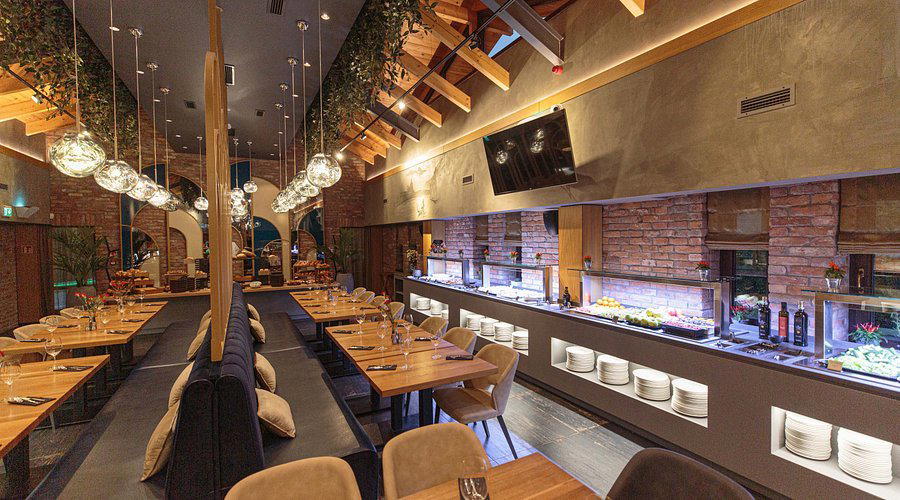
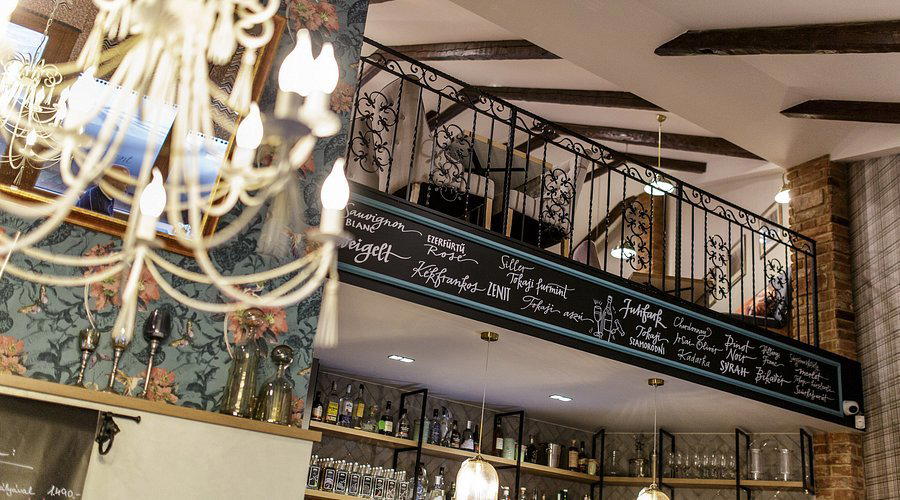
Evokes the lively streets of Naples with a cozy, Italian-inspired atmosphere.