
50 Top Pizza Asia-Pacific #19
Our verdict
Pizzeria da Tigre brings Neapolitan pizza tradition to Osaka's Nishi Ward, operating from a quiet address in Shinmachi that sits well outside the city's more trafficked dining corridors. The format places Italian ingredient sourcing logic inside a Japanese hospitality context, producing a tension that Osaka's increasingly international dining scene has shown it has appetite for.

Pearl is the En Primeur Club membership app, where members save venues, book tables and use the concierge.
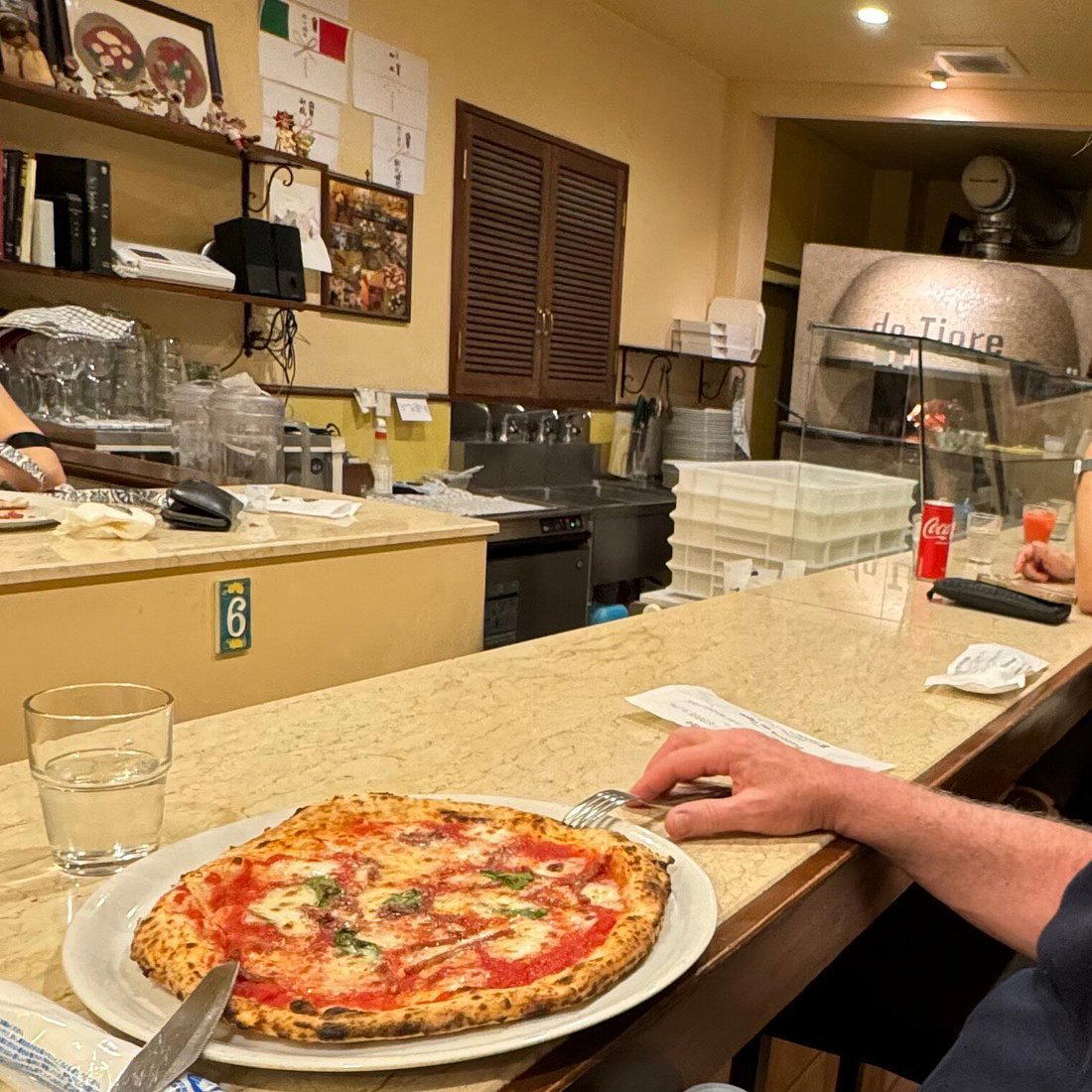
The menu
What to order
- Pizza Attilio
- Pizza Corallo
- Margherita
- Marinara
- Diavola
Shinmachi and the Geography of Osaka's Western Dining Fringe
Osaka's dining identity is most legible in its contradictions. The city that gave Japan kuidaore, the idea of eating until you're ruined, has also become one of the most receptive cities in the world to transplanted culinary traditions. Nishi Ward, where Pizzeria da Tigre occupies an address at 1 Chome-18-13 Shinmachi, sits west of the Shinsaibashi corridor that concentrates much of the city's international restaurant attention. That geographic remove matters. Restaurants that operate in Shinmachi tend to draw on a local residential base rather than tourist flow, and the dining culture that develops in that context is typically more settled, less performative, and more attuned to repeat visits than the high-churn blocks closer to Dotonbori.
Osaka has, over the past decade, developed a credible tier of non-Japanese restaurants that take their sourcing and format as seriously as the kaiseki and sushi counters that dominate international coverage of the city. Venues like HAJIME in Osaka work at the intersection of French technique and Japanese produce, while the broader Osaka dining map, detailed across our full Osaka Shi restaurants guide, shows how many different culinary traditions have found workable formats in the city. Italian pizza, however, remains a specific case. It carries expectations anchored in flour, water, salt, and fire, and the cities that do it well are the ones where those expectations are met with sourcing rigour rather than approximation.
Why Ingredient Sourcing Is the Whole Argument for Neapolitan Pizza
In the broader conversation about what makes Neapolitan pizza worth travelling for, sourcing is not a supporting detail, it is the argument. The dough fermentation, the cornicione char, the leopard spotting on the base: these are all downstream effects of how the flour was milled, how long the dough was worked, and what temperature the oven holds. San Marzano tomatoes from the volcanic plains south of Naples carry a sweetness and low acidity that generic Italian plum tomatoes do not replicate. Fior di latte and buffalo mozzarella have different fat contents, different water profiles, and different behaviour under high-temperature baking. When a pizzeria outside Italy signals fidelity to these source materials, it is making a claim about what the product should taste like, not just how it should look.
Japan has a particular relationship with this kind of sourcing logic. The domestic food culture places enormous emphasis on provenance, the prefecture a fish comes from, the farm a piece of wagyu traces to, the season that makes a vegetable worth eating. That precision, applied to an Italian framework, produces a specific kind of dining culture that Osaka has shown genuine capacity for. Ajikitcho Bunbuan and Ajihei Sonezaki represent the deep end of that local sourcing tradition in a Japanese register. Pizzeria da Tigre applies a version of the same discipline to an Italian one.
The Italian Pizzeria Format Inside a Japanese Context
The operational grammar of a serious Neapolitan pizzeria, wood-fired or gas-fired oven at 450 to 500 degrees Celsius, rapid bake times of 60 to 90 seconds, a short menu anchored around a handful of combinations, translates without obvious friction to the Japanese hospitality model. What changes is the surrounding register. Service pace, the handling of reservations, the quiet management of the dining room: these take on Japanese cadences even when the food is emphatically Italian in orientation. The result, across multiple Neapolitan-style venues that have opened in Japanese cities over the past fifteen years, is a format that feels neither compromise nor fusion but simply the product of a careful operator working in a different cultural context.
For context on how European culinary formats adapt in Japan's Kansai region, it is worth looking at how venues like akordu in Nara have managed the translation of Spanish wine-led dining into a setting shaped by Japanese aesthetics, or how Gion Sasaki in Kyoto works within an entirely different framework to show how non-native culinary ideas can root themselves in Japanese soil. Pizzeria da Tigre's Shinmachi address positions it within a quieter, more neighbourhood-facing version of this story.
Placing Pizzeria da Tigre in Osaka's Broader Dining Tier
Osaka's restaurant scene distributes across several tiers that rarely interact. At the upper end, three-Michelin-starred kaiseki and French restaurants operate on long booking windows and high per-head spend. Below that, a mid-tier of serious but accessible venues, covering everything from yakitori to contemporary French bistro formats, does the bulk of the city's quality dining work. Italian restaurants in Osaka span that range, from casual slice operations near university districts to formal tasting-menu formats in the Kitashinchi bar district. A neighbourhood pizzeria in Shinmachi, if it is operating at the level its address implies, sits in the mid-tier of that Italian subset: not casual, not a destination occasion, but a reliable and considered option for a residential part of the city that supports repeat patronage.
Elsewhere in the city, venues like Aka to Shiro, Az, and Calendrier each occupy distinct positions across French and contemporary formats, showing how varied the mid-tier has become. For those tracking how the city's non-Japanese dining scene maps against national and international reference points, Harutaka in Tokyo, Goh in Fukuoka, or even Le Bernardin in New York City and Atomix in New York City, the Italian category in Osaka is younger and thinner but developing with visible intent.
Planning a Visit
Pizzeria da Tigre is located at 1 Chome-18-13 Shinmachi in Nishi Ward, accessible from Osaka's subway network via the Nagahoribashi or Yotsubashi stations, both within walking distance of the Shinmachi address. The neighbourhood does not concentrate dining traffic in the way that Namba or Shinsaibashi do, which means the immediate area is quieter at most hours and more suitable for a focused, unhurried meal than the louder southern corridors. Given the absence of confirmed booking information in the public record, contacting the venue directly before visiting is advisable, particularly on weekends when neighbourhood pizzerias in Japan tend to fill early. Further Osaka options across cuisines and price points are covered in our Osaka Shi dining guide, alongside venues including Birdland in Sakai for those extending their Kansai itinerary.
Frequently asked questions
What do people recommend at Pizzeria da Tigre?
The venue's positioning within Osaka's Italian dining scene, and its address in a residential neighbourhood with repeat-visitor patterns, suggests the menu is anchored in Neapolitan-style pizza formats where the dough and the sourcing of core toppings carry the most weight. In that category, the standard reference points are the margherita and marinara, the two pizzas that most directly expose the quality of the tomato sauce, the cheese, and the fermentation of the base.
Do they take walk-ins at Pizzeria da Tigre?
Walk-in availability at neighbourhood pizzerias in Osaka's Nishi Ward varies significantly by day and time. If the venue operates without a confirmed reservation system in its public record, early arrival on weekday evenings tends to produce the leading chance of a table. Weekend evenings in residential Osaka dining areas fill faster than the tourist-facing districts, as local regulars tend to claim tables early in the sitting. Checking current availability directly with the venue before visiting is the practical step, given that no online booking platform has been confirmed for this address.
Is Pizzeria da Tigre the kind of restaurant that makes sense as a standalone dinner destination, or is it better as part of a wider Nishi Ward evening?
Shinmachi and the broader Nishi Ward have enough bar and café culture around them that a meal at a neighbourhood pizzeria fits naturally into a longer evening, rather than requiring a standalone occasion. The area around Shinmachi has a low-key residential character distinct from the denser entertainment districts to the south and east, which makes it more suitable for those who want a quieter, less structured Osaka evening. Visitors coming specifically for the pizza, without the surrounding neighbourhood context, may find the area less immediately legible than Namba or Kitashinchi, but that is part of what gives Shinmachi its local-facing dining culture.
Reputation First
Comparable venues nearby, for context on price, style, and recognition.
| Venue | Cuisine | Price | Awards | Notes |
|---|---|---|---|---|
| Pizzeria da TigreThis venue (the venue you are viewing) | Authentic Neapolitan Pizza | $10–20 | 50 Top Pizza Asia-Pacific #19 | Not listed |
| Okonomiyaki Izakaya Gen | Osaka-Style Okonomiyaki Izakaya | $20–30 | Not listed | Chūō |
| Feu 北新地 | japanese | Not listed | Not listed | Kita |
| 青地 | japanese | Not listed | Not listed | Nishi |
| La Cicerchia | Authentic Marche Italian | $50–100 | Michelin Bib Gourmand | Nishi |
| Yoshino Sushi | Traditional Osaka Hakozushi | $10–20 | Not listed | Chūō |
Recognition history
Dated appearances from independent guides and award organizations, with the underlying list record or original source where available.
50 Top Pizza Asia-Pacific #19
50 Top Pizza
Continue exploring
More in Osaka
Restaurants in Osaka
All restaurants in Osaka →



Bars in Osaka
All bars in Osaka →


Hotels in Osaka
All hotels in Osaka →



Wineries in Osaka
Browse all →
Details
- Cozy
- Casual
- Casual Hangout
- Solo
- Open Kitchen
- Standalone
- Beer Program
- Local Sourcing
- Counter Dining
- A La Carte
- Beer
- Wine
Current opening hours
- Monday
- Closed
- Tuesday
- Closed
- Wednesday
- Closed
- Thursday
- 11:30 AM–2:30 PM, 5–9 PM
- Friday
- 11:30 AM–2:30 PM, 5–9 PM
- Saturday
- 11:30 AM–2:30 PM, 5–9 PM
- Sunday
- 11:30 AM–2:30 PM, 5–9 PM
Hours can change for holidays and private events. Hours as of .
Warm, informal, and cozy with a firewood oven dominating the back; designed to resemble a typical Japanese ramen or donburi restaurant with counter seating and quick, attentive service.