

Michelin Plate
Our verdict
Pinocchio Rome showcases three generations of Bertinotti family mastery in Piedmontese fine dining, where 80-year-old patriarch Piero and daughter Paola transform traditional specialties like panissa and agnolotti into sophisticated expressions of Northern Italian gastronomy, complemented by one of the capital's finest Piedmont wine collections.

Pearl is the En Primeur Club membership app — saves, bookings, and concierge access live there. Same editors, same standards.
- Address
- Piazza Del Mercato, 21, 00044 Frascati RM, Italy
- Phone
- +39 06 941 6694
- Directions
- Get directions
The menu
What to order
- Ravioli cacio e pepe
- Pizza
A Piazza Table in the Castelli Romani
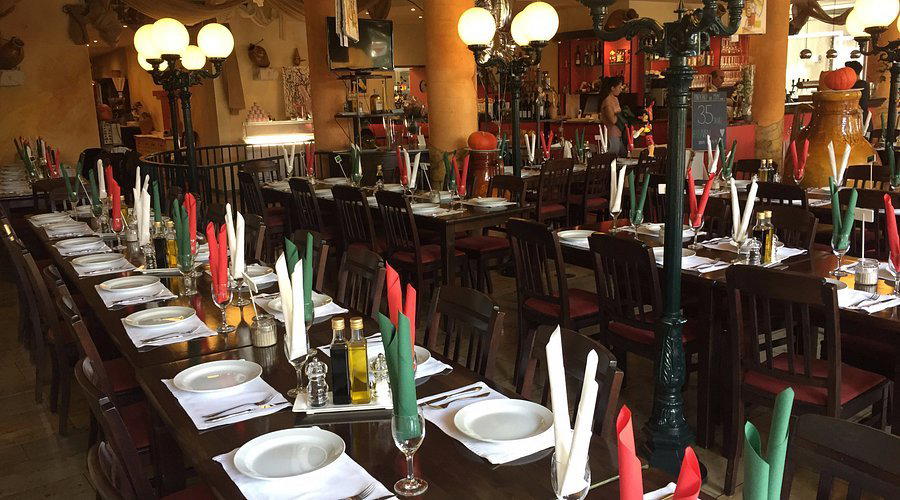
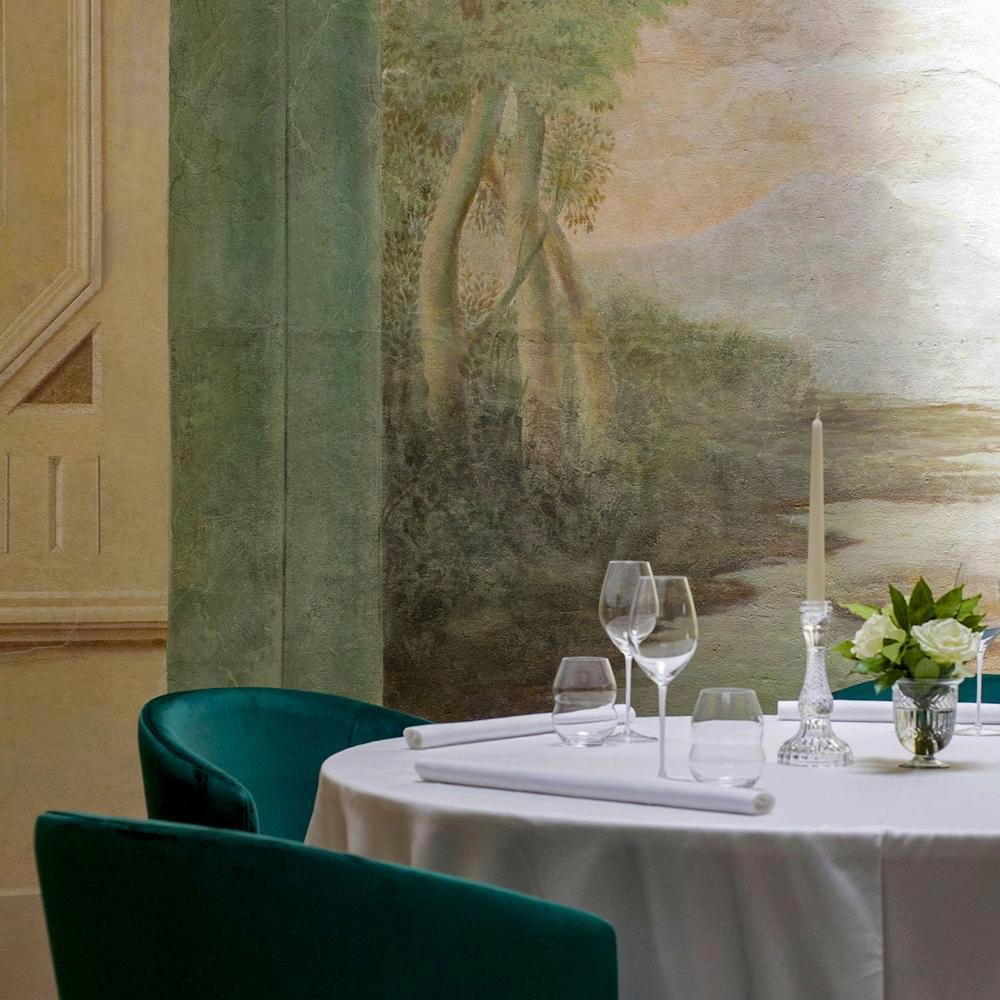
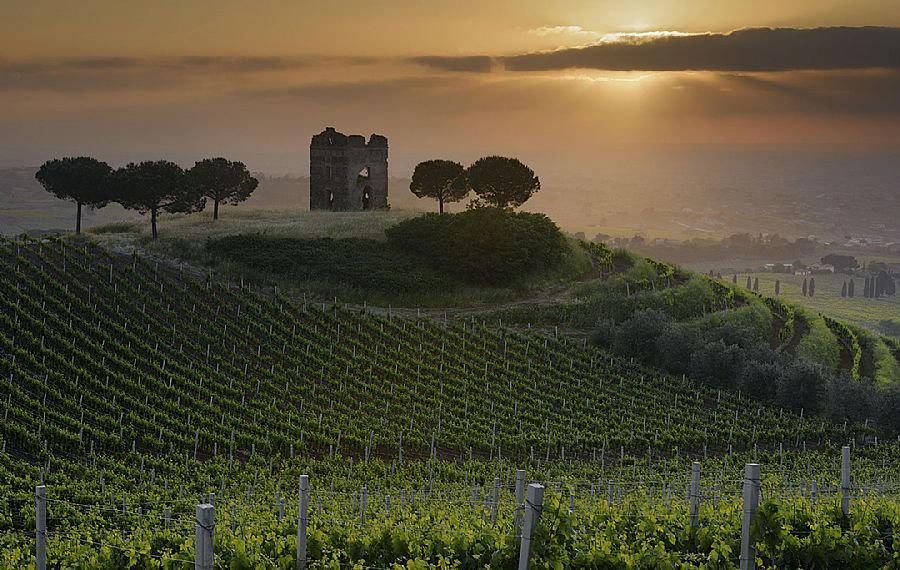
Frascati sits in the Castelli Romani hills southeast of Rome, where the volcanic soil that built the city's ancient cisterns now feeds vineyards and market gardens. Piazza del Mercato, the square that gives Pinocchio its address, is the kind of Roman-provincial setting that the capital's dining rooms rarely replicate: open stone, afternoon light that tilts rather than glares, and a pace set by local families rather than tourist circuits. Arriving at the piazza, the restaurant reads as part of its surroundings rather than apart from them. The interior holds to that register. The dining room takes a classical line, with decor that does not chase fashionable trends, and the effect is a room that feels settled and purposeful rather than provisional.
The Architecture of a Piedmontese Menu in Lazio
The most telling thing about Pinocchio's menu is the geography it refuses to resolve. Piedmontese cuisine in the Castelli Romani is not a fusion conceit; it is a deliberate positioning that sets the kitchen at a studied distance from the Roman-Lazio canon. Where Rome defaults to cacio e pepe and offal traditions rooted in the abbacchio supply chain, the Piedmontese tradition that Pinocchio draws on is built around braised meats, structured rice dishes, and a heavier reliance on legumes and mountain vegetables. Chef Piero Bertinotti works within that northern tradition while applying light, contemporary adjustments that give the menu its particular character.
The menu's structure rewards close reading. Piedmontese foundations are visible in the section given over to rice-based preparations, most clearly in the kitchen's contemporary treatment of paniscia. This is a dish from the Novara and Vercelli areas of Piedmont: a risotto-style preparation incorporating beans, salami, and vegetables, where the grain absorbs the fat and smoke of the cured meat and the legumes give the whole thing a density that separates it from Milanese-style risotto. Pinocchio's version modifies the tradition at one specific point: rather than cooking the vegetables directly into the rice, the kitchen adds them as a vegetable cream on leading. The result is a plate where colour and temperature arrive in layers, the cream sitting against the dark, dense base. It is a small structural change with a clear visual and textural outcome, which is the more disciplined kind of modern twist.
Menu also carries fish, covering both salt- and freshwater species. This is not incidental. Freshwater fish cookery connects back to northern Italian traditions, particularly lake and river preparations from Piedmont and Lombardy, and its inclusion alongside saltwater options signals a kitchen that is expanding the register rather than simply adding variety. The presence of fish on a menu rooted in a land-heavy northern tradition is worth noting as an editorial choice about scope.
Recognition and Peer Context
Pinocchio holds a Michelin Plate for both 2024 and 2025, a designation that indicates consistent quality without reaching the starred tier. The Michelin Plate sits below the star level but above the general listing category, and in a region where the highest-rated Roman tables, including La Pergola, Il Pagliaccio, and Enoteca La Torre, operate at the €€€€ price point and within a contemporary or creative framework, Pinocchio occupies a distinct position. It runs at €€€, one tier lower on price, with a classical rather than progressive kitchen identity.
The Opinionated About Dining Classical Europe ranking adds a more specific coordinate. OAD's classical list tracks restaurants that operate in established European fine-dining traditions rather than the contemporary tasting-menu format. Pinocchio appeared on that list as Recommended in 2023, ranked 321st in 2024, and moved to 417th in 2025. The ranking shift over two years does not imply a significant decline in absolute quality; OAD lists expand and shift as the survey pool changes. What the sustained presence confirms is that the restaurant is consistently visible to the kind of well-travelled, experienced-diner community that feeds OAD's methodology. Google's review aggregate sits at 4.1 from 971 ratings, a score that at that sample size reflects broad, stable approval rather than a narrow enthusiast base.
Within the Piedmontese tradition specifically, useful reference points include Al Sorriso in Soriso and Il Moro in Capriata d'Orba, both working within or adjacent to the same regional canon. Beyond Piedmont, restaurants elsewhere in Italy that carry the classical-European register alongside sustained critical recognition include Dal Pescatore in Runate and Enoteca Pinchiorri in Florence. For those covering the broader Italian fine-dining spread, Osteria Francescana in Modena, Enrico Bartolini in Milan, and Quattro Passi in Marina del Cantone represent the more progressive end of the national tier, while Atelier Moessmer Norbert Niederkofler in Brunico offers a further regional contrast. The difference in approach between those tables and Pinocchio is the difference between restaurants that lead with innovation and one that leads with tradition adjusted at the margins.
Rome-based alternatives at the creative end include Acquolina and Achilli al Parlamento. Both operate in a different key to Pinocchio, which is the point. The Frascati restaurant is not competing with the capital's progressive rooms; it occupies a separate niche built on regional specificity and classical execution.
The Family-Run Dimension
Classical European dining rooms of Pinocchio's type are frequently family-run, and that structural fact shapes the experience in ways that are observable rather than sentimental. A family operation at the €€€ level, running a split service from Tuesday through Sunday with a full Wednesday closure, typically means direct floor management, consistent front-of-house familiarity with the menu, and a wine programme that reflects personal relationships with producers rather than a purchasing department's spreadsheet. The Michelin commentary describes the operation as well-run and highly professional. At a table like this, those terms carry specific meaning: timing is reliable, communication between kitchen and floor is direct, and the room does not drift between courses.
Timing and Format
Pinocchio runs lunch and dinner Tuesday through Saturday, lunch only on Sunday, and closes on Wednesday. The lunch window runs from 12pm to 2:30pm and dinner from 7pm to 11pm. Frascati is accessible from central Rome by train on the regional rail line from Termini, making this a credible day-trip or early-evening option from the city. The piazza setting means the practical approach differs from arriving at a Roman address: there is a square to cross rather than a street to find. For those building a wider Rome itinerary, the full Rome restaurants guide, Rome hotels guide, Rome bars guide, Rome wineries guide, and Rome experiences guide cover the full picture.
Know Before You Go
- Address: Piazza del Mercato 21, 00044 Frascati RM, Italy
- Hours: Monday–Tuesday, Thursday–Saturday 12–2:30pm and 7–11pm; Sunday 12–2:30pm only; closed Wednesday
- Price range: €€€
- Cuisine: Italian, Piedmontese
- Chef: Piero Bertinotti
- Awards: Michelin Plate 2024 and 2025; Opinionated About Dining Classical Europe Ranked 417th (2025)
- Getting there: Frascati is served by regional rail from Roma Termini; the piazza is a short walk from the station
- Reservations: Contact details not publicly listed; check directly with the restaurant
What Should I Eat at Pinocchio?
The menu's anchor dish for first visits is the contemporary paniscia: a Piedmontese bean-and-salami risotto where the kitchen adds the vegetable component as a cream layered over the rice rather than cooked into it. The structural logic of the dish, and the way it demonstrates the kitchen's approach to classical technique, makes it the clearest single expression of what Pinocchio does that other Lazio tables do not. The fish preparations, covering both freshwater and saltwater species, represent the menu's secondary strand and are worth attention as an extension of the northern Italian reference frame. Chef Piero Bertinotti and the family team behind the room hold a Michelin Plate and a sustained Opinionated About Dining Classical Europe ranking, both of which support the menu's classical positioning. The €€€ price tier places Pinocchio below Rome's starred creative tables while remaining firmly in the fine-dining category by provincial standards.
Frequently asked questions
What distinctions does Pinocchio have?
Pinocchio has received recognition including: This reliable restaurant is well run by a highly professional and experienced family. In the classic-style dining room, where the decor eschews fashionable trends, enjoy typical Piedmontese cuisine lightened by the occasional modern twist. ….
What should I eat at Pinocchio?
The paniscia is the kitchen's most instructive dish: a Piedmontese bean-and-salami risotto in which the vegetable components are finished as a cream on top rather than cooked into the base, a small structural change that sharpens both colour and flavour separation. The Michelin Plate citation specifically calls it out as the contemporary version worth ordering. The menu also carries fish dishes drawing from both salt- and freshwater traditions, which is less common in the Castelli Romani, where meat and offal tend to dominate local tables.
What's the price range at Pinocchio?
Pricing at Pinocchio is listed as €€€.
Cuisine-First Comparison
| Venue | Cuisine | Price | Awards | Notes |
|---|---|---|---|---|
| PinocchioThis venue — the venue you are viewing | Italian Trattoria with Pizza | Not listed | Michelin Plate | Not listed |
| La Pergola | Modern Italian Fine Dining | $500+ | 3 Michelin Stars · La Liste Top Restaurants | Italian, Mediterranean Cuisine |
| Enoteca La Torre | Modern Italian Fine Dining | $200–300 | 2 Michelin Stars · La Liste Top Restaurants | Creative |
| Il Pagliaccio | Modern Italian-Japanese Fusion Fine Dining | $150–200 | 2 Michelin Stars · La Liste Top Restaurants | Contemporary Italian, Creative |
| Aroma | Modern Roman Fine Dining | $200–300 | 1 Michelin Star · Falstaff Restaurant - 93 Falstaff Points | Modern Cuisine |
| Idylio by Apreda | Modern Mediterranean-Asian Fusion | $150–200 | 1 Michelin Star · La Liste Top Restaurants | Modern Italian, Italian Contemporary |
Recognition history
Dated appearances from independent guides and award organizations, with the underlying list record or original source where available.
Michelin Plate
Michelin
Opinionated About Dining Classical in Europe Ranked #417
Opinionated About Dining
Full recognition history (6 entries)
Michelin Plate
Michelin
Michelin Plate
Michelin
Opinionated About Dining Classical in Europe Ranked #321
Opinionated About Dining
Opinionated About Dining Classical in Europe Recommended
Opinionated About Dining
Continue exploring
More in Rome
Restaurants in Rome
Browse all →
Bars in Rome
Browse all →
Hotels in Rome
Browse all →

Details
- Cozy
- Classic
- Family
- Casual Hangout
- A La Carte
Cozy and welcoming environment with tables both indoors and outdoors.