

Antonello Colonna Labico holds a Michelin star and sits within a resort in the Vallefredda countryside outside Rome, serving classic Italian dishes in deliberate contrast to its avant-garde architecture and art-filled interiors. The kitchen draws on Lazio's rural traditions while ranging across Italy's broader culinary canon, with a vegetable-led menu option available on request. For summer visits, the lawn tables beneath mature chestnut trees are the clear choice.
Pearl is the En Primeur Club membership app — saves, bookings, and concierge access live there. Same editors, same standards.
- Address
- Via di Valle Fredda, 52, 00030 Labico RM, Italy
- Phone
- +39 06 951 0032
- Website
- antonellocolonna.it
- Directions
- Get directions
 Saves & bookings on Pearl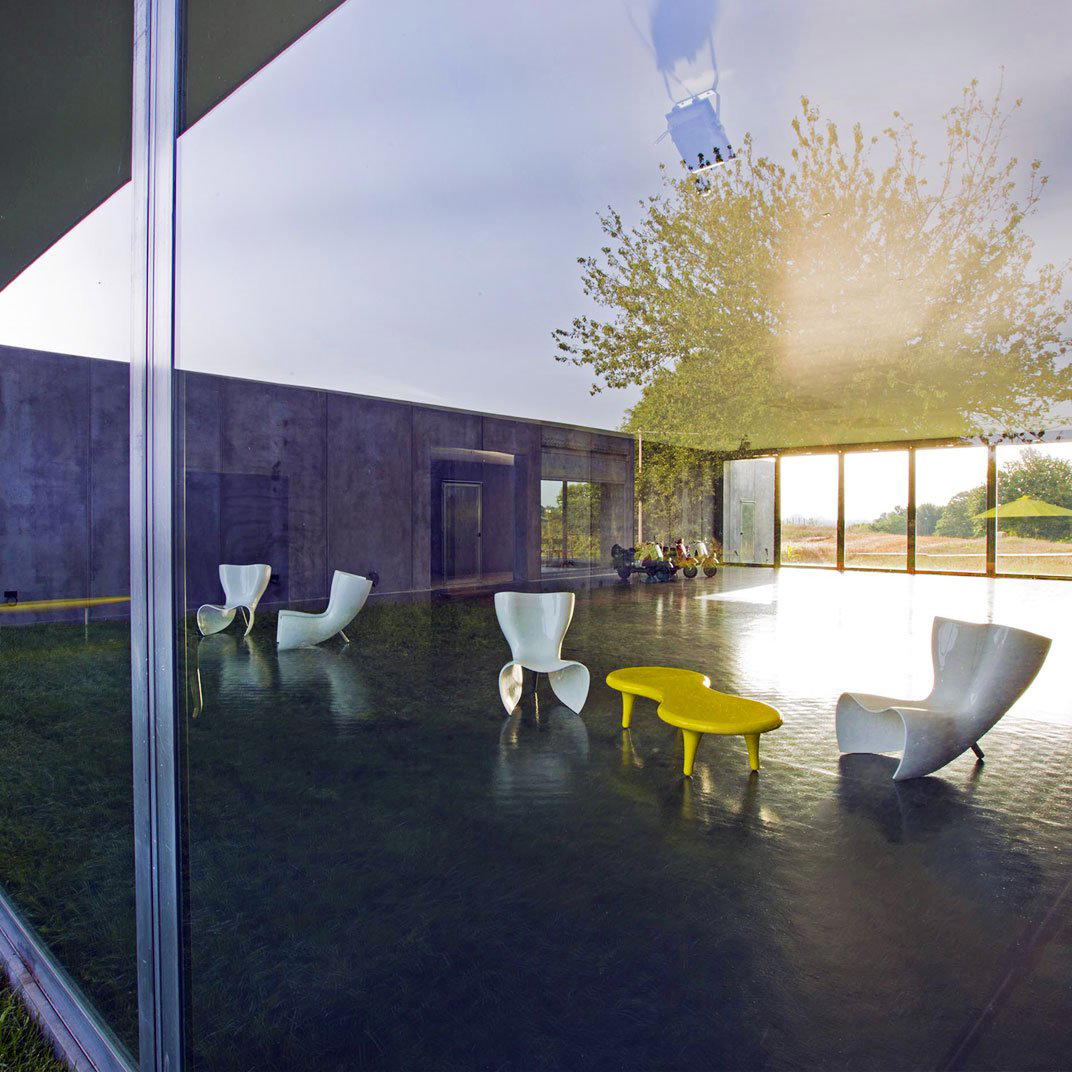
Countryside Dining, Roman Roots: The Lazio Fine Dining Tradition
The area around Rome has never generated the same international dining conversation as Emilia-Romagna or Piedmont, yet Lazio's culinary identity is among Italy's most specific. Roman cooking is defined by economy and directness: offal preparations, cured guanciale, dried pasta disciplines built over centuries of practical necessity. What fine dining in the Roman orbit has had to negotiate, more than in any other Italian region, is how to honour that directness without either abandoning it for northern sophistication or freezing it as folklore. A handful of restaurants in the province have chosen a third path: stepping out of Rome's urban density entirely, anchoring themselves in the agricultural land that supplies the city, and building something that reads as Roman in ingredient and temperament while operating at a register the capital's trattorias were never designed to reach.
Antonello Colonna Labico sits inside that tradition. Located roughly 40 kilometres southeast of Rome in the Vallefredda countryside, the restaurant occupies a position that makes geographic sense for what it is attempting: close enough to Rome's supply networks and dining audience, far enough to exist on its own terms. For comparable exercises in relocating serious Italian cooking to the countryside surrounding a major city, Reale in Castel di Sangro offers the instructive parallel, having moved from Rome to Abruzzo to gain the agricultural proximity that urban kitchens cannot replicate.
The Setting: Architecture Against Landscape
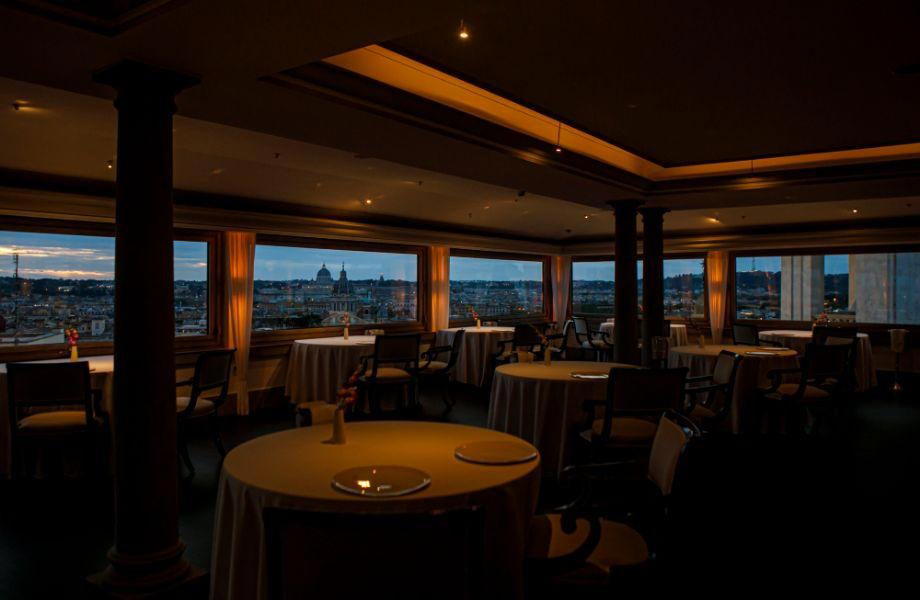
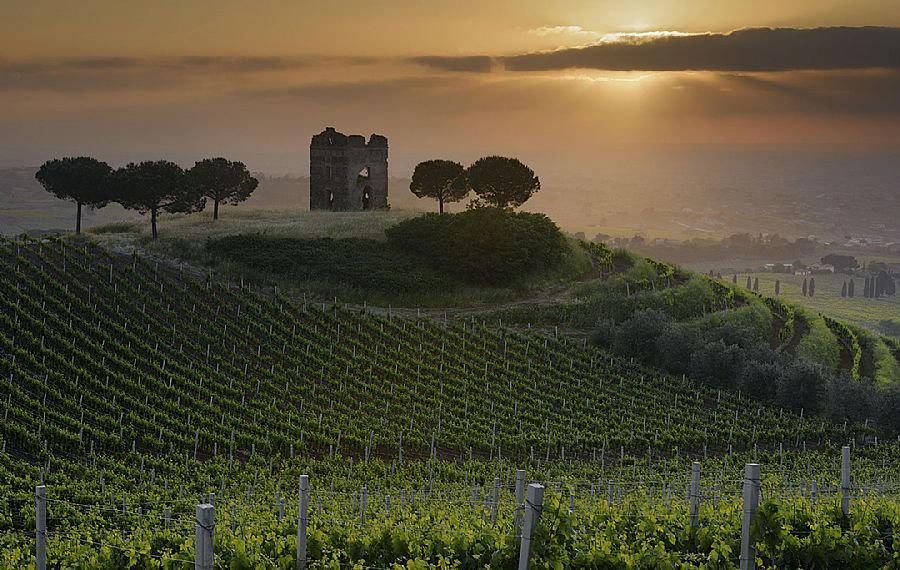
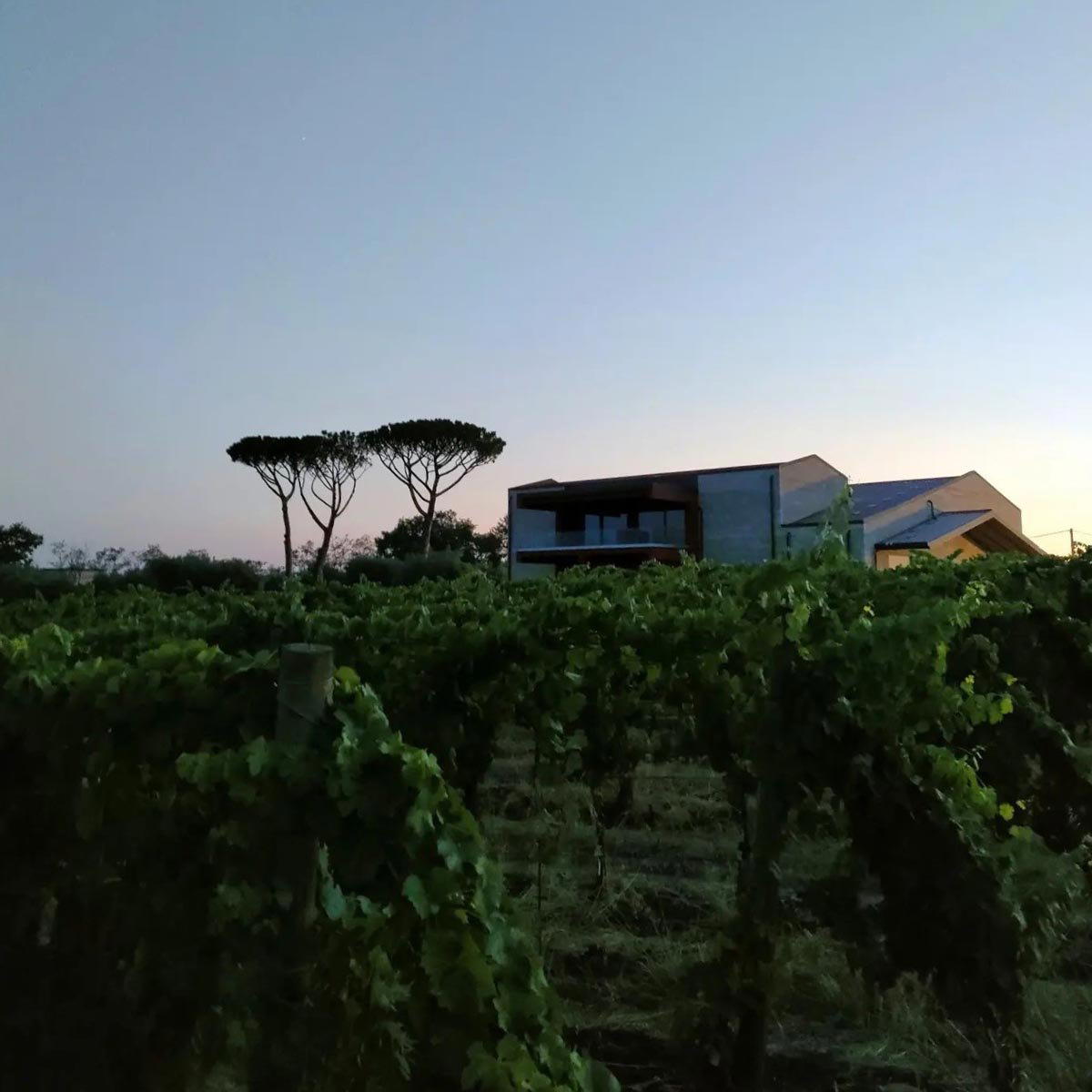
Arriving at the Vallefredda resort that houses the restaurant, the first thing to register is the deliberate tension built into the property. The building is avant-garde in conception, a structure that reads more like a contemporary art facility than a country house, and the interior rooms sustain that register: large, gallery-scale spaces with works of art on the walls and the kind of proportions that feel closer to a museum than a dining room. The parkland surrounding the building is mature and substantial, with chestnut trees old enough to provide serious shade across the lawn. That lawn, in summer, is where the restaurant's logic becomes most legible: the natural setting provides a counterpoint to the architecture's severity, and the tables set outside under the trees occupy a different atmospheric key than the interior rooms.
This tension between the contemporary frame and the classical content is not incidental. The kitchen's output is described, in the restaurant's own positioning, as deliberately classic in style against the modern backdrop, and the dining rooms function as part of that argument. The art-filled interiors are the provocation; the food is the resolution. It is an unusual compositional choice for a Michelin-starred restaurant in the Italian countryside, where the more common instinct is to let the setting speak for itself.
What the Kitchen Represents: Lazio Grounded, Italy Ranged
The 2024 Michelin Star at Labico reflects a kitchen that works within recognisable Italian cooking traditions rather than against them. The distinction matters when placing it in the context of Italian contemporary fine dining more broadly. At Osteria Francescana in Modena, the project has always been explicitly conceptual, using Italian culinary memory as material for deconstruction. At Enoteca Pinchiorri in Florence, the framework is classical French-Italian formalism with a wine program that has historically anchored the restaurant's identity. At Dal Pescatore in Runate, the focus is regional to the point of deliberate narrowness. Labico operates differently: it draws on Lazio's rural traditions as a primary reference while ranging across Italy's broader culinary canon, meaning the menu is neither tied to a single regional grammar nor attempting to transcend region entirely.
The seasonal approach is closely tied to the resort's own garden, which contributes produce directly to the kitchen. Day-by-day seasonal adjustment of this kind, where the chef is physically based outside Rome and in direct proximity to the land, produces a different relationship to ingredients than the market-sourcing model used by most urban Italian kitchens. The vegetable menu at Labico has received specific recognition in this context: a structured plant-focused option, with the possibility of a fully plant-based menu available if communicated in advance. This is not a permanent tasting menu addition but an extension of the kitchen's garden logic into a format that can be requested. Guests wanting the plant-focused route should make the request at booking.
Culinary range across Italy's traditions, rather than a strict Lazio regionalism, places Labico in the same broad category as Le Calandre in Rubano and Piazza Duomo in Alba, both of which synthesise regional grounding with wider Italian and European reference. What distinguishes Labico within that group is the explicit Lazio anchor: the proximity to Rome's ingredient traditions and the connection to the agricultural countryside that supplies the capital remain legible in the cooking.
comparable set: Italian Fine Dining Outside the City
Category of destination restaurant operating outside a major Italian city has produced some of the country's most discussed addresses. Atelier Moessmer Norbert Niederkofler in Brunico works in a different regional register entirely, rooting its cooking in Alpine South Tyrol rather than central Italian traditions. Uliassi in Senigallia occupies the Adriatic coastal format with a seafood-anchored identity. Quattro Passi in Marina del Cantone operates within the Campanian coastal tradition. Each of these restaurants has found a specific environmental and culinary identity tied to its location in ways that urban addresses cannot replicate. Labico's version of that specificity is the Lazio countryside and its connection to Rome's culinary history, which gives it a different proposition than any of those peers.
For Italian contemporary cooking in similarly non-urban Italian settings, Agli Amici Rovinj and L'Olivo in Anacapri represent the coastal version of the destination format, while Casa Perbellini 12 Apostoli in Verona and Enrico Bartolini in Milan sit firmly in the urban tier. Labico occupies the countryside position with a Rome-adjacent logic that none of the coastal or northern-urban peers share.
Planning a Visit
The address is Via di Valle Fredda, 52, 00030 Labico RM, and the journey from central Rome takes approximately 40 to 45 minutes by car; public transport options to Labico are limited and a car or taxi is the practical approach. The restaurant's price range sits at the summit tier for Italian fine dining (€€€€), consistent with its Michelin-starred peers in the same category. Guests wanting the plant-focused or fully plant-based menu should specify this when booking, as the kitchen requires advance notice to execute it properly. For summer reservations, requesting a table on the lawn is the obvious move; the chestnut trees provide shade across the afternoon and into the evening, and the contrast between the natural setting and the avant-garde building is at its most apparent from outside.
Side-by-Side Snapshot
Comparable venues nearby, for context on price, style, and recognition.
| Venue | Cuisine | Price | Awards | Notes |
|---|---|---|---|---|
| Antonello Colonna LabicoThis venue — the venue you are viewing | Italian Contemporary Fine Dining | $$$$ | Michelin 1 Star | Not listed |
| Taverna del Capitano | Modern Italian Seafood | $$$$ | Michelin 1 Star | Marina del Cantone |
| Retroscena | Contemporary Italian Fine Dining | $$$$ | Michelin 1 Star | Porto San Giorgio historic center |
| Achilli al Parlamento | Modern Italian Fine Dining with Campania Influences | $$$$ | Michelin 1 Star | Campo Marzio |
| Aroma | Modern Roman Fine Dining | $$$$ | Michelin 1 Star | Monti |
| D.one Ristorante Diffuso | Modern Abruzzese | $$$$ | Michelin 1 Star | Montepagano |
Recognition history
Dated appearances from independent guides and award organizations, with the underlying list record or original source where available.
Michelin 1 Star
Michelin
Michelin 1 Star
Michelin
We're Smart World 3 Radishes
We're Smart World
Michelin 1 Star
Michelin
Continue exploring
More in Labico
Restaurants in Labico
Browse all →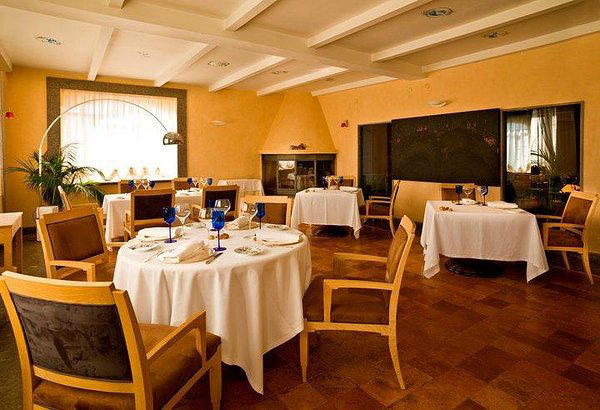
Bars in Labico
Browse all →
Hotels in Labico
Browse all →

At a Glance
- Elegant
- Sophisticated
- Modern
- Scenic
- Date Night
- Special Occasion
- Garden
- Historic Building
- Extensive Wine List
- Local Sourcing
- Garden
Sophisticated museum-like rooms adorned with art, surrounded by lush parkland, offering an elegant fusion of nature and modernity.