


1 Michelin Key · Mr & Mrs Smith Seal of Approval · Small Luxury Hotels of the World Member
Housed in the former residence of opera composer Gaetano Donizetti, Maalot Roma compresses 30 rooms, a Michelin Key-awarded restaurant, and one of Rome's most central addresses into a boutique property that reads as art deco cabinet of curiosities rather than traditional luxury hotel.

Pearl is the En Primeur Club membership app, where members save venues, book tables and use the concierge.
Via delle Muratte, Decoded
The stretch of Via delle Muratte that connects the Trevi Fountain district to Piazza Venezia is one of those Roman streets that operates at full volume from mid-morning through midnight. It is not the hushed piazza adjacency that palazzo conversions in the city typically seek. Maalot Roma plants itself squarely in this traffic, and that positioning is a deliberate editorial statement about what kind of hotel it intends to be. Where properties like Hotel Vilòn or Portrait Roma construct their identity around controlled quietude, Maalot absorbs the city's energy and mirrors it back through its interiors.
The building itself anchors that identity before you have crossed the threshold. Gaetano Donizetti, the 19th-century composer responsible for L'elisir d'amore and Don Pasquale, occupied this address during his Roman years, and the hotel's restaurant carries the latter opera's name in acknowledgment. Boutique hotels in historic European cities routinely invoke prior occupants for atmosphere; what separates the approach here is that the Donizetti reference informs the property's structural logic rather than functioning as decorative footnote. The glassed dome above the Don Pasquale restaurant is the building's spatial spine, and the 30 guest rooms and common areas radiate outward from it.
The Architecture of Don Pasquale
Rome's boutique hotel restaurant scene has fractured over the past decade into roughly two camps: properties where the dining room exists to satisfy guests who cannot face going out, and properties where the restaurant operates as a genuine destination for non-residents. The 2024 Michelin 1 Key designation awarded to Maalot Roma places Don Pasquale in the second category. Michelin's Key recognition, introduced in 2024 as the guide's formal metric for hotel quality, carries its own benchmarking weight: it does not evaluate restaurants independently but assesses the totality of the guest experience, with the dining offer as a material component of that judgment.
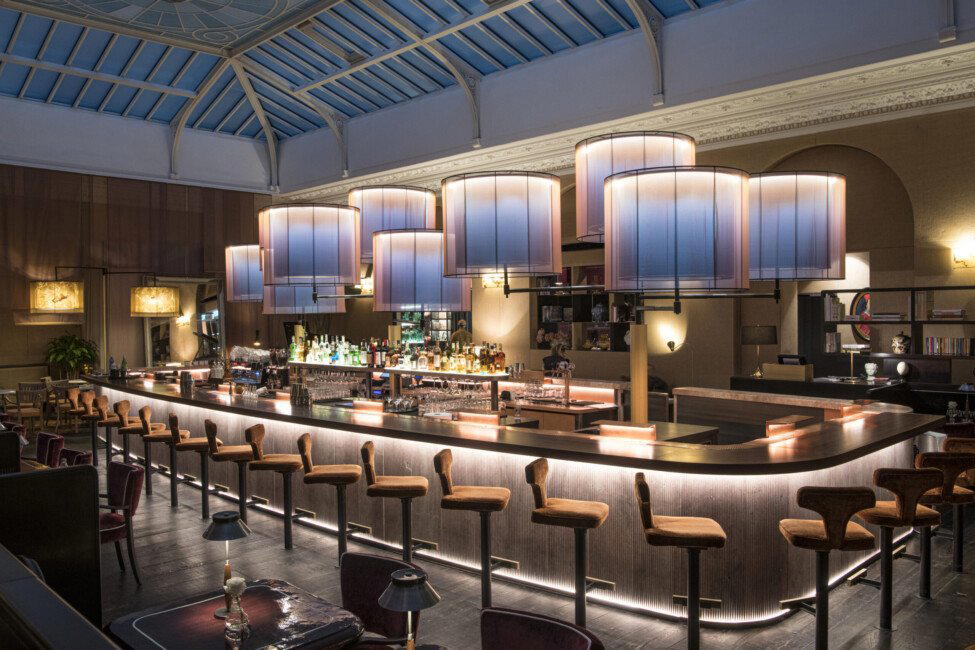
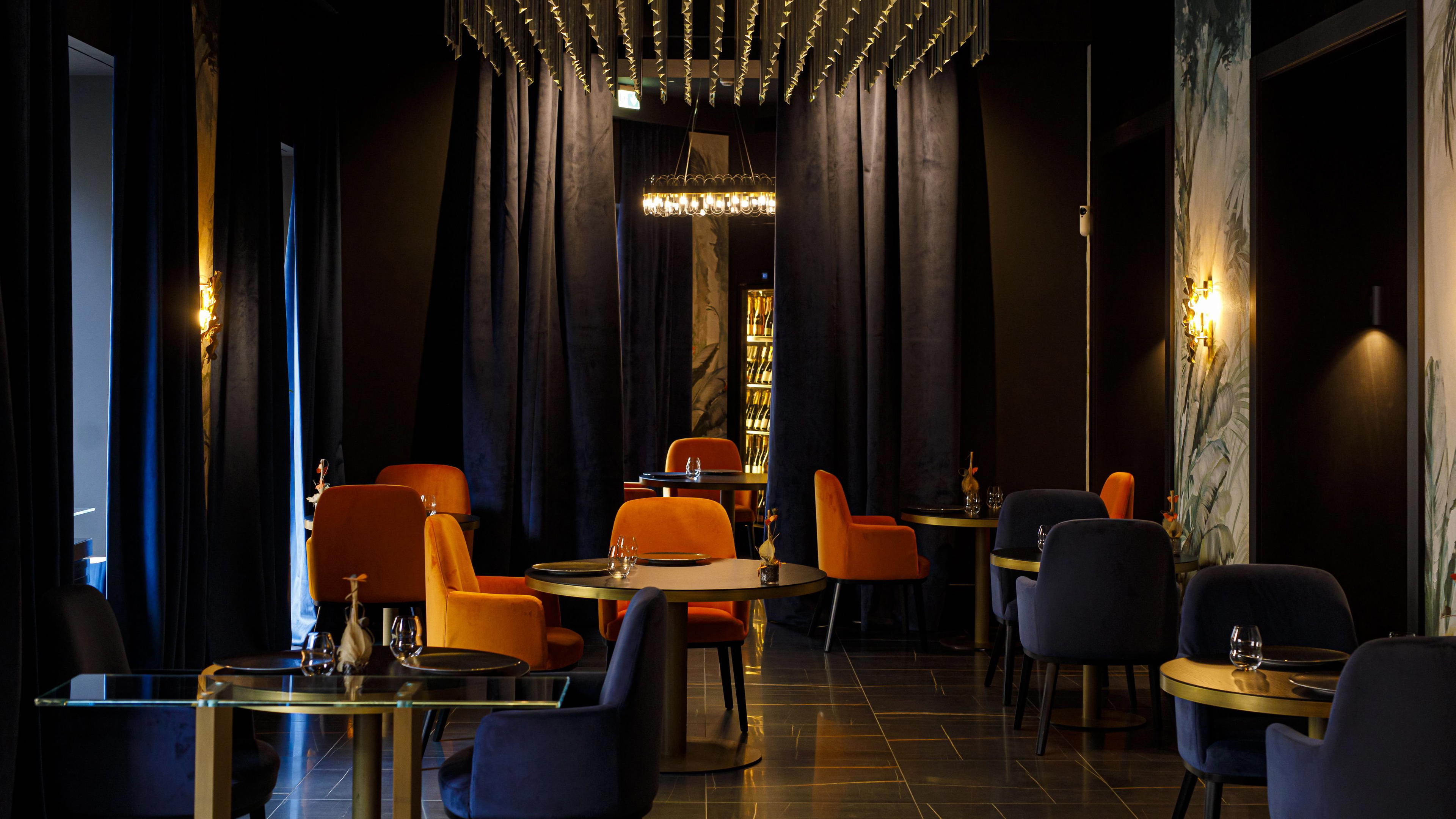
The glass dome that roofs the restaurant functions as more than architectural feature. It converts what might otherwise be a standard hotel dining room into a communal gathering space, a kind of internal piazza that the property's own description invokes deliberately. In a city where the true social architecture plays out in public squares and trattoria thresholds, replicating that dynamic inside a 30-room hotel is an ambitious structural bet. The room count matters here: at this scale, the restaurant cannot rely on captive guest traffic alone and must earn its own relevance with walk-ins and reservations from the wider neighbourhood.
Boutique hotel restaurants that genuinely hold their own in a competitive dining city tend to share a structural characteristic: the menu operates on a logic that reflects the building's identity rather than defaulting to generic Italian hotel cuisine. The Donizetti theme that names the restaurant suggests a program with theatrical personality, a quality that aligns with the property's self-described "irreverent" and "rock and roll" positioning. For those comparing across the city's hotel restaurant tier, the contrast with the more formally classical dining registers of Hassler Roma or Hotel Eden is instructive: Maalot Roma is explicitly not trying to occupy that space.
How the Interiors Work
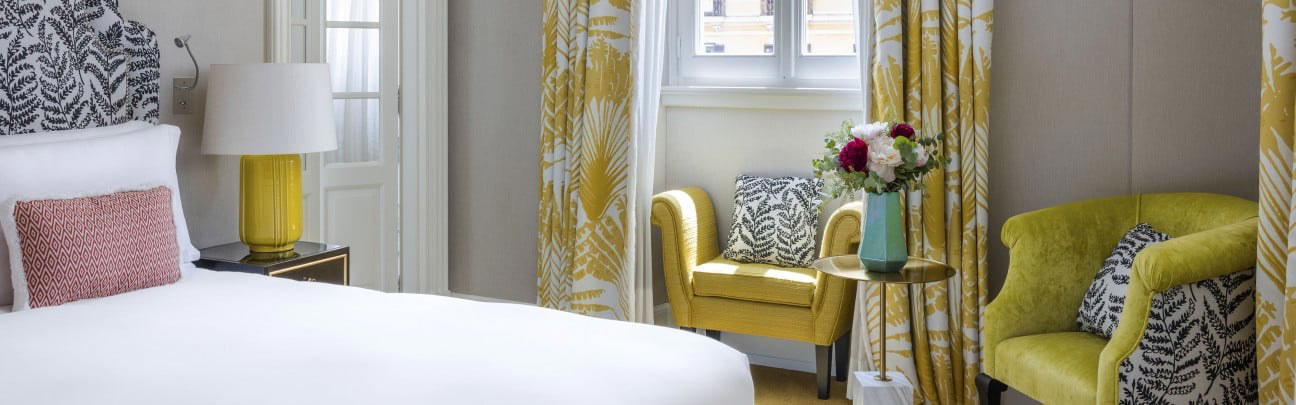
The visual language inside Maalot Roma draws from art deco conventions but applies them with a degree of irreverence that prevents the result from reading as period pastiche. The ground floor lounge deploys a portrait of Marilyn Monroe in 18th-century dress, a piece of deliberate anachronism that signals the property's attitude toward its own historical material. These are not interiors that ask you to take the heritage seriously; they use it as raw vocabulary for something more playful.
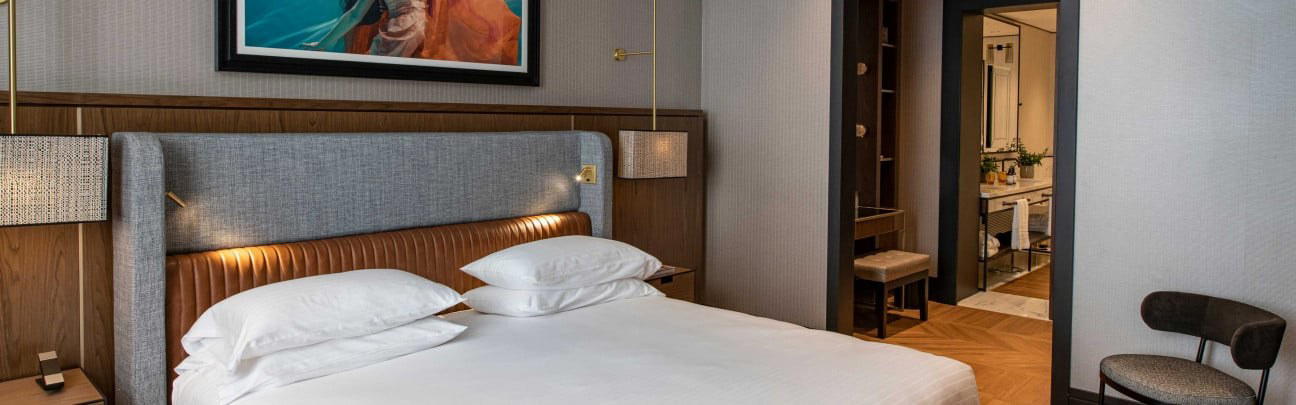
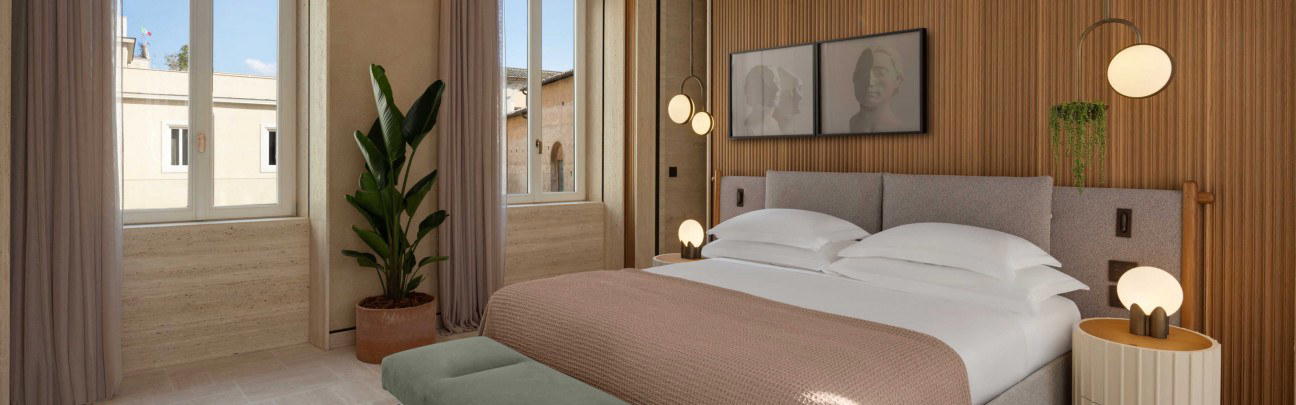
The hat motif, which recurs in various forms across the property in reference to Paul Young's 1985 song "Wherever I Lay My Hat (That's My Home)," operates on a similar principle: a pop culture referent stitched into a building with 19th-century operatic associations, producing an atmosphere that is genuinely difficult to categorise by the standard metrics of Rome's hotel market. At the higher end of the city's boutique tier, properties such as JK Place Roma and Hotel Locarno pursue different registers of cultivated design intelligence. Maalot Roma's rooms use bold colour as their primary tool, making the choice of accommodation a question of temperament as much as preference.
Inclusion of a basement gym is worth noting for practical reasons: central Rome's boutique hotel stock almost universally lacks fitness facilities, a consequence of floorplate constraints in historic buildings. At this room count and price point (rates from $761 per night), the provision of a fitness zone is a meaningful operational differentiator for the segment of travellers for whom it matters. For comparison, the large-footprint luxury properties, including Bulgari Hotel Roma and Rocco Forte Hotel De La Ville, can absorb spa and gym infrastructure through sheer scale; a 30-key property that manages the same is genuinely uncommon in the centro storico.
Location as the Underlying Argument
Trevi Fountain sits within a short walk of Via delle Muratte, and the Vittoriano monument is similarly close on foot. For first-time visitors to Rome or those structuring a short stay around the city's central monuments, this proximity carries obvious logistical value. The area also connects naturally to the Campo Marzio and Pantheon districts, giving the hotel utility as a base for on-foot exploration of a concentrated radius of Roman history.
That said, the neighbourhood's density of tourist traffic is a material consideration. The Via delle Muratte position that gives Maalot Roma its accessibility also places it inside the highest-footfall zone of the centro storico. Guests who require the calibrated serenity offered by properties like Hotel Vilòn in its quieter Prati-adjacent setting should calibrate expectations accordingly. The street-level energy is a feature of the Maalot Roma proposition, not an unintended side effect.
For travellers extending a Rome stay into the broader Italian itinerary, the surrounding EP Club portfolio maps the country's premium accommodation range: Aman Venice anchors the northeast, Four Seasons Hotel Firenze covers the Tuscan capital, Borgo Santandrea and Il San Pietro di Positano address the Amalfi Coast, and Borgo Egnazia extends the reach to Puglia. Closer to Rome, Corte della Maestà in Civita di Bagnoregio offers a day-trip-distance contrast in atmosphere. Further afield, Castello di Reschio, Rosewood Castiglion Del Bosco, Passalacqua, and Il Pellicano form a strong Italian circuit for those building a multi-property trip. International extensions through the EP Club portfolio include Aman New York, The Fifth Avenue Hotel, and Amangiri in Canyon Point. See our full Rome guide for wider context on the city's hotel and restaurant offer.
Planning a Stay
Maalot Roma operates 30 rooms at rates from $761 per night, placing it at the upper-mid tier of Rome's boutique hotel segment, below the flagship international brands but at a premium to the city's standard palazzo conversions. Given the central location and the Don Pasquale restaurant's independent draw, the hotel functions effectively as both a destination in its own right and a logistics-efficient base for centro storico exploration. The basement gym resolves a practical constraint that most comparable properties in the neighbourhood cannot address. Booking should be treated as time-sensitive during the Roman spring and autumn peaks, when demand for well-located boutique properties in this category runs well ahead of supply.
Cuisine and Credentials
Comparable venues nearby, for context on price, style, and recognition.
| Venue | Cuisine | Price | Awards | Notes |
|---|---|---|---|---|
| Maalot RomaThis venue (the venue you are viewing) | Boutique luxury hotel with personalized service and glamorous dining. | Not listed | 1 Michelin Key · Mr & Mrs Smith Seal of Approval | Not listed |
| Six Senses Rome | Urban wellness retreat fusing Roman heritage and contemporary design | Not listed | 1 Michelin Key · Virtuoso Luxury Hotel Partner | Trevi |
| Palazzo Roma | Historic aristocratic palace with modern luxury renovations | Not listed | 1 Michelin Key · Mr & Mrs Smith Seal of Approval | Colonna |
| Umiltà 36 | Retro-inspired Roman Dolce Vita boutique with refined ambiance and modern touches | Not listed | 1 Michelin Key · Mr & Mrs Smith Seal of Approval | Trevi |
| Portrait Roma | 5-star luxury boutique hotel offering private mansion experience with tailored suites. | $750–1,000 | 1 Michelin Key · La Liste Top Hotels | Campo Marzio |
| Singer Palace Hotel | Boutique luxury hotel in a historic landmark building blending Art Deco influences with contemporary Italian design. | Not listed | 1 Michelin Key · Virtuoso Luxury Hotel Partner | Colonna |
Recognition history
Dated appearances from independent guides and award organizations, with the underlying list record or original source where available.
Michelin 1 Key
Michelin
Mr & Mrs Smith Seal of Approval
Mr & Mrs Smith
Small Luxury Hotels of the World Member
Small Luxury Hotels of the World
Full recognition history (5 entries)
Michelin 1 Key
Michelin
Michelin 1 Key
Michelin
Continue exploring
More in Rome
Hotels in Rome
All hotels in Rome →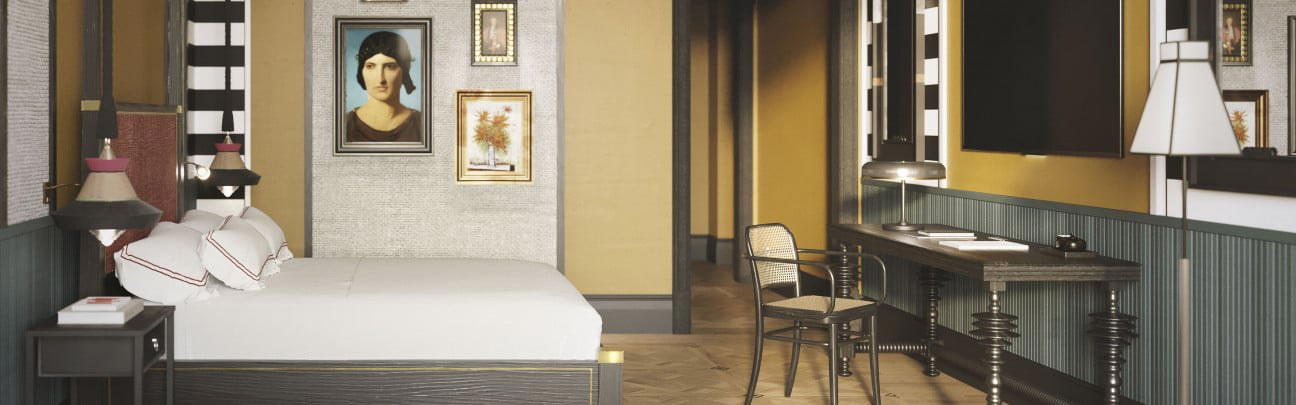
Bars in Rome
All bars in Rome →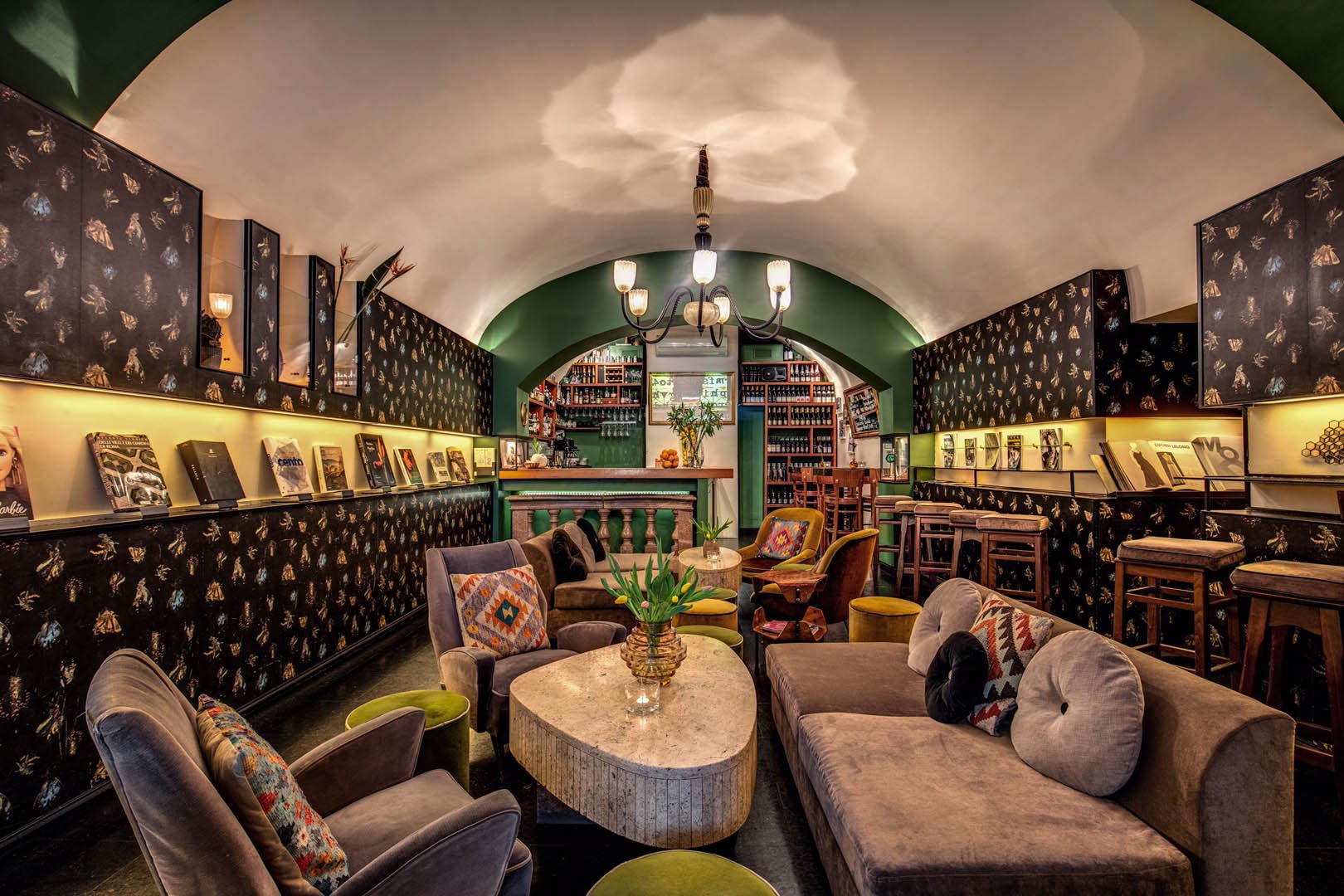
Restaurants in Rome
All restaurants in Rome →

Details
- Elegant
- Sophisticated
- Modern
- Intimate
- Romantic Getaway
- Anniversary
- Weekend Escape
- Historic Building
- Terrace
- Wi Fi
- Fitness Center
- Room Service
- Concierge
- Restaurant
- Bar
- Elevator
- Step Free Entrance
- Wheelchair Accessible
Lively and lively with eclectic art deco interiors, bold colors, and a welcoming luxurious atmosphere praised for its warmth.