Our verdict
Peking sits on Kataharamachi in central Takamatsu, placing it within easy reach of the city's compact dining corridor. The name signals a Chinese culinary orientation in a prefecture better known for udon and kaiseki, which makes it a point of genuine curiosity within the local restaurant scene. Takamatsu's broader table has room for this kind of specificity, and Peking occupies it on its own terms.

Pearl is the En Primeur Club membership app, where members save venues, book tables and use the concierge.
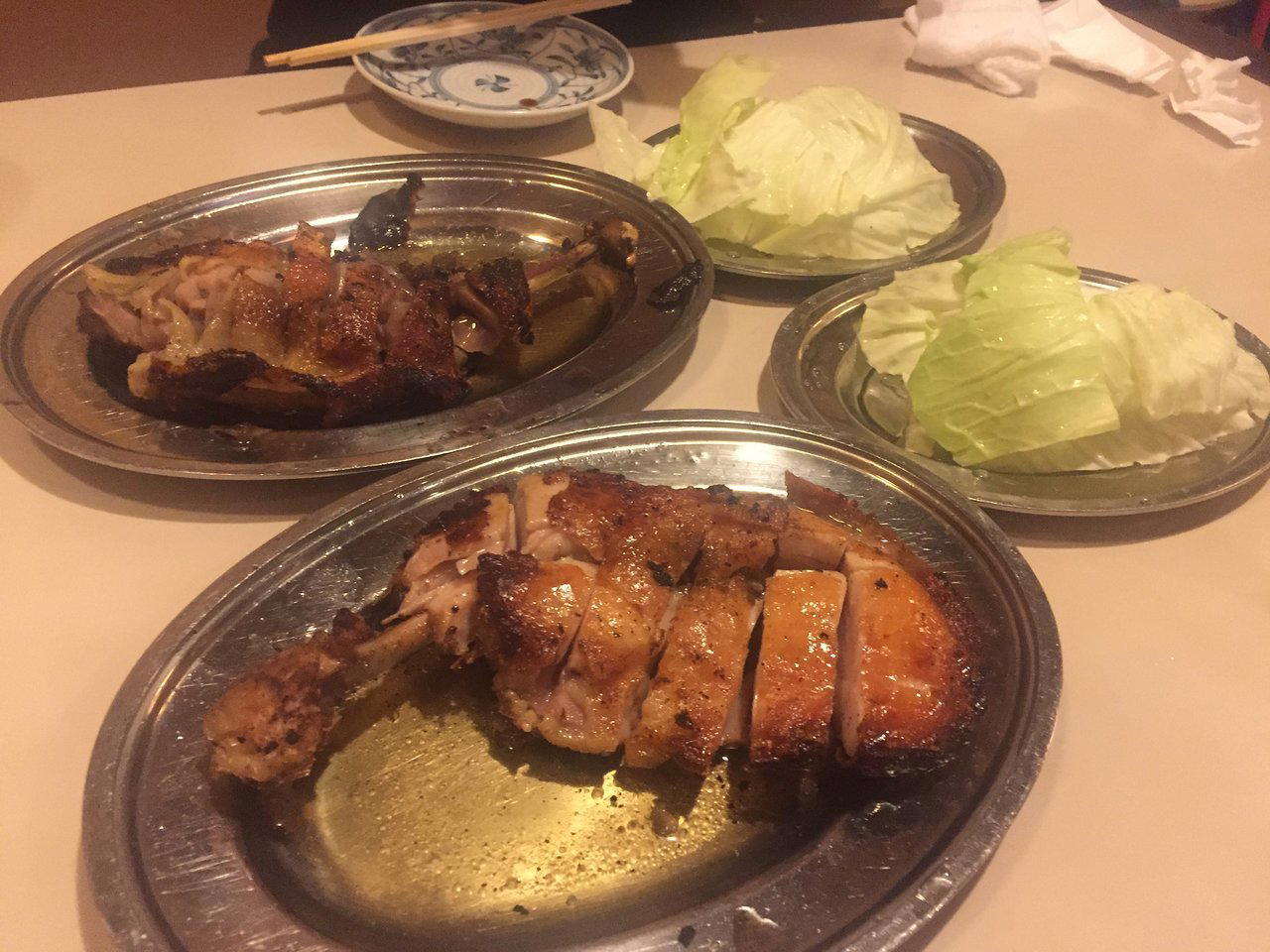
A Chinese Kitchen in Kagawa's Capital
Takamatsu's dining identity is built, above almost anything else, on udon. The flat, firm wheat noodles produced across Kagawa Prefecture have shaped the city's culinary self-image for generations, and most visitors arrive with that tradition squarely in view. What the city also holds, less discussed in international coverage, is a layer of specialist restaurants that operate outside that dominant frame, places where the ingredient logic, the cooking technique, and the cultural lineage all point somewhere else. Peking, on Kataharamachi in central Takamatsu, sits in that secondary register. The name is the older romanisation of Beijing, and it frames the kitchen's orientation clearly: this is a Chinese restaurant operating inside a Japanese prefecture-city that rarely gets credit for its non-udon dining depth.
That positioning matters because Shikoku's four prefectures, Kagawa among them, draw serious food attention primarily through their agricultural and maritime output. The Seto Inland Sea produces shellfish and small fish of genuine quality; the upland areas of Kagawa supply vegetables and citrus. A Chinese kitchen working in this geography has access to ingredients that rarely appear on tables of this culinary tradition in major urban centres. The sourcing question, in that sense, is not abstract. It sits at the centre of what differentiates a regional Chinese restaurant in a city like Takamatsu from its counterparts in Osaka, Tokyo, or international destinations like Le Bernardin in New York City or Atomix in New York City, where procurement chains and ingredient access operate on entirely different scales.
The Kataharamachi Address and What It Signals
The address, 2-8 Kataharamachi, places Peking in a district that functions as part of Takamatsu's walkable central grid. The city is compact by Japanese urban standards, and Kataharamachi sits within the commercial and dining zone that connects the station end of town to the harbour-facing streets. In practical terms, this means the restaurant is accessible on foot from most central accommodation, and it sits alongside other establishments that form the city's mid-range and specialist dining corridor. Takamatsu lacks the density of a major city's restaurant quarter, which means individual addresses carry more weight, proximity to the centre is a meaningful signal about a venue's orientation toward a broad urban clientele rather than a niche, destination-only format.
Restaurants in this part of Takamatsu compete across cuisine types rather than within narrow category silos. In Takamatsu, a Chinese kitchen on Kataharamachi is more likely to sit in conversation with the city's French-leaning tables, its izakayas, and its kaiseki rooms than with any direct Chinese-food competitor.
Chinese Culinary Tradition in a Regional Japanese Setting
Beijing-style Chinese cooking, in its traditional form, is characterised by wheat-based preparations, roasted and braised meats, and a flavour palette that runs toward savoury and slightly sweet rather than the chilli heat associated with Sichuan or the seafood brightness of Cantonese cooking. The regional tradition has its own sourcing logic: duck and pork are central proteins, fermented pastes carry significant weight in the flavour architecture, and the cooking techniques, roasting, steaming, slow-braising, prioritise rendered fat and caramelised exterior texture as much as they do raw ingredient quality.
When that tradition relocates to a coastal Japanese prefecture with access to Seto Inland Sea produce, the sourcing questions become interesting. Does the kitchen work with local seafood? Does it source its proteins from Kagawa's agricultural suppliers, or maintain supply relationships with specialist importers? These are the questions that define the difference between a regional Chinese restaurant that simply transplants a menu and one that develops a genuine local character.
For reference, the wider Shikoku region has produced some thoughtful ingredient-driven cooking in recent years, and the Seto Inland Sea's produce has appeared on menus well beyond the island, at restaurants as attentive to sourcing as Gion Sasaki in Kyoto and HAJIME in Osaka. The appetite for Shikoku ingredients at that level of precision says something about the quality of the raw material available in this geography.
Takamatsu's Broader Table
Understanding Peking's place in Takamatsu requires some familiarity with the city's dining range. The city supports a number of restaurants that operate outside the udon-and-tempura frame that defines its tourist-facing identity. 龍池 SORAE and 両忘 represent the more considered end of Takamatsu's table, while 鮨賀 and ノッキングキッチン point toward the city's range in sushi and contemporary formats. ボワ・エ・デュポン holds a French position in that broader spread. Peking occupies a distinct lane, a Chinese kitchen in a city whose restaurant culture is dominated by Japanese culinary forms. That distinctiveness is the point. See our full Takamatsu restaurants guide for a broader map of the city's dining options.
Across Japan, Chinese restaurants in smaller regional cities occupy a particular social function. They tend to serve as accessible, family-inclusive options in markets where fine-dining Japanese rooms can feel ceremony-heavy, and where French or Western tables carry a formality that narrows the occasion type. Cities like Fukuoka, home to Goh, and Nara, where akordu operates a distinct European format, show that regional Japanese cities can sustain serious non-Japanese cooking when the positioning is clear. Peking fits that broader pattern in Takamatsu.
Planning a Visit
Peking is located at 2-8 Kataharamachi, Takamatsu, Kagawa 760-0040. The central address means it is reachable on foot or by short taxi from Takamatsu Station, which is the main arrival point for visitors coming by train from the Honshu side via the Seto Ohashi Bridge or from within Shikoku. Phone and website details are not available at this time.
Frequently asked questions
Can I bring kids to Peking?
Chinese restaurants in Japanese regional cities like Takamatsu tend to operate as neighbourhood-scale venues with formats that include families without special accommodation. Beijing-style cooking, built around braised meats, noodle dishes, and shared plates, is broadly accessible across age groups. The Kataharamachi address puts the restaurant in a walkable central district, which typically signals a relaxed, mixed-demographic dining room rather than a destination-only format.
Is Peking better for a quiet night or a lively one?
Takamatsu's dining culture runs toward composed, neighbourhood-paced evenings. A Chinese kitchen at a central Kataharamachi address in a city of this scale is more likely to reflect that register than the higher-energy formats of Osaka or Tokyo. Expect a room pitched toward conversation rather than spectacle.
Does Peking in Takamatsu offer a regional take on Chinese cuisine, or does it follow a traditional Beijing-style menu?
A Chinese kitchen operating in Kagawa sits in an interesting position: the prefecture has above-average access to Seto Inland Sea seafood and Shikoku-grown produce, and regional Chinese restaurants across Japan frequently absorb local ingredients without abandoning their culinary framework. The most reliable starting point is the Beijing tradition itself, wheat-based dishes and braised meats, with any regional inflection treated as a possibility rather than a given.
What should I eat at Peking?
The name points directly to a Beijing-style kitchen, where wheat-based preparations, noodles, dumplings, steamed breads, and roasted or braised proteins form the structural core of the menu. Kagawa's position on the Seto Inland Sea means local seafood may also appear, though the extent to which the kitchen incorporates regional ingredients is not documented. Order around the roasted and braised meat preparations, which are the defining expressions of the Beijing tradition.
Comparison Snapshot
Comparable venues nearby, for context on price, style, and recognition.
| Venue | Cuisine | Price | Awards | Notes |
|---|---|---|---|---|
| PekingThis venue (the venue you are viewing) | Sanuki Chinese Dumplings | Not listed | Not listed | Not listed |
| 鮨舳 | Not listed | Not listed | Tabelog 100 #87 | Takamatsu |
| Honetsukidori Ikkaku Takamatsu ten | Kagawa honetsukidori & izakaya-style chicken dishes | $20–30 | Tabelog 100 #26 | Takamatsu |
| Teuchi Menya Oshima | Self-service Sanuki udon & soba shop | $1–10 | Tabelog 100 #27 | Takamatsu |
| Menya Shichifuku Honten | Sanuki udon shop | $1–10 | Tabelog 100 #71 | Takamatsu |
| Teuchi Udon Okura | Dining | Not listed | Tabelog 100 #2 | Takamatsu |
Continue exploring
More in Takamatsu
Restaurants in Takamatsu
All restaurants in Takamatsu →
Bars in Takamatsu
Browse all →
Details
- Classic
- Casual Hangout
- Local Sourcing
- A La Carte
Current opening hours
- Monday
- Closed
- Tuesday
- 11:15 AM–2:30 PM, 5–9 PM
- Wednesday
- 11:15 AM–2:30 PM, 5–9 PM
- Thursday
- 11:15 AM–2:30 PM, 5–9 PM
- Friday
- 11:15 AM–2:30 PM, 5–9 PM
- Saturday
- 11:15 AM–2:30 PM, 5–9 PM
- Sunday
- 11:15 AM–2:30 PM, 5–9 PM
Hours can change for holidays and private events. Hours as of .