
Honetsukidori Ranmaru belongs to Takamatsu’s local-specialty izakaya tradition, where bone-in chicken, Sanuki beef and Setouchi seafood sit closer to civic habit than tourist performance. Its 2025 Tabelog 100 selection for chicken cuisine gives the room a national signal while the format remains grounded in Kagawa’s evening drinking culture.
Pearl is the En Primeur Club membership app — saves, bookings, and concierge access live there. Same editors, same standards.
- Address
- 香川県高松市大工町7-4
- Phone
- +81878218405
- Website
- tabelog.com
 Saves & bookings on Pearl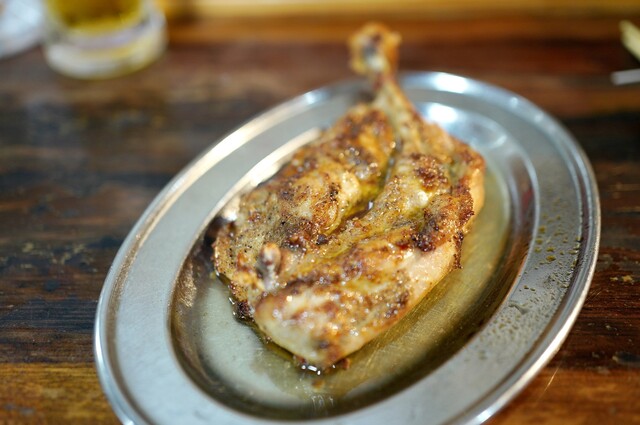
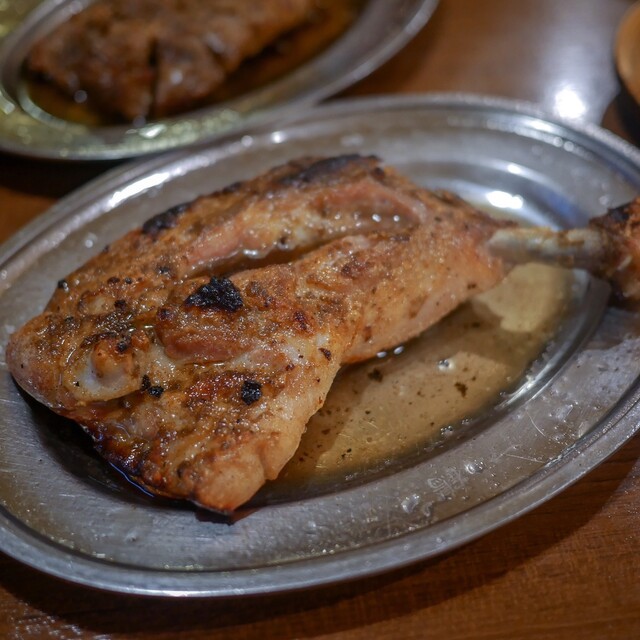
Lion Street puts Takamatsu’s dining culture at street level: shopfront signs, after-work groups, the rhythm of izakaya rooms filling before the city turns quiet. In that setting, chicken is not a supporting act. Kagawa’s honetsukidori tradition treats bone-in chicken as a local anchor, the kind of dish that belongs beside beer, sake or shochu rather than inside a formal tasting-menu frame. Honetsukidori Ranmaru sits inside that register: casual, regional, and built around food that explains Takamatsu better than another generic station-area dinner.
The useful context is that Takamatsu is often introduced through Sanuki udon, but its evening table is broader. Udon defines the daylight circuit, from quick bowls at Chikusei Honten to the local regularity of Furukawa Udon and Furusato Udon. After dark, the city moves toward izakaya formats where regional meat, seafood and drinking snacks carry the meal. This is where bone-in chicken matters: it is direct, communal, and tied to Kagawa rather than imported from a metropolitan dining script.
Bone-in chicken as Takamatsu's after-dark regional language
Chicken cuisine in Japan ranges from yakitori counters with disciplined skewer progressions to family-style local dishes that prize familiarity over ceremony. Takamatsu’s honetsukidori belongs to the second camp. The appeal is not a long sequence of rare cuts; it is the force of a local specialty that can hold a table on its own while leaving room for Sanuki beef and Setouchi seafood around it. That combination places the restaurant in a different category from the city’s higher-spend sushi rooms, including Sushi Nakagawa, where the price tier and meal structure signal a more formal occasion.
The 2025 Tabelog 100 selection for chicken cuisine is the clearest external marker here. Tabelog’s Hyakumeiten lists tend to reward category strength rather than luxury polish, which is why the recognition matters for a place serving a regional izakaya repertoire. Honetsukidori Ranmaru is not being framed as a rarefied counter; it is being marked within a national chicken-cuisine field, where a Kagawa specialty can compete against Tokyo yakitori, regional bird restaurants and other focused formats.
That distinction is important for travelers planning Takamatsu meals. A day built around udon can become repetitive if dinner simply repeats the starch-and-speed logic of lunch. Pairing a daytime stop at Azuma, Fumiya Okonomiyaki Honten or Kawafuku Honten with an evening chicken izakaya gives a fuller reading of the city: wheat culture, grill culture, seafood from the inland sea, and the informal drinking rooms that tie them together.
The izakaya format keeps the meal local rather than ceremonial
The categories tell the story: chicken dishes, izakaya and seafood. That mix is central to Takamatsu’s dining identity because the city does not need every serious meal to announce itself through imported luxury codes. Setouchi seafood brings the inland sea into the room; Sanuki beef keeps the meal tied to the prefecture; bone-in chicken supplies the signature regional grammar. Sake, shochu, wine and cocktails are available, which keeps the drinking side broad without turning the place into a cocktail-led bar.
The room’s format reinforces that local reading. Counter seating, table seating and a tatami room create a spread of uses rather than a single scripted experience. A 40-seat restaurant in this category can take families, friends and travelers without forcing them into a hushed special-occasion mode. The presence of an English multilingual menu also changes the calculus for visitors: it makes a local specialty easier to order without translating the whole meal into tourist shorthand.
For comparison inside Takamatsu, ミオ・パエーゼ and 両忘 point to how varied the city’s restaurant map becomes once the udon narrative recedes, while Ryobo shows how names outside the immediate metro can still enter the conversation around regional dining. The point is not to rank them against one another. It is to read the city by format: noodle shops for speed and craft, sushi for high-spend precision, izakaya for regional appetite, and specialty rooms for dishes that locals already understand before visitors arrive.
How to place it in a Takamatsu itinerary
Honetsukidori Ranmaru makes the most editorial sense as an evening counterweight to a day of udon or island-hopping. The restaurant is by Kataharamachi, a practical central position for travelers staying in Takamatsu rather than treating the city as a transit stop for Naoshima or Shodoshima. Because service runs in the dinner register and the kitchen is noted as open until sold out, timing matters more than lingering indecision.
Build the day around contrast. Use Our full Takamatsu restaurants guide for the broader dining map, then keep the other city rails close: Our full Takamatsu hotels guide, Our full Takamatsu bars guide, Our full Takamatsu wineries guide and Our full Takamatsu experiences guide. For readers extending the Japan file beyond Kagawa, the useful comparison is how regional specificity changes by city and genre: beef sukiyaki at -Grilled beef Sukiyaki- KAMAKURA TANUKIAN 鎌倉 たぬき庵 in Kamakura, tuna and charcoal grilling at. 鮪と炭火焼き うお炭 秋葉原店 in Tokyo, café culture at.cafe in Osaka, Kyushu casual dining at.know in Kumamoto, Vietnamese cooking in Kanagawa at (Shoku) Vietnam in Kawasaki, specialist curry in Hokkaido at [Curry Senmon Ten] Maruyama Kyoju. in Sapporo, sake-bar framing in California at Jōdo Saké Bar in Los Angeles, and Japanese comfort-food translation at Onigiri Time in Pasadena.
The verdict is practical rather than breathless: this is the kind of Takamatsu dinner that teaches the city through habit. The external recognition gives confidence, but the stronger reason to go is cultural fit. A traveler who only eats udon in Kagawa gets the headline; a traveler who adds bone-in chicken, local beef and Setouchi seafood begins to understand how the prefecture eats after office hours.
Price Lens
Side-by-side context: comparable cuisine and price.
| Venue | Cuisine | Price | Awards | Notes |
|---|---|---|---|---|
| Honetsukidori RanmaruThis venue — the venue you are viewing | $$ | , | ||
| Renge Ryori Ten | $$ | , | Takamatsu, Creative Japanese Izakaya & Seafood | |
| Mendokoro Wataya Takamatsu ten | Takamatsu, Sanuki udon noodle shop | $ | , | |
| Teuchi Judan Udon Baka Ichidai | Takamatsu, Sanuki udon specialist | $ | , | |
| Teuchi Menya Oshima | $ | , | Takamatsu, Self-service Sanuki udon & soba shop | |
| Udon Honjin Yamada Ya Sanuki honten | Takamatsu, Sanuki Udon | $ | , |
Continue exploring
More in Takamatsu
Restaurants in Takamatsu
Browse all →
At a Glance
- Lively
- Cozy
- Rustic
- Energetic
- Casual Hangout
- After Work
- Group Dining
- Family
- Solo
- Celebration
- Standalone
- Open Kitchen
- Sake Program
- Beer Program
- Craft Cocktails
- Local Sourcing
- Street Scene
A cozy, bustling izakaya with minimal partitions, counter seating overlooking the grill, simple rustic décor, and a sociable atmosphere where conversations easily flow between tables.