Our verdict
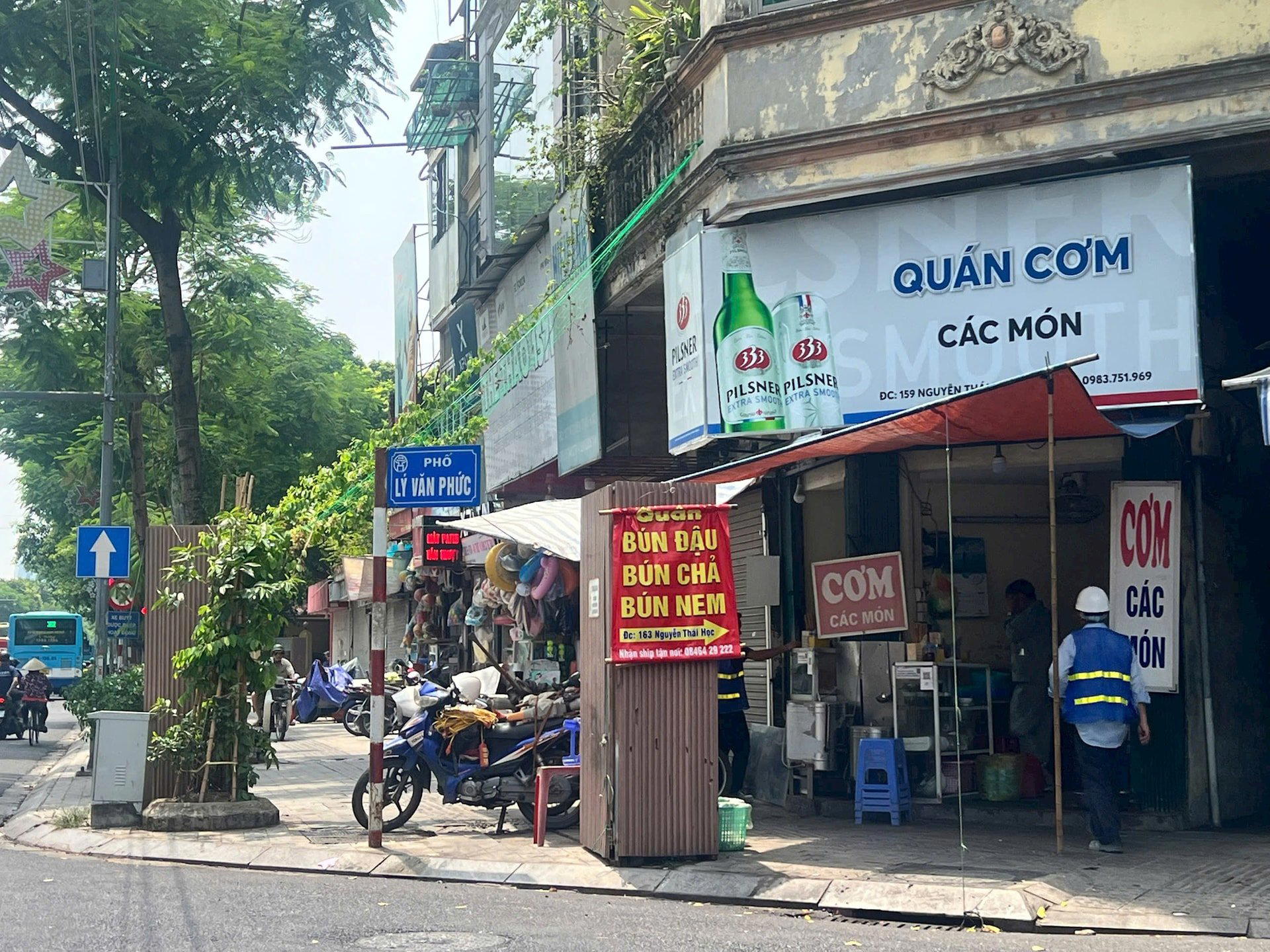
P. Lý Văn Phức sits in one of Hanoi's older residential quarters, where the gap between a midday bowl of something local and an evening table-service meal is wider than the street itself. The address draws a mix of neighbourhood regulars and visitors working through the city's dining options at different price points. Confirm details directly before visiting, as operational information is limited.

Pearl is the En Primeur Club membership app — saves, bookings, and concierge access live there. Same editors, same standards.
- Address
- Gian hàng L2 - Hanoi Centre, 175 P. Nguyễn Thái Học, Đống Đa, Hà Nội, Vietnam
- Phone
- +84 985 252 550
- Hours
- Daily 10 AM–9 PM
- Directions
- Get directions
The menu
What to order
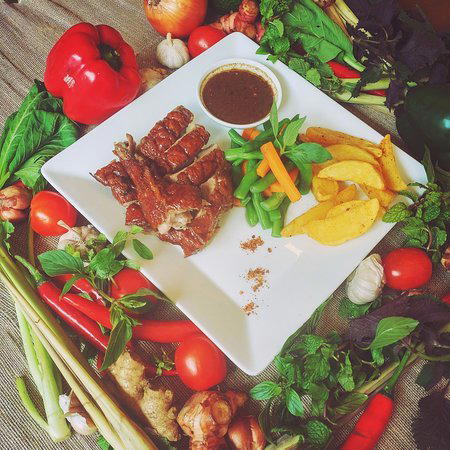
- Grilled chicken wings
- Grilled chicken feet
- Honey-baked bread
- Grilled ribs
- Pickled morning glory
A Street That Eats in Two Registers
Hanoi has always organised its eating life around time of day more than category or price. The same block that runs a brisk lunch trade in steaming bowls — pho, bun cha, bun bo — will shift register by evening, when tablecloths appear, fans slow down, and the approach to ordering becomes more deliberate. P. Lý Văn Phức, in Hanoi's Ha Noi district, sits inside that pattern. The address names a street rather than a landmark, which is itself instructive: in this city, a great many eating places take their identity from location before they take it from any other signal.
The lunch-versus-dinner divide in Hanoi is not merely atmospheric. It reflects a structural difference in how Vietnamese urban eating has developed. Midday service, particularly in streets with a residential character, tends to be faster, cheaper, and more focused on a single dish done with precision. Evening service, especially as a neighbourhood moves upmarket or gains visibility with visitors, tilts toward multi-course ordering, a wider drinks selection, and a slower pace that allows the room to function socially rather than just functionally. Whether P. Lý Văn Phức operates across both registers, or stakes its identity in one, is the kind of detail leading confirmed before arriving, the venue's operational specifics are not on the public record in a form EP Club can verify.
Hanoi's Mid-Tier Dining Position
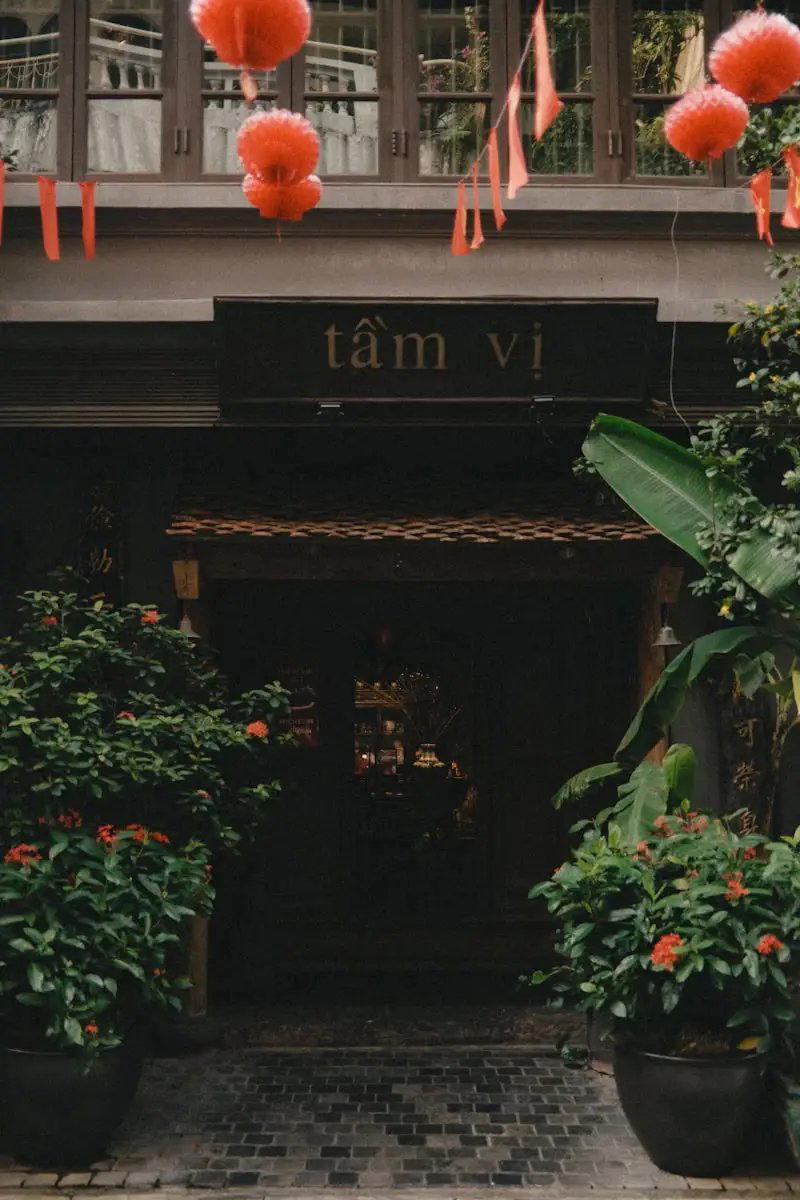
To place P. Lý Văn Phức usefully, it helps to sketch the tier it likely occupies relative to Hanoi's broader restaurant map. At the top of the market, addresses like Gia (Vietnamese Contemporary) and Hibana by Koki (Teppanyaki) operate at ₫₫₫₫, a price point that positions them against international fine-dining peers and draws guests who are already comfortable with tasting-menu formats. At the other end, single-dish specialists like Tầm Vị (Vietnamese) at ₫₫ keep the focus narrow and the pricing accessible. The space between those two poles is where most of Hanoi's neighbourhood dining actually happens, and it is a varied space: some addresses there are deliberate about their position, others have simply settled into it through years of regular trade.
P. Lý Văn Phức, based on its street-level address and the character of the quarter, reads as a neighbourhood venue rather than a destination restaurant. That is not a limitation, Hanoi's leading neighbourhood eating is among the most satisfying in Southeast Asia, but it does set expectations. The measure of quality here is not the kind that accumulates Michelin stars. It is the kind that keeps the same regulars coming back for the same dishes across years, and that is a different, often more durable, form of recognition. For further orientation across the city's categories and price tiers, our full Hanoi restaurants guide maps the full range.
How the Daytime and Evening Moods Differ
In Vietnamese street-level dining, the lunch hour tends to be the more honest hour. Vendors and cooks who built their reputation on a single dish, a particular broth, a specific style of grilled meat with fermented shrimp paste, a hand-rolled noodle, are at their most focused between 11am and 2pm, when volume is high and the dish has been refined by repetition across years. Evening service, by contrast, often involves a broader menu, longer waits, and a room that functions as much as a social space as a dining one.
For a street-address venue like P. Lý Văn Phức, that daytime discipline is likely where any true specialisation sits. Visitors arriving at lunch expecting a slower, composed experience may find something more efficient and single-minded than they anticipated. Visitors arriving at dinner expecting the stripped-back focus of midday service may find the room has shifted mood entirely. Neither outcome is wrong; understanding the shift in advance simply produces better decisions. For context on how this pattern plays out across nearby streets, 19 P. Ngũ Xã and 1946 Cua Bac (Vietnamese) offer useful reference points within the same city.
Vietnam's Wider Dining Conversation
Hanoi is one end of a dining conversation that runs the length of the country. The regional distinctions are real and persistent: northern Vietnamese cooking tends toward restraint and clarity of broth; central Vietnamese cooking around Hue and Hoi An leans into complexity and heat; southern cooking in Ho Chi Minh City is sweeter and more influenced by Chinese and Khmer traditions. A meal at a street-level address in Hanoi is, in that sense, a specifically northern experience, and worth understanding as such rather than as a generalised expression of Vietnamese cuisine.
For travellers moving through multiple cities, the contrast is worth tracing deliberately. La Maison 1888 in Da Nang represents a formal, European-influenced register that sits at the opposite end of the formality scale from a Hanoi street address. Akuna in Ho Chi Minh City and Saffron in Hue City each anchor a distinct regional identity. In Hoi An, Cargo Club Cafe and Restaurant operates at a tourist-friendly mid-register. Further afield, Mi Quang Ba Vi in Thanh Khe, Bau Troi Do in Son Tra, and Le Pont Club in Hai Phong each illustrate how the country's port and provincial cities have developed their own distinct eating cultures, separate from both Hanoi and Ho Chi Minh City. Coastal venues like Phuong Nhung Restaurant in Cat Hai, Duyên Anh Restaurant in Phu Vang, and Nhà hàng Madame Lân in Hai Chau complete a picture of Vietnamese dining that no single city address can contain on its own. At a global reference level, the controlled precision of a place like Le Bernardin in New York City or the communal format of Lazy Bear in San Francisco represent how different the western fine-dining frame is from what a Hanoi street address offers, and why the comparison is the wrong one to reach for.
Planning a Visit
Operational details for P. The practical advice is direct: locate the address on the ground before committing a meal slot to it, confirm hours in person or through a locally sourced recommendation, and treat the visit as part of a broader day of neighbourhood eating rather than as a single reservation anchor. Hanoi rewards that approach more than most cities do.
Frequently asked questions
Where is P. Lý Văn Phức in Hanoi?
P. Lý Văn Phức is located at Hanoi, Vietnam, Hanoi.
How does dining on Lý Văn Phức street fit into Hanoi's street-name dining culture?
Hanoi has a long tradition of identifying eating addresses by street name rather than restaurant name, a pattern rooted in the Old Quarter's guild-street history where a single block specialised in one trade or food type. Lý Văn Phức, in Ha Noi, follows this convention — the street itself carries the address identity. For visitors, this means the name functions as a neighbourhood locator as much as a venue identifier, and local knowledge of the block tends to travel faster than any formal listing.
What do regulars order at P. Lý Văn Phức?
EP Club does not hold confirmed menu data for this address. In Hanoi's neighbourhood dining tier, regulars tend to anchor on one or two house dishes — typically a broth-based preparation at lunch or a rice plate in the evening — rather than ordering across a broad menu. Arriving and observing what the tables around you are eating remains the most reliable ordering strategy on streets like Lý Văn Phức.
How hard is it to get a table at P. Lý Văn Phức?
At Hanoi's neighbourhood level, walk-in at lunch is standard; evening seatings on busier streets can fill quickly, particularly on weekends. Arriving early — before 12:00 for lunch or by 18:30 for dinner — is the practical approach on streets of this type in Ha Noi.
What's P. Lý Văn Phức best at?
The address sits within Hanoi's neighbourhood dining tier, a category where venues typically build reputation around consistency on a narrow set of preparations rather than broad range. The street name itself — Lý Văn Phức — carries local identity in a city where the address often matters as much as the signage.
Is P. Lý Văn Phức worth it?
Price data is not confirmed for this address, which limits a precise value comparison against Hanoi peers. Within Ha Noi's neighbourhood dining tier broadly, the category delivers strong ratio of quality to spend — notably better than tourist-facing venues in the Old Quarter at equivalent or lower price points. If the kitchen operates to the standard typical of established street-name addresses in this city, the value case is generally sound.
Cuisine and Recognition
A quick peer list to put this venue’s basics in context.
| Venue | Cuisine | Price | Awards | Notes |
|---|---|---|---|---|
| P. Lý Văn PhứcThis venue — the venue you are viewing | Vietnamese Grilled Chicken Street Food | $1–10 | Not listed | Not listed |
| Gia | Modern Vietnamese Fine Dining | $100–150 | 1 Michelin Star · La Liste Top Restaurants | Vietnamese Contemporary, ₫₫₫₫ |
| Hibana by Koki | Michelin-Starred Japanese Teppanyaki | $200–300 | 1 Michelin Star · La Liste Top Restaurants | Teppanyaki, ₫₫₫₫ |
| Tầm Vị | Northern Vietnamese Home-Style | $10–20 | 1 Michelin Star | Vietnamese, ₫₫ |
| Bun Cha Ta (Nguyen Huu Huan Street) | Authentic Vietnamese Bun Cha | $1–10 | Michelin Bib Gourmand | Noodles, ₫ |
| Chapter | Modern Northern Vietnamese Fine Dining | $50–100 | Michelin Plate · Star Wine List | Nordic, Vietnamese Contemporary, ₫₫₫₫ |
Details
- Lively
- Energetic
- Casual
- Rustic
- Casual Hangout
- Group Dining
- After Work
- Late Night
- Open Kitchen
- Beer Program
- Street Scene
- A La Carte
- Beer
- Lemon Tea
Current opening hours
- Monday
- 10 AM–9 PM
- Tuesday
- 10 AM–9 PM
- Wednesday
- 10 AM–9 PM
- Thursday
- 10 AM–9 PM
- Friday
- 10 AM–9 PM
- Saturday
- 10 AM–9 PM
- Sunday
- 10 AM–9 PM
Hours can change for holidays and private events. Last verified .