Our verdict
Xoi Che Ba Thin is a Hanoi institution anchored in two of northern Vietnam's most fundamental street foods: xôi (sticky rice) and chè (sweet dessert soups). In a city where these preparations carry deep cultural weight, this address draws locals and returning visitors who treat it as a reference point rather than a novelty. It belongs to the stratum of Hanoi eateries where longevity and neighbourhood loyalty say more than any award.

Pearl is the En Primeur Club membership app — saves, bookings, and concierge access live there. Same editors, same standards.
- Address
- Hanoi, Vietnam
- Directions
- Get directions
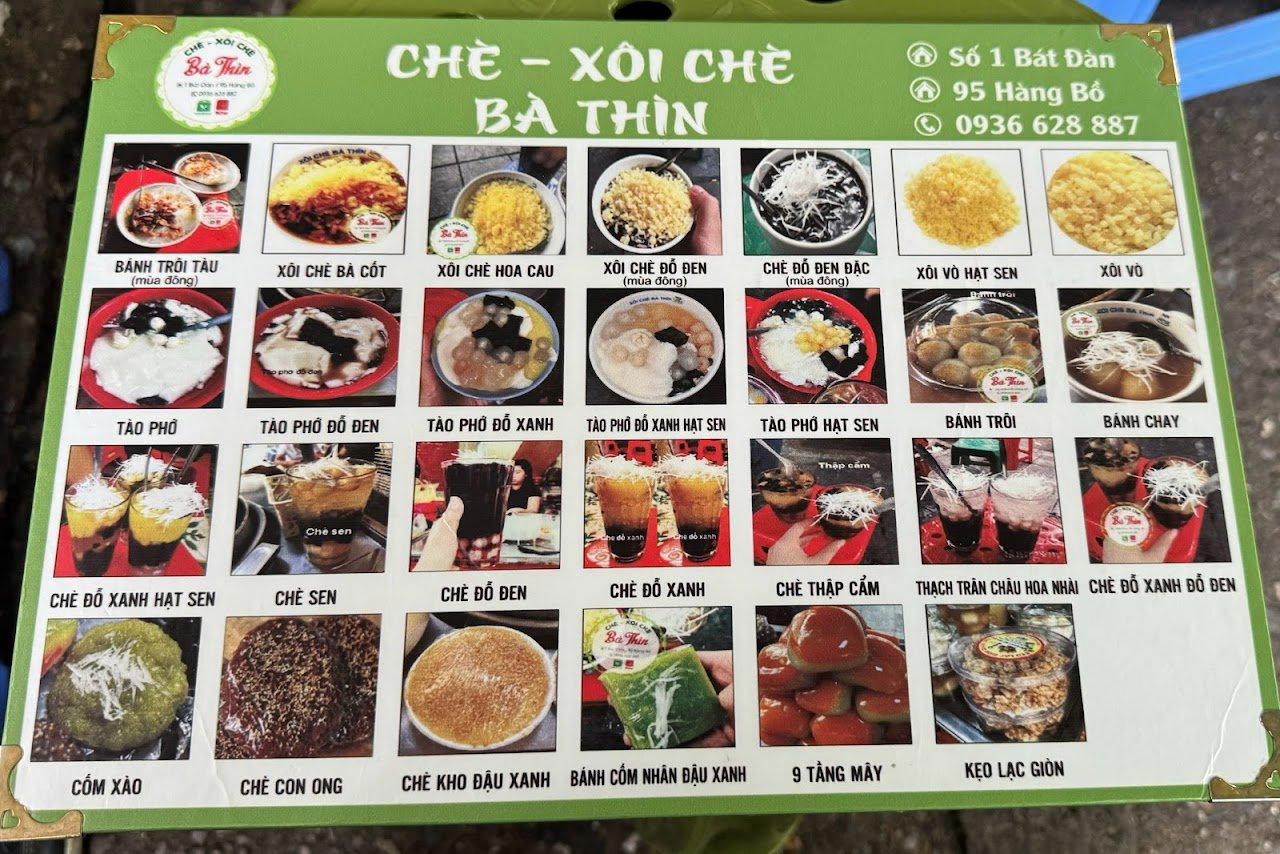
The menu
What to order
- Xôi chè
- Glutinous rice desserts
- Jasmine tofu pudding
- Winter sweet soup
Sticky Rice, Sweet Soup, and the Architecture of a Hanoi Morning
Approach almost any Hanoi street corner before eight in the morning and you will encounter some version of the same ritual: a low plastic stool, a bowl of glutinous rice topped with mung bean paste or fried shallots, and the particular silence of people eating with focused attention. Xôi is not breakfast in the way a hotel buffet is breakfast. It is a nutritional and cultural anchor, a preparation that has organised the mornings of Hanoians across multiple generations and political eras. Xoi Che Ba Thin sits inside that tradition — not as a departure from it, but as one of its more durable local expressions.
Hanoi's xôi culture divides loosely into two registers: the mobile vendor, who carries a basket through a neighbourhood and disappears by mid-morning, and the fixed address, which accumulates a loyal customer base over years and becomes a kind of neighbourhood institution. Fixed addresses in this category tend to survive on consistency rather than innovation. Regulars return because the ratio of rice to topping holds steady, because the glutinous texture is calibrated to a familiar standard, and because the price does not drift far from what the surrounding residential streets can absorb. Xoi Che Ba Thin operates on that model.
Chè: The Other Half of the Name
The second half of the venue's name points to chè, the broad category of Vietnamese sweet soups, puddings, and dessert drinks that has no clean equivalent in Western culinary vocabulary. Chè preparations range from warm black sesame soup to layered jellies served over crushed ice, from red bean congee to pandan-infused coconut milk with taro. In Hanoi, chè occupies a distinct cultural space from its southern Vietnamese counterpart: northern preparations tend toward simpler, less sweet profiles, with fewer toppings than the elaborate chè ba màu associated with Ho Chi Minh City.
The pairing of xôi and chè under a single roof is not accidental. Both preparations share an emphasis on glutinous rice and legumes as primary ingredients, and both function as transitional foods — consumed at the boundary between meals rather than as the meal itself. A morning bowl of xôi and an afternoon glass of chè represent the same domestic food logic: filling, affordable, and deeply embedded in how Vietnamese families have historically structured their eating day. For visitors exploring Vietnamese cuisine beyond pho and bánh mì, this category represents one of the more direct entry points into everyday Hanoi food culture.
Where This Address Sits in the Hanoi Spectrum
Hanoi's restaurant scene in 2024 spans a wider price and format range than at any previous point. At the upper end, contemporary Vietnamese cooking, exemplified by venues like Gia (Vietnamese Contemporary) and, for international formats, Hibana by Koki (Teppanyaki), draws a clientele comfortable with multi-course tasting formats and wine pairings. At the opposite end of the spectrum, street-level specialists like 1946 Cua Bac and Tầm Vị serve traditional Vietnamese food at prices that reflect neighbourhood rather than tourist-area economics. Xoi Che Ba Thin belongs in this latter category, a fixed street-food address whose value is measured in consistency and cultural authenticity rather than in the language of fine dining.
This is a different kind of intelligence from what you would apply to, say, Le Bernardin in New York City or Atomix in New York City. There are no tasting menus, no sommelier recommendations, and no reservation system to manage. The benchmark here is repeatability: does the food taste the same on visit twenty as it did on visit one? For the neighbourhood regulars who constitute the core customer base of an address like this, that consistency is the entire point.
Other addresses in the Vietnamese street-food register, like 19 P. Ngũ Xã, draw comparable crowds by specialising in a single preparation and executing it to a consistent standard across years of operation. The logic holds across Vietnamese cities: in Ho Chi Minh City, in Hoi An, and across the country's food-focused destinations, the most durable street-food addresses operate on the same principle of focused repetition rather than menu breadth. You can see variations of this approach at La Maison 1888 in Da Nang, where the logic runs in a completely different price tier but the principle of focused identity remains.
The Cultural Weight of Glutinous Rice
To understand why an address like Xoi Che Ba Thin accumulates meaning in a city like Hanoi, it helps to understand what glutinous rice represents in Vietnamese food culture. Xôi appears at weddings, at ancestor commemorations, at festivals, and in daily street commerce. It is not a luxury ingredient, but it is a ceremonially significant one, a preparation whose appearance signals occasion as much as nutrition. The varieties of xôi served in Hanoi reflect regional identity: xôi xéo (with mung bean and fried shallots), xôi gấc (coloured red with gac fruit for celebrations), and xôi lạc (with peanuts) each carry specific associations in the northern Vietnamese imagination.
This cultural embeddedness is part of what distinguishes Hanoi's street-food scene from more visitor-oriented food destinations. The audience for xôi and chè at an address like this is overwhelmingly local. Visitors from elsewhere in Vietnam recognise the format immediately; international visitors may encounter it as an introduction to a category of Vietnamese eating that does not translate into Western restaurant vocabulary. That friction, between what the food is and how it is usually described to outsiders, is itself an argument for seeking it out. The EP Club guide to Hanoi restaurants covers the full spectrum from street-food specialists to contemporary fine dining, and the contrast between addresses like this one and venues at the tasting-menu end of the range illustrates how wide that spectrum has become.
Planning Your Visit
Street-food specialists of this type in Hanoi typically operate during morning and early afternoon hours, with xôi service concentrated in the first half of the day and chè available through the afternoon. No booking is required or expected. Pricing sits at the lower end of Hanoi's already affordable street-food range, making it accessible without any advance planning beyond knowing the neighbourhood. For visitors building a Hanoi food itinerary, this category of address rewards early scheduling: arrive before the morning rush subsides and you will find both the widest selection and the most animated version of what these kitchens do. Those extending their travels across Vietnam will find comparable street-food intelligence useful in other cities, from Halong to Cam Ranh to Phan Thiet.
Frequently asked questions
How would you describe the vibe at Xoi Che Ba Thin?
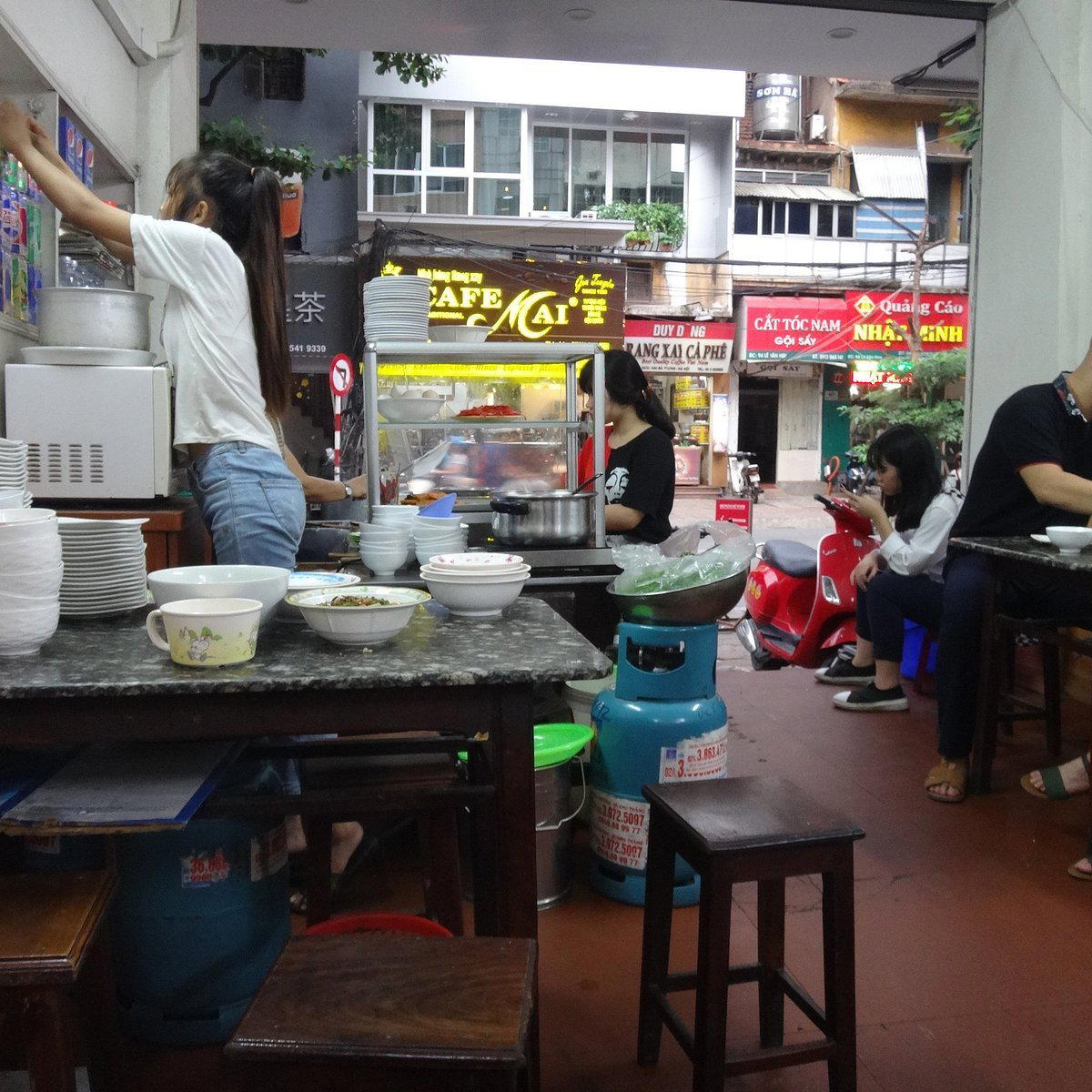
This is a street-level Hanoi operation built around early-morning rhythm: low stools, quick service, and a steady queue of locals rather than tourists. The atmosphere is functional and communal, shaped by the ritual of the morning meal rather than any deliberate design concept. Conversation is incidental; the focus is the food and the pace of the street.
Is Xoi Che Ba Thin a good option for someone wanting to eat the way Hanoi locals actually eat in the morning?
Xôi and chè are among the most embedded daily rituals in Hanoi's food culture — not restaurant food but street-corner food consumed before work, on a stool, for a few thousand dong. Xoi Che Ba Thin sits within that tradition rather than repackaging it for outside audiences. For anyone wanting to understand how glutinous rice functions as a meal rather than a side dish, this category of Hanoi address is the direct source.
What's the must-try dish at Xoi Che Ba Thin?
The two categories in the name tell you exactly where to focus: xôi (glutinous rice preparations) and chè (Vietnamese sweet soups and puddings). Xôi served in the first hours of the morning is the core draw, paired with whichever chè is running that day. These are not interchangeable with anything else on the Hanoi street-food circuit — chè in particular has no direct Western equivalent.
Do they take walk-ins at Xoi Che Ba Thin?
Street-food counters of this format in Hanoi operate on a walk-in basis by default — there are no reservations. Arriving early matters more than any booking strategy, as xôi service at addresses like this is concentrated in the first hours of the morning and supply is finite.
What is Xoi Che Ba Thin known for?
Xoi Che Ba Thin is a Hanoi address associated with two foundational Vietnamese food categories: xôi, the glutinous rice dishes that anchor the city's morning street-food culture, and chè, the broad family of sweet soups and dessert drinks with deep roots across Vietnam. In a city where this tradition is practiced on dozens of corners, Ba Thin holds a name that locals recognize rather than one that requires a guidebook.
In Context: Similar Options
A short peer table to compare basics side-by-side.
| Venue | Cuisine | Price | Awards | Notes |
|---|---|---|---|---|
| Xoi Che Ba ThinThis venue — the venue you are viewing | Traditional Vietnamese Xôi Chè | $1–10 | Not listed | Not listed |
| Gia | Modern Vietnamese Fine Dining | $100–150 | 1 Michelin Star · La Liste Top Restaurants | Vietnamese Contemporary, ₫₫₫₫ |
| Hibana by Koki | Michelin-Starred Japanese Teppanyaki | $200–300 | 1 Michelin Star · La Liste Top Restaurants | Teppanyaki, ₫₫₫₫ |
| Tầm Vị | Northern Vietnamese Home-Style | $10–20 | 1 Michelin Star | Vietnamese, ₫₫ |
| 1946 Cua Bac | Northern Vietnamese | $10–20 | Michelin Bib Gourmand | Vietnamese, ₫ |
| Chapter | Modern Northern Vietnamese Fine Dining | $50–100 | Michelin Plate · Star Wine List | Nordic, Vietnamese Contemporary, ₫₫₫₫ |