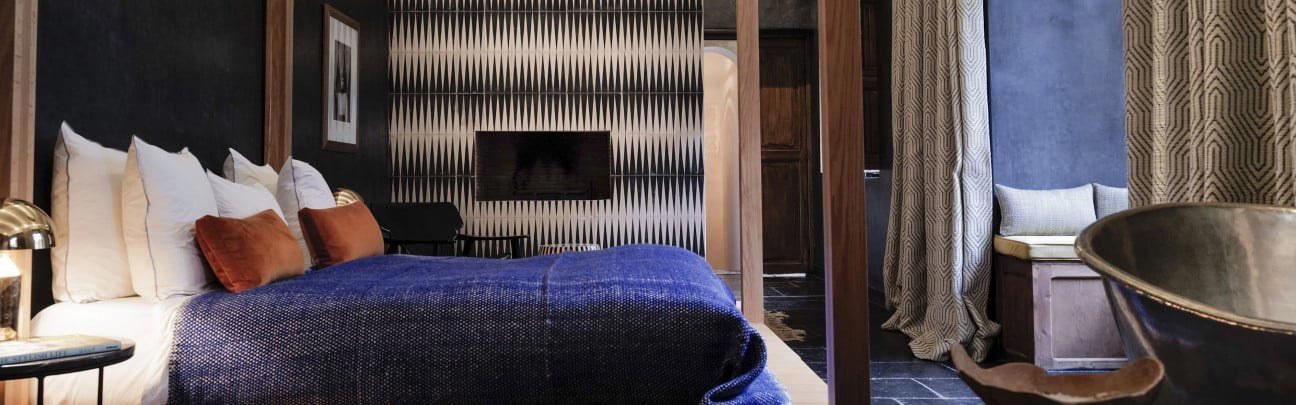
Set within Riad Noir d'Ivoire at 31-33 Derb Jdid in the Marrakesh medina, Oban occupies a quietly authoritative position among the city's riad-dining circuit. The address places it inside one of the medina's more considered residential conversions, where the architecture does deliberate work before the kitchen begins its own. For travellers calibrating between spectacle and substance, it sits in a tier worth examining closely.
Pearl is the En Primeur Club membership app — saves, bookings, and concierge access live there. Same editors, same standards.
- Address
- At Riad Noir d'Ivoire, 31-33 Derb Jdid, Marrakesh 40000, Morocco
- Phone
- +212608020608
- Website
- obanmarrakech.com
- Directions
- Get directions
 Saves & bookings on Pearl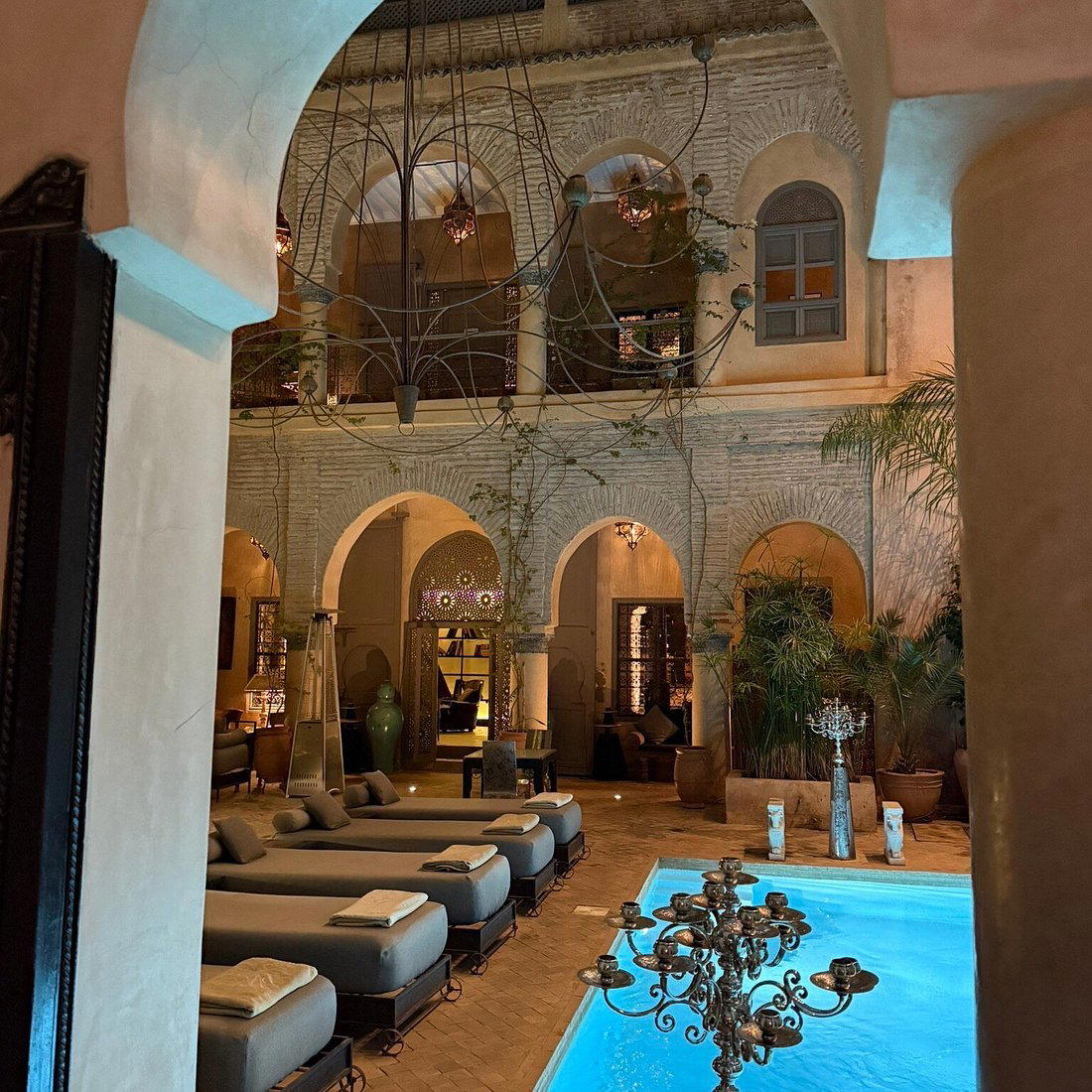
A Riad Address and What It Demands of a Kitchen
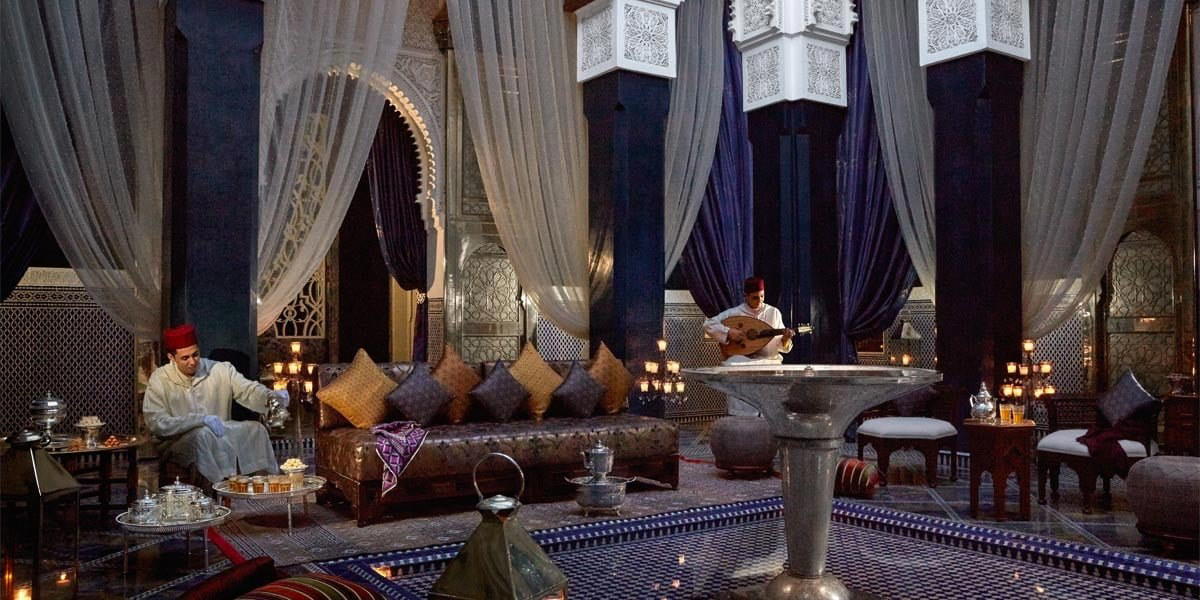
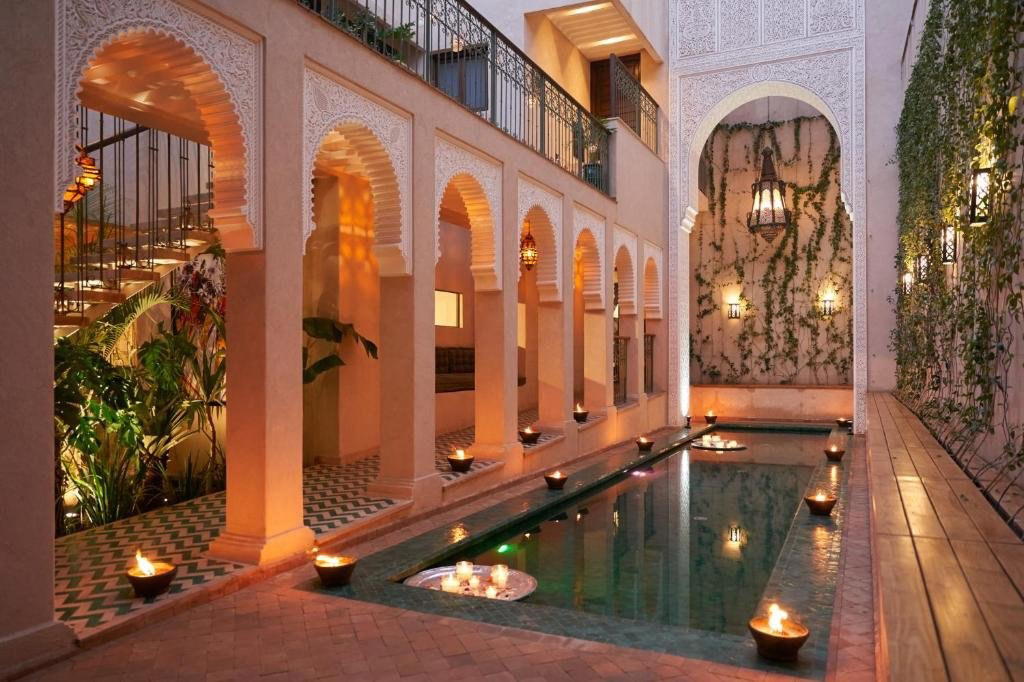
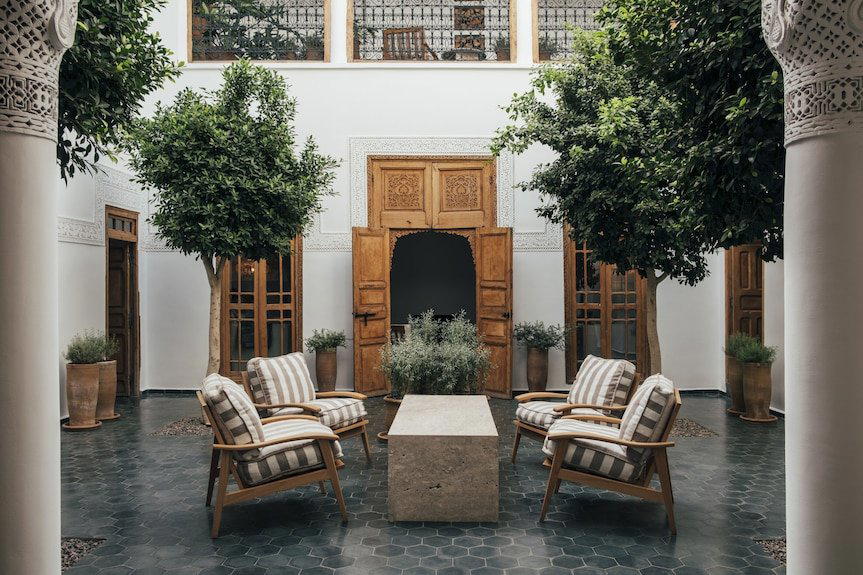
Marrakesh has developed a distinct category of dining that exists almost nowhere else in North Africa: the riad restaurant, where the architecture is so insistent that the food must either compete with it or surrender to it. The courtyard fountain, the cedar-carved ceilings, the geometry of the zellige tilework, these elements arrive before any dish does, and they set expectations that a mediocre kitchen cannot meet. At Riad Noir d'Ivoire, the property itself signals a particular register of restraint and material seriousness. Oban is a refined French and traditional Moroccan restaurant in Marrakesh, with an average price of about $50 per person. Oban, the restaurant operating within it at 31-33 Derb Jdid, inherits that positioning whether it seeks it or not.
Across the medina, the riad-dining circuit spans considerable range. At one end sit the large-production operations that move hundreds of covers through theatrical courtyard settings, relying on setting more than sourcing. At the other sit smaller, more deliberate tables where the guest count is low enough that the kitchen can make individual decisions per plate. Riad Noir d'Ivoire's residential scale pushes Oban toward the latter category, a positioning that aligns it more closely with Sesamo and Al Fassia in terms of intimacy and focus than with the grand-hotel format occupied by La Grande Table Marocaine at Royal Mansour.
How the Menu Speaks to the Room
In Marrakesh's stronger riad kitchens, menu architecture tends to follow one of two logics. The first is preservation: a deliberate focus on Moroccan classical cooking, slow-braised tagines, hand-rolled couscous, bastilla in its traditional pigeon-and-almond form, treated as repertoire worth protecting rather than updating. The second is translation: a menu that uses Moroccan spice logic as a grammar but writes new sentences with it, often incorporating European technique or non-Moroccan ingredients without losing the underlying flavour framework. Both approaches can produce serious food; the failure mode of the first is museum-piece stasis, and of the second, fusion incoherence.
Oban's position within Riad Noir d'Ivoire suggests it is operating in a milieu that values considered hospitality over volume. That context shapes what a menu should do: it cannot lean on spectacle, because the room is not built for spectacle. It must function at a pace that suits a residential conversion, unhurried courses, a service rhythm that treats the evening as sufficient in itself. Among Marrakesh's riad tables, the ones that sustain a serious reputation over time are those whose menus have internal coherence: a discernible point of view across courses, not a loose collection of Moroccan standards assembled to satisfy an international tourist brief.
For calibration against a wider Moroccan context, the question of menu coherence is one that tables from Berrada in Fes to Heure Bleue Palais in Essaouira each answer differently, and the answer tends to reflect the character of the property around it. Coastal addresses, like L'Araignée Gourmande in Oualidia, lean into seafood sourcing as the organising principle. Marrakesh medina kitchens have no such obvious anchor; their logic must come from somewhere else, tradition, training, or a deliberate editorial stance on Moroccan cooking's range.
The Medina Tier This Address Occupies
Derb Jdid is a residential derb in the northern medina, away from the Jemaa el-Fna's noise and the Mouassine quarter's concentration of high-visibility boutique riads. Arriving at 31-33 means navigating the medina's narrowing street logic on foot, which is not incidental: it filters the clientele before the door opens. Guests who reach a riad through the medina's residential network are, by definition, intentional visitors. They have made a booking, followed directions through streets that do not announce themselves, and arrived with some anticipation already in place.
That self-selection has implications for how the kitchen can pitch its offer. A restaurant in the Djemaa el-Fna's orbit must catch walk-in traffic; it must advertise its identity at the threshold. A restaurant reached through Derb Jdid does not have that obligation and cannot rely on that mechanism. Its menu is communicating to people who already decided to come, which is a different, and in many ways more demanding, context for a kitchen. The food must justify a deliberate journey, not merely satisfy an opportunistic appetite.
Within Marrakesh's broader dining tier, this address sits below the grand hotel productions, La Grande Brasserie by Hélène Darroze and the Royal Mansour table operate with infrastructure and investment that a riad setting cannot replicate, and outside the contemporary format occupied by addresses like +61 and Le Palace. The riad tier has its own coherence as a category, one that rewards visitors who understand what they are choosing.
Morocco's Wider Dining Circuit for Context
Oban is one table in a national dining circuit that has become considerably more varied in recent years. Casablanca has developed its own contemporary restaurant scene, with addresses like Cocoa Café and the heritage-anchored La Sqala: Café Maure occupying different registers. Tangier has its own emerging tables, including Azurita. Agadir's circuit, represented by places like Café Enjoy Agadir, operates in a tourist-resort economy that is structurally different from medina dining. For travellers building a Morocco itinerary around food, the riad restaurant format in Marrakesh remains distinct from anything available in these other cities, precisely because it is inseparable from its architectural and residential context.
For a broader map of where Oban sits among Marrakesh's restaurant options, our full Marrakesh restaurants guide covers the city's major tables across price tiers and formats. Internationally, the discipline required to run a serious kitchen inside a heritage property finds parallels in a different register at addresses like Atomix in New York City, where environmental design and culinary intent are similarly integrated, though the cultural and culinary language is entirely different.
Planning a Visit
The address, 31-33 Derb Jdid, Marrakesh 40000, requires arriving by foot through the medina from the nearest accessible point by vehicle. As with all derb addresses, building a margin into arrival time is sensible, particularly for evening sittings when the medina streets are at their most active. Given the residential scale of Riad Noir d'Ivoire, seat counts are likely to be limited, which means booking in advance is the operative approach rather than a precaution.
Reputation First
Comparable venues nearby, for context on price, style, and recognition.
| Venue | Cuisine | Price | Notes |
|---|---|---|---|
| ObanThis venue — the venue you are viewing | Refined French and Traditional Moroccan | $$$ | Not listed |
| Amal Gueliz Center - Restaurant | Authentic Moroccan | $$ | Gueliz |
| Pepe Nero | Italian-Moroccan Haute Cuisine | $$$ | Marrakech-Médina |
| La Famille | Fresh Vegetarian Mediterranean | $$ | Marrakech-Médina |
| La Villa des Orangers | French-Moroccan Fine Dining | $$$$ | Marrakech-Médina |
| Table III (La Table) | Refined Moroccan | $$$ | Marrakech-Médina |
Continue exploring
More in Marrakech
Restaurants in Marrakech
Browse all →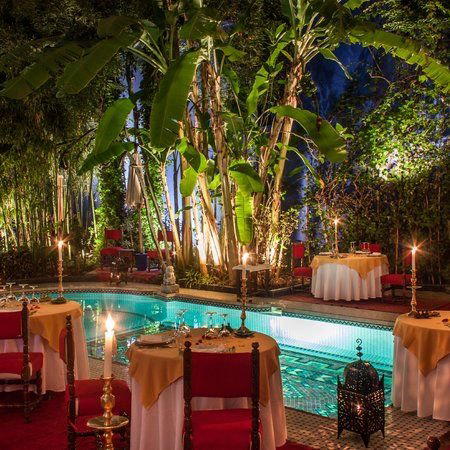
Bars in Marrakech
Browse all →
At a Glance
- Romantic
- Elegant
- Intimate
- Cozy
- Date Night
- Special Occasion
- Celebration
- Live Music
- Courtyard
- Wine Cellar
- Craft Cocktails
- Extensive Wine List
Current opening hours
- Monday
- 12–11 PM
- Tuesday
- 12–11 PM
- Wednesday
- 12–11 PM
- Thursday
- 12–11 PM
- Friday
- 12–11 PM
- Saturday
- 12–11 PM
- Sunday
- 12–11 PM
Hours can change for holidays and private events. Last verified .
Romantic candlelit courtyard around a shimmering pool with warm lighting from Moroccan lamps and open flames, enhanced by live pianist and singer.