
A Relais & Châteaux property occupying a riad-style palace within Essaouira's UNESCO-listed medina, Heure Bleue Palais anchors Moroccan coastal hospitality at one of the Atlantic coast's most characterful addresses. Under chef Ahmed Handour, the kitchen works within a tradition of slow-cooked, spice-layered Moroccan cuisine. it sits at the upper tier of Essaouira's dining scene.
Pearl is the En Primeur Club membership app — saves, bookings, and concierge access live there. Same editors, same standards.
- Address
- 2 Rue Ibn Batouta, Essaouira 44000, Morocco
- Phone
- +212 5 24 78 34 34
- Website
- heure-bleue.com
- Directions
- Get directions
 Saves & bookings on Pearl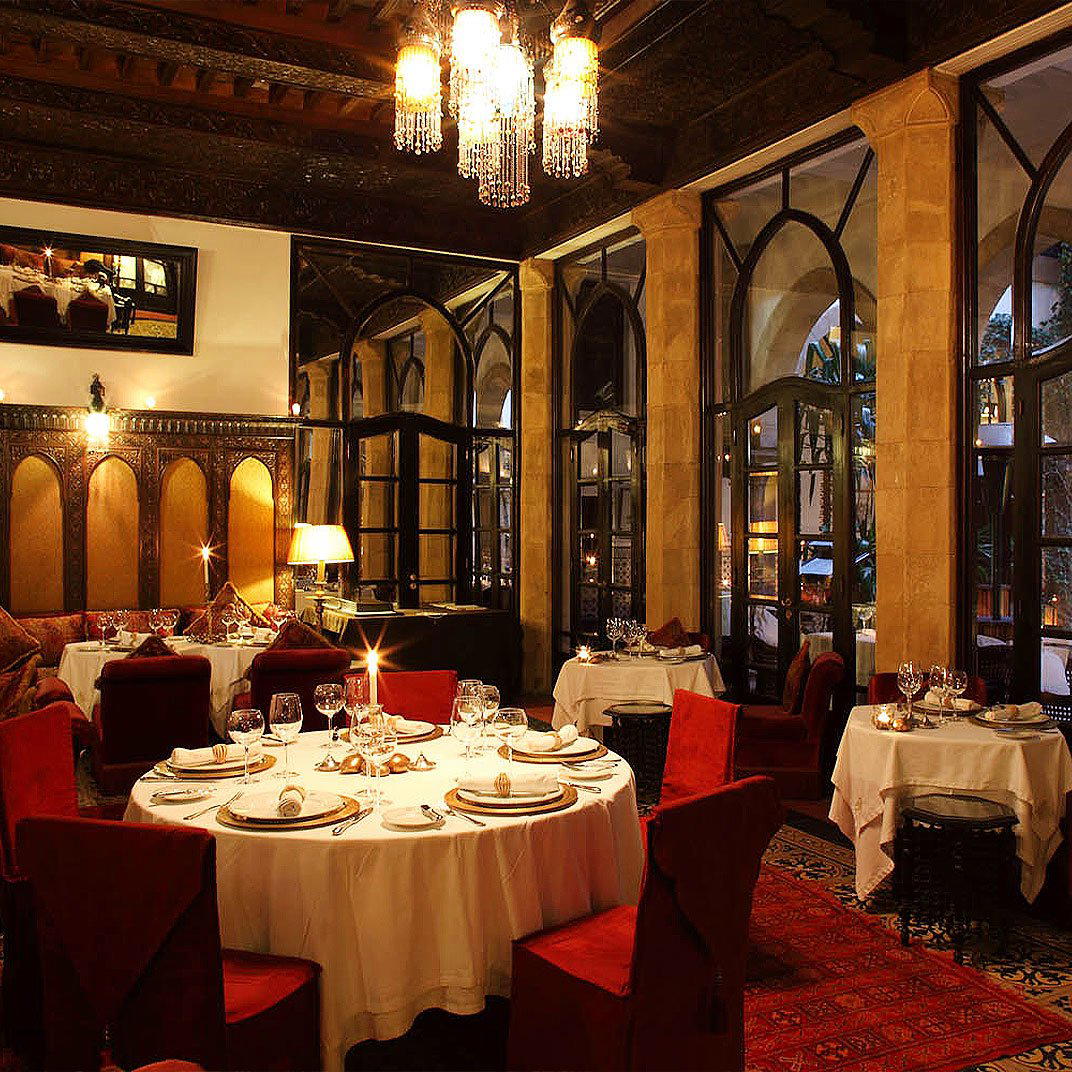
Where the Medina Slows Down
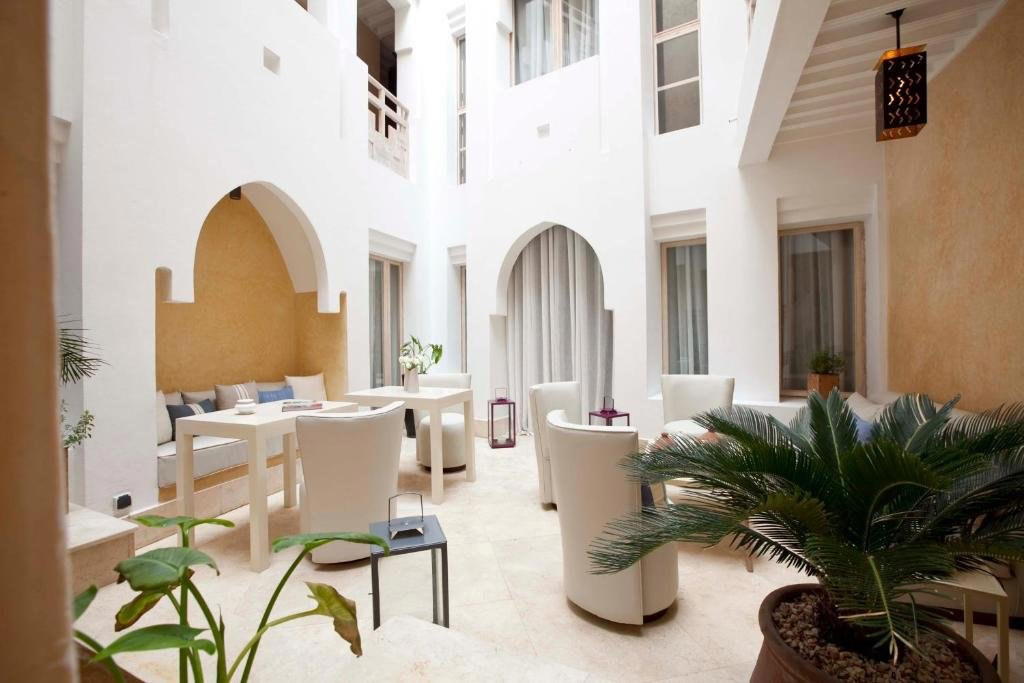
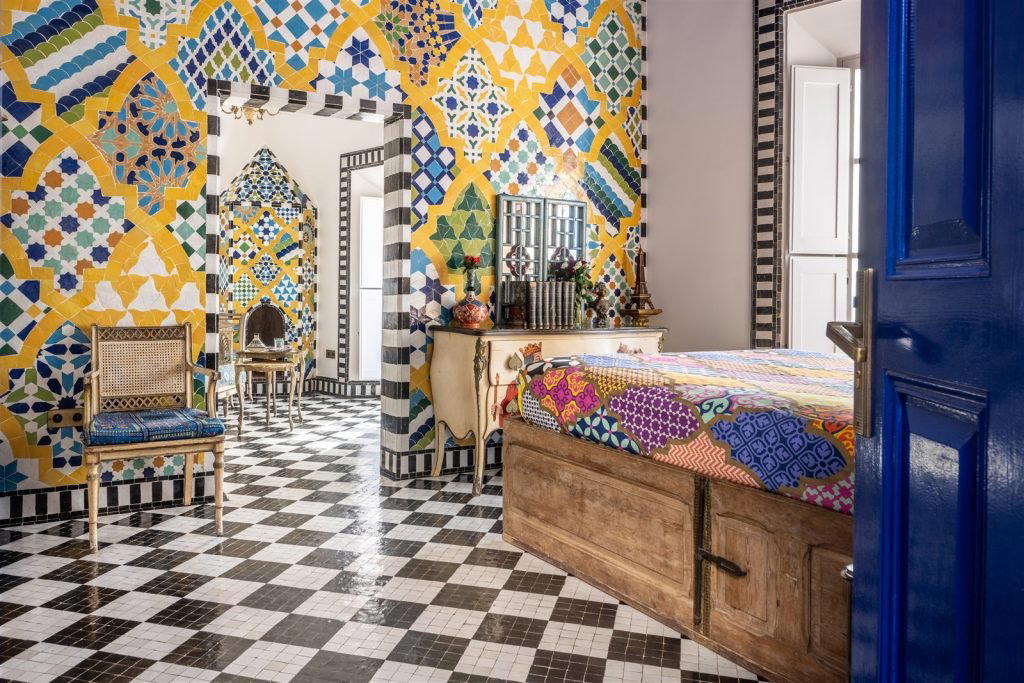
Approach Heure Bleue Palais through Rue Ibn Batouta and the medina's compressed geometry does most of the work before you even cross the threshold. The lanes narrow, the ambient noise of the port fades, and you arrive at a carved doorway that opens onto something considerably quieter than the street outside. This is the structural logic of the traditional Moroccan riad: all the noise goes outward, all the life turns inward. Essaouira's medina, a UNESCO World Heritage Site distinguished by its 18th-century Portuguese-influenced fortifications and remarkably intact street plan, gives properties like this one a specific kind of gravitational pull. You are not simply entering a hotel or restaurant — you are entering a built argument about what Moroccan hospitality looks and feels like.
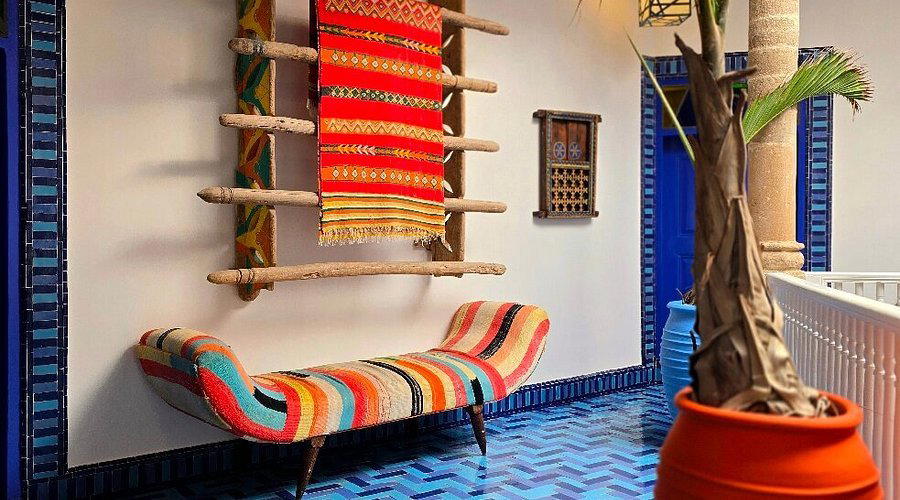
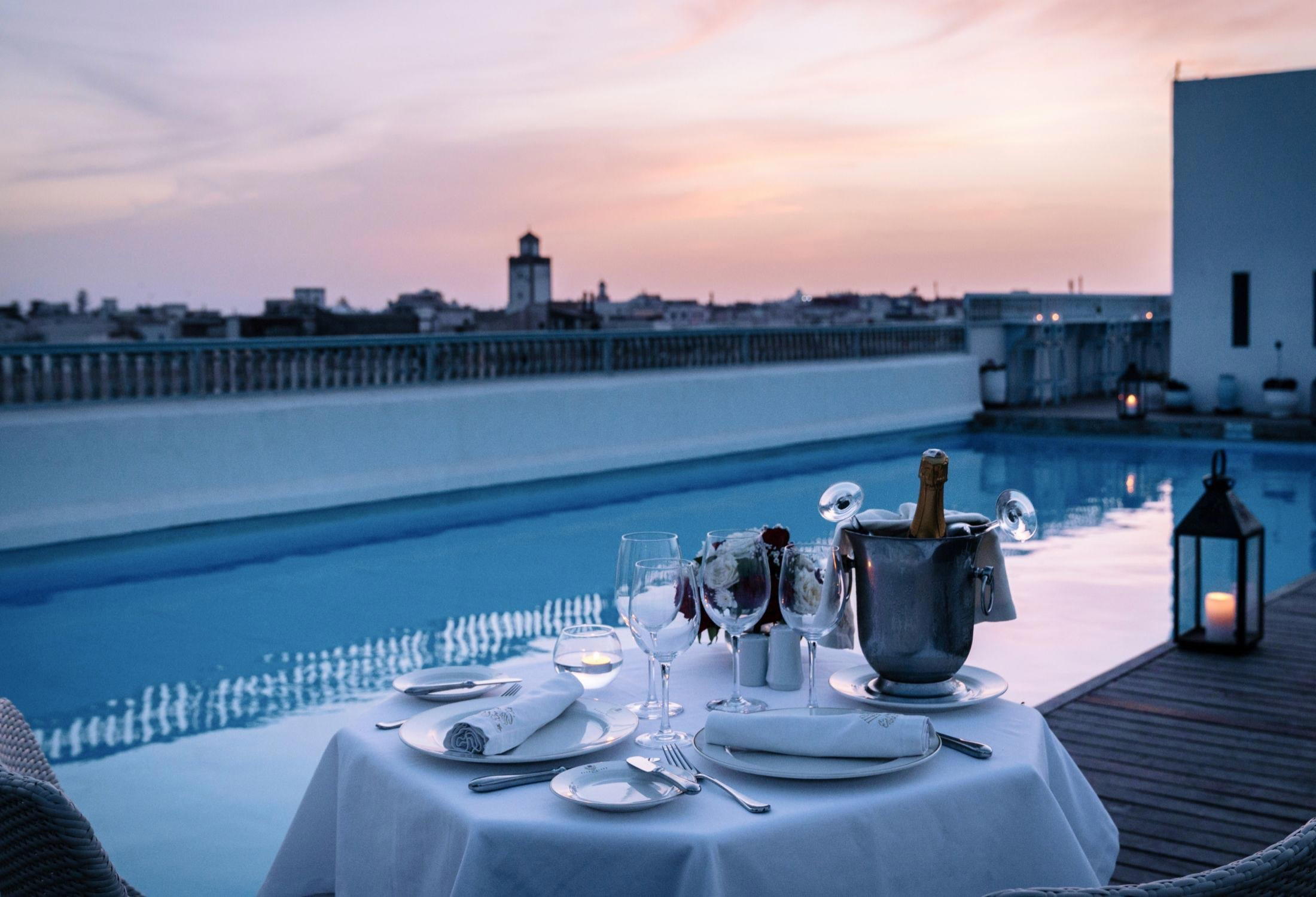
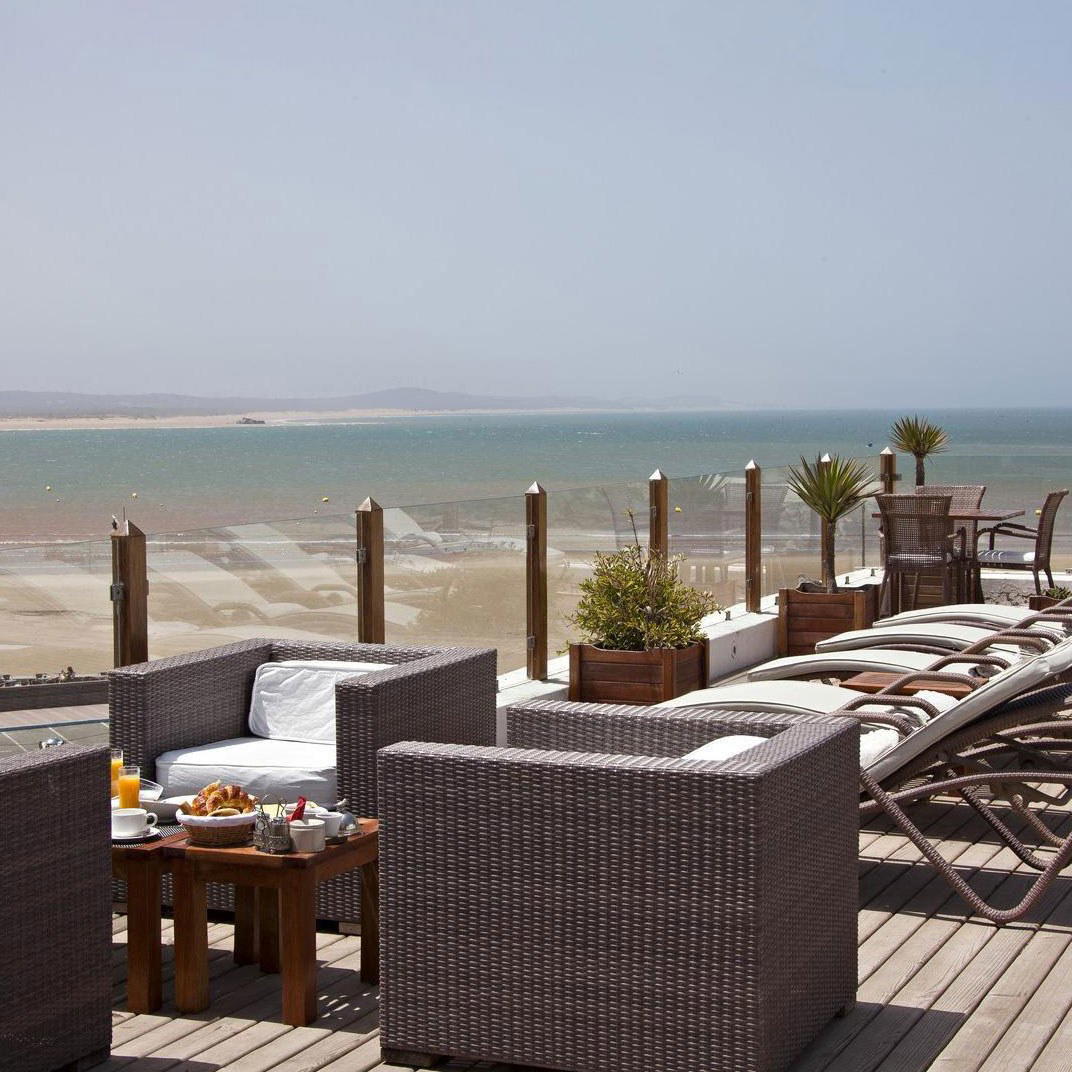
Heure Bleue Palais carries Relais & Châteaux membership, a designation that positions it within a global network of independently operated properties held to standards of cuisine, character, and service rather than brand uniformity. The lush interior patio and rooftop pool — both cited as the property's signature physical features, are not incidental amenities. In medina architecture, the courtyard is the building's emotional centre, the space around which everything else organises itself.
The Tradition Behind the Table
Moroccan coastal cuisine occupies a specific position within the country's broader culinary geography. Where inland cities like Marrakech and Fès built their reputations on long-braised tagines and the ceremonial weight of bastilla, the Atlantic coast introduced a different register: preserved lemon-cured fish, chermoula-dressed grills, and the briny immediacy of what arrives at port each morning. Essaouira sits at the intersection of both traditions. The town's historical role as a trading hub between sub-Saharan Africa, Europe, and the Arab world left its cuisine with a spice vocabulary that extends well beyond the coast's usual parameters.
Chef Ahmed Handour works within this inherited framework. In Moroccan fine-dining contexts, the opening spread functions as both welcome and statement of intent. The mezze logic, small dishes arriving together before any single plate claims the table, translates in Moroccan kitchens into a procession of salads, dips, and preserved accompaniments that set the flavour architecture for everything that follows. Harira or bessara might anchor one corner of the table; a dish of marinated olives and preserved lemon another; slow-cooked vegetable salads dressed with cumin and paprika filling the space between. The point is not abundance for its own sake but layering: each element intended to prime the palate for the heavier, slower-cooked dishes to come. Properties operating at Heure Bleue's tier within Moroccan hospitality treat this opening sequence with the same seriousness that a European fine-dining kitchen would apply to an amuse-bouche programme.
This tradition distinguishes Morocco's high-end table from comparable fine-dining scenes elsewhere. At restaurants like Le Bernardin in New York City or Alain Ducasse at Louis XV in Monte Carlo, the tasting menu format imposes a strict sequence. The Moroccan communal table inverts that logic: plurality is the format, and the skill lies in balancing the spread rather than pacing a procession. It is a different kind of culinary intelligence, and one that Essaouira's coastal ingredient quality makes particularly well-suited to expression.
Essaouira's Position in Morocco's Dining Circuit
Morocco's premium dining scene concentrates heavily in Marrakech and Casablanca. Properties like +61 in Marrakesh and Hôtel Le Doge in Casablanca operate within those cities' denser competitive environments, where multiple Relais & Châteaux members and international hotel brands overlap. Essaouira operates differently. Its visitor base skews toward travellers seeking a slower pace, the wind-scoured ramparts, the fishing port, the established arts and music culture associated with the Gnaoua World Music Festival each June. That selective visitor profile has kept the town's hospitality tier coherent rather than fragmented, with a handful of medina properties, Heure Bleue among them, holding most of the upper-tier positioning.
For broader context across Morocco's culinary geography, properties like Gayza in Fès and Château Roslane in Icr Iqaddar offer reference points for how different cities and regions handle the intersection of Moroccan tradition and contemporary dining ambition. Within Essaouira itself, Le Salon Oriental operates in the Moroccan Fusion space, drawing from the same medina setting but with a different culinary emphasis. Our full Essaouira restaurants guide maps the town's dining options across price points and styles.
The Relais & Châteaux affiliation also signals something about pace and format. Properties in that network are expected to deliver an experience that is measurably slower and more attentive than their surrounding context, not high-volume covers but a deliberate rhythm that matches the physical environment. In a medina where the afternoon light shifts incrementally and the Atlantic wind is a constant presence, that rhythm aligns with the town's own tempo.
Planning a Visit
Heure Bleue Palais is located at 2 Rue Ibn Batouta in Essaouira's medina, reachable via the property's email at heurebleue@relaischateaux.com or by telephone at +212 (0)524 78 34 34. The property's website at heure-bleue.com carries current room and dining details. Essaouira sits roughly 175 kilometres southwest of Marrakech along the coastal road, with the drive taking two to two and a half hours depending on traffic through the Chichaoua junction. Ménara Airport in Marrakech handles the majority of international arrivals for this stretch of coast. Within the medina, the property is accessible on foot from the main Bab Doukkala gate, though navigating the lanes is easier with the property's directions in hand. The rooftop pool makes the property particularly well-suited to visits outside the peak summer crowd months; spring and early autumn bring the clearest light and the most consistent Atlantic breeze without the August congestion.
For full planning across the city, our Essaouira hotels guide, bars guide, experiences guide, and wineries guide cover the broader scene. Those travelling with a wider Moroccan itinerary may also find context in our coverage of Le Petit Cornichon in Marrakech and L'Oliveraie in El Hajeb.
What Dish Is Heure Bleue Palais Famous For?
The property does not publish a single signature dish in available records, and chef Ahmed Handour's menu specifics are not documented in public sources. What the property's positioning within Moroccan coastal cuisine and its Relais & Châteaux membership suggest is a kitchen focused on the regional canon: opening spreads of marinated salads and preserved accompaniments, fish preparations drawing on Atlantic port supply, and the slow-cooked tagines that anchor any serious Moroccan table. The opening course, in this tradition, functions as the meal's anchor rather than its prologue.
How Heure Bleue Palais Essaouira compares with similar nearby venues.
| Venue | Cuisine | Awards |
|---|---|---|
| Heure Bleue Palais | Moroccan Coastal | Relais Chateaux Award (2025) |
| Le Grill de La Terrasse | Expression of the terroir | Not listed |
Recognition history
Dated appearances from independent guides and award organizations, with the underlying list record or original source where available.
Relais Chateaux Award
Relais Chateaux
Continue exploring
More in Essaouira
More from Chef Ahmed Handour
Browse all →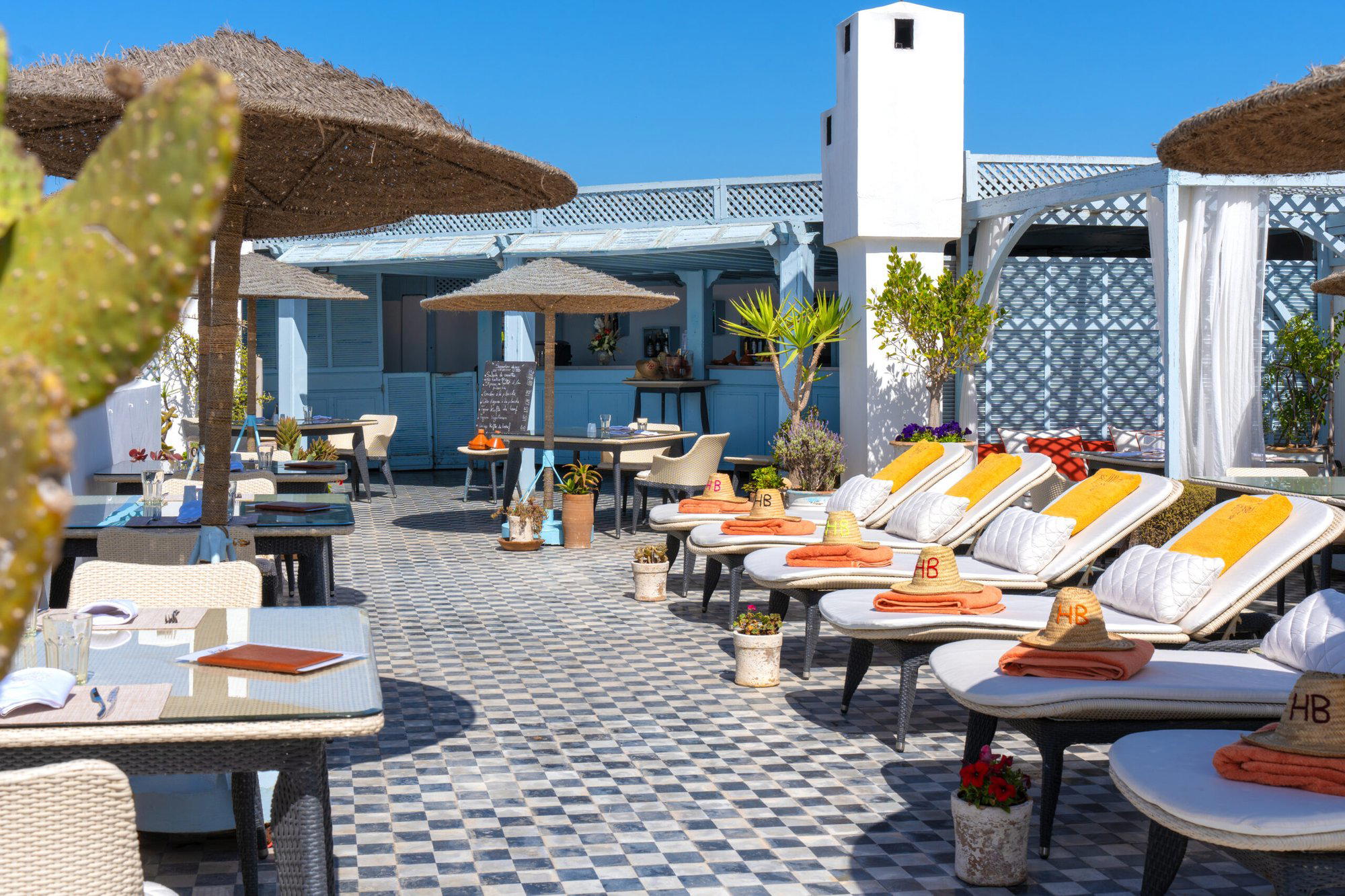
Restaurants in Essaouira
Browse all →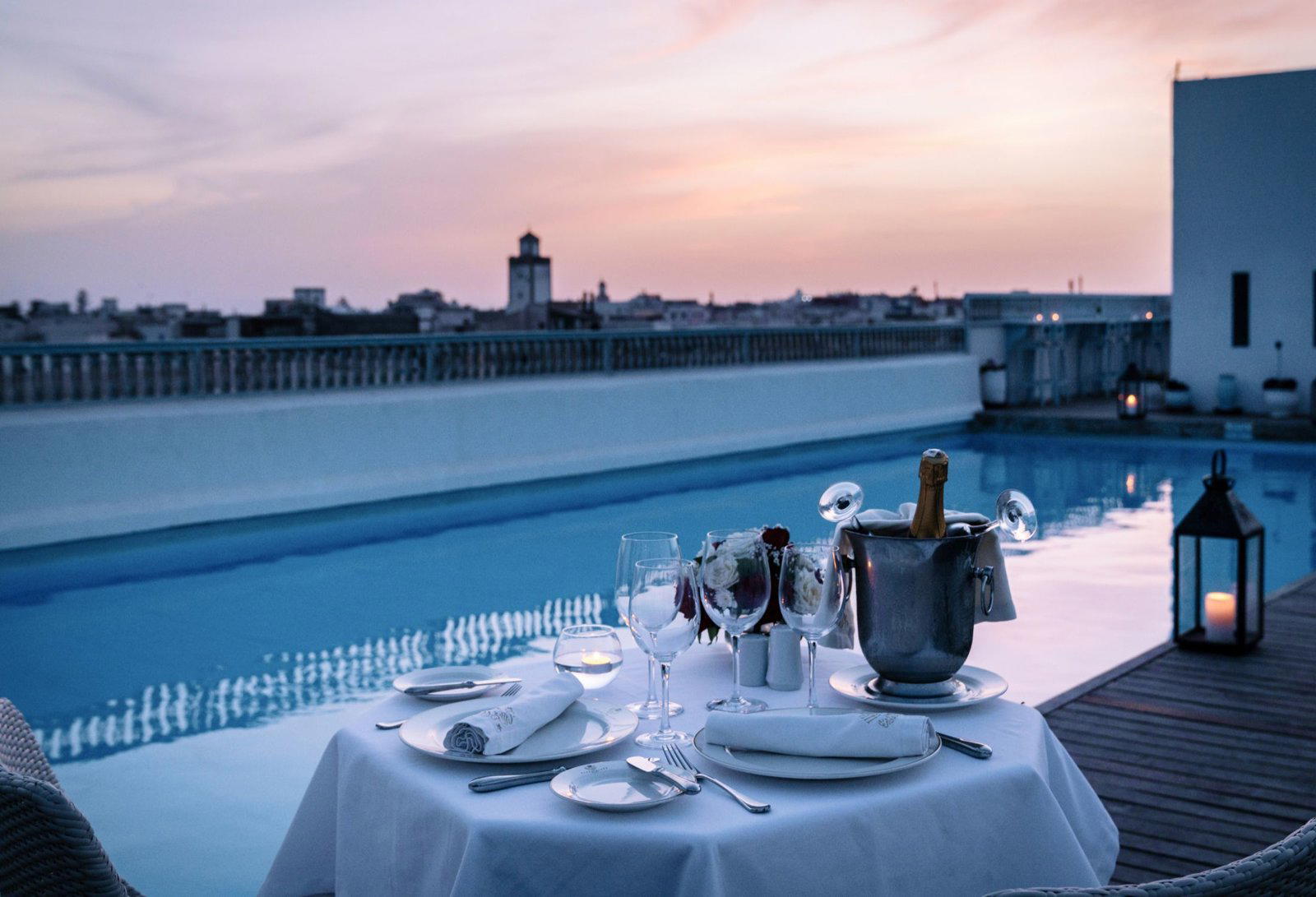
Bars in Essaouira
Browse all →
At a Glance
- Elegant
- Romantic
- Sophisticated
- Ornate
- Classic
- Date Night
- Special Occasion
- Celebration
- Terrace
- Hotel Restaurant
- Historic Building
- Rooftop
- Craft Cocktails
- Local Sourcing
- Street Scene
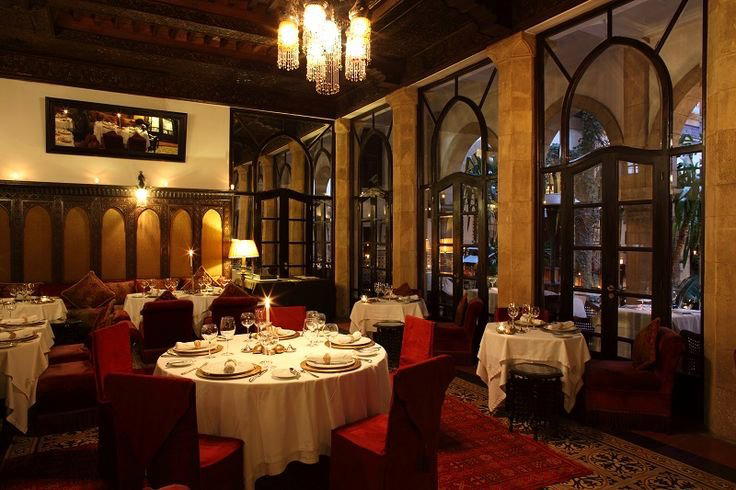
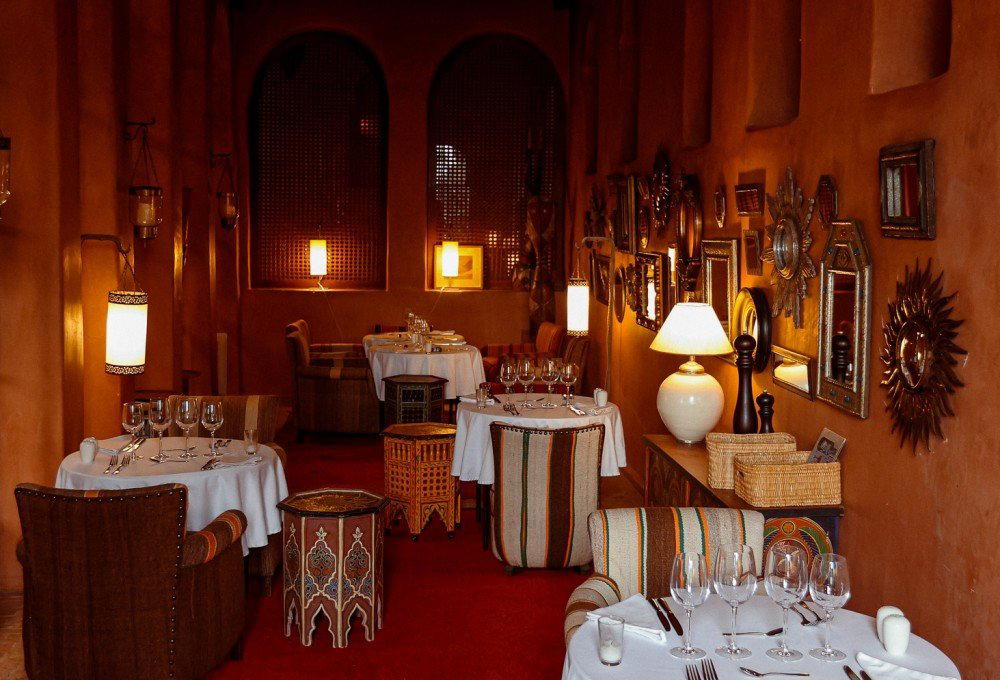
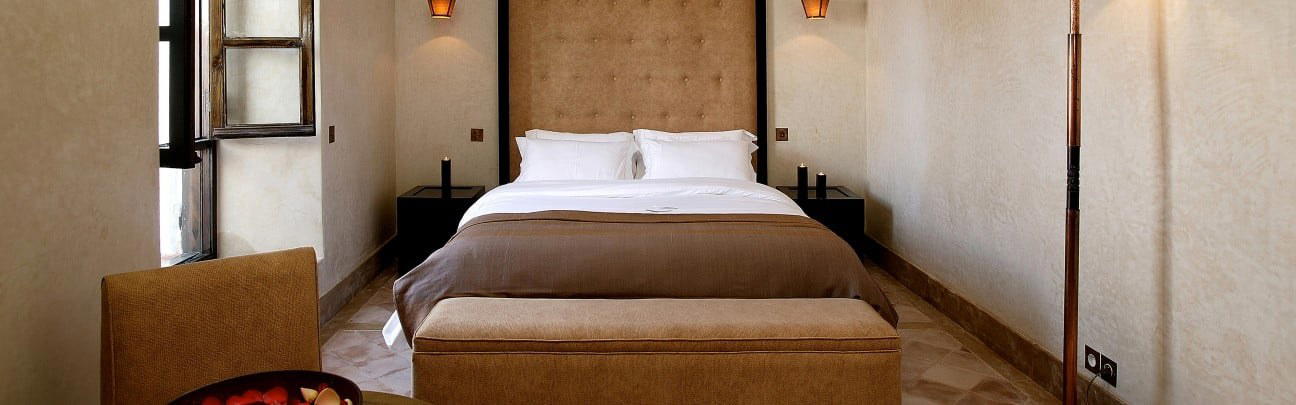
Elegant Moroccan lounge with sophisticated yet cozy atmosphere, colonial-inspired decor, warm lighting from glowing glass lamps, and relaxing courtyard greenery.
Know Before You Go
- Getting there
- 2 Rue Ibn Batouta, Essaouira 44000, Morocco