



Sesamo brings the Italian kitchen of Massimiliano Alajmo into the Royal Mansour, Marrakesh's most architecturally ambitious hotel. Chef Riccardo Barni works local Moroccan produce alongside imported Italian ingredients, framed by a dining room and sunset patio that rank among the medina-edge's most considered settings. La Liste places it at 89 points (2026), and it holds a Les Grandes Tables du Monde award and a World's 50 Best MENA ranking of #32 (2024).
Pearl is the En Primeur Club membership app — saves, bookings, and concierge access live there. Same editors, same standards.
- Address
- Rue Abou Abbas El Sebti, Marrakesh 40000, Morocco
- Phone
- +212 5 29 80 82 82
- Website
- royalmansour.com
- Directions
- Get directions
 Saves & bookings on Pearl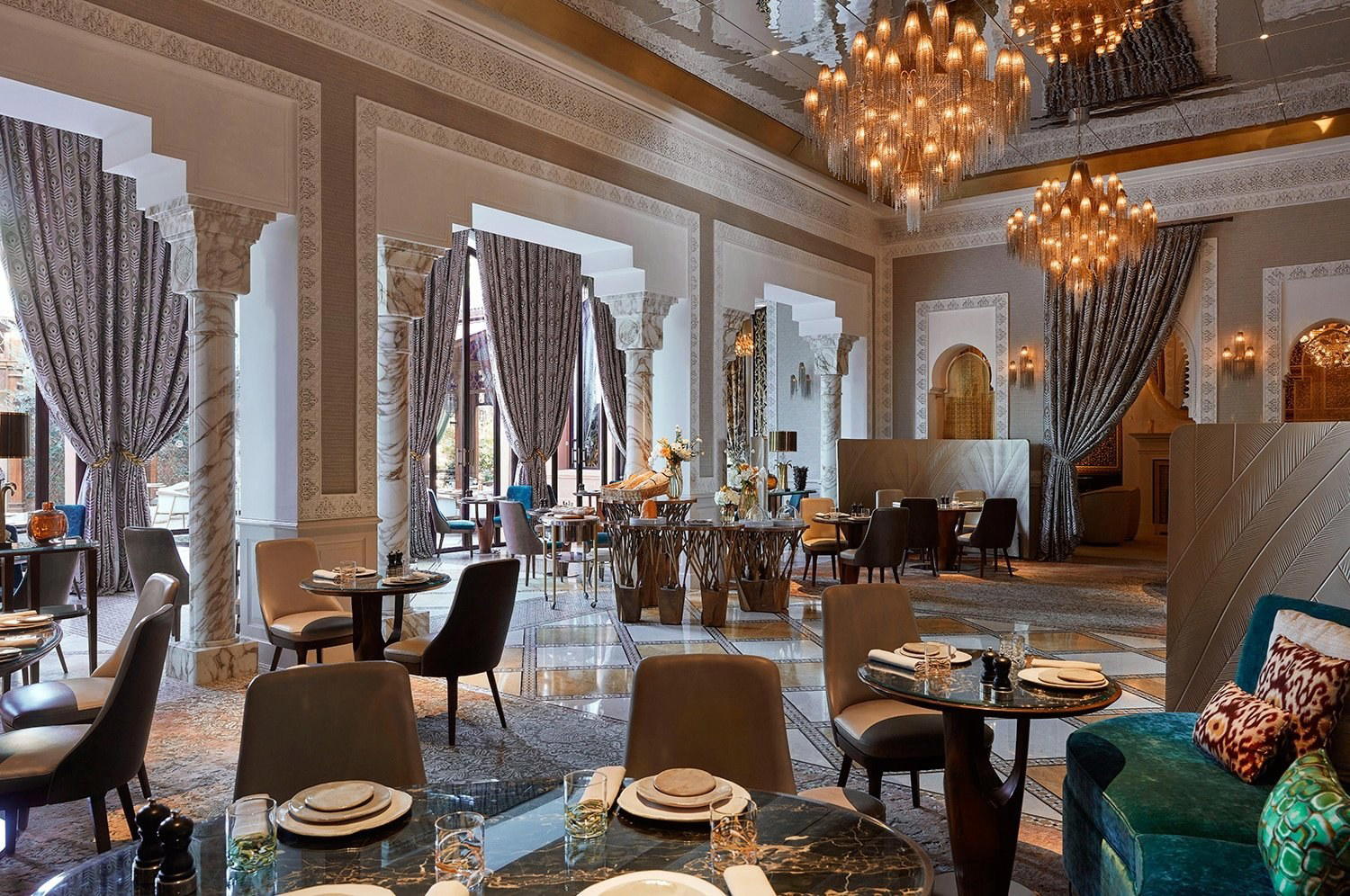
Italian Craft Inside Morocco's Most Scrutinised Hotel
The Royal Mansour Marrakesh sets a particular kind of expectation before any guest reaches a table. Built under royal commission and opened in 2010, the property is an exercise in architectural maximalism: 53 private riads connected by a network of underground corridors, each finished to a standard that makes most luxury hotels feel provisional. Dining inside that context carries its own weight. Sesamo operates within it as the hotel's Italian-led room, and the pressure of the address is, if anything, useful — it forces the kitchen to be precise rather than merely comfortable.
Italian restaurants placed inside grand hotels in non-Italian cities occupy a specific and sometimes awkward position. They must justify the cuisine's presence on foreign ground while resisting the pull toward menu conservatism that hotel kitchens can encourage. Sesamo's answer is to work with the tension rather than dissolve it: Massimiliano Alajmo, the Padua-based chef whose family restaurant Le Calandre has held three Michelin stars for over two decades, supplies the culinary framework, while Riccardo Barni operates the kitchen day to day. The arrangement places local sourcing and Italian technique in direct conversation — Moroccan ingredients treated through an Italian lens, with imported Italian products arriving where the local supply cannot match the requirement.
The Room, the Patio, and How to Choose Between Them
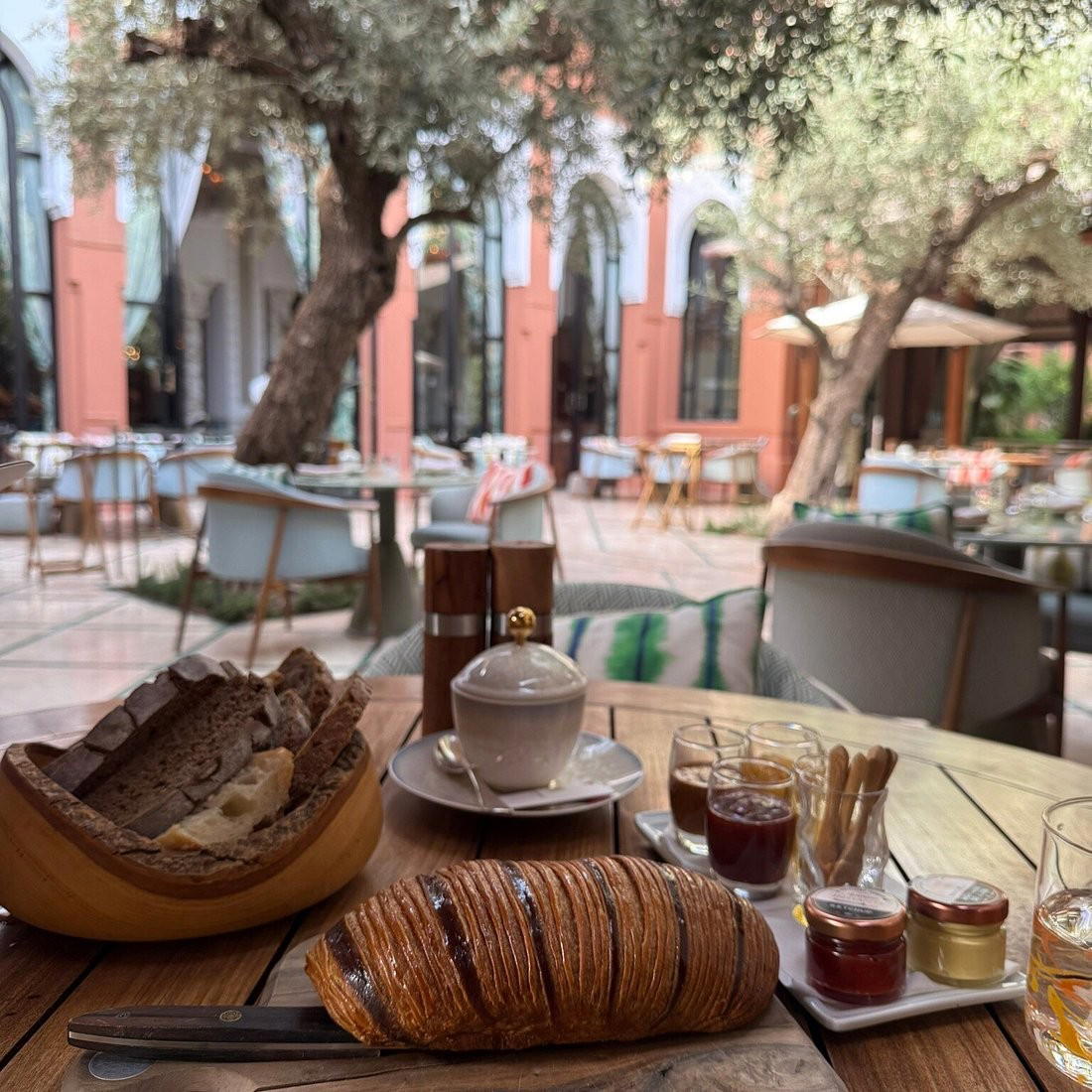
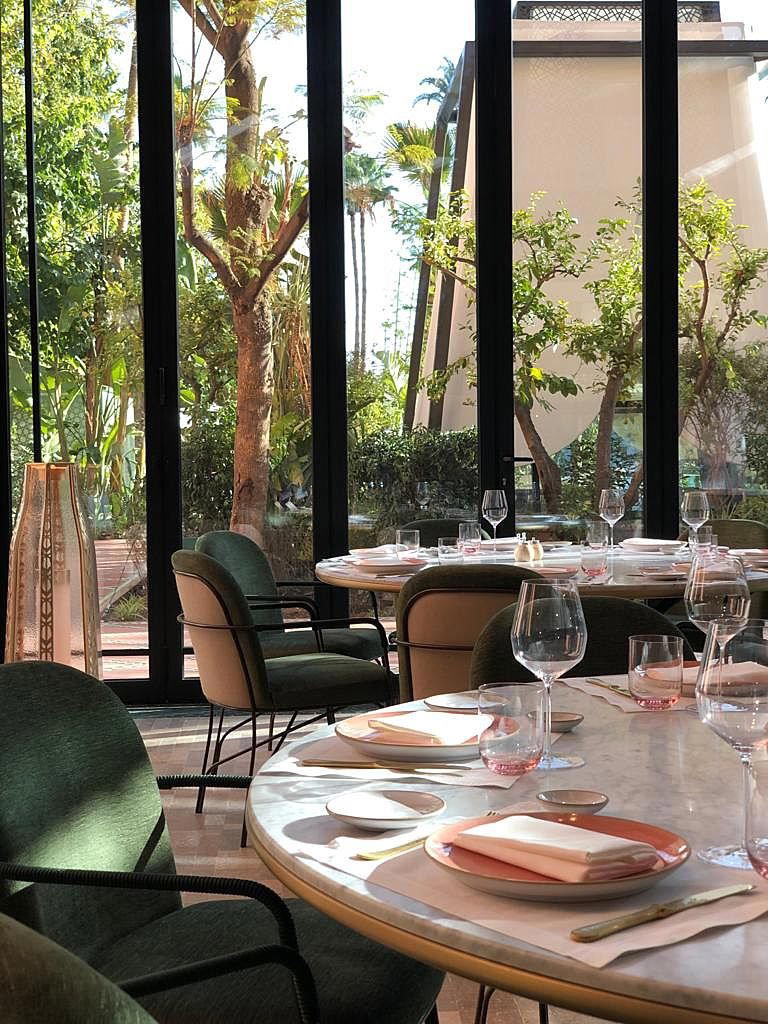
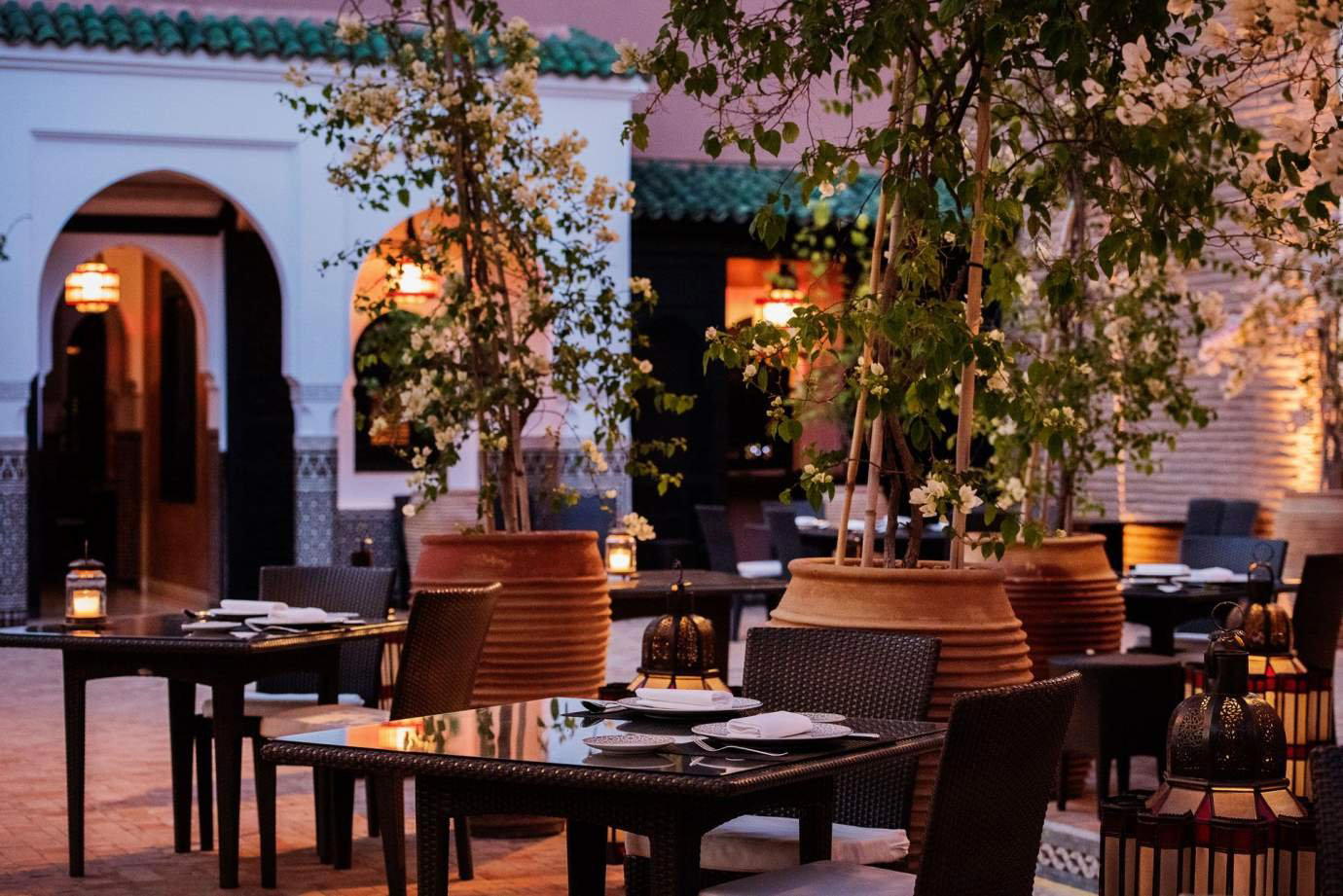
The dining room at Sesamo is the more formal of the two options. Its proportions and finish are consistent with what the Royal Mansour does throughout: craftsmanship that reads as architectural rather than decorative, with lighting calibrated for dinner rather than for photography. The patio is the more spontaneous choice and, for visitors arriving between October and April when Marrakesh evenings hold a particular quality of warmth without heat, it is frequently the better one. The alignment with sunset is not incidental, the patio faces west across the hotel gardens, and the hour between 6:30pm and 7:30pm in winter produces a light that shifts from amber to deep rose across the Atlas-facing sky. Choosing between the two spaces is partly a weather decision, but it is also a decision about pace: the room encourages a longer, more sequenced experience; the patio invites a more open rhythm.
Awards and Where Sesamo Sits in the Regional Picture
The recognition attached to Sesamo is specific enough to be useful for placing it correctly. La Liste's 2026 ranking assigns it 89 points, a score that positions it among the upper tier of North African restaurant entrants in that list, a list that evaluates on culinary consistency rather than novelty alone. The Les Grandes Tables du Monde membership (2025) is a peer-selected designation that connects the restaurant to a network of houses committed to classical service and kitchen craft, predominantly European in membership but increasingly international. The World's 50 Best MENA ranking at #32 in 2024, meanwhile, places it inside a competitive regional set that includes some of the strongest addresses in Dubai, Beirut, and Cairo.
Within Marrakesh itself, the relevant comparison is less with other Italian kitchens, there are very few operating at this tier, and more with the city's other high-ambition hotel restaurants. La Grande Table Marocaine at the Royal Mansour operates the Moroccan fine-dining proposition on the same property, which means a visitor staying at the hotel faces a genuinely differentiated choice rather than a redundant one. La Grande Brasserie by Hélène Darroze represents another French-European perspective in the city, while Dar Moha anchors the more independent, Moroccan-rooted end of the fine-dining range. Sesamo's position is distinct: it is the address for someone who wants European culinary rigour applied to Moroccan raw material, within a setting that removes most logistical friction.
The Wine Question at an Italian Table in a Muslim-Majority City
The editorial angle that deserves the most attention at Sesamo, and one that is almost never discussed seriously, is what a credible Italian restaurant wine program looks like when the surrounding city has limited wine infrastructure and a predominantly non-drinking local culture. Morocco is not a dry country; it has a wine industry centred in the Meknes and Benslimane regions, and the Royal Mansour holds a full alcohol licence. But the logistical reality of sourcing, storing, and rotating a serious Italian cellar in Marrakesh is meaningfully different from doing the same in Milan or London.
Sesamo's Italian framework implies a wine list that should, at minimum, reflect the regional diversity of the Italian peninsula: the structured reds of Piedmont and Tuscany alongside the more textural whites of Friuli and the Campanian coast. Whether the cellar extends to aged Barolo or serious Brunello is a question the house would need to answer directly, but the Les Grandes Tables du Monde membership does carry implicit service standards that include sommelier competence. The more interesting pairing question is how Moroccan wine appears alongside Italian selections. Labels from Château Roslane in the Meknès appellation and producers from around El Hajeb have raised the quality ceiling for Moroccan viticulture considerably over the past decade, and a kitchen that explicitly uses local ingredients should, logically, carry local bottles. For visitors interested in Moroccan wine specifically, the broader context is worth exploring in our full Marrakesh wineries guide.
Marrakesh's European Restaurant Tier in Broader Context
Marrakesh has long attracted European-trained chefs and international hotel groups, but the city's restaurant hierarchy has historically been Moroccan-led, riad dining rooms and palace settings dominating the high end. The past decade has shifted that balance somewhat. Addresses such as Farasha Farmhouse-Mouton Noir and Le Petit Cornichon represent the more independent, neighbourhood-scale end of the European-influenced spectrum in the city. +61 represents another perspective. Sesamo occupies a different position: hotel-anchored, awards-verified, and operating within a kitchen lineage that connects it to one of Italy's most decorated culinary families.
For visitors comparing Sesamo against what else Moroccan cities offer at a similar international standard, the comparison extends beyond Marrakesh. Gayza in Fès and Heure Bleue Palais in Essaouira represent different city characters, while Hôtel Le Doge in Casablanca offers the closest urban equivalent of the grand hotel dining format. Outside Morocco, the reference points shift to a different tier: Le Bernardin in New York and Atomix in New York City illustrate what sustained award recognition looks like at the upper end of the global restaurant market, against which Sesamo's MENA and La Liste placements are the relevant calibration points.
Planning a Visit
Sesamo sits within the Royal Mansour on Rue Abou Abbas El Sebti in Marrakesh, which places it at the edge of the medina and accessible from both the Hivernage district and the old city on foot or by short taxi. The restaurant serves hotel guests and outside reservations, though table availability at the patio during the high season (November through March) tightens considerably. Booking through the Royal Mansour's central reservations is the direct route; no independent website or phone number is listed separately for Sesamo. Dress expectations inside a Royal Mansour dining room sit at smart-casual as a floor, with the room leaning toward the more formal end of that range in the evening. For broader orientation across the city's dining, drinking, and hotel options, our full Marrakesh restaurants guide, bars guide, hotels guide, and experiences guide cover the city's full range.
Budget Reality Check
| Venue | Price | Awards |
|---|---|---|
| SesamoThis venue — the venue you are viewing | Globally renowned chef Massimiliano Alajmo brings the culinary delights of Italy to beguiling Marrakech with his restaurant Sesamo Both local ingredients and imported Italian delicacies are spun into gold by chef Riccardo Barni Found in the chic Royal Mansour Marrakech hotel, guests can opt to enjoy the luxurious dining room, or enjoy the elegant patio, where diners can take in the sunset.; La Liste Top Restaurants (2026): 89pts; Les Grandes Tables Du Monde Award (2025); World's 50 Best Restaurants MENA 2024 - Rank #32 | This venue |
| La Grande Table Marocaine - Royal Mansour | World's 50 Best | Moroccan Cuisine |
| L’Italien par Jean-Georges | French Moroccan | Not listed |
| La Villa des Orangers | Moroccan Cuisine | Not listed |
| Le Jardin d'Hiver | Moroccan Traditional | Not listed |
| Palais Ronsard | Moroccan French | Not listed |
Recognition history
Dated appearances from independent guides and award organizations, with the underlying list record or original source where available.
La Liste Top Restaurants
La Liste
Les Grandes Tables du Monde Member
Les Grandes Tables du Monde
World's 50 Best MENA's Best Restaurants #24
World's 50 Best
World Culinary Awards Africa's Best Fine Dining Hotel Restaurant 2025 #1
World Culinary Awards
World's 50 Best MENA's Best Restaurants #32
World's 50 Best
Continue exploring
More in Marrakech
Restaurants in Marrakech
Browse all →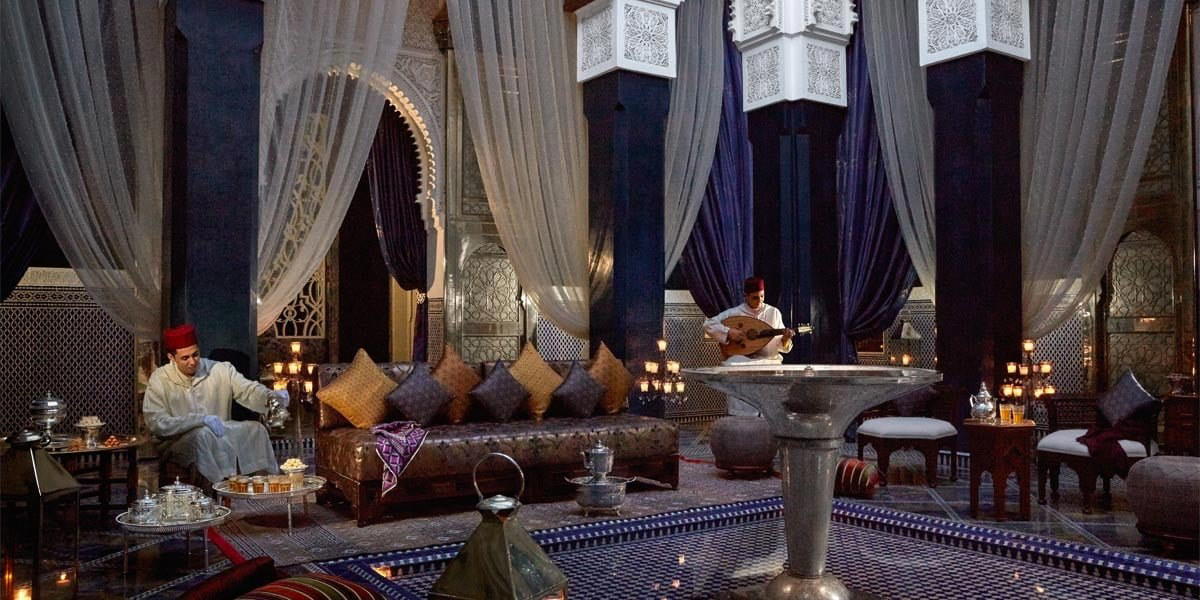
Bars in Marrakech
Browse all →

Hotels in Marrakech
Browse all →
Wineries in Marrakech
Browse all →
At a Glance
- Elegant
- Sophisticated
- Ornate
- Intimate
- Special Occasion
- Date Night
- Celebration
- Terrace
- Hotel Restaurant
- Open Kitchen
- Extensive Wine List
- Local Sourcing
- Garden
Current opening hours
- Monday
- 7–10:30 PM
- Tuesday
- 7–10:30 PM
- Wednesday
- 7–10:30 PM
- Thursday
- 7–10:30 PM
- Friday
- 7–10:30 PM
- Saturday
- 7–10:30 PM
- Sunday
- 12–4 PM, 7–10:30 PM
Hours can change for holidays and private events. Last verified .
Ornate interiors resembling a classic Venetian palace with high ceilings, sumptuous drapes, candlelit tables, and a refined calm atmosphere.
Know Before You Go
- Getting there
- Rue Abou Abbas El Sebti, Marrakesh 40000, Morocco