Google: 4.8 · 102 reviews

Inside The Okura Tokyo's Forbes Travel Guide Five-Star property in Toranomon, Nouvelle Epoque operates at the intersection of French classical technique and Japanese seasonal sourcing. The menu moves from truffle-flavored eggs Benedict at breakfast through kaiseki-informed dinner courses, all served under a dress code — jackets required for gentlemen — that signals the restaurant's formal register. An extensive wine cellar, displayed behind glass, anchors a beverage program weighted toward French bottles and champagnes.
 Discover on Pearl
Pearl is the En Primeur Club membership app — saves, bookings, and concierge access live there. Same editors, same standards.
Where French Classicism and Japanese Seasonality Meet
The Okura Tokyo has been one of the city's defining luxury hotel addresses since the original building opened in 1962, and its dining rooms have long reflected the particular cultural moment the hotel was designed to represent: postwar Japan opening to European influence while remaining grounded in its own aesthetic traditions. Nouvelle Epoque, the hotel's French restaurant occupying the fifth floor of the Okura Heritage tower at 2-10-4 Toranomon, Minato City, inhabits that intersection with unusual consistency. While Tokyo has spent two decades producing hybrid Franco-Japanese formats, few operate at this level of formal commitment to both traditions simultaneously.
The broader category of high-end French dining in Tokyo is well-populated. Restaurants like L'Effervescence and Sézanne have built international reputations around French technique applied to Japanese ingredients. Crony sits further along the innovative spectrum. Nouvelle Epoque occupies a different position in this peer set: it leans into the classical European register — both in its menu architecture and its interior — rather than chasing the progressive-tasting-menu format that dominates the city's ¥¥¥¥ French tier.
The Ritual of the Meal
There is a particular discipline to how Nouvelle Epoque structures an evening that separates it from the more casual end of hotel dining. The dress code , jackets required for gentlemen , is not incidental. In a city where smart-casual has gradually overtaken formal requirements even in top-tier restaurants, the enforcement of a dress code reshapes the psychological contract between guest and kitchen before a single course arrives. The meal becomes an occasion rather than a transaction.
That intentionality extends to the pacing of the menu itself. The format spans all three meal periods: a breakfast menu built around dishes like truffle-flavored eggs Benedict, a lunch service that includes preparations such as boar carbonnade, and a dinner menu where the kitchen reaches toward more elaborate combinations, including queen crab with flounder. This all-day structure, unusual for a restaurant operating at this price register, speaks to the hotel-dining model Nouvelle Epoque was built around: the guest who dines multiple times within the same stay, each meal calibrated to a different rhythm and appetite.
The ritual quality is reinforced at the table through small, accumulated details. French breads arrive with a selection of butters , smoked, fermented, and flavored , that announce the kitchen's attention to what other restaurants treat as incidental. Barley tea, a marker of Japanese hospitality, finds its way onto tables as a counterpoint to the French wine list. These are not accidental juxtapositions. They reflect a menu philosophy where Japanese ingredients and customs are woven into a French structural framework rather than placed beside it.
The Menu: Japanese Ingredients, French Architecture
Under Chef Shinichi Ikeda, the kitchen sources locally across the menu's core ingredients: meats, vegetables, and seafood are drawn from Japanese producers, with sustainability criteria applied to the seafood program. The Japanese influence is specific rather than gestural. Shungiku, the leafy green used in both traditional Japanese cooking and shabu-shabu, appears on plates. Yuzu provides the citrus register that lemon would occupy in a conventional French kitchen. Japanese pepper adds heat in a mode distinct from black pepper or Espelette.
The menu carries both a seasonal rotation and a set of permanent fixtures that return regardless of the time of year. Fine cuts of beef, fresh foie gras, local artichokes, and French caviar are among the year-round offerings that regulars organize their visits around. The combination of seasonal responsiveness and anchoring permanents is a format borrowed more from kaiseki tradition than from the French brigade system, even if the plating language , gold-and-white service ware, architectural presentation , reads as European. This kind of structural dialogue between the two cuisines is what distinguishes Nouvelle Epoque from restaurants that merely describe themselves as Franco-Japanese.
For comparison, the Franco-Japanese synthesis is being pursued at different registers elsewhere in the country. HAJIME in Osaka works at the experimental end. Gion Sasaki in Kyoto approaches the same question from a kaiseki foundation. akordu in Nara brings a European wine sensibility to a Japanese rural setting. Nouvelle Epoque's position , French-dominant, hotel-anchored, formally dressed , is its own distinct answer to a question the Japanese dining scene has been asking for decades.
The Room and the Wine
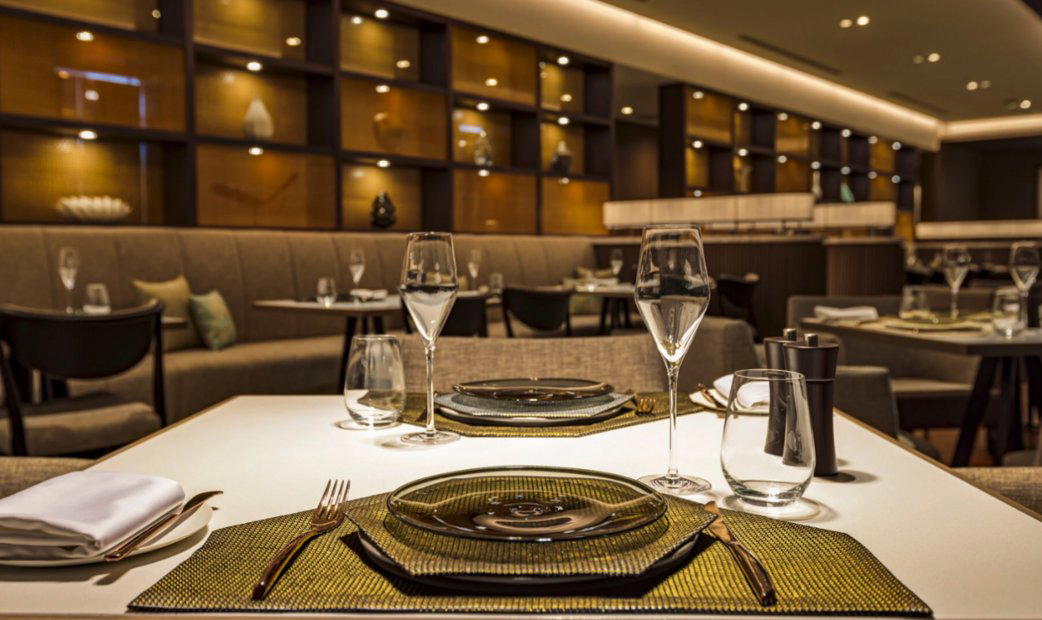
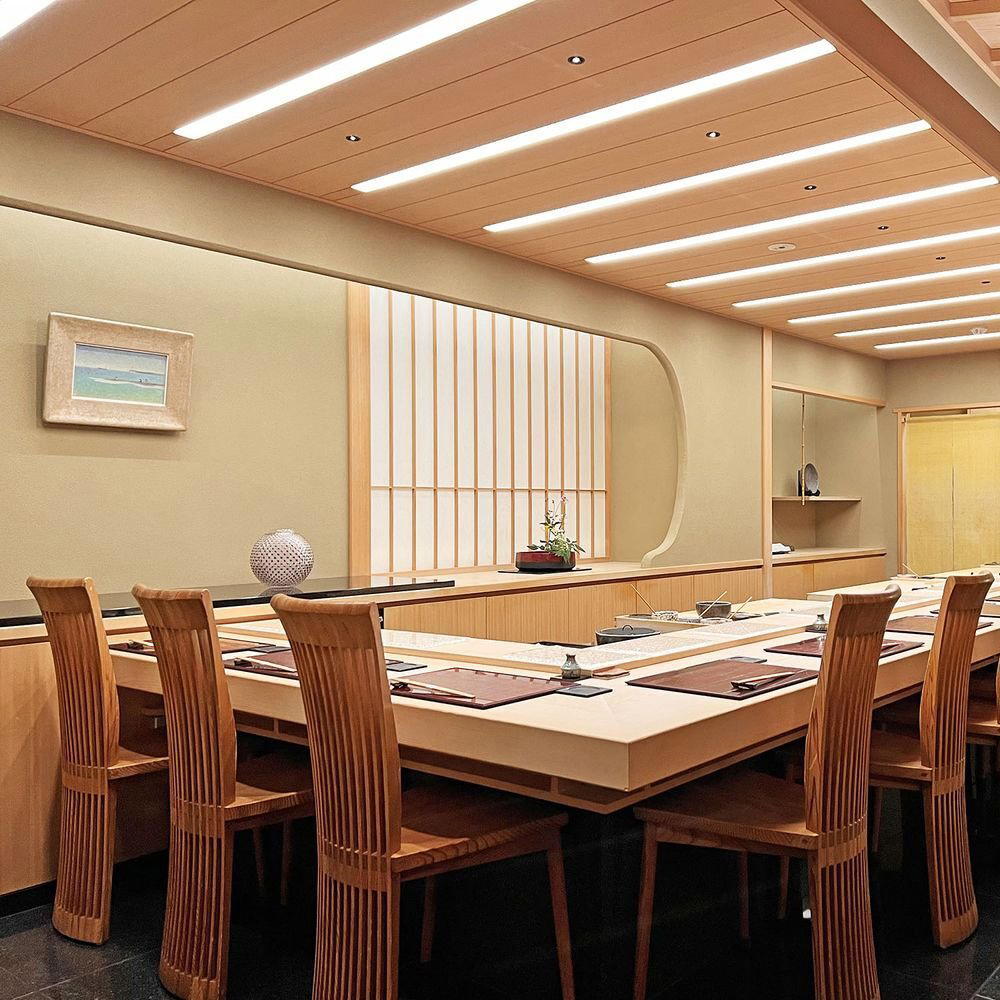
The interior works in pale gold, ecru, and beige, with floor-to-ceiling windows that draw in natural light during the day and shift the room toward a warmer, chandelier-lit register after dark. White flowers appear as part of the evening service. The effect is a space that changes character across the day without requiring architectural intervention , the light does the work. By the standards of Tokyo's newer fine-dining rooms, which tend toward raw materials and considered minimalism, Nouvelle Epoque reads as formally European. That is, almost certainly, the point.
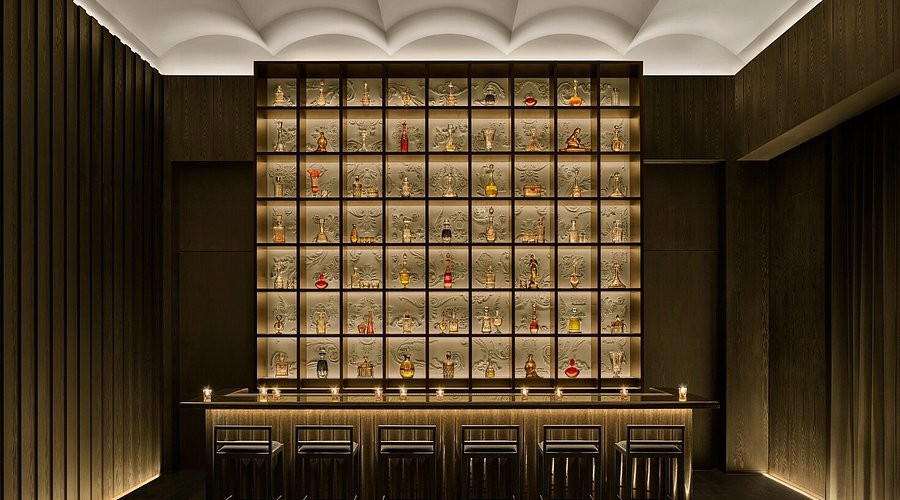
The wine program is displayed behind glass as part of the room's visual architecture, a presentation that treats the cellar as both inventory and statement. French bottles and champagnes anchor the list, with international selections alongside. The inclusion of a non-alcoholic champagne rosé reflects an accommodation of contemporary dining preferences without compromising the program's overall character.
Tokyo's broader fine-dining wine culture has grown considerably over the past decade, and restaurants like Harutaka and RyuGin have developed wine programs that rival dedicated European counterparts. Nouvelle Epoque sits within that trend while retaining a Francophile center of gravity that aligns with the kitchen's overall orientation.
For those planning a broader visit, our full Tokyo restaurants guide maps the city's dining scene by category and neighborhood. The Tokyo hotels guide covers the full range of accommodation options, while the Tokyo bars guide and Tokyo experiences guide extend the picture further. Beyond Tokyo, comparable levels of precision-led cooking appear at Goh in Fukuoka, 1000 in Yokohama, and 6 in Okinawa. For a transatlantic reference point on French technique applied with similar formality, Le Bernardin in New York City and the more progressive Atomix offer instructive comparisons. Tokyo's winery scene rounds out the broader drinks picture for those interested in domestic Japanese producers.
Know Before You Go
- Location: 5th floor, Okura Heritage, 2-10-4 Toranomon, Minato City, Tokyo 105-0001
- Hotel: The Okura Tokyo , Forbes Travel Guide Five-Star rated
- Dress code: Smart elegant; jackets required for gentlemen
- Meal periods: Breakfast, lunch, and dinner service available
- Reservations: Recommended
- Parking: Self-parking and valet parking available
- Dietary options: Vegetarian and gluten-free options available
- Private dining: Available on request
- Google rating: 4.8 (88 reviews)
What Do Regulars Order at Nouvelle Epoque?
The year-round fixtures on the menu function as the kitchen's signature anchors: fine cuts of beef, foie gras, local artichokes, and French caviar return each season regardless of what else rotates. Among the meal-specific items, the truffle-flavored eggs Benedict at breakfast has become a reference point for the hotel's regular guests, and the bread service with its trio of butters (smoked, fermented, and flavored) draws consistent attention as a marker of how much care the kitchen applies to what is, technically, an amuse before the amuse. The wine list, particularly the champagne selection and the non-alcoholic champagne rosé, gives regulars a reason to treat the room as a destination rather than a convenience. Forbes Travel Guide's Five-Star recognition of the parent hotel provides the baseline credential; the return-visit patterns of the guest profile suggest that the restaurant sustains interest well beyond a single occasion.
Cuisine-First Comparison
A compact peer snapshot based on similar venues we track.
| Venue | Cuisine | Awards | Notes |
|---|---|---|---|
| Nouvelle Epoque | Japanese Modern | Nouvelle Epoque is unique to Tokyo for the European elegance shown in both its m… | This venue |
| Harutaka | Sushi | Michelin 3 Star | Sushi, ¥¥¥¥ |
| RyuGin | Kaiseki, Japanese | Michelin 3 Star | Kaiseki, Japanese, ¥¥¥¥ |
| L'Effervescence | French | Michelin 3 Star | French, ¥¥¥¥ |
| HOMMAGE | Innovtive French, French | Michelin 2 Star | Innovtive French, French, ¥¥¥¥ |
| MAZ | Innovative | Michelin 2 Star | Innovative, ¥¥¥¥ |






At a Glance
- Elegant
- Sophisticated
- Quiet
- Classic
- Intimate
- Business Dinner
- Date Night
- Special Occasion
- Celebration
- Hotel Restaurant
- Private Dining
- Garden
- Panoramic View
- Design Destination
- Extensive Wine List
- Sommelier Led
- Farm To Table
- Local Sourcing
- Organic
- Garden
- Skyline
Pale golden hues with simple white tablecloths, regal dining chairs, and elegantly modern chandeliers create an atmosphere of understated elegance and calm refinement; soft classical music and natural lighting from tall windows overlooking the hotel garden and Tokyo skyline enhance the tranquil setting.