
Kyoto yakitori usually rewards precision rather than spectacle, and Nishino sits in that serious counter-dining register. Its nine-seat, reservation-only format and repeated selection for Tabelog’s Yakitori WEST 100 place it among the city’s more focused charcoal restaurants, with a price tier that signals a deliberate evening rather than a casual stop.
Pearl is the En Primeur Club membership app — saves, bookings, and concierge access live there. Same editors, same standards.
- Address
- 36-16 Saiinkitayakakecho, Ukyo Ward, Kyoto, 615-0026, Japan
- Website
- tabelog.com
 Saves & bookings on Pearl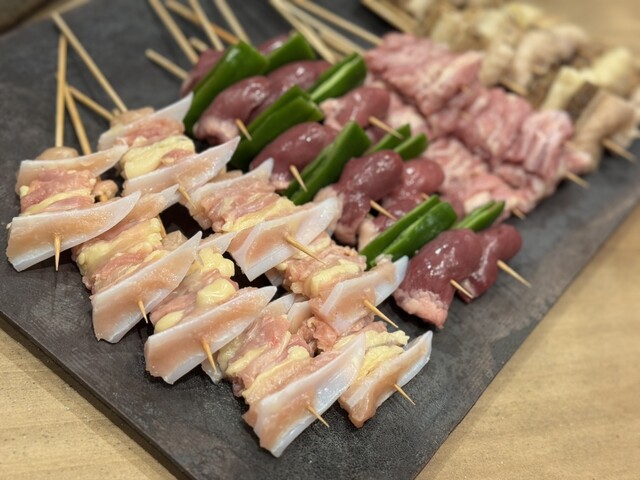
Approaching Kyoto’s smaller counter restaurants, the city’s volume drops before the meal begins. Yakitori here is less noise or theatre than compression: a narrow room, charcoal heat, timed service, and a cook turning familiar chicken cuts into a rhythmic sequence. Nishino belongs to that school. It is not competing with kaiseki rooms on ceremony or ramen counters on speed. Its sharper argument is that yakitori can carry the seriousness of Kyoto’s formal dining while staying rooted in grill smoke, poultry, and counter discipline.
That matters because Kyoto often frames Japanese dining through temples, tea, and seasonal multicourse cuisine. Yakitori sits outside that postcard version, yet it is one of the clearest ways to read contemporary Kyoto eating. The format rewards directness: ingredient quality, knife work, charcoal control, seasoning, and pacing. Global luxury dining has borrowed from Japanese counter formats, but Kyoto’s better yakitori rooms reverse the exchange, applying tasting-menu rigour to an everyday genre. Nishino’s repeated selection for Tabelog’s Yakitori WEST 100 in 2023, 2024, and 2025 gives that position a public marker rather than leaving it to reputation.
Kyoto yakitori with counter-dining discipline
Yakitori is often misunderstood by visitors as casual skewers and beer. At the higher end, the craft is closer to sushi in structure than pub cooking. The counter puts timing in full view, and a small seat count changes the meal’s economics. Nishino operates with nine counter seats, forcing each course into a controlled cadence. That differs from inexpensive Kyoto staples such as Ramen Tsurumusha, Men Dokoro Toritani, Taiyo Curry, caffellatte, or Kashi Shokunin, where the value is speed, habit, or daily use. Here the point is attention, not turnover.
The local-ingredient, global-technique angle is central to modern yakitori. Binchotan-style grilling, nose-to-tail sequencing, and counter-led pacing are now familiar to serious diners beyond Japan, yet the genre depends on products that do not travel as ideas alone. Poultry quality, offal handling, tare balance, salt selection, and the cook’s reading of heat decide whether a skewer lands with clarity or fatigue. Kyoto adds a constraint: diners used to subtle seasoning and seasonal restraint are less forgiving of heavy smoke or sweetness. A yakitori counter here must show control without sanding away the pleasures of fat, char, and texture.
Nishino’s price tier puts it closer to occasion dining than weeknight grazing, so it should be judged against compact Kyoto counters built around concentration, not a quick bowl before a train. The category also suits visitors who have already booked kaiseki, sushi, or tempura and want another reading of Japanese technique. Kyoto luxury dining can become repetitive if every evening follows the same seasonal template; yakitori cuts through with fire, protein, and more physical pacing.
Why the room size changes the meal
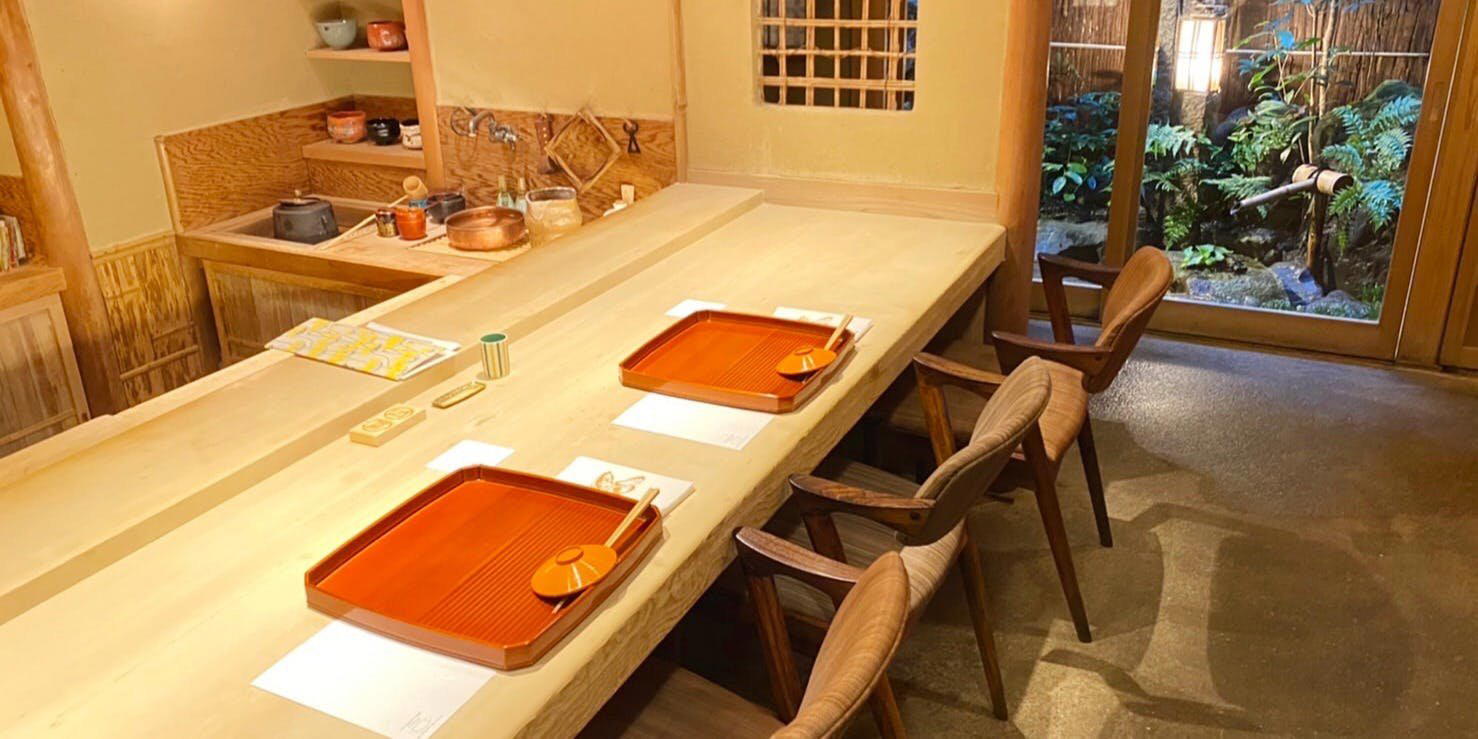
A nine-seat counter is not just charm; it defines the experience. Small yakitori rooms reduce the distance between grill and diner, making pacing legible: when skewers are fired, when the sequence pauses, when salt or sauce shifts the register. The format also raises expectations. At this scale, inconsistency has fewer places to hide. A restaurant repeatedly selected for a regional Tabelog 100 list is measured within a competitive western Japan yakitori field, not only by neighbourhood loyalty.
Reservation-only dining also shapes the mood. Kyoto receives diners moving between hotel concierges, temple itineraries, and late train connections, but serious yakitori is not a drop-in category. It suits travellers who plan one evening around a counter, not those seeking flexibility after sightseeing. Saiin, west of central Kyoto’s heavier tourist corridors, reinforces that distinction. The neighbourhood lacks the immediate shorthand of Gion or Pontocho, which can benefit diners more interested in food than address mythology.
That western position also explains the audience. Kyoto dining is not confined to the east-side temple belt, and many stronger meals happen in ordinary districts where local demand matters. Saiin has the transport logic of a residential-commercial hub rather than preserved-stage atmosphere. For visitors, the meal reads less like a performance of old Kyoto and more like current restaurant culture: compact, appointment-based, and shaped by regulars who understand the genre.
How it fits into a Kyoto dining itinerary
The smartest use of Nishino is as counterpoint. Pairing Kyoto only with formal cuisine misses how the city eats after work, after trains, and beyond the ceremonial frame. Yakitori at this level brings precision without grand-meal architecture. It works in an itinerary that alternates categories: one night for kaiseki, one for sushi or tempura, one for charcoal. Diners comparing formats across Japan will notice how Kyoto’s restraint changes the grill’s emotional temperature.
Within EP Club’s Kyoto coverage, the broader picture helps. For another reading of the city’s casual-to-serious range, see 3TOKU6MI Shijo karasuma ten, 551蓬莱, [ki:], Abbesses, and Aburi Mochi Honke Nemoto Kazariya. The wider city rails sit at Our full Kyoto restaurants guide, Our full Kyoto hotels guide, Our full Kyoto bars guide, Our full Kyoto wineries guide, and Our full Kyoto experiences guide. For cross-city contrast, EP Club also covers -Grilled beef Sukiyaki- KAMAKURA TANUKIAN 鎌倉 たぬき庵 in Kamakura. 鮪と炭火焼き うお炭 秋葉原店 in Tokyo.cafe in Osaka.know in Kumamoto, (Shoku) Vietnam in Kawasaki, [Curry Senmon Ten] Maruyama Kyoju. in Sapporo, Jōdo Saké Bar in Los Angeles, and Onigiri Time in Pasadena.
The editorial case is clear: Kyoto’s serious dining is not only lacquerware, private rooms, and seasonal poetry. A compact yakitori counter can express the city’s discipline through fire and sequence, and Nishino has enough external recognition and format focus to belong in that conversation.
Price Lens
Comparable venues for context, by category and price tier.
| Venue | Cuisine | Price | Notes |
|---|---|---|---|
| NishinoThis venue — the venue you are viewing | Ukyō, Yakitori | $$$ | Not listed |
| 今 | Not listed | $$$ | Nakagyo-ku, Traditional Japanese Seasonal Cuisine |
| MERCY Vegan Factory KYOTO STATION | Shimogyō, Vegan Japanese | $$$ | Not listed |
| Tomikyu | Not listed | $$$ | Higashiyama, Traditional Fugu & Hamo Kaiseki |
| Tousuiro Kiyamachi | Nakagyō, Traditional Kyoto Tofu Kaiseki | $$$ | Not listed |
| GYUKATSU Kyoto Katsugyu Teramachi Kyogoku | Not listed | $$$ | Nakagyō, Gyukatsu (Breaded Beef Cutlet) |
Recognition history
Dated appearances from independent guides and award organizations, with the underlying list record or original source where available.
Tabelog 100 #22 · No. 22
Tabelog · Tabelog 100 - Yakitori - WEST - 2025
Continue exploring
More in Kyoto
Restaurants in Kyoto
Browse all →

Bars in Kyoto
Browse all →
Hotels in Kyoto
Browse all →
Wineries in Kyoto
Browse all →
At a Glance
- Intimate
- Sophisticated
- Cozy
- Elegant
- Date Night
- Special Occasion
- Solo
- Private Event
- Chefs Counter
- Standalone
- Sake Program
Current opening hours
- Monday
- 6–9 PM
- Tuesday
- 6–9 PM
- Wednesday
- Closed
- Thursday
- 6–9 PM
- Friday
- 6–9 PM
- Saturday
- 6–9 PM
- Sunday
- Closed
Hours can change for holidays and private events. Last verified .
An intimate, counter-only yakitori room with a refined, focused atmosphere built around close chef interaction and a small-seating experience.