Our verdict
Niko Izakaya brings the relaxed, communal format of the Japanese izakaya to Brunnenstraße in Berlin's Wedding district, a neighbourhood that has quietly absorbed a wave of independent dining rooms over the past decade. The format suits Berlin's preference for informal, late-running evenings over rigid tasting menus. Practical details including hours and booking method are best confirmed directly with the venue.

Pearl is the En Primeur Club membership app, where members save venues, book tables and use the concierge.
The menu
What to order
- Umami cabbage salad
- Squid tempura
- Beef tongue
- Fried mochi
Brunnenstraße After Dark: What Berlin's Izakaya Moment Tells You
The stretch of Brunnenstraße running through Wedding and into Mitte has spent the better part of a decade trading its industrial vacancy for the kind of low-key, operator-led dining that Berlin does better than almost any European capital. The formula is consistent: modest shopfronts, serious kitchens, prices that don't require an expense account. Niko Izakaya at number 73 fits that pattern precisely, occupying a position in the neighbourhood that makes sense the moment you understand what an izakaya actually is, and why Berlin was always going to be receptive to the format.
The izakaya tradition in Japan is essentially the pub-restaurant hybrid, a place to drink, eat in rounds, and stay longer than you planned. It is the structural opposite of the formal kaiseki sequence or the omakase counter, where the kitchen controls pace and portion. In an izakaya, the table controls everything: what arrives, when, and in what quantity. Berlin's dining culture, shaped by a population that treats restaurants as extensions of the living room rather than occasion venues, maps onto that logic with unusual ease. Where cities like London or Paris have historically pushed Japanese dining toward the premium end, Berlin has been more willing to let it operate at mid-register, neighbourhood scale.
The Format and What It Asks of You
Understanding the izakaya format matters before you arrive, because it shapes how an evening actually works. Dishes come in small portions designed for sharing across a table. The kitchen moves at a rhythm that supports grazing over the course of two or three hours rather than a structured progression of courses. Drinks, typically beer, shochu, sake, or highballs, are integral rather than supplementary. The expectation is that you order in waves, respond to what you've eaten, and make decisions in real time rather than committing to a set menu at the door.
This format has gained ground across European cities over the past five years, as diners have become less willing to surrender an entire evening to a single tasting arc. Venues like CODA Dessert Dining and Nobelhart & Schmutzig represent Berlin's appetite for format-led dining, but both operate at the €€€€ tier with structured programming. Niko Izakaya addresses a different need entirely: the informal, repeatable dinner that doesn't require advance choreography.
Where Niko Izakaya Sits in Berlin's Japanese Scene
Berlin's Japanese dining options have diversified considerably from the sushi-and-ramen duopoly that defined the early 2000s. The city now has ramen specialists, yakitori bars, omakase counters, and izakayas occupying different price points and social registers. The izakaya tier, in particular, has expanded as operators recognised that the format's inherent flexibility suits both kitchen economics and Berlin's informal dining culture.
Within Germany more broadly, the high-end reference points for Japanese-influenced dining tend to sit well outside Berlin. Restaurant Tim Raue in Berlin applies Asian flavour structures to a fine dining framework with two Michelin stars, operating in a different competitive register entirely. Venues like Rutz and FACIL address the contemporary European fine dining tier. Niko Izakaya doesn't compete with any of them, it operates in a space where the measure of success is whether a table of four can order freely, eat well, and return the following week without financial strain.
For context on how Germany's Michelin tier looks across cities, the country's decorated addresses run from Aqua in Wolfsburg and Vendôme in Bergisch Gladbach to Schwarzwaldstube in Baiersbronn and Victor's Fine Dining by Christian Bau in Perl. Niko Izakaya is not in that conversation, which is entirely the point. The izakaya format exists outside the award infrastructure almost by design, it is evaluated by locals on repetition, not by critics on a single occasion.
Planning Your Visit: What to Know Before You Go
The izakaya format generally rewards drop-in or short-notice booking more than weeks-ahead planning. Unlike Berlin's tasting-menu rooms, where CODA and similar venues often require advance reservation to secure a seat, izakayas typically turn tables quickly enough to absorb walk-ins at shoulder hours. That said, Brunnenstraße draws a regular neighbourhood crowd, and weekend evenings fill earlier than the format's casual reputation might suggest.
Phone and online details should be verified through current local listings rather than relying on older sources.
Getting to Brunnenstraße 73 is direct by public transport. The address sits in the northern reaches of Mitte, accessible from multiple U-Bahn and S-Bahn lines serving the Wedding and Gesundbrunnen corridor. Berlin's transit network makes this kind of neighbourhood dining accessible without the need for a taxi or car.
For visitors building a wider Berlin dining itinerary, the city's stronger editorial case rests at its Michelin tier. Beyond Tim Raue, the full Berlin restaurants guide maps the range from neighbourhood independents up through to the city's decorated addresses. For comparison across the German fine dining circuit, Restaurant Haerlin in Hamburg, JAN in Munich, and Schanz in Piesport give a sense of how regional German fine dining compares. Further afield, Le Bernardin in New York and Atomix in New York represent what Japanese-influenced and tasting-menu formats look like at their most ambitious in a North American context. Bagatelle in Trier, ES:SENZ in Grassau, and Waldhotel Sonnora in Dreis round out the German regional picture.
Know Before You Go
- Address: Brunnenstraße 73, 13355 Berlin, Germany
- Neighbourhood: Wedding / Northern Mitte
- Format: Izakaya, small plates, shared ordering, drink-led
- Getting there: Multiple U-Bahn and S-Bahn lines serve the Gesundbrunnen and Wedding corridor; Brunnenstraße is well-served by public transport
- Leading for: Informal group dinners, repeat visits, drink-led evenings
Frequently asked questions
Is Niko Izakaya okay with children?
Berlin's izakaya venues generally skew toward evening dining crowds rather than family lunch settings, and Niko Izakaya's format as a drink-led dining room makes it a better fit for adults than young children.
What is the atmosphere like at Niko Izakaya?
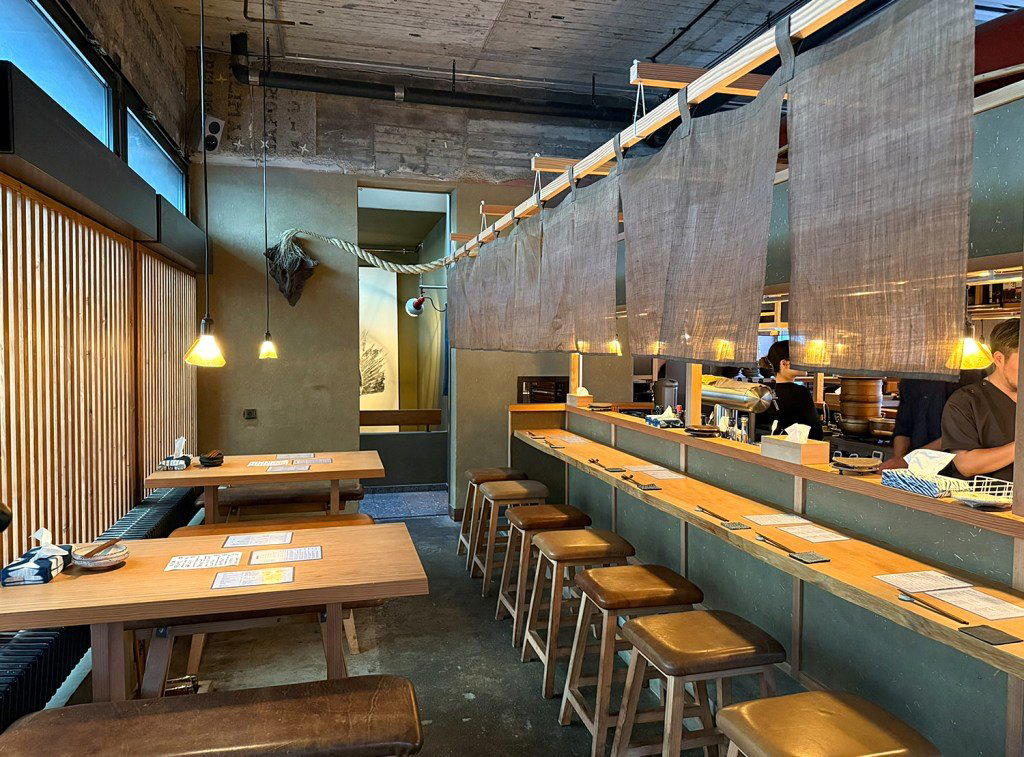
If you are coming from one of Berlin's structured tasting-menu rooms such as those at the €€€€ tier, expect something considerably more informal. The izakaya format is defined by communal energy, background noise, and a pace that the table controls rather than the kitchen, closer to a well-run neighbourhood bar with serious food than to a formal dining room.
What's the signature dish at Niko Izakaya?
In the izakaya tradition more broadly, the format prizes range over single signature dishes: small plates across grilled, fried, and raw preparations are typical, designed to be ordered in multiple rounds alongside drinks. Confirming the current menu directly with the venue will give you accurate detail.
What's the ideal way to book Niko Izakaya?
As a neighbourhood izakaya rather than a high-demand tasting counter, the lead time required is likely shorter than venues like Berlin's Michelin-decorated addresses, but weekend evenings on Brunnenstraße fill quickly. Check current local listings for the most reliable contact method before visiting.
What makes Niko Izakaya worth seeking out?
The izakaya format itself is the answer, positioned against Berlin's wider dining options. In a city where the alternative Japanese dining references sit either at the budget ramen end or at the two-Michelin-star tier of Restaurant Tim Raue, a properly executed izakaya fills a format gap that the city's international population clearly demands. The Brunnenstraße address places it in a neighbourhood that has consistently supported independent operators over the past decade.
How does Niko Izakaya compare to other Japanese dining formats in Berlin?
The izakaya sits at the informal end of Japanese dining, structurally distinct from omakase counters, kaiseki sequences, or ramen specialists. In Berlin's context, it competes less with venues like Restaurant Tim Raue, which uses Asian flavour logic within a fine dining framework, and more with the broader neighbourhood dining scene on Brunnenstraße and the surrounding streets. The draw is the format's repeatability: it is built for regular attendance rather than single-occasion visits.
Pricing, Compared
Comparable venues nearby, for context on price, style, and recognition.
| Venue | Cuisine | Price | Notes |
|---|---|---|---|
| Niko IzakayaThis venue (the venue you are viewing) | Authentic Japanese Izakaya | $30–50 | Not listed |
| SAN | Modern Japanese Sushi | $50–100 | Prenzlauer Berg, Modern Japanese Sushi |
| SHINJU Restaurant | Modern Italian | $20–30 | Mitte, Modern Japanese with Izakaya-Style Small Plates |
| Iimori Ramen | Japanese Ramen | $10–20 | Mitte, Japanese Ramen |
| Lode & Stijn | Modern European Bistro with Dutch-Scandinavian Influences | Not listed | Mitte, Modern European Bistro with Dutch-Scandinavian Influences |
| Lu Liba | Mediterranean-Lebanese Fusion | $30–50 | Tiergarten, Mediterranean-Lebanese Fusion |
Continue exploring
More in Berlin
Restaurants in Berlin
All restaurants in Berlin →
Bars in Berlin
All bars in Berlin →

Details
- Lively
- Trendy
- Cozy
- Energetic
- Casual Hangout
- After Work
- Late Night
- Open Kitchen
- Sake Program
- Craft Cocktails
- Small Plates
- A La Carte
- Sake
- Whisky Highballs
Current opening hours
- Monday
- Closed
- Tuesday
- 6–11 PM
- Wednesday
- 6–11 PM
- Thursday
- 6–11 PM
- Friday
- 6–11 PM
- Saturday
- 6–11 PM
- Sunday
- Closed
Hours can change for holidays and private events. Last verified .
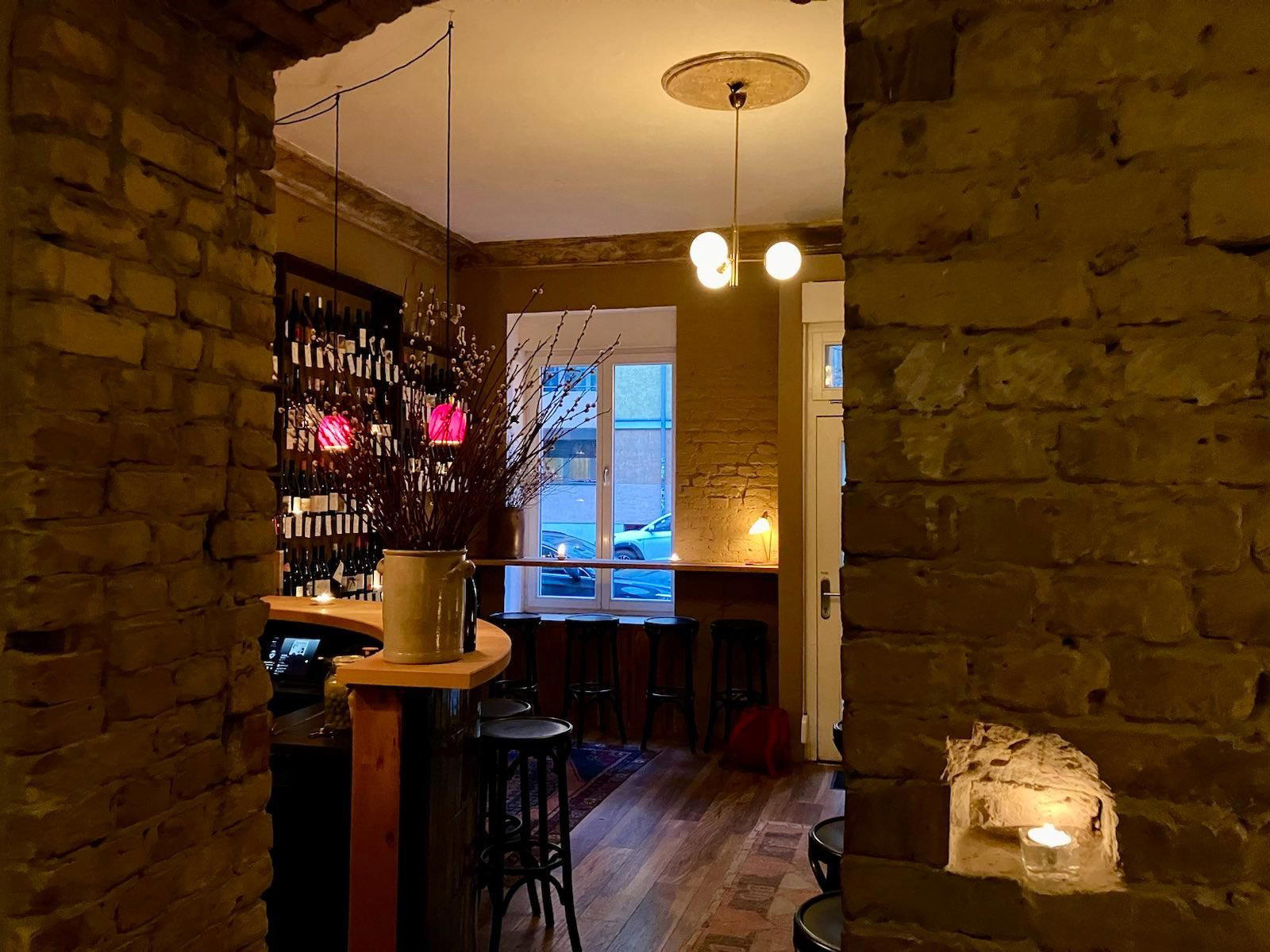
Cramped, close-quartered space packed around a busy open kitchen with wooden kayak decor, factory-like industrial feel, loud and energetic for drinking and eating.