On Mulackstraße in Mitte's former garment district, Iimori Ramen draws a returning crowd that has quietly made it a fixture in Berlin's ramen conversation. The format is direct: a focused bowl-centred menu in a neighbourhood that now runs on specialty coffee, natural wine bars, and a handful of restaurants that reward repeat visits. Worth knowing before the queue forms.
Pearl is the En Primeur Club membership app — saves, bookings, and concierge access live there. Same editors, same standards.
- Address
- Mulackstraße 29, 10119 Berlin, Germany
- Phone
- +493033905188
- Website
- instagram.com
- Directions
- Get directions
 Saves & bookings on Pearl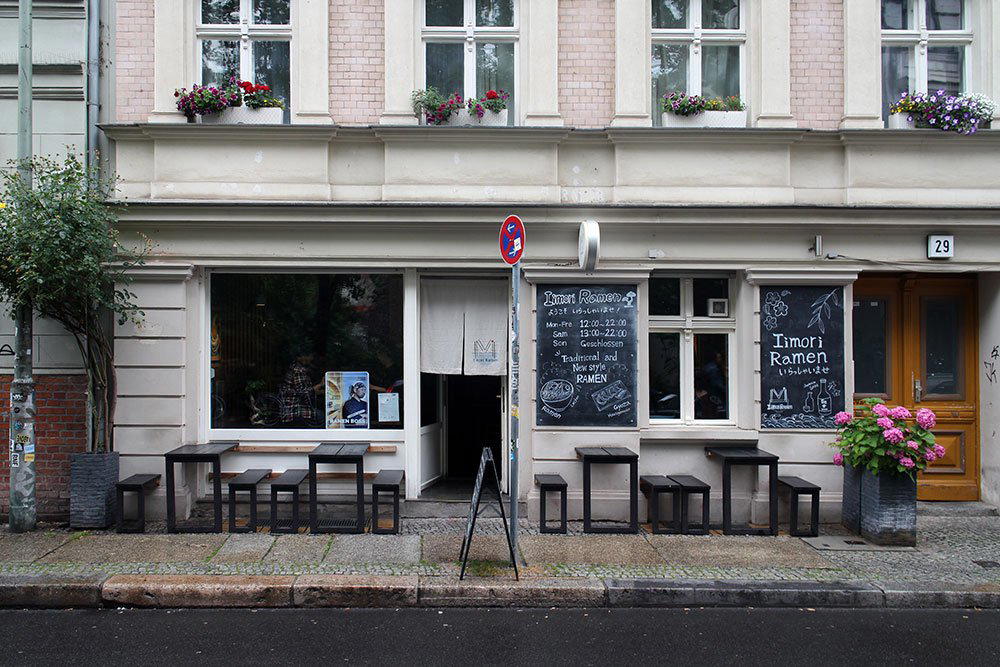
Mulackstraße and the Anatomy of a Neighbourhood Regular
Mulackstraße sits at a particular inflection point in Mitte, close enough to the Hackescher Markt axis to catch foot traffic from tourists, far enough into the residential backstreets to sustain a genuinely local clientele. The street has shifted considerably since reunification: what was once part of the Scheunenviertel's dense working-class fabric is now a corridor of independent operators, small labels, and the kind of low-key eating and drinking spots that Berliners return to on a Tuesday evening without much deliberation. Iimori Ramen at number 29 is a casual Japanese ramen restaurant in Berlin, known for.
Berlin's ramen scene has matured over the past decade in ways that parallel broader European patterns. Early arrivals treated ramen as a novelty format, leaning into Japanese visual codes, timber, low lighting, ceramic, to signal authenticity. A more recent wave, to which Iimori Ramen belongs, operates with less theatre and more repetition. The regulars here are not chasing an experience; they are fulfilling a habit. That distinction matters more than it might seem.
What Keeps People Coming Back
The regulars' economy works differently from destination dining. At Berlin's €€€€ fine-dining tier, places like Rutz, Nobelhart & Schmutzig, or FACIL, a return visit is a considered event, often planned weeks or months in advance. At a focused ramen counter, the return visit happens because the bowl is consistent, the pricing sits within casual reach, and the friction of getting in is low enough that the decision barely registers as a decision at all. Iimori Ramen operates in that cadence.
That consistency is the unwritten contract of a neighbourhood ramen spot. Japanese ramen culture places significant emphasis on repeatability: the same broth temperature, the same noodle texture, the same salt balance across hundreds of consecutive bowls. For the regular customer, a deviation is noticed immediately. The absence of deviation is what builds loyalty quietly over months and years. Berlin has several ramen operators trying to hold that standard; address Mulackstraße 29 belongs to that category of spots where the bowl you receive on a random Wednesday evening matches what you remember from the last visit.
Where Iimori Ramen Sits in Berlin's Casual Dining Map
Berlin's food identity has always been more complex than its reputation for cheapness suggests. The city has a fully developed Michelin tier, CODA Dessert Dining and Restaurant Tim Raue represent different ends of that bracket, and a substantial middle band of European restaurants operating in the €€–€€€ range. Ramen sits below that middle band in price while competing directly for the same Tuesday-evening slot. The value equation is different: you are paying for craft broth and Japanese noodle technique rather than European fine-dining conventions, and the room asks less of you in return.
Across Germany, the highest-concentration dining destinations are not Berlin but smaller cities with specific Michelin clusters, Aqua in Wolfsburg, Schwarzwaldstube in Baiersbronn, Vendôme in Bergisch Gladbach, Victor's Fine Dining by Christian Bau in Perl, and Waldhotel Sonnora in Dreis. Berlin punches below that formal-dining weight but compensates with density of casual operators and an international cooking community that has made the city disproportionately interesting for Asian cuisines, street food registers, and independent formats. Ramen is one of the cleaner success stories in that cohort.
The Mitte Context: Why This Street, Why This Format
The Scheunenviertel micro-area, bounded roughly by Rosenthaler Platz, Hackescher Markt, and the old garment streets running north, has become one of Berlin's most contested dining corridors. Rents have risen sharply since the mid-2010s, and operators who survive there have generally done so by developing a loyal repeat base rather than relying on tourist walk-in traffic alone. A format that works on table turns and spontaneous visits, rather than advance reservations, is well-suited to the neighbourhood's rhythm.
Mulackstraße 29 is accessible on foot from Rosenthaler Platz U-Bahn station in a few minutes, placing it within comfortable reach of the Rosa-Luxemburg-Platz area and the broader Mitte–Prenzlauer Berg border zone. The surrounding blocks hold a mix of independent boutiques, wine bars, and the occasional gallery space, the kind of neighbourhood where a pre-dinner drink and a post-dinner walk are both plausible options without much planning.
For a broader orientation to eating and drinking in the city, the range spans Michelin-recognized fine dining to the casual independent tier that restaurant represents. Comparable neighbourhood-anchored formats can also be found in other German cities, JAN in Munich operates in a different register but shares that quality of having built its audience through word of mouth rather than awards noise, as does Bagatelle in Trier and Schanz in Piesport.
The broader European ramen conversation is also useful context. Japanese noodle formats in European capitals have generally tracked similar arcs: early novelty, consolidation around a handful of credible operators, then a bifurcation between high-volume chain formats and smaller independent spots with genuine technique behind the broth. Berlin is mid-consolidation. The spots that survive into the next cycle will be those with a repeating customer base rather than those still trading on novelty. Internationally, the reference points for serious Japanese cooking in Western cities, Atomix in New York City for Korean-Japanese fine dining, Le Bernardin for how a single cuisine executed with precision can anchor a loyal audience for decades, suggest that consistency and focus, not scale, are what sustain serious food operations over time. The restaurant operates at a different price point, but the underlying logic is the same. For comparable European fine dining anchored by precision and restraint, Restaurant Haerlin in Hamburg and ES:SENZ in Grassau offer instructive comparisons.
How It Stacks Up
Comparable venues nearby, for context on price, style, and recognition.
| Venue | Cuisine | Price | Notes |
|---|---|---|---|
| Iimori RamenThis venue — the venue you are viewing | Japanese Ramen | $$ | Not listed |
| SHINJU Restaurant | Modern Japanese with Izakaya-Style Small Plates | $$ | Mitte |
| Kabuki Berlin | Japanese Teppanyaki | $$ | Tiergarten |
| Sachiko Sushi | Creative Japanese Sushi | $$$ | Charlottenburg |
| All in | German Schnitzel Diner | Not listed | Prenzlauer Berg |
| Cancún | Authentic Mexican | $$ | Mitte |
Continue exploring
More in Berlin
Restaurants in Berlin
Browse all →
Bars in Berlin
Browse all →
Hotels in Berlin
Browse all →
Wineries in Berlin
Browse all →

At a Glance
- Cozy
- Trendy
- Casual Hangout
- Sake Program
Current opening hours
- Monday
- 12–10 PM
- Tuesday
- 12–10 PM
- Wednesday
- 12–10 PM
- Thursday
- 12–10 PM
- Friday
- 12–10 PM
- Saturday
- 12–10 PM
- Sunday
- Closed
Hours can change for holidays and private events. Last verified .
Snug and inviting with a casual, welcoming Japanese atmosphere.