



Cookies Cream has held a Michelin star since 2017, making it one of Germany's earliest standard-bearers for vegetarian fine dining at the summit tier. Operating from an address in Berlin-Mitte that requires a specific kind of navigation to find, the kitchen under chef Nicolas Hahn works within a plant-only framework that has shaped how the city thinks about serious meatless cooking.
Pearl is the En Primeur Club membership app — saves, bookings, and concierge access live there. Same editors, same standards.
- Address
- Behrenstraße 55, 10117 Berlin, Germany
- Phone
- +49 30 680730448
- Website
- cookiescream.com
- Directions
- Get directions
 Saves & bookings on Pearl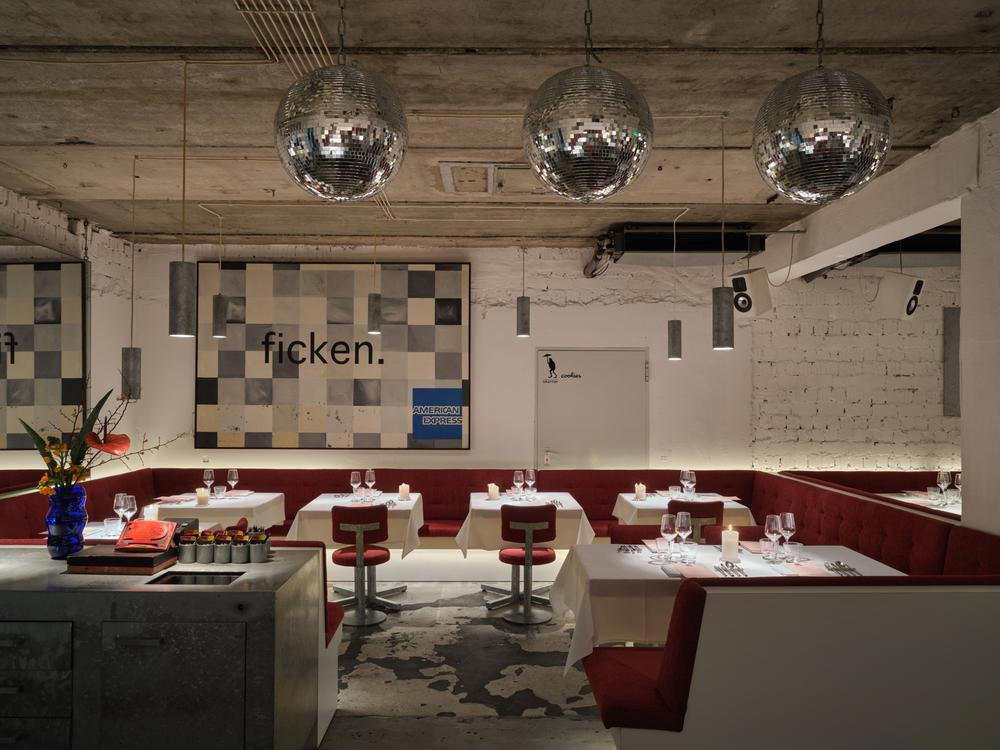
An Address That Asks Something of You
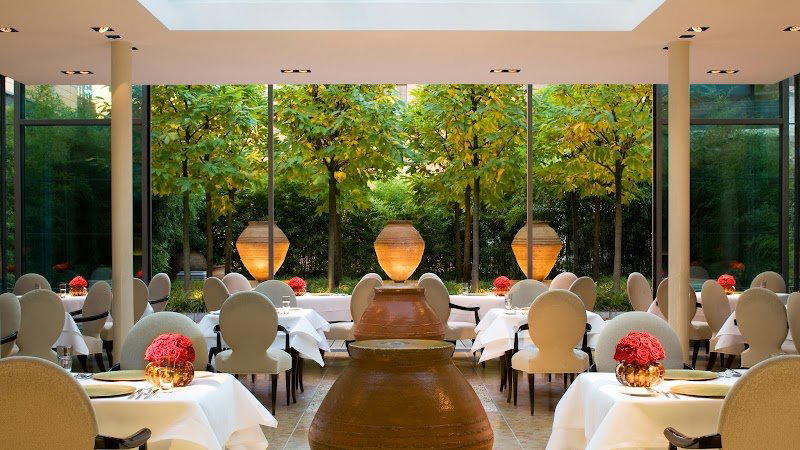
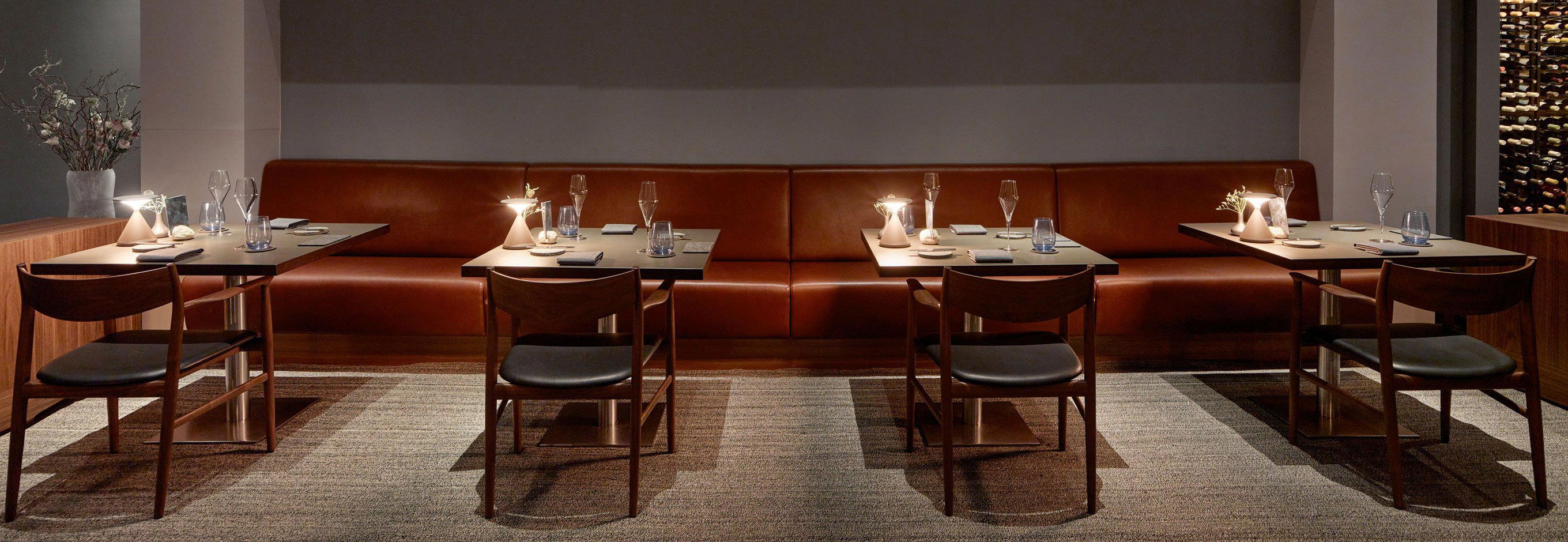
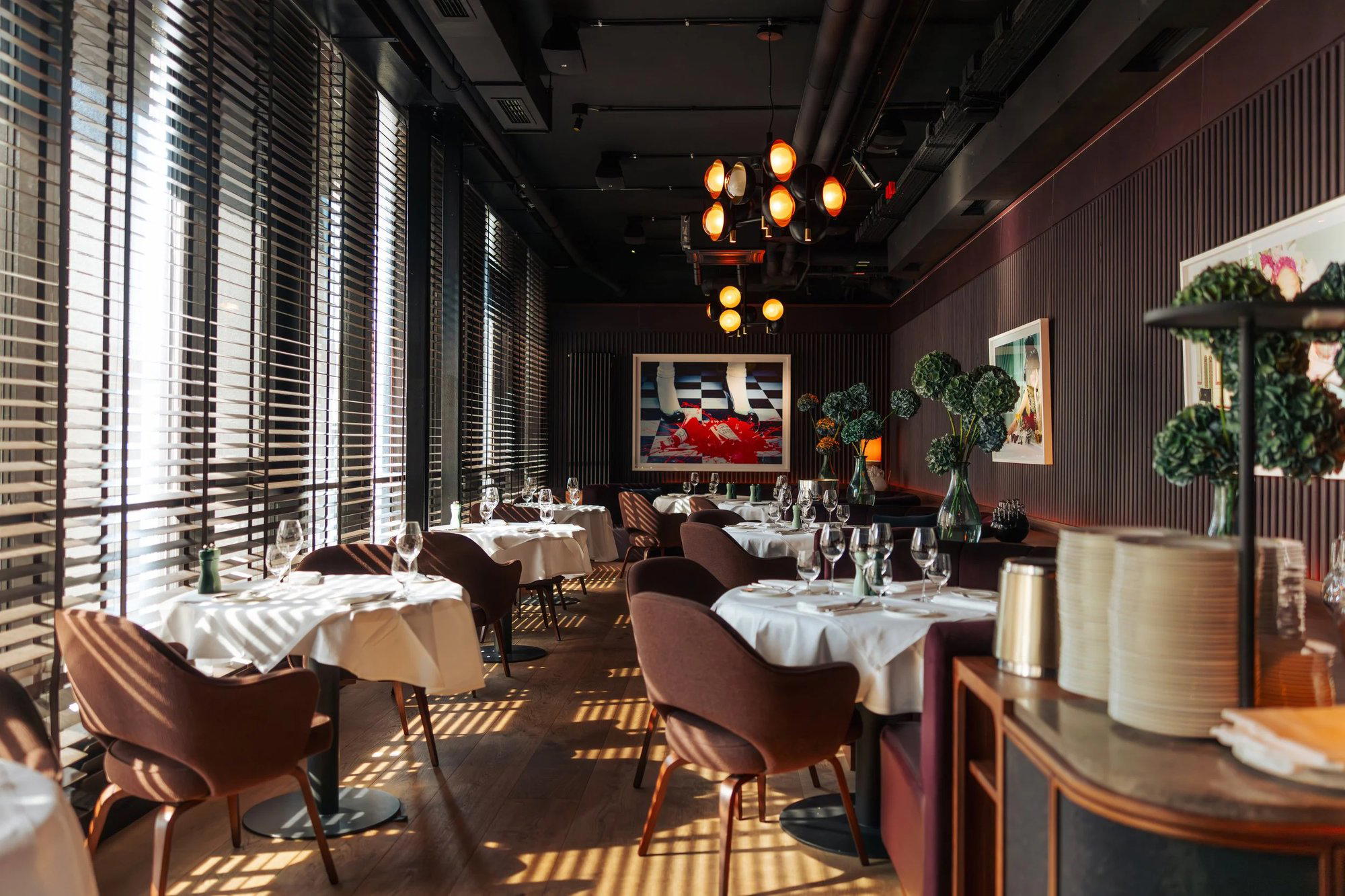
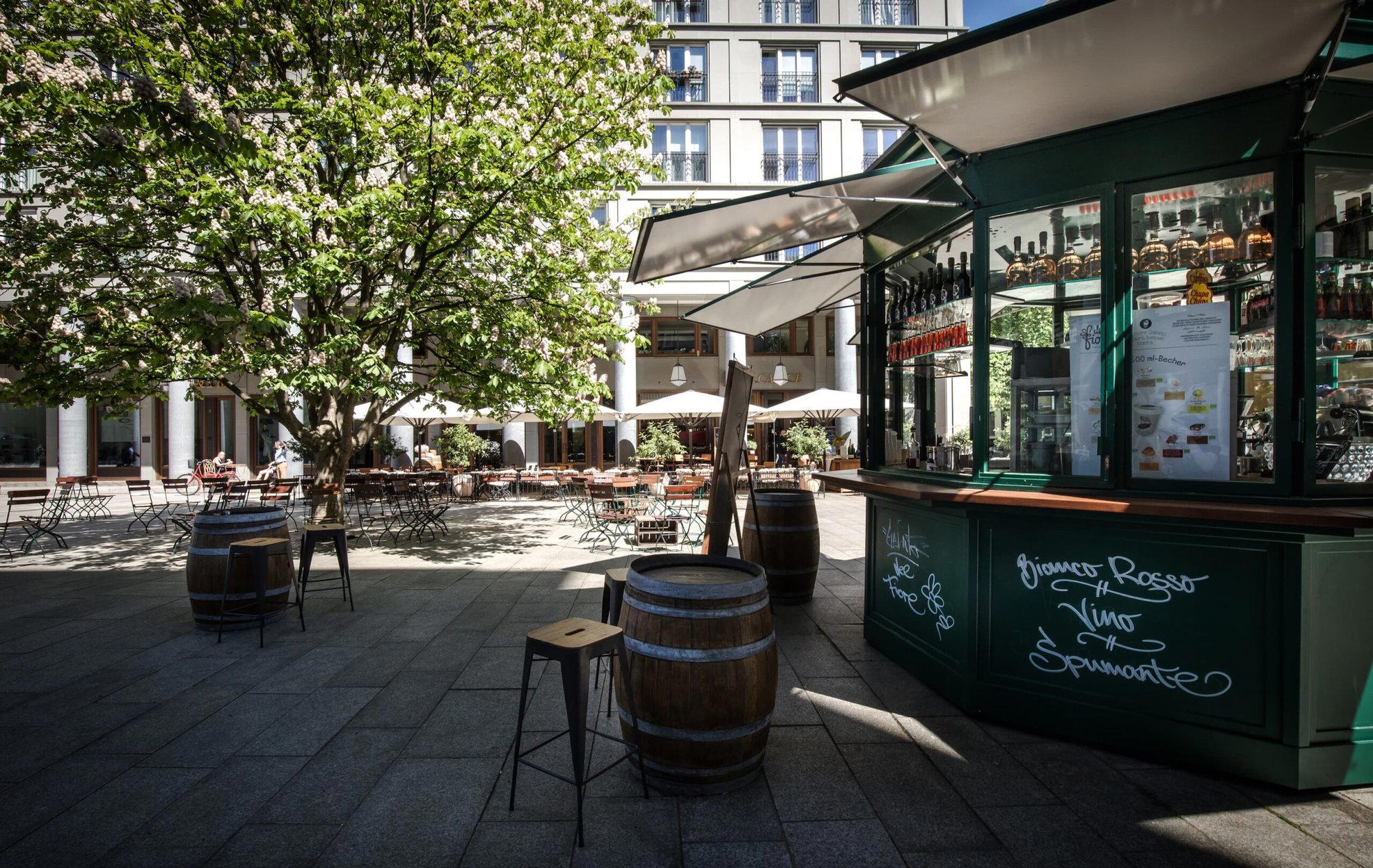
Behrenstraße 55 in Berlin-Mitte sits in the kind of neighbourhood where Michelin-starred ambitions feel entirely plausible, government buildings, grand facades, the western edge of Unter den Linden within reach. Cookies Cream, however, does not announce itself from the street. The entrance requires a deliberate turn away from the boulevard and a walk through a service passage that reads, to the uninitiated, like a wrong turn. That approach is not incidental. It sets a tone: this is a restaurant that rewards the committed diner, not the walk-in curious. Once inside, the room shifts register entirely, a loft-scale space with industrial bones softened by candlelight, the ambient noise of a kitchen that takes itself seriously without taking the atmosphere hostage.
What a Michelin Star Means Here, Specifically
Germany's Michelin-starred restaurants cluster heavily around classical French-influenced kitchens, regional ingredient-led modern German programs, and a handful of creative outliers. Places like Rutz in Berlin and Nobelhart & Schmutzig both operate in the €€€€ bracket with programs built around sourcing precision and editorial menus. What makes Cookies Cream's star retention since 2017, confirmed again in both the 2024 and 2025 Michelin guides, editorially significant is the constraint it operates under. A fully vegetarian kitchen at this price tier is not simply a diet-conscious option; it is a structural creative commitment that removes protein fallbacks entirely. The guide's repeated recognition signals that the kitchen has earned its star on technical terms, not novelty terms.
Both are evidence of Berlin's appetite for restaurants that build programs around a governing idea rather than conventional menu architecture.
The Kitchen's Founding Logic and What It Produced
When Cookies Cream opened in 2007, there was no established template for vegetarian fine dining in Germany. The country's restaurant culture at that level was built almost entirely around meat and fish as structural anchors. Working without those anchors meant developing technique from first principles: how to deliver richness without reduction sauces built on bone, how to create textural contrast without animal protein, how to give a tasting menu the kind of arc, build, rest, climax, resolution, that diners at this level expect. The restaurant's own vegetable garden became a sourcing mechanism, but also a creative constraint: what grows determines, at least in part, what gets plated.
Ten years after opening, the first Michelin star arrived. That gap is worth noting. The guide does not typically reward patience; it rewards consistent execution at a defined standard. A decade of development before institutional recognition suggests the program took time to arrive at the technical precision required. It also suggests the star reflects a mature kitchen, not a debut performance.
Chef Nicolas Hahn now leads the kitchen. The dishes documented in the awards record, vegetarian caviar with egg yolk, potato and sour cream; white asparagus with rhubarb, potato and chervil; baked eggplant with edamame, papadam, savory and onion, describe a kitchen that uses modernist technique selectively, applying it where it genuinely extends what a vegetable can do rather than as spectacle. The caviar preparation is an example of reframing: the visual and textural grammar of a luxury ingredient, reconstituted from plant and dairy components. It is a technically demanding move that would read as cheap provocation if it did not hold up on the palate.
Placing Cookies Cream Inside Germany's Broader Fine Dining Picture
Berlin's Michelin map is thinner than Hamburg or Munich proportionally, and the city's dining culture has historically prioritised accessibility over formality. Restaurants like Restaurant Tim Raue and Bonvivant represent the city's capacity for serious cooking, but the city does not have the density of two- and three-star addresses found in Munich or the Black Forest. Elsewhere in Germany, Schwarzwaldstube in Baiersbronn, Aqua in Wolfsburg, Vendôme in Bergisch Gladbach, ES:SENZ in Grassau, and JAN in Munich operate at higher star ratings but within more conventional ingredient frameworks. Restaurant Haerlin in Hamburg offers a useful comparison point for classical French-influenced fine dining in a German city context.
The restaurant's position is therefore specific: it sits at the one-star tier within a city that has relatively few of them, and it operates in a category, vegetarian fine dining, where the global comparable set is small. For international comparison, Fu He Hui in Shanghai and Lamdre in Beijing represent how the vegetarian fine dining format has developed in a different cultural register, where plant-based cooking at the high end connects to longstanding Buddhist culinary traditions rather than the post-2000 Western fine dining reappraisal of vegetables.
What the Price Point Signals
The €€€€ designation places the restaurant alongside Berlin's most expensive restaurants, with menus likely in the range that requires advance reservation and deliberate planning rather than spontaneous booking. At this price, the guest is paying for technique, sourcing provenance, and the sustained creative effort required to make a tasting menu without meat or fish feel complete rather than reduced. That is a different value proposition from a plant-forward restaurant at a lower price tier, and the Michelin star functions partly as third-party confirmation that the kitchen delivers on that proposition.
A Restaurant in a Category It Largely Created
The vegetarian fine dining category in Germany looks different in 2025 than it did when the restaurant opened. Other restaurants have since added plant-based tasting menus, and the broader European fine dining conversation has shifted to treat vegetables as primary rather than supplementary. The restaurant pre-dated that shift by years and spent the intervening period developing a technical vocabulary that the Michelin guide has consistently recognised.
Comparison Snapshot
Comparable venues nearby, for context on price, style, and recognition.
| Venue | Cuisine | Price | Awards | Notes |
|---|---|---|---|---|
| Cookies CreamThis venue — the venue you are viewing | Modern Vegetarian Fine Dining | $$$$ | Michelin 1 Star | Not listed |
| SKYKITCHEN | Modern French Fine Dining with Asian & Regional Influences | $$$$ | Michelin 1 Star | Fennpfuhl |
| GOLVET | Modern German Fine Dining | $$$$ | Michelin 1 Star | Tiergarten |
| Loumi | French-Japanese-Nordic Fusion Fine Dining | $$$$ | Michelin 1 Star | Kreuzberg |
| pars Restaurant | Modern Cuisine | $$$$ | Michelin 1 Star | Charlottenburg |
| Bandol sur mer | Modern French | $$$ | Michelin 1 Star | Mitte |
Recognition history
Dated appearances from independent guides and award organizations, with the underlying list record or original source where available.
Michelin 1 Star
Michelin
Opinionated About Dining Top Restaurants in Europe Recommended
Opinionated About Dining
Star Wine List
Star Wine List
Michelin 1 Star
Michelin
Opinionated About Dining Top Restaurants in Europe Ranked #637
Opinionated About Dining
We're Smart World 4 Radishes
We're Smart World
Michelin 1 Star
Michelin
Continue exploring
More in Berlin
Restaurants in Berlin
Browse all →
Bars in Berlin
Browse all →
Hotels in Berlin
Browse all →

At a Glance
- Trendy
- Modern
- Sophisticated
- Intimate
- Whimsical
- Date Night
- Special Occasion
- Celebration
- Open Kitchen
- Extensive Wine List
- Local Sourcing
Current opening hours
- Monday
- Closed
- Tuesday
- 6:30–11 PM
- Wednesday
- 6:30–11 PM
- Thursday
- 6:30–11 PM
- Friday
- 5–11 PM
- Saturday
- 5–11 PM
- Sunday
- Closed
Hours can change for holidays and private events. Last verified .
Trendy industrial-chic with lively Berlin vibe, colorful bar, subtle music, and quirky sophisticated charm.