
Tokyo’s okonomiyaki conversation is too often reduced to Osaka nostalgia or tourist-facing griddle theatre. Naniwa belongs to the quieter Nerima side of the category: a 25-seat, cash-only room recognised in Tabelog’s Okonomiyaki 100 selections across multiple years, with takoyaki and drinks keeping the format closer to everyday Kansai cooking than luxury dining ritual.
Pearl is the En Primeur Club membership app — saves, bookings, and concierge access live there. Same editors, same standards.
- Address
- 東京都練馬区豊玉北5-15-1 小泉ビル 2F
- Phone
- +81339937285
- Website
- tabelog.com
 Saves & bookings on Pearl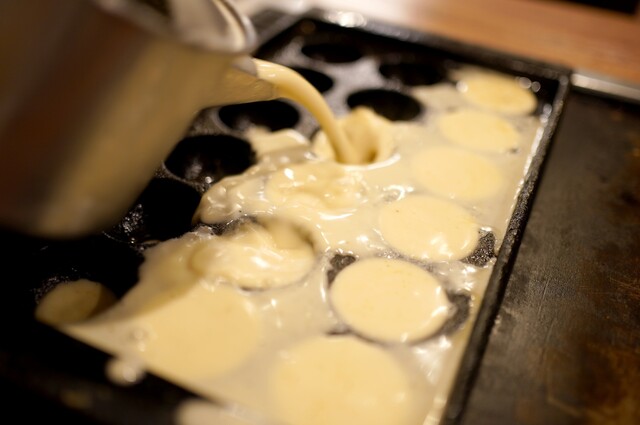
This is not Ginza polish or hotel-dining choreography. Nerima’s okonomiyaki rooms announce themselves through heat, compact seating, and the social rhythm of food built around a griddle, not plated in a kitchen. Okonomiyaki is assembly: flour, cabbage, egg, seafood or meat, sauce, mayonnaise, aonori, bonito flakes, and timed contact with iron. Pleasure sits in proportion and heat management, not expensive garnish.
Naniwa fits that Tokyo category with unusual credibility. It appears in Tabelog’s Okonomiyaki 100 for 2025, with prior selections in 2024, 2023, 2022, 2019, and 2018. For a cuisine often treated casually outside Kansai, repeated recognition signals consistency in a field where differences are small, technical, and easy to miss. Too dense, sweet, or wet, and the pancake fails quickly; a good one keeps cabbage, batter, sauce, and smoke in balance without turning the meal into spectacle.
Nerima's griddle culture rewards proportion over luxury cues
Tokyo’s premium dining reputation rests on counters: sushi, tempura, yakitori, kaiseki, and increasingly precise French-Japanese tasting menus. Okonomiyaki works differently. It is democratic, tactile, and better judged by repeatability than rarity. The ingredient question is less provenance theatre than how humble inputs behave under heat. Cabbage must carry sweetness and structure; batter must bind without heaviness; octopus in takoyaki needs resistance; sauce has to season rather than bury the base.
That makes Naniwa’s recognition useful for travellers who know Tokyo’s formal dining circuit. It points to excellence built not on luxury ingredients, but disciplined handling of everyday ones. In a city where visitors can spend heavily on counter sushi, a griddle-led meal at this tier gives a sharper read on how Tokyo absorbs regional Japanese food. Kansai cooking does not become museum food here; it becomes neighbourhood dining.
The comparison set clarifies the lane. Tori Cho sits in a higher spend band for yakitori, where value depends on sourcing, skewer pacing, and charcoal control. Gen-soba Nonaka occupies a lower soba bracket, where flour, water, and noodle texture shape the meal. Nogata Gyoza Honten sits nearer casual dumpling dining, and Parlor Ekoda works in a bakery-café lane. Naniwa is neither fine-dining nor snack-bar; it is a mid-priced specialist where the griddle is the argument.
Okonomiyaki and takoyaki belong to the same logic of batter, heat, and timing
The listed categories, okonomiyaki and takoyaki, are not random companions. Both depend on batter behaving correctly under direct heat and reveal errors quickly. Okonomiyaki gives the kitchen a broader canvas: cabbage volume, protein choice, sauce level, and cooking time. Takoyaki is less forgiving in miniature, built around a crisped exterior and molten interior when handled well. Together they place Naniwa in the Kansai-derived comfort-food tradition rather than Tokyo’s more austere noodle or rice-counter genres.
Ingredient sourcing here is practical, not decorative. Okonomiyaki does not need luxury branding to make sense. Quality depends on rotation and freshness: cabbage that has not lost water, eggs that bind cleanly, batter that has not gone slack, and seafood or meat that can survive the griddle without becoming an afterthought. The drinks list points the same way, with sake and shochu fitting a meal driven by salt, sauce, and heat rather than wine-pairing ceremony.
The room’s format supports that reading. Counter seating and tatami seating make the meal closer to shared table culture than a tasting-menu sequence. The experience is social, but not loose. With 25 seats, timing errors are visible, and a recognised specialist keeps a casual form from becoming careless. Children are welcomed, private rooms are not part of the setup, and the occasion profile skews toward family and friends rather than corporate dining.
How to place it within a Tokyo food itinerary
Naniwa is strongest for travellers who have allocated high-budget meals elsewhere and want Tokyo’s everyday food culture treated seriously. It is not a substitute for sushi or kaiseki; it answers another question: where does the city keep informal regional cooking precise? Nerima, away from obvious visitor corridors, gives a useful answer by reducing pressure to perform for tourists and keeping the room tied to local dining habits.
The planning details reinforce that this is a specialist, not a drop-in snack stop. Reservations are available, and guidance indicates arriving without one is generally not the mode to rely on. Payment is cash-only; credit cards, electronic money, and QR code payments are not accepted. The restaurant is listed as non-smoking, with a smoking area at the entrance, and parking is not provided, though paid parking exists nearby. These are not glamorous details, but they separate a smooth evening from a wasted detour.
Readers building a Tokyo itinerary around contrast can pair this griddle meal with other category-specific stops rather than chasing a single hierarchy. For broader city mapping, start with Our full Tokyo restaurants guide, then compare casual and specialist lanes such as . 鮪と炭火焼き うお炭 秋葉原店, 12/10 Shinjuku ten, 124. KAGURAZAKA (Yakitori), 2D Cafe, and 3 Chome no Curry Ya San. Tokyo planning rarely stops at restaurants, so the wider city rails also help: Our full Tokyo hotels guide, Our full Tokyo bars guide, Our full Tokyo wineries guide, and Our full Tokyo experiences guide.
For regional context beyond Tokyo, the same specialist logic appears in different forms across Japan and abroad: -Grilled beef Sukiyaki- KAMAKURA TANUKIAN 鎌倉 たぬき庵 in Kamakura.cafe in Osaka.know in Kumamoto, (Shoku) Vietnam in Kawasaki, [Curry Senmon Ten] Maruyama Kyoju. in Sapporo, [ki:] in Kyoto, Jōdo Saké Bar in Los Angeles, and Onigiri Time in Pasadena. Naniwa’s value is clearer in that company: a modestly priced griddle counter can carry as much technical identity as a far more formal room.
How It Stacks Up
Comparable venues at the same tier for side-by-side context.
| Venue | Cuisine | Price | Notes |
|---|---|---|---|
| NaniwaThis venue — the venue you are viewing | Okonomiyaki & Takoyaki | $$ | Not listed |
| Yukinoshita Pancake | Japanese Thick Pancakes & Shaved Ice | $$ | Ginza |
| Gyukatsu Motomura Behind Shinjuku Alta Branch | Japanese Beef Cutlet (Gyukatsu) | $$ | Shinjuku |
| Tsunahashi Shinjuku | Traditional Japanese Tempura | $$ | Shinjuku |
| IkkoAn | Traditional Japanese Wagashi | $$ | Bunkyō |
| Kaikaya by the Sea | Japanese Seafood Izakaya | $$ | Shibuya |
Recognition history
Dated appearances from independent guides and award organizations, with the underlying list record or original source where available.
Tabelog 100 #70 · No. 70
Tabelog · Tabelog 100 - Okonomiyaki - 2025











At a Glance
- Lively
- Cozy
- Casual
- Casual Hangout
- Family
- Group Dining
- Solo
- Late Night
- After Work
- Standalone
- Sake Program
- Beer Program
Casual, bustling local spot with counter and tatami seating, where guests cook or watch okonomiyaki and takoyaki on tabletop griddles in a warm, family-friendly atmosphere.