
Nagai gives Iruma-gun a serious udon address rather than a casual noodle footnote. Its Tabelog 100 Udon EAST selections in 2020, 2022, and 2024 place a small Saitama house restaurant inside a competitive eastern Japan category, with udon, tempura, and curry udon kept at an everyday price tier.
Pearl is the En Primeur Club membership app — saves, bookings, and concierge access live there. Same editors, same standards.
- Address
- 264-4 Kitanagai, Miyoshi, Iruma District, Saitama 354-0044, Japan
- Phone
- +81 49-258-2984
- Website
- tabelog.com
 Saves & bookings on Pearl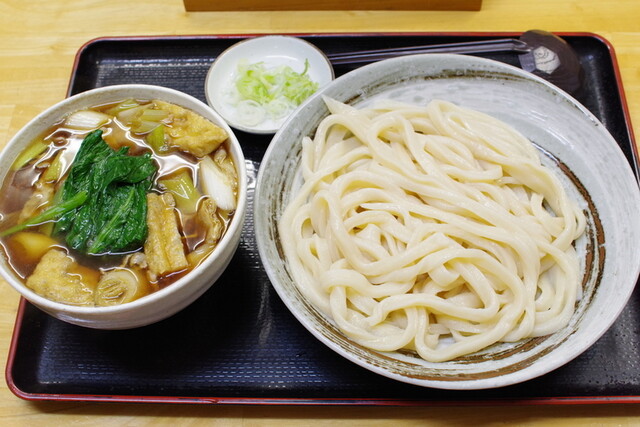
Approaching Nagai means leaving Tokyo’s dense station-front dining grammar for Saitama’s lower-rise, domestic rhythm. The setting matters: this is a house restaurant in Kitanagai, Miyoshi, not a polished urban counter built for theatre. That shift suits udon, whose seriousness often hides in plain sight. In eastern Japan, the category rewards texture, flour handling, broth discipline, and timing over luxury signals. A bowl can cost less than a coffee and pastry in central Tokyo yet belong in the same conversation as restaurants people cross prefectural lines to reach.
Nagai’s selection for Tabelog 100 Udon EAST in 2020, 2022, and 2024 is the useful signal. The list is not a Michelin-style luxury marker; it is a category marker. Udon in Japan is judged through repetition and narrow technical margins: noodle elasticity, serving temperature, dashi balance, frying consistency when tempura is involved, and whether the kitchen can hold those details through a lunch rush. Nagai reads less like a Western-style destination restaurant than a regional benchmark for a craft built on restraint.
Saitama udon makes its case through flour, texture, and restraint
Udon is often flattened abroad into one national idea, but Japan’s regional styles behave differently. Sanuki-style firmness, Musashino-influenced wheat culture around greater Tokyo, hot broth bowls, cold dipping formats, curry udon, and tempura pairings all ask different things from the noodle. Around Saitama and western Tokyo, wheat has deeper local relevance than many visitors expect, and udon shops can be both everyday canteens and serious craft addresses.
The menu categories attached to Nagai, udon, tempura, and curry udon, place it in that practical tradition rather than the tasting-menu economy. Ingredient sourcing should be understood through the staple itself: wheat noodles are unforgiving because there is little to hide behind. The diner notices chew, surface, salt, hydration, and how broth or curry clings to the noodle. Tempura adds a second test, because frying has to support the bowl rather than make lunch heavy.
That is why the price bracket is part of the editorial story, even when the structured rail carries the exact figure. Serious udon in Japan does not need ceremony. Compared with out-of-metro peers such as Eisuke, Beruteko, Sanuki Udon Jobe, Shinfula, and Zenya, the competitive field sits in a compact, value-driven band where recognition depends less on spend than repeatable execution. Nagai’s awards history suggests the shop has been judged within that demanding everyday tier, not above it.
A small room changes how the meal behaves
The room is compact, with counter seating and tatami seating rather than a formal dining-room hierarchy. Experienced Japan travelers will read the layout quickly: solo diners can move through efficiently, families have somewhere to sit, and groups of friends fit the format. It is non-smoking, important in a category where meals can be quick and close-quartered.
The address is in Miyoshi, Iruma District, so this is not a casual add-on to a central Tokyo itinerary. The nearest station is Tsuruse, and transport notes point to a bus from the south exit plus a short walk from the Eikido stop; bus frequency is limited. Parking is available, making the restaurant easier to understand as a local and regional address than a rail-tourist stop. Treat the meal as a Saitama excursion, not a spare hour between Tokyo appointments.
Reservations are unavailable, and service is built around noodles running out. That is not a minor inconvenience; it is how small udon shops protect quality. Weekends and holidays bring higher risk of early closure, so arrive earlier in service and avoid building a day around a late arrival. Payment is cash-only; credit cards, electronic money, and QR code payments are not accepted.
Where Nagai fits in an Iruma-gun food day
Iruma-gun is not a restaurant district in the way Ginza, Shinjuku, or Kyoto’s central dining corridors are. Its appeal is quieter: suburban roads, local regulars, family-friendly rooms, and specialist shops that do not need international polish to be serious. Nagai fits neatly. Its 28-seat format, split between counter and tatami seating, is flexible but not anonymous. The better comparison is with Japan’s regional noodle specialists, where a short menu family and narrow technical focus can carry more authority than a long list of options.
For EP Club readers building a wider route, separate category ambition from luxury cues. Nagai is not competing with premium sushi counters or French-influenced tasting rooms. It belongs to Japanese dining where craft stays close to daily life, and where a Tabelog category selection can be a sharper signal than décor, wine service, or chef biography. That makes it relevant for travelers who already know Japan’s high-end restaurant circuit and want different evidence: local demand, focused specialization, and a room that works for solo bowls as easily as family lunch.
Use it as an anchor for a Saitama day rather than a detour squeezed into a Tokyo evening. For broader planning, see Our full Iruma-gun restaurants guide, with nearby category context also covered in Our full Iruma-gun hotels guide, Our full Iruma-gun bars guide, Our full Iruma-gun wineries guide, and Our full Iruma-gun experiences guide.
For readers comparing casual Japanese formats across regions, the wider restaurant archive ranges from -Grilled beef Sukiyaki- KAMAKURA TANUKIAN 鎌倉 たぬき庵 in Kamakura and . 鮪と炭火焼き うお炭 秋葉原店 in Tokyo to .cafe in Osaka, .know in Kumamoto, (Shoku) Vietnam in Kawasaki, [Curry Senmon Ten] Maruyama Kyoju. in Sapporo, [ki:] in Kyoto, #肉といえば松田 奈良本店 in Kashihara, 1/3 HAMBURGER FACTORY in Kanazawa, 1000 in Yokohama, 1000mヒュッテ 1000m Hut in Kutchan, Jōdo Saké Bar in Los Angeles, and Onigiri Time in Pasadena.
Snapshot
Comparable venues by cuisine and price in the same metro.
| Venue | Cuisine | Price | Notes |
|---|---|---|---|
| NagaiThis venue — the venue you are viewing | Traditional Udon & Tempura Shop | $ | Not listed |
| asakanakicchinruburu | Hiroshima okonomiyaki & fish deli kitchen-café | $ | Asaka |
| Kodaira Udon Kodaira honten | Musashino-style Udon Noodle Shop | $ | Kodaira |
| Goto Udon Bizenya | Goto udon specialist | $ | Koganei |
| goden | Ramen & Tsukemen | $ | Urawa Ward |
| Chuka Soba Chigonoki | Niboshi-focused Ramen Shop | $ | Shinjuku |
Recognition history
Dated appearances from independent guides and award organizations, with the underlying list record or original source where available.
Tabelog 100 #71 · No. 71
Tabelog · Tabelog 100 - Udon - EAST - 2024
Continue exploring
More in Iruma-gun
Restaurants in Iruma-gun
Browse all →



Bars in Iruma-gun
Browse all →



Hotels in Iruma-gun
Browse all →




Wineries in Iruma-gun
Browse all →
At a Glance
- Cozy
- Rustic
- Solo
- Family
- Casual Hangout
- Group Dining
- After Work
- Standalone
Current opening hours
- Monday
- Closed
- Tuesday
- 11 AM–3 PM
- Wednesday
- 11 AM–3 PM
- Thursday
- 11 AM–3 PM
- Friday
- 11 AM–3 PM
- Saturday
- 11:15 AM–6:45 PM
- Sunday
- 11:15 AM–6:45 PM
Hours can change for holidays and private events. Last verified .
Simple house-style restaurant with counter and tatami seating, a casual, family-friendly feel, and a relaxed atmosphere suited to solo diners and small groups.