
Goto Udon Bizenya puts Tokyo’s everyday noodle culture in a small Musashi-Koganei room rather than a central-city dining theatre. The case for going is practical and specific: Tabelog 100 Udon EAST 2024 recognition, a compact 17-seat layout, udon with regional-cuisine and tempura framing, and a price band that keeps it in Tokyo’s accessible specialist tier.
Pearl is the En Primeur Club membership app — saves, bookings, and concierge access live there. Same editors, same standards.
- Address
- Japan, 〒184-0004 Tokyo, Koganei, Honcho, 6 Chome−9−42 SKビル
- Phone
- +81 42-382-1833
- Website
- twitter.com
 Saves & bookings on Pearl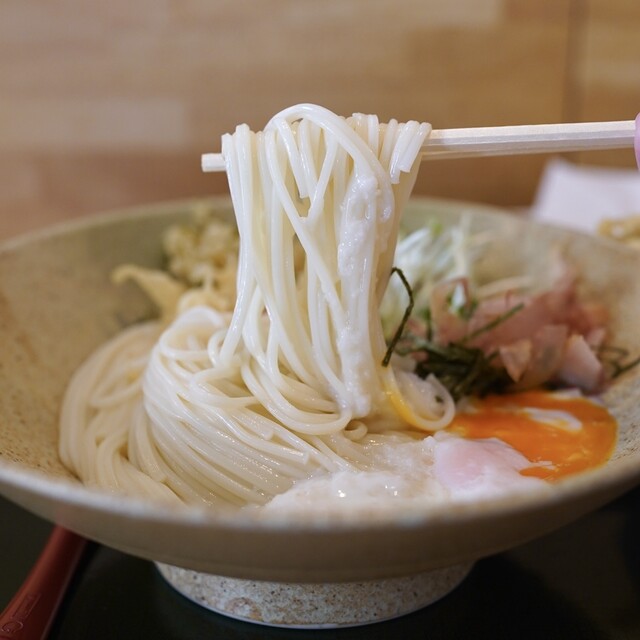
Approaching a compact udon shop in Musashi-Koganei changes the tempo of Tokyo dining. The city’s luxury restaurant conversation often tilts toward Ginza counters and hotel dining rooms, but noodle culture works through smaller rooms, short services, and a physical closeness between kitchen, counter, and table. At Goto Udon Bizenya, the format is part of the argument: 17 seats, including five at the counter and three four-seat tables, place the meal closer to a neighbourhood craft shop than a destination tasting room.
That scale matters. Udon in Tokyo is not a single category so much as a set of regional habits translated into the capital: Sanuki firmness, Kansai restraint, local standing counters, family-run lunch rooms, and specialist shops that pair wheat noodles with tempura or regional side dishes. Goto Udon Bizenya sits in the latter lane, listed for udon, regional cuisine, and tempura, with Tabelog 100 Udon EAST 2024 recognition giving it a stronger signal than a standard local lunch stop. The point is not spectacle; it is the discipline of a narrow format executed in a small container.
A small-room udon format built around counter proximity
Tokyo’s casual dining excellence often reveals itself through room planning. A 17-seat noodle shop has little space for drift: turnover, sightlines, and kitchen rhythm become part of the experience. Counter seating gives solo diners a clear place in the room, while the three tables make the format workable for families or friends without changing its scale. That split is useful in western Tokyo, where neighbourhood restaurants need to absorb local lunch traffic while retaining the precision that brings destination diners across town.
The physical setup also shapes expectations. This is not the multi-course grammar of kaiseki or the reservation theatre of omakase. It belongs to a different Tokyo category: specialist cooking where the architecture supports speed, repetition, and consistency. The award recognition places it among selected eastern Japan udon addresses rather than in a broad casual-dining pile, but the price band remains in the JPY 1,000 to JPY 1,999 range. In a city where serious meals can quickly detach from daily life, that combination is worth reading closely.
Compared with nearby-value categories in Tokyo, the positioning is precise. Curry no Mise Pusan and Chuka Soba Hirai occupy the same JPY 1,000 to JPY 1,999 bracket, while Kodaira Udon Kodaira honten sits lower at under JPY 999. Goto Udon Bizenya prices with modest specialist peers rather than with high-touch dining rooms. The difference is category depth: the noodle house earns attention through a defined udon lane, not breadth.
Why Musashi-Koganei changes the reading
Musashi-Koganei is not the shorthand Tokyo visitors usually reach for when planning meals. That is part of the editorial interest. The JR Chuo Line pushes west from the central wards into a dining geography where independent shops can be both local infrastructure and serious specialist stops. In that context, a recognised udon room in Honcho reads differently from a central address: it asks for a trip built around a specific genre rather than a neighbourhood crawl of famous names.
The room’s family-friendly and solo-friendly framing also says something about udon’s place in Japanese dining. A noodle shop can be technically serious without requiring ceremony. Children and strollers are welcome, private rooms are not part of the format, and the seating plan keeps the experience open rather than secluded. That openness is not a lesser form of dining; it is how many of Japan’s strongest single-dish traditions function. Ramen, soba, curry rice, tonkatsu, and udon all reward rooms where the kitchen’s repetition becomes the standard.
The no-smoking policy and wheelchair-accessible facilities add practical clarity to a small space, though the essential decision remains culinary: choose this when udon is the point of the outing, not a fallback between other plans. The 2011 opening date gives the shop enough history to move beyond novelty, while the Tabelog 100 selections in 2020, 2022, and 2024 indicate repeated recognition across multiple list cycles. For a modestly priced noodle room, that is the signal to notice.
Know Before You Go
- Recognition: Selected for Tabelog 100 Udon EAST 2024, with prior Tabelog 100 udon selections in 2020 and 2022.
- Format: Udon specialist with regional-cuisine and tempura categories; 17 seats across counter and tables.
- Reservations: Reservations are unavailable, so the visit works better as a flexible lunch plan than a fixed formal booking.
- Payment: Cash planning matters here; credit cards, electronic money, and QR code payments are not accepted.
- Transit context: The shop is by Musashi-Koganei on the JR Chuo Line, useful for diners willing to look beyond central Tokyo’s usual restaurant clusters.
For broader planning, use Our full Tokyo restaurants guide alongside Our full Tokyo hotels guide, Our full Tokyo bars guide, Our full Tokyo wineries guide, and Our full Tokyo experiences guide. Other Tokyo dining references include. 鮪と炭火焼き うお炭 秋葉原店, 12/10 Shinjuku ten, 124. KAGURAZAKA (Yakitori), 2D Cafe, and 3 Chome no Curry Ya San. Regional planning can extend to -Grilled beef Sukiyaki- KAMAKURA TANUKIAN 鎌倉 たぬき庵 in Kamakura.cafe in Osaka.know in Kumamoto, (Shoku) Vietnam in Kawasaki, [Curry Senmon Ten] Maruyama Kyoju. in Sapporo, [ki:] in Kyoto, Jōdo Saké Bar in Los Angeles, and Onigiri Time in Pasadena.
Cuisine and Credentials
Comparable venues for cuisine and category context.
| Venue | Cuisine | Price | Notes |
|---|---|---|---|
| Goto Udon BizenyaThis venue — the venue you are viewing | Goto udon specialist | $ | Not listed |
| Kitchen Nankai (キッチン南海) | Classic Yoshoku Katsu Curry | $ | Jimbocho |
| Chuka Soba Hirai | Ramen & Tsukemen Shop | $ | Fuchu |
| Ozasa | Traditional Japanese Wagashi (Yokan & Monaka) | $ | Kichijoji |
| Sumibi Yakisakana Bento Sumisawa | Charcoal-Grilled Fish Bento | $ | Setagaya |
| Imagawayaki Kashiwaya | Traditional imagawayaki & Japanese sweets stand | $ | Setagaya |
Recognition history
Dated appearances from independent guides and award organizations, with the underlying list record or original source where available.
Tabelog 100 #10 · No. 10
Tabelog · Tabelog 100 - Udon - EAST - 2024
Continue exploring
More in Tokyo
Restaurants in Tokyo
Browse all →



Bars in Tokyo
Browse all →



Hotels in Tokyo
Browse all →




Wineries in Tokyo
Browse all →
At a Glance
- Cozy
- Quiet
- Solo
- Casual Hangout
- Family
- After Work
- Standalone
Current opening hours
- Monday
- Closed
- Tuesday
- 11:30 AM–2:15 PM
- Wednesday
- 11:30 AM–2:15 PM
- Thursday
- 11:30 AM–2:15 PM
- Friday
- 11:30 AM–2:15 PM
- Saturday
- 11:30 AM–2:30 PM
- Sunday
- 11:30 AM–2:30 PM
Hours can change for holidays and private events. Last verified .