
Asaka’s okonomiyaki map now has a serious Hiroshima-style marker: asakanakicchinruburu pairs iron-plate cooking with fish-shop side dishes in a compact, family-ready room. Its selection for Tabelog 100 - Okonomiyaki - 2025 gives the restaurant a credential that matters in a category often judged by local loyalty rather than formal ceremony.
Pearl is the En Primeur Club membership app — saves, bookings, and concierge access live there. Same editors, same standards.
- Address
- 埼玉県朝霞市本町2-8-15 第2ホワイトビルB 1F
- Phone
- +817040607186
 Saves & bookings on Pearl
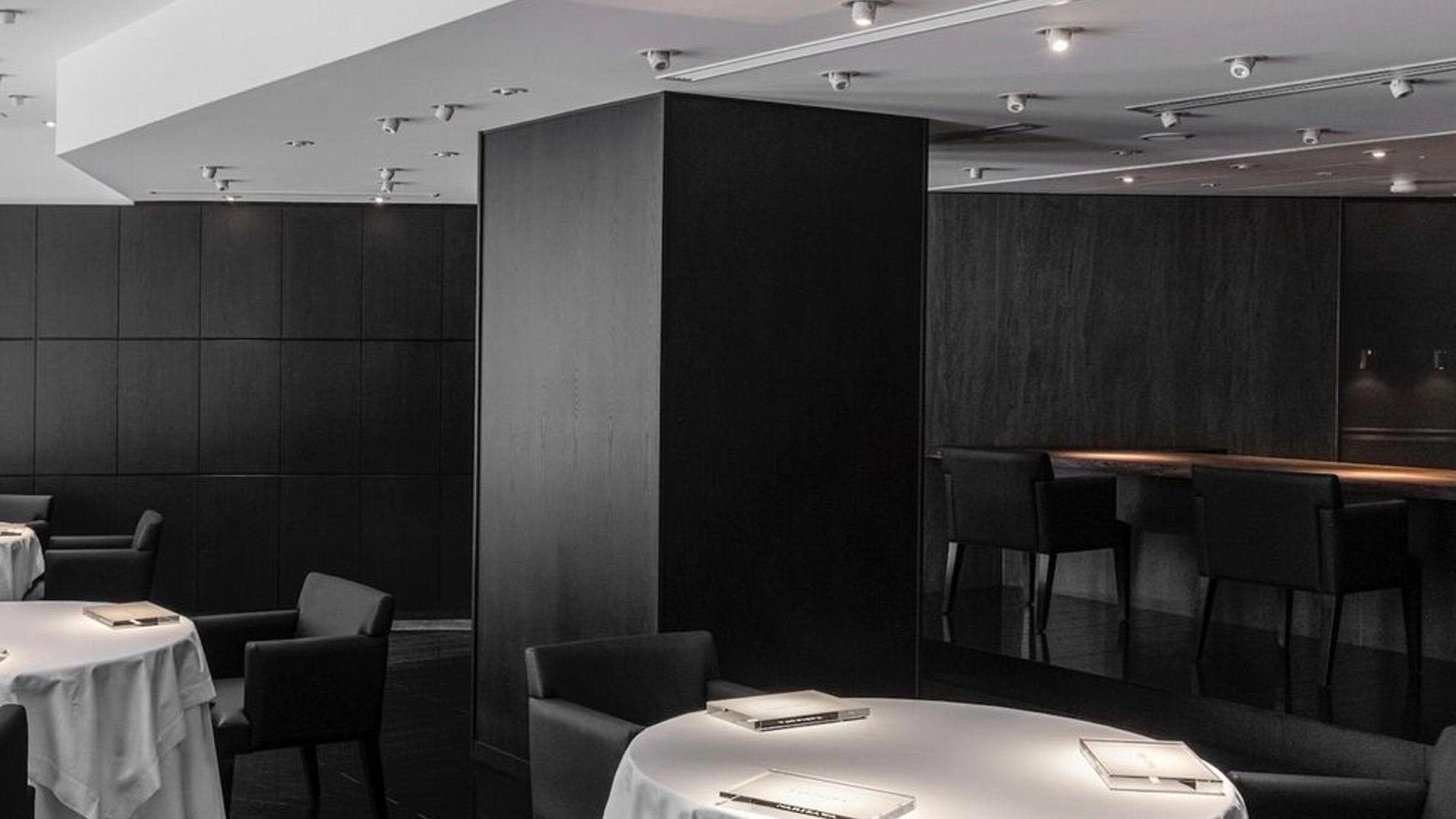
Approach the room as a small-town Japanese dining ritual rather than a destination spectacle: tables, raised seating, a kids’ area, and the quiet promise of an iron plate doing the serious work. In Asaka, where everyday eating often means bakeries, ramen counters, and neighborhood set meals, asakanakicchinruburu adds a Hiroshima okonomiyaki rhythm to the city’s casual restaurant circuit.
That matters because okonomiyaki is not only a dish category; it is a pacing system. Hiroshima-style cooking tends to feel more assembled than mixed, with layers built in sequence rather than folded into a single batter-heavy mass. The meal asks diners to slow down, order with appetite rather than ceremony, and let the plate define the tempo. The restaurant’s selection for Tabelog 100 - Okonomiyaki - 2025 places it inside a national conversation about a genre that rarely depends on luxury signals.
Hiroshima okonomiyaki enters Asaka's everyday dining circuit
Asaka’s casual food culture is practical by nature. Bread shops such as Asaka Bakery Honmachi ten, Asaka Bakery Asakadai ten, and Boulangerie Arbre serve the commuter and family routines that shape suburban Saitama eating. Ramen houses such as Chuka Soba Genroku and Chuka Soba Zuizan answer a different need: fast, focused bowls with little negotiation. Okonomiyaki sits between those modes. It is casual, but not rushed; communal, but not necessarily celebratory.
The stronger reading of asakanakicchinruburu is not as a novelty import from Hiroshima, but as a neighborhood room translating a regional ritual into Asaka’s daily register. The menu identity combines okonomiyaki, seafood, and cafe elements, with fish side dishes tied to a fish-shop background. That combination shifts the usual okonomiyaki expectation. Instead of treating the pancake as a solitary drinking snack or late-night staple, the format leans toward set-meal logic: iron-plate cooking supported by side dishes, drinks, and a room that can absorb families.
The Tabelog score of 3.66 and inclusion in the 2025 okonomiyaki selection are useful signals because this category is crowded with regional loyalty. Awards alone do not tell diners how a meal feels, but they do mark a threshold: enough consistency, identity, and public response to register beyond the immediate neighborhood. For a city better known to outsiders as a residential base than as a food-travel target, that recognition gives Asaka a sharper point on the okonomiyaki map.
The ritual is casual, but the format rewards attention
Hiroshima-style okonomiyaki changes the social mechanics of a meal. Kansai-style versions often read as looser and batter-led; Hiroshima versions are associated with layered construction, noodles, cabbage, and a more architectural build. The pleasure is not only in the finished plate but in the wait, the sequence, and the way a table settles around the iron-plate premise. asakanakicchinruburu’s seafood and fish-side-dish identity adds another layer to that ritual without turning it formal.
That dual identity explains why the room can be read in two ways. For diners tracking Japan’s regional comfort foods, it is a Hiroshima okonomiyaki address in Saitama with national category recognition. For Asaka residents, it functions more like a flexible neighborhood kitchen, the kind of place where lunch, an early family meal, takeout, and drinks can exist under the same roof. Those two readings are not in conflict. They are exactly how casual Japanese dining often earns staying power: a specialist core supported by practical habits.
The presence of sake, shochu, wine, and cocktails gives the meal range, but the room is not asking for bar-like seriousness. The better expectation is a table built around okonomiyaki and seafood-leaning sides, with drinks as support rather than performance. Compared with single-purpose ramen rooms, the pacing is broader. Compared with bakeries and patisserie stops, it has more seated rhythm and more heat from the kitchen. The meal sits in the middle, which is why it fits Asaka.
How to place it within an Asaka food day
For visitors using Asaka as more than a train-line stop, the city rewards small, category-specific choices rather than grand dining itineraries. Start with the broader map in Our full Asaka restaurants guide, then think by appetite: bakery in the morning, ramen when time is tight, okonomiyaki when the meal can stretch. The city’s hospitality and leisure infrastructure is better understood through separate lenses, from Our full Asaka hotels guide to Our full Asaka bars guide, Our full Asaka wineries guide, and Our full Asaka experiences guide.
Within Japan’s wider casual-dining spectrum, the appeal here is format discipline at an accessible tier rather than luxury theater. A sukiyaki specialist such as -Grilled beef Sukiyaki- KAMAKURA TANUKIAN 鎌倉 たぬき庵 in Kamakura centers ritual around beef and a more deliberate table sequence; seafood-led casual rooms such as. 鮪と炭火焼き うお炭 秋葉原店 in Tokyo frame the meal through fish and charcoal. Cafe formats such as.cafe in Osaka and.know in Kumamoto occupy a softer register, while (Shoku) Vietnam in Kawasaki and [Curry Senmon Ten] Maruyama Kyoju. in Sapporo show how imported or regional formats can become neighborhood staples when the ritual is clear.
For international readers, the closest comparison is not a tasting-menu restaurant but a specialized comfort-food room with enough recognition to justify a detour if the route already points toward Saitama. Los Angeles and Pasadena have their own Japanese casual grammars, from Jōdo Saké Bar in Los Angeles to Onigiri Time in Pasadena, but Asaka’s version is quieter and more domestic. The draw is the meal’s structure: layered okonomiyaki, seafood support, a family-aware room, and a price tier that keeps the ritual attached to everyday life rather than special-occasion performance.
Cuisine Lens
Comparable venues by cuisine and price in the same metro.
| Venue | Cuisine | Price | Notes |
|---|---|---|---|
| asakanakicchinruburuThis venue — the venue you are viewing | Hiroshima okonomiyaki & fish deli kitchen-café | $ | Not listed |
| Asaka Bakery Asakadai ten | Japanese neighborhood bakery and sandwich shop (take‑out only) | $ | Kita Asaka |
| Chuka Soba Zuizan | Ramen & Chuka Soba | $ | Asaka |
| Udon Dokoro Ohana | Udon & Izakaya | $ | Asakadai |
| Chuka Soba Genroku | Ramen & Tsukemen Shop | $$ | Asakadai |
| PATISSERIE ORANGE | Dining | Not listed | Asaka |
Recognition history
Dated appearances from independent guides and award organizations, with the underlying list record or original source where available.
Tabelog 100 #35 · No. 35
Tabelog · Tabelog 100 - Okonomiyaki - 2025













At a Glance
- Cozy
- Lively
- Casual
- Family
- Casual Hangout
- Group Dining
- After Work
- Private Event
- Standalone
- Private Dining
- Local Sourcing
Casual, homey neighborhood kitchen and café with a relaxed daytime feel, welcoming families and kids with amenities like a kids’ space and child seats, and suitable for daytime drinks.