Michelin Plate
Our verdict
Where Nara's Dining Scene Places Its Stakes Nara is not a city that announces itself through its restaurants. Most visitors spend their time among the deer and the daibutsu, treating meals as an afterthought between temple gates. That pattern has made it easy to overlook how quietly the city has assembled a credible tier of serious Japanese cooking. Within a city where the starred cohort is small enough to count on one hand, that positioning carries weight. Across the Kansai corridor, the comparison set sharpens the picture. Gion Sasaki in Kyoto and HAJIME in Osaka anchor the region's highest-recognition Japanese tables; Musoan operates a step below that stratosphere but occupies a clear position as Nara's most decorated address for Japanese cuisine. The Suimoncho Setting The address, Suimoncho, places Musoan within one of Nara's older residential and merchant quarters, a stretch of the city that sits east of the commercial centre and carries the low-rise, unhurried character common to streets near Nara Park. In cities like Kyoto, an address in a historic quarter functions almost as a marketing asset; in Nara, where that atmosphere is widespread and taken for granted, the location makes no particular claim on the diner. What the Suimoncho position does offer is separation from the higher-footfall tourist circuits, which means the clientele arriving at Musoan has generally made a deliberate choice to be there. Approaching a Japanese restaurant of this calibre in a neighbourhood context rather than a hotel lobby or a purpose-built dining district changes the register of the meal from the first few minutes. There is no theatrical arrival, no concierge handoff. The experience opens, as is typical for starred Japanese houses in secondary cities, through understatement. Service as a Structural Argument The editorial angle worth pressing at a restaurant operating at Musoan's level in a city of Nara's size is the question of team depth. In Tokyo, a starred address like Harutaka or Azabu Kadowaki draws from a large labour pool and can maintain considerable depth in its kitchen and front-of-house. Nara does not offer that advantage. In the Kansai region's finer dining tier, inconsistency is typically what separates one-star houses from long-term recognition, and Musoan appears to have stabilised that variable. How precisely the kitchen and floor divide responsibility for that stability, the pacing, the drink pairings, the temperature of service, belongs to the territory of the meal itself rather than external reportage, but the outcome registers in the record. For a point of comparison closer in scale, Ajinokaze Nishimura and Ajinotabibito Roman represent the city's mid-tier Japanese offer. The gap between those addresses and Musoan is not purely about price; it reflects the level of coordination required to hold a starred rating in a competitive national inspection framework, in a city where the industry infrastructure is thinner than in Osaka or Kyoto. Japanese Cuisine at This Address and Price Point The ¥¥¥ designation at Musoan aligns with what the market for serious Japanese dining in Nara currently supports. This is a price tier that, in the context of Kansai's dining economy, represents a meaningful commitment from the diner without crossing into the allocation-only territory of multi-star kaiseki houses. What the Michelin recognition does confirm is that the cooking meets a standard of technical discipline and ingredient handling that the Guide's Japan programme, among the most closely watched in the world, considers worth singling out. Japan's Michelin operations are notable for their consistency and rigour; a star in Nara is evaluated against the same benchmarks applied to addresses in Tokyo, Osaka, and Kyoto. That context makes the 2024 star and 2025 Plate retention a substantive signal rather than a courtesy award for a regional market. For additional reference points across Japan's broader starred Japanese dining category, Myojaku in Tokyo, Goh in Fukuoka, 1000 in Yokohama, and 6 in Okinawa illustrate the breadth of the category beyond the major urban centres. Planning the Visit Musoan is located at 70-7-1-2 Suimoncho, Nara 630-8208. The ¥¥¥ price tier situates the meal above the city's casual dining range and in line with the handful of other destination addresses in town. Given the starred status and small cohort of comparable restaurants in Nara, advance booking is the practical approach; walk-in availability at this level in Japan is limited, and the combination of Michelin recognition and a contained local market means tables fill with lead time. For accommodation context, our full Nara hotels guide covers properties across price tiers. Visitors building a broader Nara itinerary around the restaurant can cross-reference our Nara bars guide, our Nara wineries guide, and our Nara experiences guide for the full picture. For the widest view of what the city's restaurant tier offers at this price point and above, our full Nara restaurants guide maps the current scene. Frequently Asked Questions What should I eat at Musoan?The reliable approach is to follow the kitchen's lead: at a starred Japanese address, the set format, whatever its length or structure, is typically where the kitchen's strengths are most coherently expressed. Allow the restaurant to pace the meal rather than requesting modifications.Do they take walk-ins at Musoan?Nara's small starred cohort means the few tables at this level are in genuine demand, particularly on weekends and during peak temple-tourism seasons in spring and autumn. If the city is a planned stop rather than a spontaneous one, a reservation made well in advance is the sensible approach. Same-day seats occasionally open through cancellations, but building an itinerary around that possibility is a risk at a restaurant priced in the ¥¥¥ tier.What's the standout thing about Musoan?Nara's dining scene is defined by a large number of casual, tourist-adjacent options and a very small group of kitchens operating to a higher technical standard. Musoan belongs to the latter group, has maintained its Michelin recognition from 2024 into 2025, and occupies an address in a quieter quarter of the city rather than a high-footfall tourist zone. For a visitor who wants to eat seriously in Nara rather than default to whatever is nearest the park, that combination of credential and deliberate positioning is the relevant argument.

Pearl is the En Primeur Club membership app, where members save venues, book tables and use the concierge.

Where Nara's Dining Scene Places Its Stakes
Nara is not a city that announces itself through its restaurants. Most visitors spend their time among the deer and the daibutsu, treating meals as an afterthought between temple gates. That pattern has made it easy to overlook how quietly the city has assembled a credible tier of serious Japanese cooking. Within a city where the starred cohort is small enough to count on one hand, that positioning carries weight.
Across the Kansai corridor, the comparison set sharpens the picture. Gion Sasaki in Kyoto and HAJIME in Osaka anchor the region's highest-recognition Japanese tables; Musoan operates a step below that stratosphere but occupies a clear position as Nara's most decorated address for Japanese cuisine.
The Suimoncho Setting
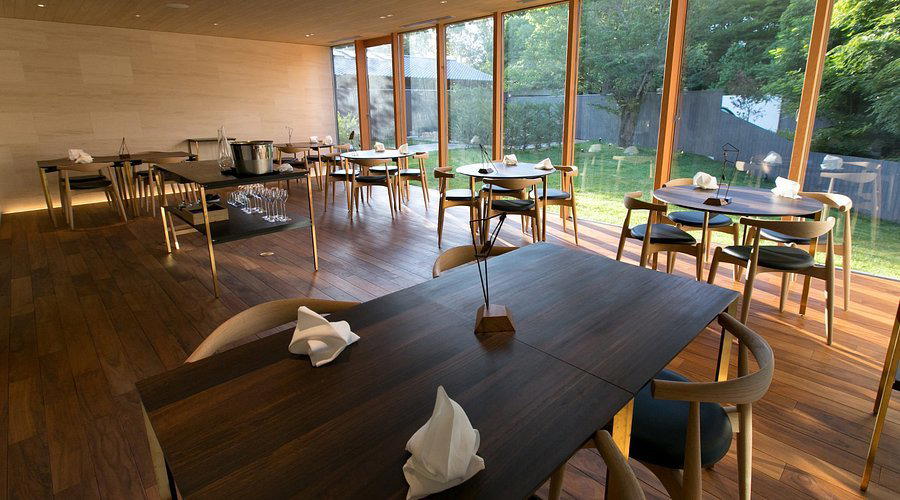
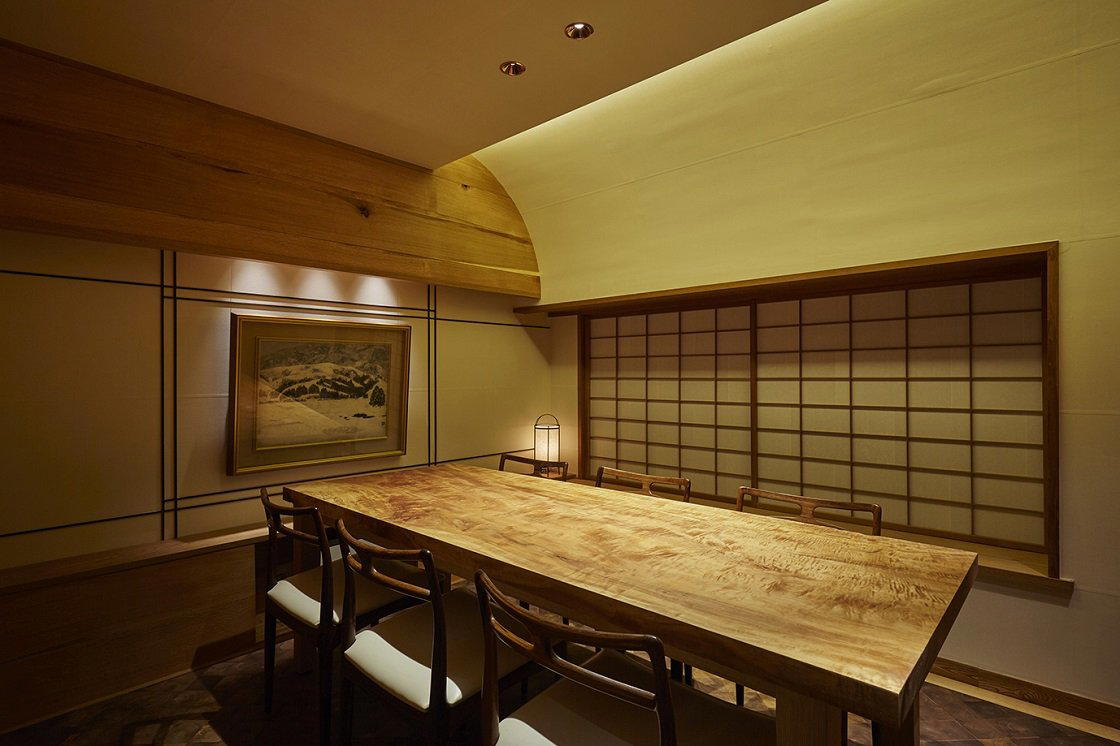
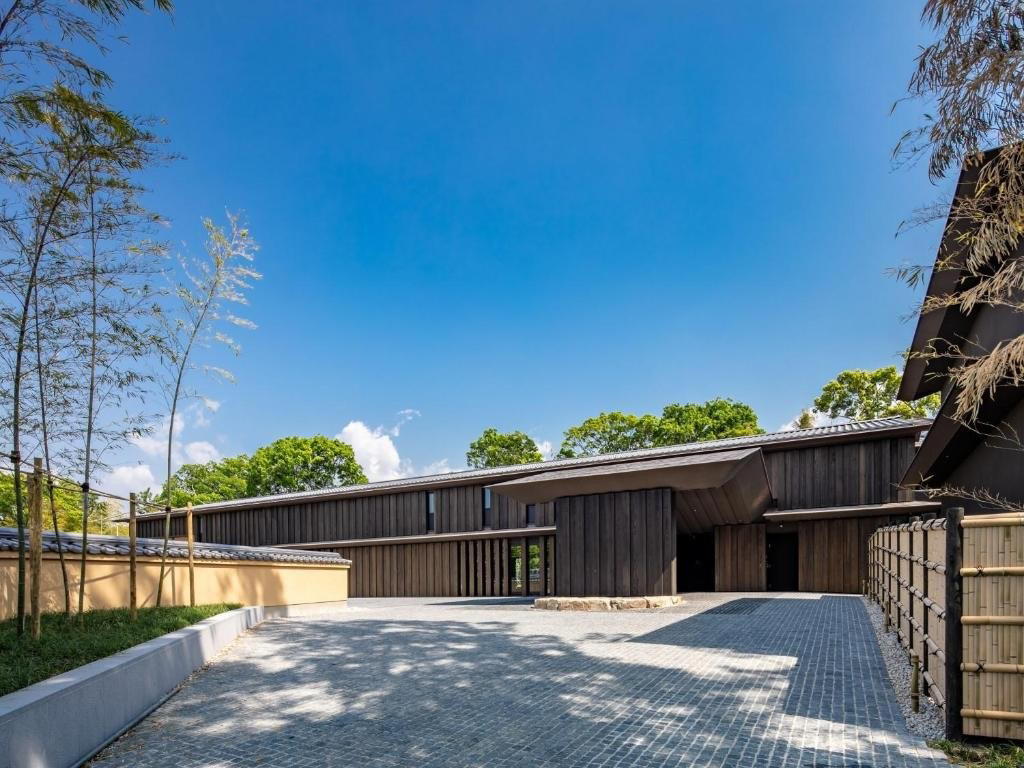
The address, Suimoncho, places Musoan within one of Nara's older residential and merchant quarters, a stretch of the city that sits east of the commercial centre and carries the low-rise, unhurried character common to streets near Nara Park. In cities like Kyoto, an address in a historic quarter functions almost as a marketing asset; in Nara, where that atmosphere is widespread and taken for granted, the location makes no particular claim on the diner. What the Suimoncho position does offer is separation from the higher-footfall tourist circuits, which means the clientele arriving at Musoan has generally made a deliberate choice to be there.
Approaching a Japanese restaurant of this calibre in a neighbourhood context rather than a hotel lobby or a purpose-built dining district changes the register of the meal from the first few minutes. There is no theatrical arrival, no concierge handoff. The experience opens, as is typical for starred Japanese houses in secondary cities, through understatement.
Service as a Structural Argument
The editorial angle worth pressing at a restaurant operating at Musoan's level in a city of Nara's size is the question of team depth. In Tokyo, a starred address like Harutaka or Azabu Kadowaki draws from a large labour pool and can maintain considerable depth in its kitchen and front-of-house. Nara does not offer that advantage.
In the Kansai region's finer dining tier, inconsistency is typically what separates one-star houses from long-term recognition, and Musoan appears to have stabilised that variable. How precisely the kitchen and floor divide responsibility for that stability, the pacing, the drink pairings, the temperature of service, belongs to the territory of the meal itself rather than external reportage, but the outcome registers in the record.
For a point of comparison closer in scale, Ajinokaze Nishimura and Ajinotabibito Roman represent the city's mid-tier Japanese offer. The gap between those addresses and Musoan is not purely about price; it reflects the level of coordination required to hold a starred rating in a competitive national inspection framework, in a city where the industry infrastructure is thinner than in Osaka or Kyoto.
Japanese Cuisine at This Address and Price Point
The ¥¥¥ designation at Musoan aligns with what the market for serious Japanese dining in Nara currently supports. This is a price tier that, in the context of Kansai's dining economy, represents a meaningful commitment from the diner without crossing into the allocation-only territory of multi-star kaiseki houses.
What the Michelin recognition does confirm is that the cooking meets a standard of technical discipline and ingredient handling that the Guide's Japan programme, among the most closely watched in the world, considers worth singling out. Japan's Michelin operations are notable for their consistency and rigour; a star in Nara is evaluated against the same benchmarks applied to addresses in Tokyo, Osaka, and Kyoto. That context makes the 2024 star and 2025 Plate retention a substantive signal rather than a courtesy award for a regional market. For additional reference points across Japan's broader starred Japanese dining category, Myojaku in Tokyo, Goh in Fukuoka, 1000 in Yokohama, and 6 in Okinawa illustrate the breadth of the category beyond the major urban centres.
Planning the Visit
Musoan is located at 70-7-1-2 Suimoncho, Nara 630-8208. The ¥¥¥ price tier situates the meal above the city's casual dining range and in line with the handful of other destination addresses in town. Given the starred status and small cohort of comparable restaurants in Nara, advance booking is the practical approach; walk-in availability at this level in Japan is limited, and the combination of Michelin recognition and a contained local market means tables fill with lead time. For accommodation context, our full Nara hotels guide covers properties across price tiers. Visitors building a broader Nara itinerary around the restaurant can cross-reference our Nara bars guide, our Nara wineries guide, and our Nara experiences guide for the full picture. For the widest view of what the city's restaurant tier offers at this price point and above, our full Nara restaurants guide maps the current scene.
Frequently asked questions
Is Musoan award-winning?
What type of food is Musoan known for?
What should I eat at Musoan?
Musoan's cuisine type is listed as Japanese, operating at the ¥¥¥ tier, a price point that, in Nara, supports a focused, composed menu rather than a sprawling one.
How much does it cost to eat at Musoan?
Pricing at Musoan is listed as ¥¥¥.
How do I find Musoan?
Musoan is located at 70-7-1-2 Suimoncho, Nara, 630-8208, Japan, Nara.
Do they take walk-ins at Musoan?
What's the standout thing about Musoan?
That recognition, sustained from 2024 into the 2025 Michelin Plate listing, positions Musoan as the kind of address that changes how seriously the city's dining scene is taken.
Comparable Spots, Quickly
Comparable options at a glance, pulled from our tracked venues.
| Venue | Cuisine | Price | Awards |
|---|---|---|---|
| MusoanThis venue (the venue you are viewing) | Traditional Japanese Kaiseki | $150–200 | Michelin Plate |
| akordu | Modern Spanish with Nara Influences | $150–200 | 2 Michelin Stars · La Liste Top Restaurants |
| Wa Yamamura | Traditional Kaiseki | $100–150 | 1 Michelin Star |
| Araki | Seasonal Japanese Tempura and Kaiseki | $100–150 | Michelin Plate · Tabelog Bronze #23 |
| Tama | French with Local Nara Ingredients | $50–100 | Michelin Plate |
| NARA NIKON | Kaiseki | $150–200 | 2 Michelin Stars · La Liste Top Restaurants |
Recognition history
Dated appearances from independent guides and award organizations, with the underlying list record or original source where available.
Michelin Plate
Michelin
Full recognition history (2 entries)
Michelin Plate
Michelin