Mo. Sto Bistrot occupies a quiet address in Milan's Zona Tortona district, one of the city's more considered residential pockets south of the Navigli canals. The bistrot format positions it in a tier between neighbourhood trattoria and the formal tasting-menu houses that define Milan's fine-dining circuit. For visitors mapping the city's mid-register dining scene, it warrants a close look.
Pearl is the En Primeur Club membership app — saves, bookings, and concierge access live there. Same editors, same standards.
- Address
- Via Gian Carlo Castelbarco, 3, 20136 Milano MI, Italy
- Phone
- +39283977026
- Website
- mostobistrot.it
- Directions
- Get directions
 Saves & bookings on Pearl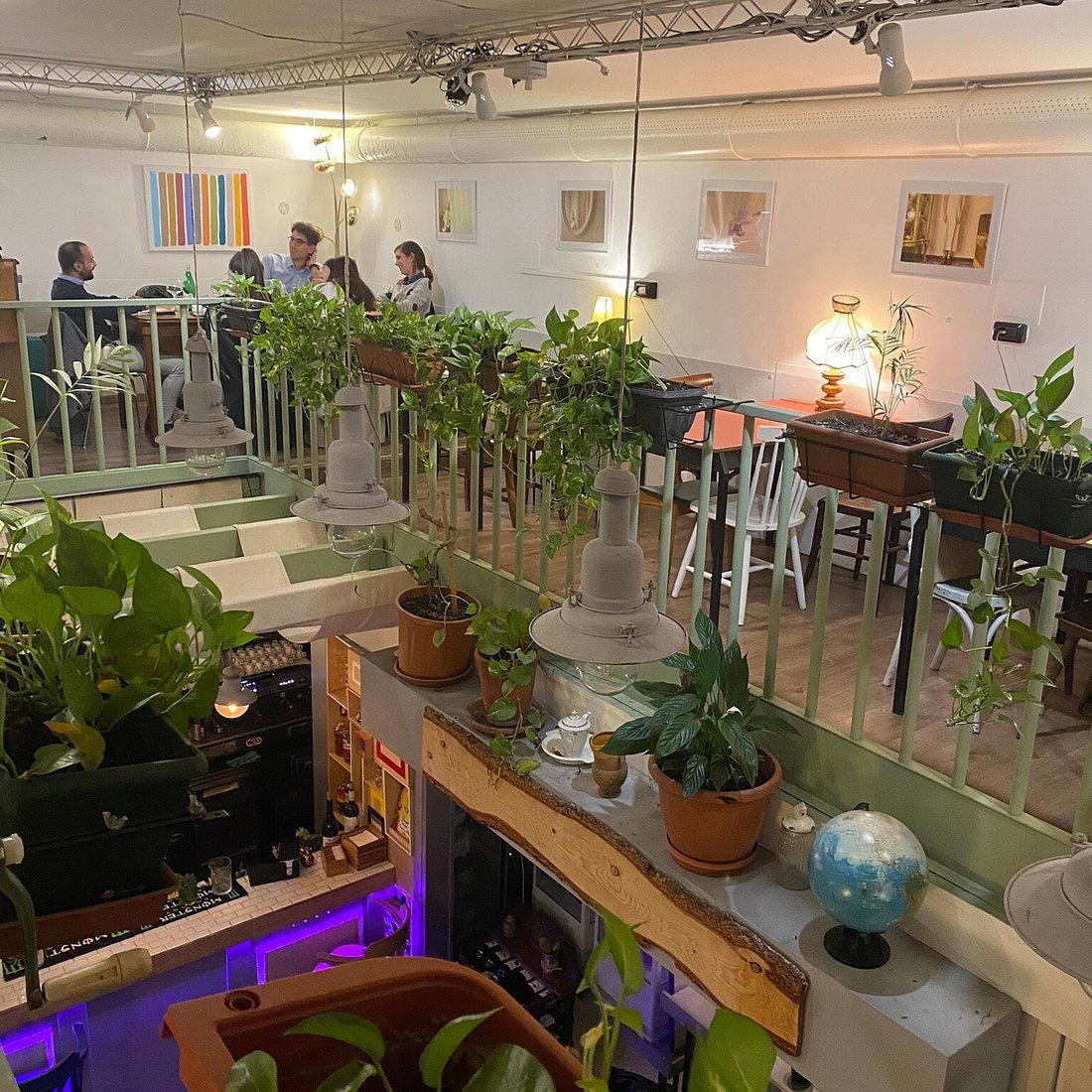
South of the Navigli: What the Address Signals
Mo. Sto Bistrot is a Sicilian and Pugliese Italian Bistro in Milan, at Via Gian Carlo Castelbarco, 3 in the Tortona district. The Duomo and Galleria corridor carries the grand-gesture restaurants: Cracco in Galleria and its theatre of modern Italian technique, or the tasting-menu formalism of Andrea Aprea and Seta further north. The Navigli canals attract a younger, louder crowd. And then there is the band of streets between the two: the Zona Tortona quadrant extending toward the Porta Romana axis, where Via Gian Carlo Castelbarco sits. This is residential Milan at its quieter register, a neighbourhood defined less by destination dining and more by the kind of place that locals return to on a Tuesday.
Mo. Sto Bistrot's address on Via Castelbarco, 3 places it inside that logic. A bistrot in this part of the city operates against a different set of expectations than one positioned near Brera or in the Porta Nuova towers. The surrounding streets offer fewer of the urban spectacles that pull tourists; what they offer instead is a more settled, neighbourhood-specific rhythm. That context shapes how a visit reads before you even sit down.
The Bistrot Format in the Milan Hierarchy
Milan's restaurant categories have sharpened considerably over the past decade. At the leading edge, a cluster of multi-course kitchens has pulled fine dining toward higher price points and longer commitment formats. At the other end, a wave of natural-wine bars and small-plates operations has colonised the Navigli banks and the Isola district. The middle ground, the classic bistrot proposition of a focused à la carte, a short wine list, and a room that rewards lingering, has become a more deliberate positioning choice rather than a default.
Mo. Sto Bistrot occupies that middle tier. The bistrot designation carries specific expectations in Milan: a degree of informality, a menu built around seasonal Italian produce without the scaffolding of a tasting sequence, and pricing that sits well below the €€€€ bracket of the starred circuit. That places it in a different competitive conversation than, say, Verso Capitaneo, which leans toward progressive technique, and closer to the neighbourhood dining that Milanese residents rely on rather than book for occasions.
Across Italy more broadly, the bistrot format has proven durable precisely because it resists the arms race of tasting-menu complexity. Restaurants like Dal Pescatore in Runate or Osteria Francescana in Modena represent the destination end of Italian dining; the bistrot answers a different question about how Italians actually eat when the occasion is not notable.
Reading the Room
Tortona's streets carry a particular quiet. The neighbourhood built its current identity around the design and fashion industries that moved into former industrial spaces in the 1990s and 2000s; outside Salone del Mobile in April, when the whole district transforms into a month-long installation, its pace is unhurried. A bistrot on Via Castelbarco fits that character: it is not competing for the pre-theatre crowd or the post-Duomo tourist flow. It is operating on a different clock.
That positioning matters practically. Diners arriving from the centre will want to allow transit time; the address sits south of the Navigli and is more walkable from the Porta Genova or Porta Romana metro stops than from the northern hubs. It suits diners who plan ahead.
Italian Dining at This Register: The Broader Picture
The strongest argument for a bistrot format in a city like Milan is continuity: the regular visit rather than the occasion meal. Italy's dining culture has always placed high value on the restaurant that becomes a fixed point in a neighbourhood's life, a format that the starred circuit in cities like Florence (Enoteca Pinchiorri) or the long-table destination restaurants of the north (Le Calandre in Rubano, Atelier Moessmer Norbert Niederkofler in Brunico) cannot occupy by design. The bistrot fills the space between the trattoria and the fine-dining room, offering a kitchen with more ambition than a neighbourhood pizza joint but without the occasion-dining freight of a tasting menu.
Internationally, the gap between neighbourhood bistrot and destination dining is even more pronounced. The technical precision of Le Bernardin in New York City or the conceptual rigour of Atomix represent one end of a wide spectrum. Mo. Sto Bistrot operates at the other end of that spectrum, where proximity, regularity, and a room that does not demand a special occasion are the relevant metrics.
Planning a Visit
Via Gian Carlo Castelbarco, 3 in the 20136 postal district is the confirmed address. The bistrot is recommended for reservations and opens Monday to Saturday from 11 AM to 12 AM, with Sunday closed.
For visitors building a broader Milan dining itinerary, the EP Club full Milan restaurants guide maps the city's dining options across price tiers and neighbourhoods, which is useful context for positioning a meal at Mo. Sto Bistrot within a longer visit. Nearby southern Italy comparison points like Quattro Passi in Marina del Cantone, Uliassi in Senigallia, Reale in Castel di Sangro, Piazza Duomo in Alba, and Casa Perbellini 12 Apostoli in Verona illustrate how widely the ambition and format of Italian dining varies across the country's regions, which sharpens the case for understanding what a Milanese bistrot is specifically designed to deliver.
Style and Standing
Comparable venues nearby, for context on price, style, and recognition.
| Venue | Cuisine | Price | Notes |
|---|---|---|---|
| Mo. Sto BistrotThis venue — the venue you are viewing | Sicilian and Pugliese Italian Bistro | $$ | Not listed |
| Taverna del Borgo Antico | Italian Trattoria & Pizzeria | $$ | Brera |
| Cantina della Vetra | Traditional Milanese Trattoria | $$ | Duomo |
| Baladin Milano | Italian Craft Beer Gastropub | $$ | Brera |
| Fradiavolo Milano Premuda | Contemporary Neapolitan Pizza | $$ | Xxii Marzo |
| Marghe Pizza | Neapolitan Pizza | $$ | Xxii Marzo |
Continue exploring
More in Milan
Restaurants in Milan
Browse all →
Bars in Milan
Browse all →
Hotels in Milan
Browse all →

At a Glance
- Cozy
- Intimate
- Elegant
- Date Night
- Casual Hangout
- Terrace
- Local Sourcing
Current opening hours
- Monday
- 11 AM–12 AM
- Tuesday
- 11 AM–12 AM
- Wednesday
- 11 AM–12 AM
- Thursday
- 11 AM–12 AM
- Friday
- 11 AM–12 AM
- Saturday
- 11 AM–12 AM
- Sunday
- Closed
Hours can change for holidays and private events. Last verified .
Warm, cozy, and intimate atmosphere with dim lighting, mezzanine seating, and a hospitable, original environment.