



2 Michelin Stars · La Liste Top Restaurants · Falstaff Restaurant - 96 Falstaff Points
Our verdict
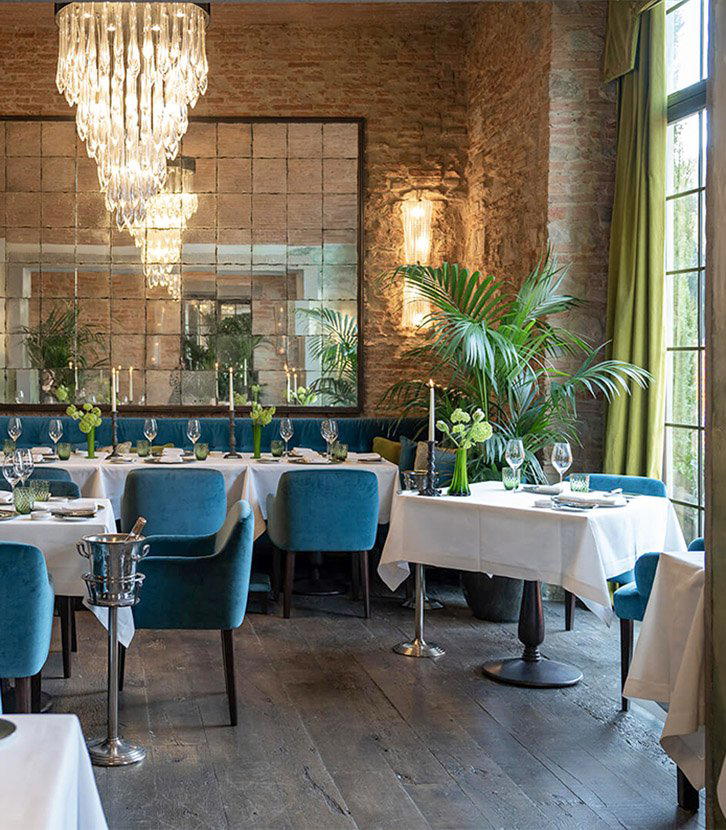
On the second floor of a building facing Piazza del Duomo, Verso Capitaneo holds two Michelin stars and an 87-point La Liste score for creative cooking with Pugliese roots and a Milanese sensibility. Three long communal tables face an open kitchen, giving the room an unusual transparency. Chef Omar Barsacchi and the Capitaneo brothers operate one of the city's more deliberate fine-dining formats, closed Tuesday and Wednesday, with lunch and dinner service the rest of the week.

Pearl is the En Primeur Club membership app, where members save venues, book tables and use the concierge.
The menu
What to order
- Spaghettoni with king crab
- Almond ravioli with calamaretti
- Blue lobster
- Roasted pigeon
- Veal sweetbreads with coffee béarnaise and sea urchins
A Room with a View of Both the Duomo and the Kitchen
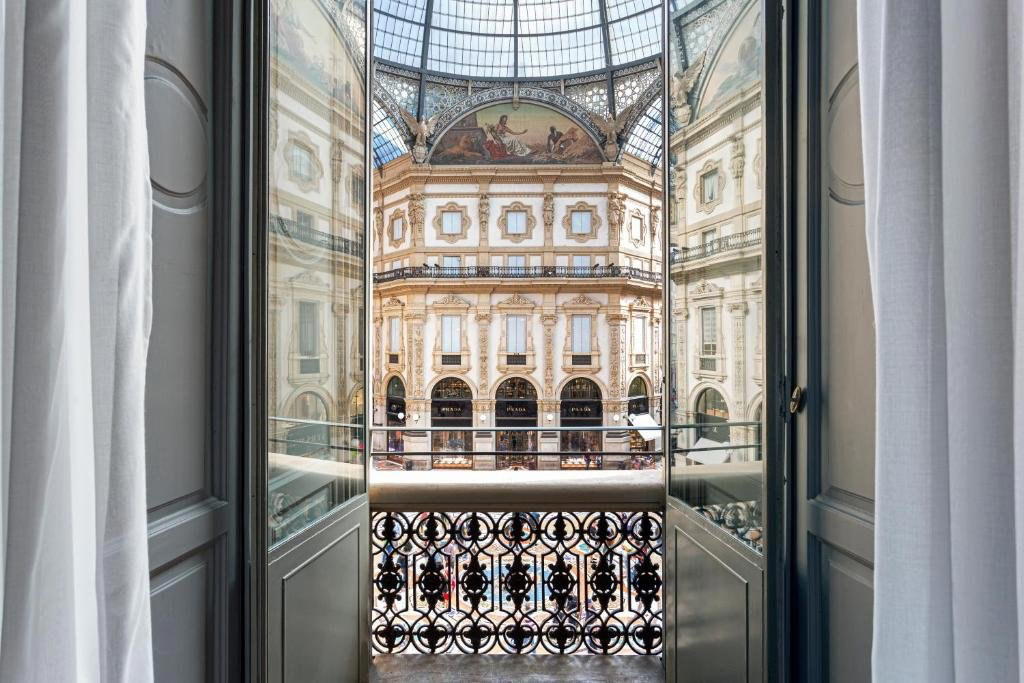
Milan's fine-dining tier has split, over the past decade, between hotel-anchored institutions and a smaller set of independently minded rooms where the physical staging is part of the argument. Verso Capitaneo belongs firmly to the latter group. You enter from Piazza del Duomo, number 21, and take a lift to the second floor, where the city's most recognisable façade sits just outside and an open-view kitchen dominates the interior. Three long tables run parallel to that kitchen, so the cooking is never hidden, the brigade works in full sight of the room, a format that signals a particular kind of confidence. More conventional tables exist for those who prefer distance, but the arrangement in front of the kitchen is the one that defines the restaurant's character.
The address is worth pausing on. Piazza del Duomo is tourist territory in the way that most central European squares are: crowded, commercial, and easy to dismiss. That a two-star kitchen operates on the second floor of a building on its perimeter says something about how Milan's high-end restaurant scene has been willing, in recent years, to claim spaces that earlier generations of serious cooking avoided. The room itself, once you are in it, neutralises the square below. What matters is the kitchen theatre ahead of you.
Creative Cooking with a Regional Spine
The creative category in Italian fine dining covers considerable ground, from technique-heavy modernism to more produce-centred interpretations that use innovation as a lens rather than a destination. Verso Capitaneo sits in the latter current. The Capitaneo brothers come from Puglia, and their southern Italian origins surface periodically in the menu without becoming the whole story. Milanese gastronomic tradition enters the picture alongside it, producing a kitchen that reads two regional grammars at once, neither displacing the other.
This kind of regional layering has become more common across Italy's top tier. Restaurants such as Osteria Francescana in Modena and Uliassi in Senigallia have made the case that Italian creative cooking works well when it is anchored to a specific geography rather than operating as a stateless technical exercise. Verso Capitaneo applies a version of that logic across two geographies simultaneously, which is a less common and more difficult balance to maintain.
Chef Omar Barsacchi leads the kitchen. His name provides the creative axis; the Capitaneo brothers provide the regional identity and the front-of-house direction. The division of labour is not unusual in this tier of Italian dining, but the dual regional pull it produces is.
Ethical Sourcing and the Question of Provenance
Puglia is one of Italy's most agriculturally productive regions, with an olive oil culture that predates Roman documentation, grain cultivation that has survived centuries of shifting land ownership, and a coastal fishing tradition whose pressure on wild stocks has grown considerably in the modern era. A kitchen that draws on Pugliese ingredients with any regularity is making sourcing decisions whether it frames them that way or not.
The broader movement in Italian fine dining toward transparent provenance has accelerated since roughly 2018, partly driven by consumer pressure and partly by chefs who trained under figures like Norbert Niederkofler, whose Atelier Moessmer in Brunico made Alpine sourcing discipline into an internationally discussed model. The question of what arrives on the plate, from where, and under what conditions has moved from a niche concern to a mainstream credentialing issue at the two- and three-star level.
For a kitchen positioned between Puglia and Milan, the sourcing conversation has two dimensions. Southern Italian smallholder producers, particularly those working with heritage grain varieties and traditional olive cultivars, represent a form of agricultural continuity that deserves acknowledgment when their output reaches a fine-dining table. Milanese supply chains, meanwhile, have their own complexity, sitting at the intersection of northern Italian agriculture and a city with a very large import and wholesale infrastructure. A kitchen that draws from both is navigating different ethical and logistical realities at once.
What can be confirmed from the record is the regional framing the restaurant itself uses. Whether the sourcing behind that framing meets the standards that the best of this generation has set, as demonstrated by places like Dal Pescatore in Runate or Quattro Passi in Marina del Cantone in their respective ways, is a question worth asking when you are at the table.
Where Verso Capitaneo Sits in the Milan Two-Star Field
Milan currently holds more Michelin stars per square kilometre than almost any other Italian city, and the two-star tier is competitive. Enrico Bartolini operates at the same price level with a creative format and a longer track record of international recognition. Andrea Aprea and Seta both occupy the modern Italian tier at €€€€, each with their own institutional backing.
Verso Capitaneo's distinction within this group is positional: the Piazza Duomo address, the open-kitchen long-table format, and the Pugliese-Milanese dual identity give it a profile that does not overlap directly with any of its two-star peers. Il Circolino and Il Liberty occupy different price and formality tiers. Moebius Sperimentale and Morelli represent the city's more experimental registers.
At the European level, La Liste's 2025 ranking of 87 points placed Verso Capitaneo inside a large cohort of recognised creative restaurants without positioning it in the very top tier. The 2026 score of 86 points represents a marginal adjustment rather than a significant shift. The Opinionated About Dining ranking of 422nd in Europe in 2024 reflects a similar positioning: solidly credentialled, not at the apex. For context, Enoteca Pinchiorri in Florence and Alléno Paris au Pavillon Ledoyen operate at higher La Liste scores, while JAN in Munich represents what a comparable creative format looks like in a different northern European city context.
Google's 4.7 score across 151 reviews suggests a consistent guest experience rather than a polarising one, which aligns with the format's transparency: an open kitchen and communal long tables tend to self-select for guests who want engagement rather than invisibility.
What the Format Demands of the Guest
The long-table arrangement facing the kitchen is not a neutral logistical choice. It places the guest in a participatory relationship with the cooking, even if no words are exchanged. Restaurants that use this configuration, from high-end counter formats in Tokyo to the more communal European versions, are asking diners to pay attention. The food arrives in a room where attention is already directed toward the source of the food. That changes the experience relative to a conventional room where the kitchen is hidden and the table is an island.
The format also affects the social dynamic. Long communal tables mix parties in ways that more conventional seating does not. Whether that reads as convivial or intrusive depends on the guest, but it is worth knowing before you book. The conventional tables exist as an alternative, but they are, by the room's own logic, the secondary option.
Planning a Visit
Verso Capitaneo opens for lunch and dinner Monday and Thursday through Sunday, with Tuesday and Wednesday fully closed. The compressed operating week is common at this level of Italian fine dining, where brigade welfare and kitchen consistency are managed through reduced service days. Lunch runs from 12:30 to 2pm; dinner from 7:30 to 10pm. The address is Piazza del Duomo 21, second floor, central Milan.
| Venue | Stars | Price | Format | Closed |
|---|---|---|---|---|
| Verso Capitaneo | Michelin 2★ | €€€€ | Open kitchen, long tables | Tue–Wed |
| Enrico Bartolini | Michelin 3★ | €€€€ | Hotel-anchored, tasting menu | Varies |
| Contraste | Michelin 2★ | €€€€ | Progressive, independent | Varies |
| Seta | Michelin 2★ | €€€€ | Hotel-anchored, modern Italian | Varies |
For a broader view of where Verso Capitaneo sits within Milan's restaurant scene, see our full Milan restaurants guide. Visitors planning a longer stay can also consult our full Milan hotels guide, our full Milan bars guide, our full Milan wineries guide, and our full Milan experiences guide.
Frequently asked questions
What days is Verso Capitaneo closed?
Hours at Verso Capitaneo: Hours: Monday 12:30–2 pm, 7:30–10 pm Tuesday Closed Wednesday Closed Thursday 12:30–2 pm, 7:30–10 pm Friday 12:30–2 pm, 7:30–10 pm Saturday 12:30–2 pm, 7:30–10 pm Sunday 12:30–2 pm, 7:30–10 pm.
What's Verso Capitaneo's location?
Verso Capitaneo is located at P.za del Duomo, 21/secondo piano, 20121 Milano MI, Italy, Milan.
What's Verso Capitaneo known for in terms of accolades?
Verso Capitaneo has received recognition including: La Liste Top Restaurants (2026): 86pts; From the entrance on Piazza Duomo, you take a lift to this restaurant on the second floor where three long tables are arranged in front of the open-view kitchen so that guests can watch the chefs at w….
What's the must-try dish at Verso Capitaneo?
Verso Capitaneo's menu is built around creative cuisine with a Pugliese backbone, shaped by the Capitaneo brothers' regional origins and Milan's own gastronomic traditions. The Michelin two-star kitchen operates from an open-view counter format, meaning the cooking process itself is part of what guests come to observe. Confirming a single signature dish without current menu documentation would be speculation, the most reliable approach is to request the kitchen's current focus when booking, as the €€€€ price tier typically corresponds to a tasting-led format where the selection shifts seasonally.
Fast Comparison
A short peer table to compare basics side-by-side.
| Venue | Cuisine | Price | Awards | Notes |
|---|---|---|---|---|
| Verso CapitaneoThis venue (the venue you are viewing) | Modern Italian Fine Dining | Not listed | 2 Michelin Stars · La Liste Top Restaurants | Not listed |
| Enrico Bartolini | Modern Italian Fine Dining | $300–500 | 3 Michelin Stars · World's 50 Best #85 | Creative |
| Cracco in Galleria | Modern Italian Fine Dining | $150–200 | 1 Michelin Star · World's 50 Best #33 | Modern Cuisine |
| Andrea Aprea | Modern Italian Fine Dining | $200–300 | 2 Michelin Stars · La Liste Top Restaurants | Modern Italian, Italian Contemporary |
| Seta | Modern Italian Fine Dining | $150–200 | 2 Michelin Stars · La Liste Top Restaurants | Modern Italian |
| Contraste | Modern Italian Fine Dining | $150–200 | 1 Michelin Star · La Liste Top Restaurants | Progressive Italian, Modern Cuisine |
Recognition history
Dated appearances from independent guides and award organizations, with the underlying list record or original source where available.
Michelin 2 Stars
Michelin
La Liste Top Restaurants
La Liste
Falstaff Restaurant - 96 Falstaff Points
Falstaff
Opinionated About Dining Classical in Europe Ranked #88
Opinionated About Dining
Full recognition history (8 entries)
La Liste Top Restaurants
La Liste
Michelin 2 Stars
Michelin
Michelin 2 Stars
Michelin
Opinionated About Dining Top Restaurants in Europe Ranked #422
Opinionated About Dining
Continue exploring
More in Milan
Restaurants in Milan
All restaurants in Milan →
Bars in Milan
All bars in Milan →
Details
- Elegant
- Sophisticated
- Modern
- Intimate
- Date Night
- Business Dinner
- Special Occasion
- Open Kitchen
- Chefs Counter
- Extensive Wine List
- Skyline
- Tasting Menu
- A La Carte
- Wine Program
- Vegetarian Friendly
Current opening hours
- Monday
- 12:30–2 PM, 7:30–10 PM
- Tuesday
- Closed
- Wednesday
- Closed
- Thursday
- 12:30–2 PM, 7:30–10 PM
- Friday
- 12:30–2 PM, 7:30–10 PM
- Saturday
- 12:30–2 PM, 7:30–10 PM
- Sunday
- 12:30–2 PM, 7:30–10 PM
Hours can change for holidays and private events. Hours as of .
Intimate and elegant with open kitchen views, pleasant environment, and a sense of luxury balanced by relaxed, home-like service.