



1 Michelin Star · World's 50 Best #33 · Wine Spectator Grand Award
Our verdict
Inside the Galleria Vittorio Emanuele II, one of Milan's most recognisable 19th-century arcades, Cracco in Galleria holds a Michelin star and an OAD Top 100 Europe ranking. Chef Luca Sacchi leads a tasting menu and à la carte that reference contemporary Italian technique while keeping classic Milanese touchstones, notably vitello alla Milanese, in frame. The wine programme, spanning 2,500 selections and 18,000 bottles, is among the most comprehensive French-leaning lists in Italy.

Pearl is the En Primeur Club membership app, where members save venues, book tables and use the concierge.
Dining Inside the Galleria
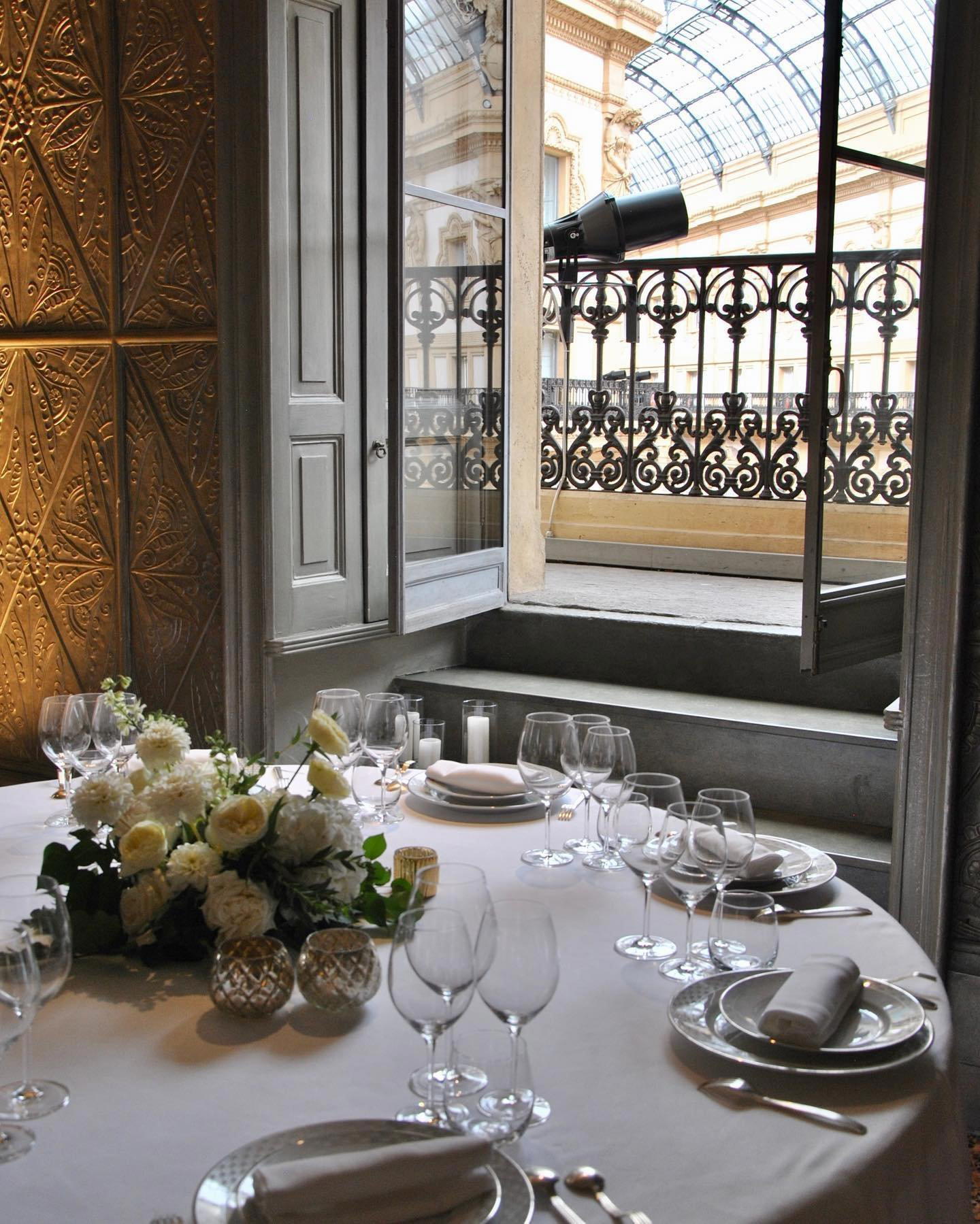
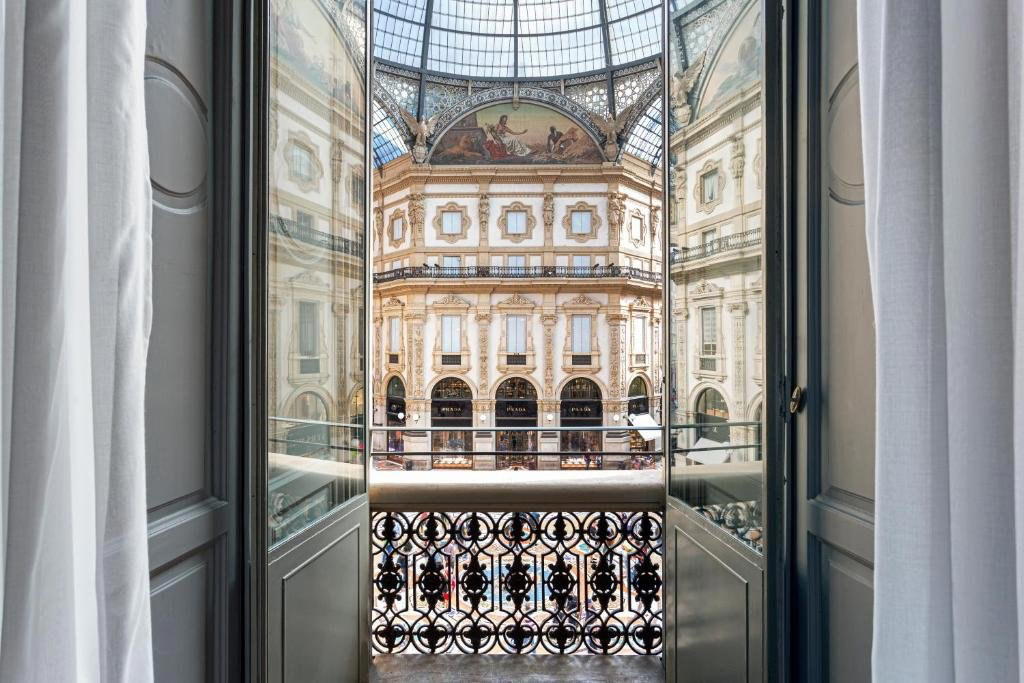
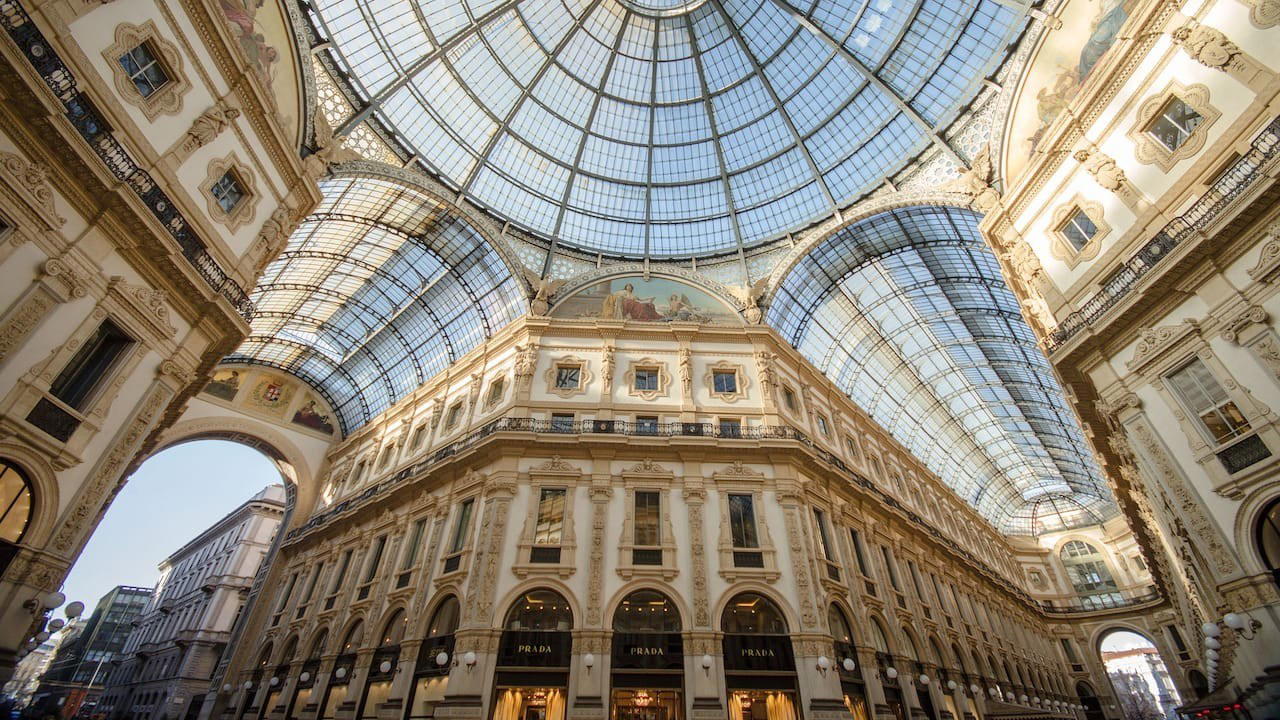
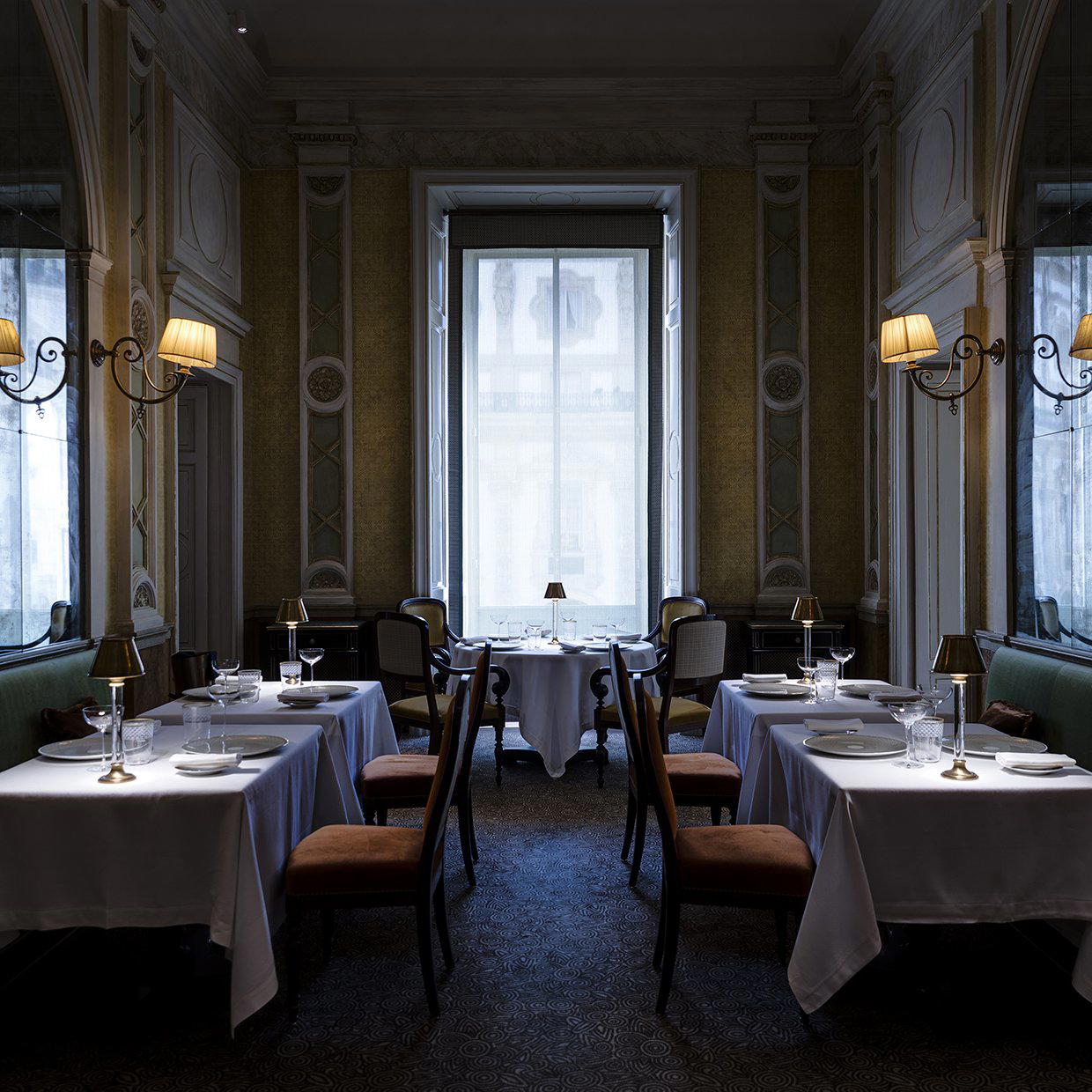
The Galleria Vittorio Emanuele II was completed in 1877, and its cross-shaped iron-and-glass nave has functioned as Milan's most theatrical public interior ever since. Entering from the Piazza del Duomo side, you pass beneath the central octagonal cupola before reaching the restaurant's entrance, a transition that frames any meal here in the specific gravity of 19th-century civic ambition. That setting is not incidental to the dining experience. The most requested tables are those by the window, where the arcade's soaring glass vault fills the sightline, and advance booking for those positions is advised well before your travel date.
Milan's top tier of formal dining has consolidated around a handful of addresses at the €€€€ price point, each staking out a distinct identity: Acanto for its hotel-anchored classicism, Ceresio 7 for its design-led rooftop positioning, Enrico Bartolini (three Michelin stars) for its maximalist creative register, and Andrea Aprea and Seta (both two stars) for their polished modern Italian approaches. Cracco in Galleria, holding one Michelin star and ranked 228th in the 2025 Opinionated About Dining Leading Restaurants in Europe list (218th in 2024), occupies a different position in that competitive set: a room of genuine historical weight, a wine programme that rivals the kitchen as a draw, and a menu that does not entirely abandon Milan's culinary vernacular in the pursuit of technical novelty.
The Team at the Pass
The editorial angle for understanding Cracco in Galleria is less about a single personality and more about how the front-of-house and kitchen functions are distributed across a specific team. Carlo Cracco, as owner, carries a professional record that includes formative time with Alain Ducasse and at Enoteca Pinchiorri, the latter a reference point that matters when you examine the wine programme, since Enoteca Pinchiorri in Florence has long held one of Italy's most discussed cellars. That lineage shapes the seriousness with which wine is treated here.
Resident chef Luca Sacchi leads the kitchen, composing both the tasting menu and an à la carte. The menu structure offers two points of entry: the tasting format for guests who want the kitchen's full compositional argument, and the à la carte for those who prefer to construct their own sequence. References in both include the open ravioli, which positions the dish within the contemporary Italian register, and the vitello alla Milanese, which keeps one foot in the city's classical repertoire. The Milanese cutlet is one of the few dishes in Northern Italian cooking with a genuinely contested civic identity, Milan and Vienna have argued over its origins for well over a century, and its presence on the menu is a deliberate anchor to place.
Wine Director Gianluca Sanso and Sommelier Christian Proserpio manage a programme that reaches 2,500 selections across an inventory of 18,000 bottles. The cellar's strength runs through Italy (with particular depth in Piedmont and Tuscany), Burgundy, Bordeaux, and Champagne, a French-leaning emphasis that reflects the owner's own training and palate formation. Pricing sits at the upper tier of Milan's restaurant wine lists, with significant representation above the €100 threshold. Wines by the glass are available, and the list includes bottles from Vistamare, the organic estate in the Romagna hills owned by Cracco himself. That estate provenance adds a layer of vertical integration rarely found in restaurant wine programmes at this scale.
Where It Sits in the Broader Italian Scene
Cracco in Galleria's trajectory across the World's 50 Best rankings, 42nd in 2007, 43rd in 2008, 22nd in 2009, 33rd in 2011, documents a period when Italian modern cuisine was being reassessed internationally. The restaurant's current OAD ranking places it in a tier that includes houses such as Le Calandre in Rubano, Piazza Duomo in Alba, Dal Pescatore in Runate, and Osteria Francescana in Modena, addresses that represent Italy's serious fine-dining geography outside of Rome. Most of Italy's highest-ranked tables are anchored in smaller towns or rural contexts where the dining destination is the primary draw; here, the city itself is already doing substantial work before a single plate arrives.
For comparison, internationally the model of fine dining inside significant historical architecture has become more common at addresses like Frantzén in Stockholm, where the setting reinforces rather than competes with the kitchen's ambitions. The challenge for any restaurant in a room this architecturally dominant is ensuring that the food and wine programme develop their own authority rather than functioning merely as content inside a spectacular container. The kitchen and sommelier team at Cracco in Galleria have to earn their position in that argument each service.
Milan's Dining Context
Milan's restaurant scene has diversified significantly over the past decade. The city now supports a range of serious addresses at different price points and registers: 28 Posti and Altriménti operate at the more accessible end of the table-driven dining spectrum, while Contraste and Horto hold Michelin stars and represent the city's progressive Italian current. Don Carlos maintains a classicist position in the hotel dining category. Cracco in Galleria's one-star standing, combined with its location and price tier, places it in the group of restaurants where the occasion of going matters as much as the sequence of dishes, addresses chosen for significant dinners, client meals, or deliberate evenings rather than spontaneous bookings.
The Galleria address means proximity to the Duomo, La Scala, and the Via Montenapoleone shopping corridor. Visitors building a Milan itinerary around culture and fashion will find the location coherent; it is the axis around which much of the city's premium tourism organises itself. For visitors who want to extend their time in the city across other food and drink categories, EP Club's guides cover the full picture: see our full Milan restaurants guide, our full Milan hotels guide, our full Milan bars guide, our full Milan wineries guide, and our full Milan experiences guide.
Planning Your Visit
The restaurant operates for lunch Tuesday through Friday (12:30 PM to 3:00 PM) and dinner Tuesday through Saturday (7:30 PM to 10:00 PM). Monday service is dinner only. Sunday is closed. The price tier is €€€€, consistent with Milan's premium fine dining bracket and comparable to Michelin-starred addresses like Atelier Moessmer Norbert Niederkofler in Brunico and FZN by Björn Frantzén in Dubai at equivalent meal cost. Window tables, the ones that look directly onto the Galleria's octagonal building, are the most sought-after in the room and should be specifically requested at the time of booking. Given the volume of interest the location generates, early reservation is advisable for any evening sitting, and particularly for Friday and Saturday dinners.
Frequently asked questions
What's the cuisine at Cracco in Galleria?
Is Cracco in Galleria open every day?
Hours at Cracco in Galleria: Monday 7:30 PM-10 PM Tuesday 12:30 PM-3 PM 7:30 PM-10 PM Wednesday 12:30 PM-3 PM 7:30 PM-10 PM Thursday 12:30 PM-3 PM 7:30 PM-10 PM Friday 12:30 PM-3 PM 7:30 PM-10 PM Saturday 7:30 PM-10 PM Sunday closed.
What's Cracco in Galleria known for in terms of accolades?
Cracco in Galleria has received recognition including: The Galleria Vittorio Emanuele II is one of the most iconic sights in Milan and as such it is apt that it is home to this star of Italian cuisine, whose professional career is one of the most impressive in Italy with influences that include….
What's the must-try dish at Cracco in Galleria?
Two dishes anchor the menu: the open ravioli, which references contemporary Italian technique, and the vitello alla Milanese, a reinterpretation of the classic breaded veal cutlet that connects the kitchen to its Milanese context. Resident chef Luca Sacchi, who trained under Carlo Cracco's influence, presents both on the tasting menu and à la carte. The window tables overlooking the Galleria's Octagonal building are the seats to request when booking, and they fill well in advance.
A Quick Peer Check
| Venue | Cuisine | Price | Awards | Notes |
|---|---|---|---|---|
| Cracco in GalleriaThis venue (the venue you are viewing) | Modern Italian Fine Dining | $150–200 | 1 Michelin Star · World's 50 Best #33 | Not listed |
| Enrico Bartolini | Modern Italian Fine Dining | $300–500 | 3 Michelin Stars · World's 50 Best #85 | Creative |
| Andrea Aprea | Modern Italian Fine Dining | $200–300 | 2 Michelin Stars · La Liste Top Restaurants | Modern Italian, Italian Contemporary |
| Seta | Modern Italian Fine Dining | $150–200 | 2 Michelin Stars · La Liste Top Restaurants | Modern Italian |
| Contraste | Modern Italian Fine Dining | $150–200 | 1 Michelin Star · La Liste Top Restaurants | Progressive Italian, Modern Cuisine |
| Il Luogo Aimo e Nadia | Italian Contemporary | Not listed | Michelin 1 Star | Not listed |
Recognition history
Dated appearances from independent guides and award organizations, with the underlying list record or original source where available.
Michelin 1 Star
Michelin
World's 50 Best Restaurants #33
World's 50 Best
Opinionated About Dining Top Restaurants in Europe Ranked #228
Opinionated About Dining
Wine Spectator Grand Award
Wine Spectator
World's Best Wine Lists Awards WBWL 3-Star
World's Best Wine Lists Awards
Full recognition history (12 entries)
Michelin 1 Star
Michelin
Michelin 1 Star
Michelin
Opinionated About Dining Top Restaurants in Europe Ranked #218
Opinionated About Dining
Opinionated About Dining Top New Restaurants in Europe Highly Recommended
Opinionated About Dining
World's 50 Best Restaurants #22
World's 50 Best
World's 50 Best Restaurants #43
World's 50 Best
World's 50 Best Restaurants #42
World's 50 Best