Our verdict
Mitsumoto Tei (三本亭) sits at the address of the Sanbonmatsu Imperial Stock Farm grounds in Narita, Chiba Prefecture, a location that places it within one of the more historically weighted dining settings in the airport city. With limited publicly available data, the venue draws curiosity from travellers seeking a meal that connects to Narita's quieter, less transit-facing side.

Pearl is the En Primeur Club membership app, where members save venues, book tables and use the concierge.
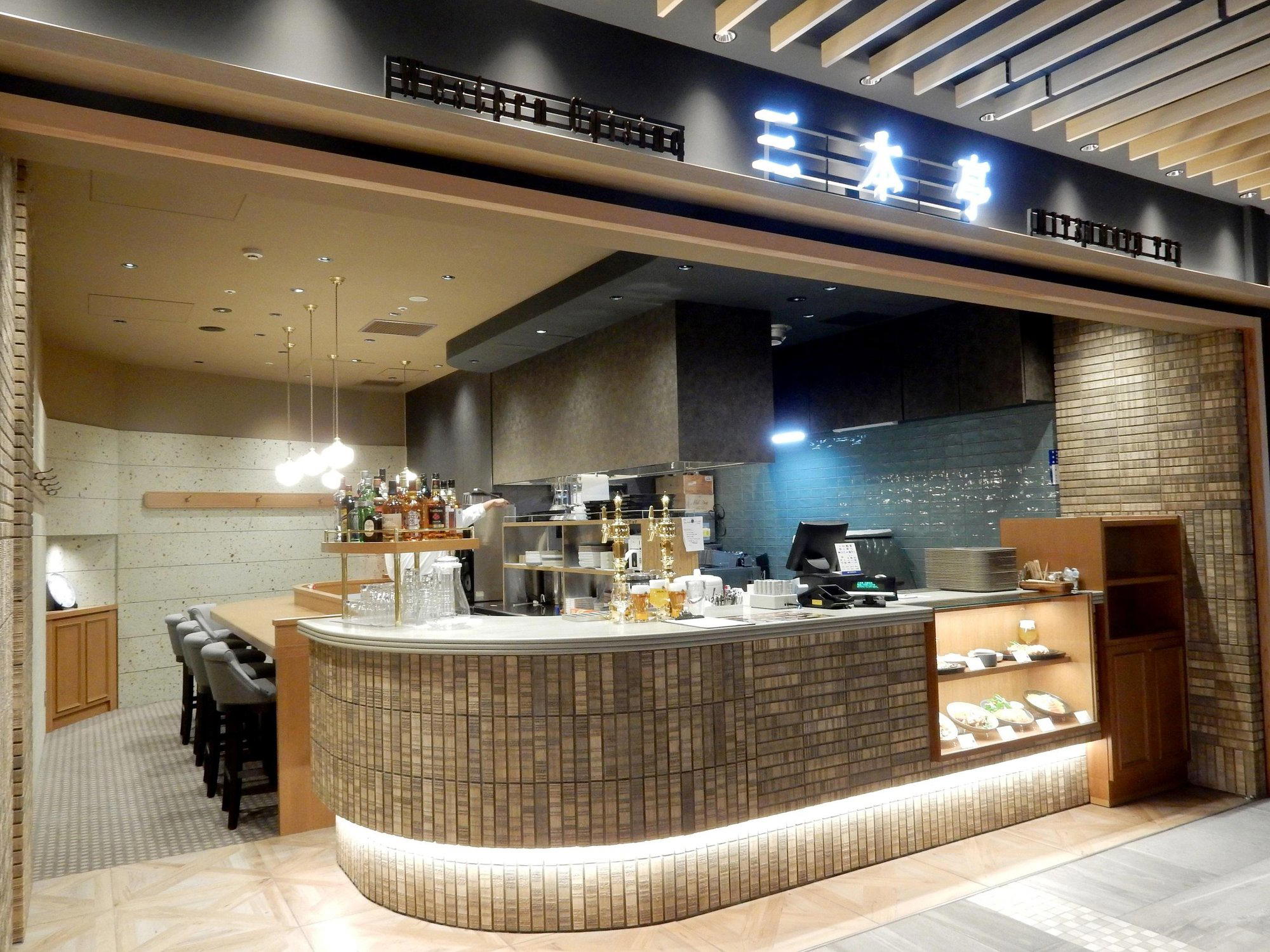
The menu
What to order
- Hamburger steak
- Black Angus beef steak
- Pork cutlet curry
Where Narita's Agricultural Past Meets the Table
Most visitors to Narita move between the airport terminals and the pilgrimage corridor of Naritasan Shinshoji Temple without pausing to consider what the surrounding Chiba farmland has historically provided. The address of Mitsumoto Tei (三本亭), 三里塚御料牧場1-1, offers a direct geographic clue: it sits on or adjacent to the grounds of the former Sanbonmatsu Imperial Stock Farm (三里塚御料牧場), a Meiji-era imperial grazing operation that once supplied the royal household with dairy and livestock. That context is not incidental. In Japan, dining spaces that occupy historically significant agricultural land carry an implicit weight that positions them differently from urban restaurant openings. The setting invites a slower pace before you even consider the food.
Narita's dining scene divides along a clear fault line. The area around Omotesando-dori, the stone-paved approach to the temple, supports a concentration of eel restaurants, ramen counters, and soba houses that have served pilgrims and transit travellers for generations. Venues like Kikukawa (うなぎ四代目菊川) and ramen specialists such as Japanese Ramen Tomita (日本の中華そば富田) sit within that tradition of high-volume, category-defined dining. Mitsumoto Tei occupies a different geography and, by extension, a different logic, further from the transit flow, on grounds that have a specific imperial and pastoral history.
The Ritual of Arrival and Setting
In Japanese dining culture, the approach to a restaurant is considered part of the meal. The concept of ma, meaningful space between moments, extends from the kaiseki course sequence to the physical journey from a car park or train station to a restaurant entrance. A venue positioned within former imperial farmland, surrounded by open Chiba sky and the spatial generosity that comes with agricultural-scale plots, delivers a form of arrival that urban restaurants in Tokyo or Osaka cannot replicate. Compared to the compact settings of Ginza Kagari (銀座 篝) operating in Narita's more commercial zones, the physical approach here is defined by distance from density rather than proximity to it.
That spatial generosity is a recognisable feature of dining destinations built around estate or grounds settings across Japan. Properties on former imperial or aristocratic land, a pattern seen also in certain ryokan and rural kappo restaurants, tend to use the exterior as an extension of hospitality. The walk from arrival point to entrance, the framing of the building against agricultural or pastoral backdrop, functions as an informal decompression from transit or urban noise. For a city like Narita, where most visitors are psychologically still mid-journey, that transition carries particular utility.
Reading the Meal at This Category of Venue
Restaurants attached to or near historic farmland in Japan's Chiba and Kanagawa prefectures have a well-established tendency toward locally sourced proteins and dairy-adjacent preparations, a legacy of the agricultural infrastructure around them. What the address does tell a reader familiar with this category of venue is that the sourcing logic, if consistent with the regional tradition, is likely to prioritise proximity over import. That principle distinguishes a meal here from airport-adjacent dining options that apply a more generic, transit-convenience template.
Chain-format options available across Narita's commercial zones, Ippudo (一風堂) and Saboten (新宿さぼてん) among them, serve a different function: consistency, speed, and category reliability for travellers with limited time. Mitsumoto Tei's location suggests it is not competing in that space. The choice to travel to its address is itself a statement about how a visitor is choosing to spend their time in Narita.
Narita Beyond the Terminal
Narita is too often treated as a layover problem to solve rather than a city with its own dining logic. Chiba Prefecture as a whole produces significant agricultural output, peanuts, pork, and dairy among the most prominent, and the restaurant tradition around Narita reflects that production base. Travellers who extend a layover or base themselves in Narita rather than commuting from Tokyo find a dining environment that rewards the decision. For broader orientation, our full Narita restaurants guide maps the city's dining across neighbourhood and category.
The contrast with Japan's high-concentration fine dining cities is instructive. Places like HAJIME in Osaka, Harutaka in Tokyo, or Gion Sasaki in Kyoto operate within dense, credential-heavy urban dining ecosystems where peer comparison is constant and Michelin recognition is the primary sorting mechanism. Narita's dining geography works differently, rural Chiba scale, agricultural proximity, and historical setting carry weight that star counts do not easily capture. Venues operating in this register across Japan, from akordu in Nara to Goh in Fukuoka, each occupy their local context rather than aspiring to a single national benchmark. Regional dining venues in settings analogous to Mitsumoto Tei's, including 三本亭川制 in Nanao, 夕仙山乃 in Sapporo, 湖畔荘 in Takashima, and 庭羽屋 in Nishikawa Machi, share a structural logic: the setting is part of the proposition, not background detail.
Planning Your Visit
Mitsumoto Tei's address within the former Sanbonmatsu Imperial Stock Farm grounds places it outside Narita's central walkable zone. A visit requires deliberate planning: either a taxi from Narita or Keisei Narita stations, or access via private vehicle. That friction is itself a signal: venues in this category tend to serve a local and introduced guest base rather than walk-in transit traffic. If you are travelling through Narita International Airport and considering a meal before departure, factor sufficient time for travel to and from the venue's grounds.
For travellers accustomed to the booking precision of venues like Le Bernardin in New York City or Atomix in New York City, where reservation systems and tasting menus are fully documented online, Mitsumoto Tei requires a different approach. Similarly, Birdland in Sakai demonstrates how Japanese dining venues with strong local positioning can operate effectively outside the international booking infrastructure. The practical advice is direct: confirm directly before making the journey.
Frequently asked questions
What's the address for Mitsumoto Tei (三本亭)?
Mitsumoto Tei (三本亭) is located at 三里塚御料牧場1-1, 成田市, 千葉県, 286-0116, Narita.
Is Mitsumoto Tei (三本亭) worth visiting if I have a long layover at Narita Airport?
The address, within the former Sanbonmatsu Imperial Stock Farm at 三里塚御料牧場1-1 in Narita, puts Mitsumoto Tei outside easy walking distance from both the airport terminals and the Naritasan Shinshoji Temple corridor, so a layover visit requires genuine transit planning. That said, Narita is consistently underestimated as a dining destination: Chiba Prefecture produces substantial quantities of pork, vegetables, and coastal seafood, and farm-situated restaurants in this area tend to reflect that directly on the plate. Travelers with four or more hours between flights and a willingness to arrange a taxi or local transport will find the detour more purposeful than another terminal meal.
What do regulars order at Mitsumoto Tei (三本亭)?
Regulars at this category of venue in rural Chiba typically anchor their meals around whatever the farm calendar dictates that season. Calling ahead or checking on arrival will give you a clearer picture of what's available on the day.
How far ahead should I plan for Mitsumoto Tei (三本亭)?
The venue's location within the Sanbonmatsu Imperial Stock Farm grounds in Narita places it outside the city's central walkable zone, which means a visit requires deliberate planning regardless of booking windows, transport arrangements should be figured out before the table. For farm-adjacent restaurants of this type in Chiba, contacting the venue directly and planning at least a week ahead is a reasonable baseline, particularly for weekend visits.
Cuisine and Awards Snapshot
| Venue | Cuisine | Price |
|---|---|---|
| Mitsumoto Tei (三本亭)This venue (the venue you are viewing) | Yoshoku (Japanese Western Cuisine) | $20–30 |
| Ippudo (一風堂) | Tonkotsu Ramen | $10–20 |
| Ginza Kagari (銀座 篝) | Chicken Paitan Ramen | $10–20 |
| Kikukawa (うなぎ四代目菊川) | Traditional Japanese Unagi (Grilled Eel) | $30–50 |
| Japanese Ramen Tomita (日本の中華そば富田) | Japanese Ramen and Tsukemen | $10–20 |
| Saboten (新宿さぼてん) | Tonkatsu (Japanese Pork Cutlet) | $10–20 |
Continue exploring
More in Narita

Details
- Classic
- Casual Hangout
- Beer Program
- Sake Program
- A La Carte
- Beer
- Sake
- Vegetarian Friendly
Casual airport eatery with focus on freshly prepared grilled meats and comfortable seating.