Our verdict
Ippudo's Terminal 1 location at Narita Airport places one of Japan's most recognised ramen chains directly in the path of travellers who rarely have time to hunt down a serious bowl. The Hakata-style tonkotsu format that built Ippudo's reputation translates consistently across its airport outpost, making it a practical and honest introduction to the chain's approach before or after a flight.

Pearl is the En Primeur Club membership app, where members save venues, book tables and use the concierge.
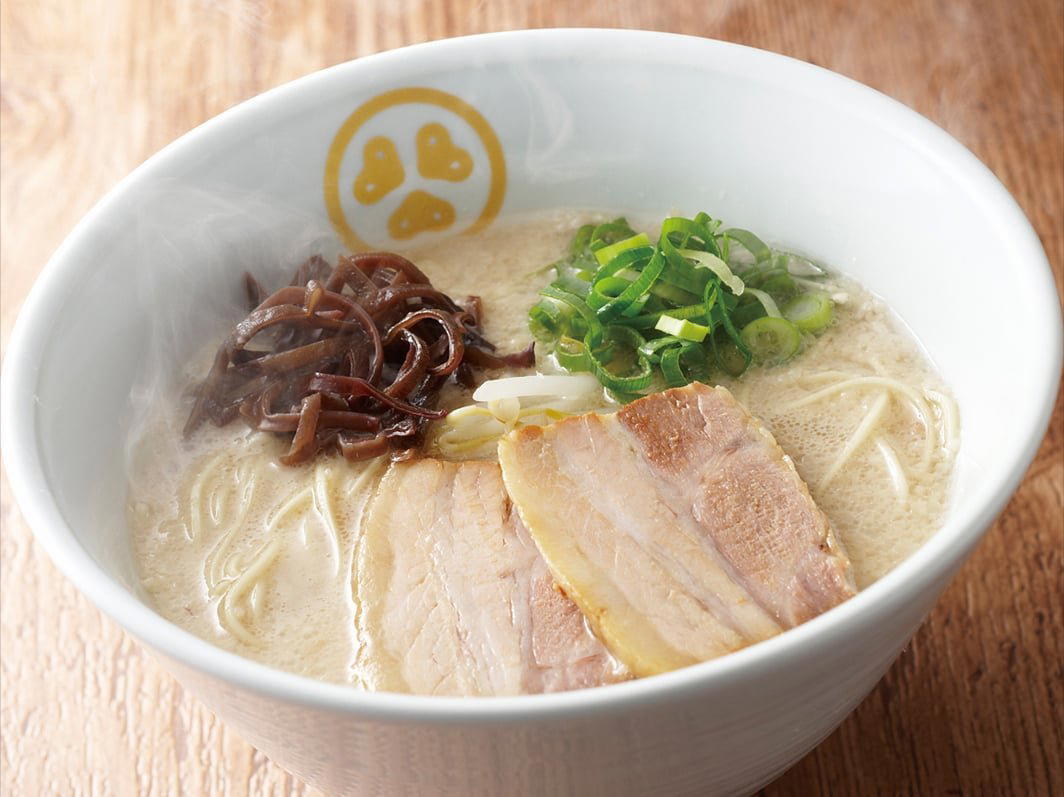
The menu
What to order
- Tonkotsu ramen
Ramen at 30,000 Feet: What Airport Dining Reveals About Japan's Noodle Culture
Japan's domestic airport food courts operate under a logic that surprises most international travellers. Rather than defaulting to generic brasserie menus or franchise coffee chains, major Japanese terminals frequently house outposts of nationally significant restaurant brands, treating the pre-departure or post-arrival meal as part of the travel experience itself. Narita International Airport's Terminal 1 follows this pattern. Among the dining options scattered across its departure and transit levels, Ippudo (一風堂) represents something specific: a chain whose Hakata tonkotsu ramen helped define how the rest of Japan, and eventually much of the world, understood Fukuoka-style noodle cooking.
That context matters when you are sitting in an airport terminal with a flight in two hours. The question is not whether Ippudo is the most serious ramen counter in Japan, it is not, and it would never claim to be. The question is what the presence of a brand with Ippudo's track record means for a traveller making a quick but considered choice. At Narita Terminal 1, the answer is that you are eating ramen built on a production model refined over decades and a broth formula that the chain has spent considerable effort standardising without hollowing out.
The Tonkotsu Tradition and Where Ippudo Fits Within It
Hakata ramen occupies a specific position in Japan's ramen taxonomy. The broth is derived from long-simmered pork bones, producing a milky, collagen-rich liquid that is richer and more opaque than the clear chicken or seafood broths common elsewhere. The noodles are thin and straight, cooked firm by default, and the toppings are relatively restrained: chashu pork, a soft-boiled egg, spring onion, and often a smear of ginger or sesame. Customisation, adjusting broth richness, noodle firmness, and fat content, is built into the ordering format at serious Hakata counters.
Ippudo brought this format to Tokyo in the mid-1980s, at a time when Hakata-style ramen was still largely regional. The chain's expansion positioned tonkotsu as a nationally viable product rather than a local specialty, which required consistency in broth production at a scale that smaller craft shops do not need to consider. What Ippudo standardised was not a compromise on flavour so much as a discipline around supply chain. The pork sourcing, the bone-to-water ratios, the simmering times, these became reproducible across dozens of locations, including the one inside Narita Terminal 1.
Travellers who have eaten at Hakata ramen specialists in Fukuoka, places where the counter seats twelve and the broth has been running continuously for years, will notice the difference. But for the vast majority of international visitors passing through Narita, Ippudo offers an accurate and well-executed version of a tradition worth understanding. Compared to the chicken-broth shio ramen at Ginza Kagari (銀座 篝) elsewhere in the airport, Ippudo represents the tonkotsu end of the spectrum: heavier, more intense, and rooted in a different regional lineage entirely.
What the Airport Format Does and Does Not Change
Airport locations impose constraints that no serious ramen operator can fully escape. Table turnover pressure, extended operating hours tied to flight schedules, and the logistical complexity of ingredient delivery to a restricted airside environment all shape what ends up in the bowl. At Ippudo Terminal 1, the format is counter-and-table service rather than the standing counters or queue-based systems common at street-level ramen shops in Tokyo or Fukuoka.
The ingredient sourcing question is worth addressing directly. Ippudo's supply chain for its core broth ingredients operates at a corporate scale, which means the pork bones used at Narita are sourced through the same procurement network as its other Japanese locations. This is not a farm-to-table narrative in any meaningful sense, and the brand does not present it as one. What it does mean is that the broth profile is consistent and traceable within the chain's own standards, a different kind of quality assurance than what you find at independent shops like Japanese Ramen Tomita (日本の中華そば富田), where sourcing decisions are made by a single operator with a specific aesthetic point of view.
For context on how other Narita dining options approach their ingredients, Kikukawa (うなぎ四代目菊川) works within the eel preparation tradition, where provenance is tied to specific aquaculture regions, while Mitsumoto Tei (三本亭) and Saboten (新宿さぼてん) represent different points on the Narita airport dining map. Each reflects a distinct approach to what airport dining can credibly deliver.
Ramen as a Closing Argument for Japan
There is a case for treating a bowl of ramen at Narita not as a consolation prize for missing a proper meal in Tokyo, but as a deliberate final act. Japan's ramen culture has produced an extraordinary range of regional styles, Sapporo's miso-based broths, Kyoto's chicken-and-soy constructions, Kitakata's flat noodles in light pork broth, and Hakata tonkotsu is one of the most distinctive. Eating it at the airport, in a chain setting, is not the same as eating it at a counter in Fukuoka, but it is categorically Japanese in a way that a sandwich or a bowl of pasta is not.
That distinction carries weight for travellers leaving Japan after a first visit. The ramen format, even in a standardised chain version, encodes something real: the preference for broth complexity over sauce, the attention to noodle texture, the optionality around richness and fat. Visitors heading on to other Japanese destinations might find value in the comparison, Goh in Fukuoka represents a very different register of Japanese cooking, as does Gion Sasaki in Kyoto or Harutaka in Tokyo. For those whose itinerary extends beyond Japan, the contrast with Le Bernardin in New York City or Atomix in New York City illustrates how differently serious cooking can be expressed across cultures.
The Narita terminal dining scene is covered more fully in our full Narita restaurants guide, which maps the options across terminals by cuisine type and dining context. For those with longer layovers or pre-departure time, options across other Japanese cities from HAJIME in Osaka to akordu in Nara offer a wider frame of reference for what Japanese dining at a serious level looks like beyond the airport.
Planning Your Visit
Ippudo is located within Narita International Airport's Terminal 1, making it accessible to departing passengers once through security, as well as to international arrivals navigating the terminal before ground transport. As with most airport dining in Japan, no reservation is possible or necessary, the format is walk-in, and queue length varies considerably depending on flight schedules and time of day. Travelling before or after peak departure windows generally means shorter waits. For additional regional context, restaurants across Japan from 一本木 中川壽城 in Nanao to 夕佳亭乃 in Sapporo to 湖畔庵芳洲 in Takashima and 庄羽屋 in Nishikawa Machi, along with Birdland in Sakai, illustrate the breadth of serious eating available beyond the terminal.
Frequently asked questions
What part of town is Ippudo (一風堂) in?
Ippudo (一風堂) is located at 三里塚御料牧場1-1 (成田空港 第1ターミナル), 成田市, 千葉県, 282-0011, Narita.
Is Ippudo at Narita Airport the right place for a final bowl of ramen before leaving Japan?
For departing passengers through Terminal 1 at Narita International Airport (address: 三里塚御料牧場1-1, 成田市), Ippudo offers a direct connection to one of Japan's most replicated ramen traditions without requiring a detour into the city. The broth formula matches what Ippudo serves across its Japan network, meaning the bowl reflects a genuine Hakata tonkotsu standard rather than an airport-simplified version. It is a practical and credible closing meal for anyone whose Japan itinerary did not include a dedicated ramen stop.
What should I order at Ippudo (一風堂)?
Start with the tonkotsu ramen, the pork bone broth is what built Ippudo's reputation across its Japan-wide network and remains the most coherent expression of the kitchen. At Narita Terminal 1, where the format is built around speed and accessibility for departing passengers, the core bowls rather than any add-on sets are the most reliable choice. Gyoza, a consistent side across Ippudo outlets, is worth adding if time allows.
Do they take walk-ins at Ippudo (一風堂)?
Ippudo at Narita International Airport Terminal 1 operates exclusively on a walk-in basis. The transit setting makes reservations impractical, and seating turns over at a pace driven by flight schedules rather than dining rhythm. During peak departure windows, a short queue is possible but rarely extends beyond ten to fifteen minutes.
What's the signature at Ippudo (一風堂)?
Across the Ippudo network, two bowls define the brand: Shiromaru, the original white tonkotsu broth with thin Hakata-style noodles, and Akamaru, an enriched version finished with blended miso and fragrant oil that adds depth and mild heat. Shiromaru is the cleaner benchmark for understanding what Ippudo's kitchen does with pork bone broth; Akamaru suits those who prefer a more complex, layered finish. Both are available at the Narita Terminal 1 location.
Is Ippudo (一風堂) good for vegetarians?
Hakata tonkotsu ramen is structurally a pork product, the broth requires extended simmering of pork bones, and the standard toppings include chashu pork. Ippudo's Narita Terminal 1 location follows the same format as its broader Japan network, where vegetarian alternatives are limited or absent. Vegetarian travellers transiting through Narita will find better options elsewhere in Terminal 1's food area.
Does Ippudo (一風堂) justify its prices?
Airport pricing at Narita runs above street-level equivalents, and Ippudo Terminal 1 is no exception to that pattern. The premium over a comparable bowl at a Hakata or Tokyo Ippudo branch reflects location costs rather than any difference in the product. For travellers ending a Japan trip, the quality-to-airport-price ratio holds up better here than at most international terminal restaurants of comparable standing.
Comparison Snapshot
Comparable venues nearby, for context on price, style, and recognition.
| Venue | Cuisine | Price | Awards | Notes |
|---|---|---|---|---|
| Ippudo (一風堂)This venue (the venue you are viewing) | Tonkotsu Ramen | $10–20 | Not listed | Not listed |
| Kikukawa (うなぎ四代目菊川) | Traditional Japanese Unagi (Grilled Eel) | $30–50 | Not listed | Narita Airport Terminal 2 |
| Torihan Uohan | Japanese Izakaya with Chicken & Seafood | $30–50 | Tabelog 100 #13 | Narita |
| Halal Dosa Biryani | Halal South Indian & Pakistani Curry House | $10–20 | Tabelog 100 #8 | Aeon Mall Narita |
| Ginza Kagari (銀座 篝) | Chicken Paitan Ramen | $10–20 | Not listed | Ginza |
| Surugaya | Traditional Unagi (eel) Restaurant | $30–50 | Tabelog 100 #73 | Nakamachi / Naritasan Shinsho-ji Temple approach |
Continue exploring
More in Narita
Details
- Casual Hangout
- Sake Program
- A La Carte