
We're Smart World 3 Radishes
Our verdict
Misticanza occupies a specific and still-rare position in Rome's dining scene: a wholly plant-based osteria drawing on Italian culinary tradition rather than departing from it. Recognized by the We're Smart Green Guide for its colourful, flavour-driven approach, the restaurant sits on Via Cesare Baronio in the Appio Latino neighbourhood and represents one of the more closely watched openings in the city's growing botanical cooking conversation.

Pearl is the En Primeur Club membership app, where members save venues, book tables and use the concierge.
The menu
What to order
- Seitan with radicchio
- Fregola
- Pasta with chestnut puree
Where Rome's Plant-Based Cooking Gets Serious
Appio Latino is not the neighbourhood Rome's food press tends to lead with. The residential quarter south of the Aurelian Walls sits at a remove from the tourist circuits of Trastevere and the Centro Storico, and its dining scene runs toward family-run trattorias and neighbourhood wine bars rather than destination restaurants. That context matters for understanding what Misticanza is doing on Via Cesare Baronio, and why the We're Smart Green Guide took notice.
The broader Italian fine-dining conversation in 2024 is still dominated by animal protein, technique-heavy tasting menus, and the kind of classical formality found at addresses like Enoteca Pinchiorri in Florence or Le Calandre in Rubano. Against that backdrop, a wholly plant-based restaurant framing itself as an osteria, and doing so with enough conviction to earn external recognition, represents a genuine position rather than a trend-chasing pivot. Italy's osteria tradition is grounded in simplicity and seasonal honesty; Misticanza draws on that inheritance and redirects it entirely through the vegetable.
The Sourcing Logic Behind the Menu
The We're Smart Green Guide, which evaluates restaurants specifically on the depth and integrity of their plant-based cooking, described Misticanza's approach as one guided by nature. That framing, however vague in marketing copy, has a practical meaning in the Italian context: it points toward seasonal sourcing, regional provenance, and a kitchen that builds its repertoire around what the land is producing rather than what the menu requires year-round.
Italian plant-based cooking, when it works at the level Misticanza appears to be operating at, is not about substitution. It is not about replacing the Sunday roast with something that mimics its texture. It is about treating the vegetable as the primary creative material, with the same respect for sourcing and seasonality that a coastal kitchen gives to fish, or that a Piedmontese kitchen gives to truffles and aged cheese. The peer reference here is closer to Atelier Moessmer Norbert Niederkofler in Brunico, where the Alpine larder defines the menu's entire logic, than to more protein-centric Italian institutions.
For the diner, what this means practically is that the menu shifts with the seasons, and that arriving in autumn will produce a substantially different experience than arriving in spring. Dishes are reportedly colourful, which in plant-based cooking is often a reliable proxy for broad botanical sourcing rather than a kitchen relying on a narrow set of hero ingredients. Colour in this context signals range: bitter leaves alongside sweet roots, fermented preparations alongside raw, cooked alliums alongside fresh herbs.
The Female Voice in Italian Restaurant Culture
The We're Smart Green Guide specifically noted a female vision at work at Misticanza, crediting the kitchen's direction to Chef Marta Maffucci. This is worth pausing on for a moment, not because female-led kitchens require special annotation in 2024, but because the Italian restaurant establishment has been slower than most European peers to see women at the helm of ambitious, critically recognised projects. When you look at the addresses dominating Italy's upper tier, from Osteria Francescana in Modena to Reale in Castel di Sangro to Enrico Bartolini in Milan, the named protagonists are almost uniformly male. Misticanza operates in a different register, but the recognition it has received places it in a conversation that extends well beyond its neighbourhood.
Misticanza in the Context of Rome's Broader Dining Scene
Rome's restaurant culture has always been more conservative than Milan's or the northern cities'. The city's identity is tied to specific preparations, specific cuts, specific seasonal markers, and diners here have historically been less receptive to category-disrupting formats than visitors sometimes expect. The fact that a wholly plant-based osteria is generating external critical recognition in this city, rather than in a more culinarily experimental market, is itself a signal that something has shifted.
For travellers building a Rome itinerary around the full range of the city's serious cooking, Misticanza sits in a different quadrant from the bigger-name options. Balagan operates in the more theatrical, Middle Eastern-inflected mode that has become prominent in European capitals. Misticanza's register is quieter and more rooted in Italian culinary grammar. Our full Rome restaurants guide maps the broader field if you are assembling a multi-day programme.
For context on what the city offers beyond restaurants, the Rome hotels guide, bars guide, wineries guide, and experiences guide cover the remaining categories. Italy's wider fine-dining tier, if you are extending the trip, includes Dal Pescatore in Runate, Piazza Duomo in Alba, Uliassi in Senigallia, and Quattro Passi in Marina del Cantone. If your travels extend further, Le Bernardin in New York City and Emeril's in New Orleans represent reference points for how ingredient-led cooking at serious restaurants operates in a different national context.
Planning Your Visit
Frequently asked questions
Would Misticanza be comfortable with kids?
The osteria format and plant-based focus at Misticanza make it a reasonable choice for families open to vegetable-led Italian cooking. The We're Smart Green Guide highlighted the kitchen's colourful, flavour-forward approach, which tends to translate well across age groups. That said, Appio Latino is a residential neighbourhood rather than a tourist-facing district, so the atmosphere skews local and relaxed rather than child-targeted.
What kind of setting is Misticanza?
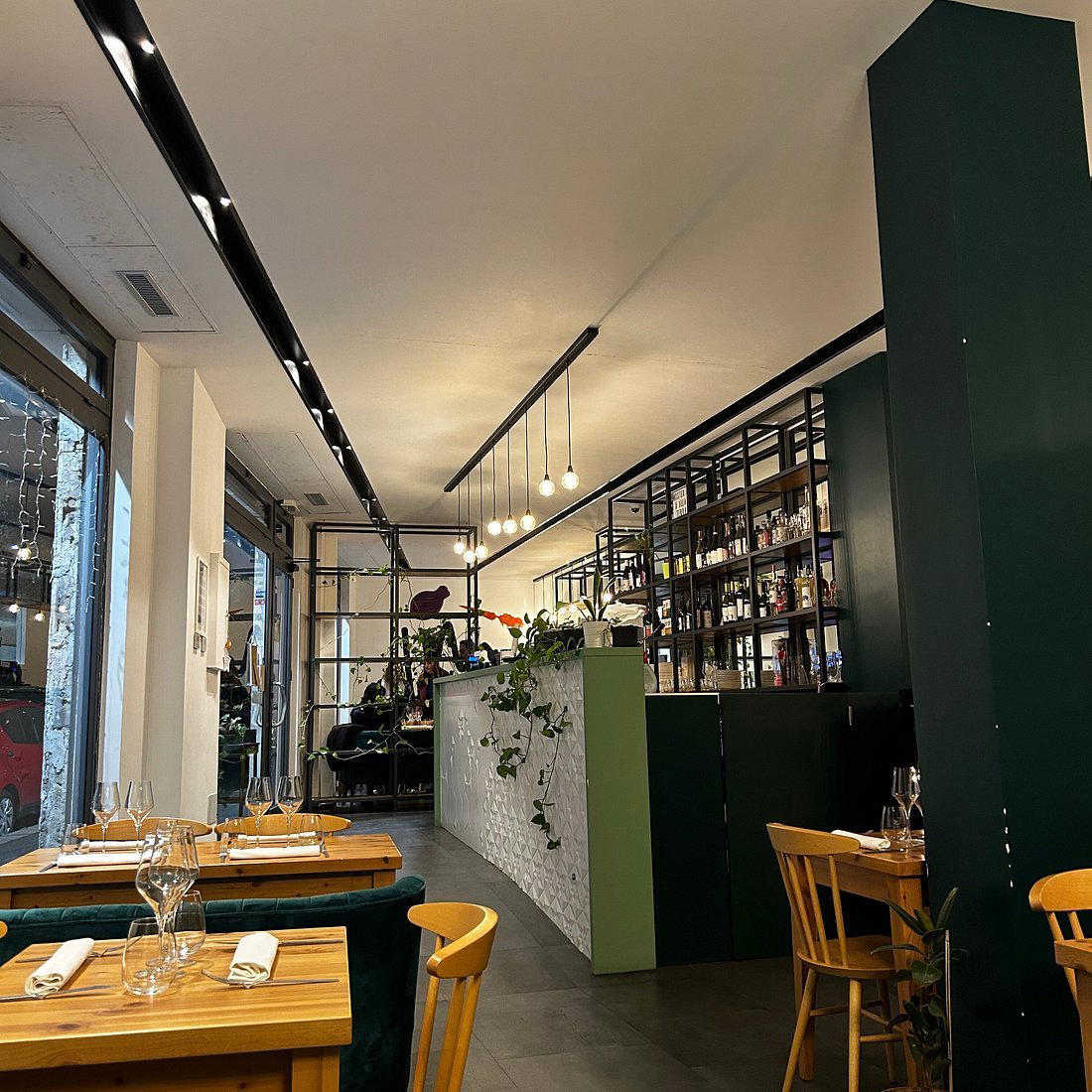
Misticanza operates as an osteria, a format rooted in Italian neighbourhood dining culture: informal, host-led, and ingredient-driven rather than ceremonial. It sits on Via Cesare Baronio, 179 in Appio Latino, a residential quarter south of the Aurelian Walls that draws a local rather than tourist crowd. The We're Smart Green Guide described the kitchen's output as colourful and flavour-rich, which suggests a space that reflects the cooking: direct and without pretension.
What distinctions does Misticanza have?
Misticanza has received recognition including: Misticanza is a pure plant restaurant, Italian cuisine with nature as its guide. At We're Smart Green Guide, we are excited about this female vision of plant-based. Not only is if very colourful, but chef Marta Maffucci brings everything in….
What should I eat at Misticanza?
Misticanza's menu is fully plant-based, built around Italian cuisine with vegetables as the structural backbone rather than a substitute. Chef Marta Maffucci's cooking impressed the We're Smart Green Guide specifically for its depth of flavour, which is the credential to lean on when ordering: follow whatever the kitchen is treating as the central ingredient that day. The 'Osteria dalla Terra' concept signals a close relationship with sourcing, so seasonal dishes are where the kitchen's intent is clearest.
Comparison Snapshot
Comparable venues nearby, for context on price, style, and recognition.
| Venue | Cuisine | Price | Awards | Notes |
|---|---|---|---|---|
| MisticanzaThis venue (the venue you are viewing) | Italian Vegetarian Nouvelle Cuisine | $30–50 | We're Smart World 3 Radishes | Not listed |
| Cul de Sac | Traditional Italian Wine Bar | Not listed | Star Wine List · Falstaff Wine Bar - 90 Falstaff Points | Parione |
| Gelateria La Romana | Artisanal Italian Gelato | $1–10 | Not listed | Sallustiano |
| Proloco Centocelle | Lazio Regional Italian Trattoria | $20–30 | Not listed | Centocelle |
| C'è pasta... E pasta! | Roman-Jewish Pasta & Classics | $10–20 | Not listed | Portuense |
| Er Faciolaro | Classic Roman Trattoria | $20–30 | Not listed | Colonna |
Recognition history
Dated appearances from independent guides and award organizations, with the underlying list record or original source where available.
We're Smart World 3 Radishes
We're Smart World
Continue exploring
More in Rome
Restaurants in Rome
All restaurants in Rome →

Bars in Rome
All bars in Rome →


Details
- Minimalist
- Cozy
- Elegant
- Date Night
- Casual Hangout
- Open Kitchen
- Natural Wine
- A La Carte
- Vegetarian Friendly
- Vegan Options
Current opening hours
- Monday
- Closed
- Tuesday
- 7:30–10:30 PM
- Wednesday
- 7:30–10:30 PM
- Thursday
- 7:30–10:30 PM
- Friday
- 7:30–10:30 PM
- Saturday
- 12:30–3 PM, 7:30–10:30 PM
- Sunday
- 12:30–3 PM
Hours can change for holidays and private events. Hours as of .
Clean, minimal, and pleasant with a youthful, welcoming atmosphere.