

One of Rome's earliest wine bars, Cul de Sac on Piazza di Pasquino has operated from the same address since at least the early 1900s, when locals knew it as 'Wines and Oils.' By the 1970s it had pivoted into the enoteca format that now defines it: a long, narrow room stocked with an extensive cellar, where the wine list does most of the editorial work.
Pearl is the En Primeur Club membership app — saves, bookings, and concierge access live there. Same editors, same standards.
- Address
- Piazza di Pasquino, 73, 00186 Roma RM, Italy
- Phone
- +39 06 6880 1094
- Website
- enotecaculdesacroma.it
- Directions
- Get directions
 Saves & bookings on Pearl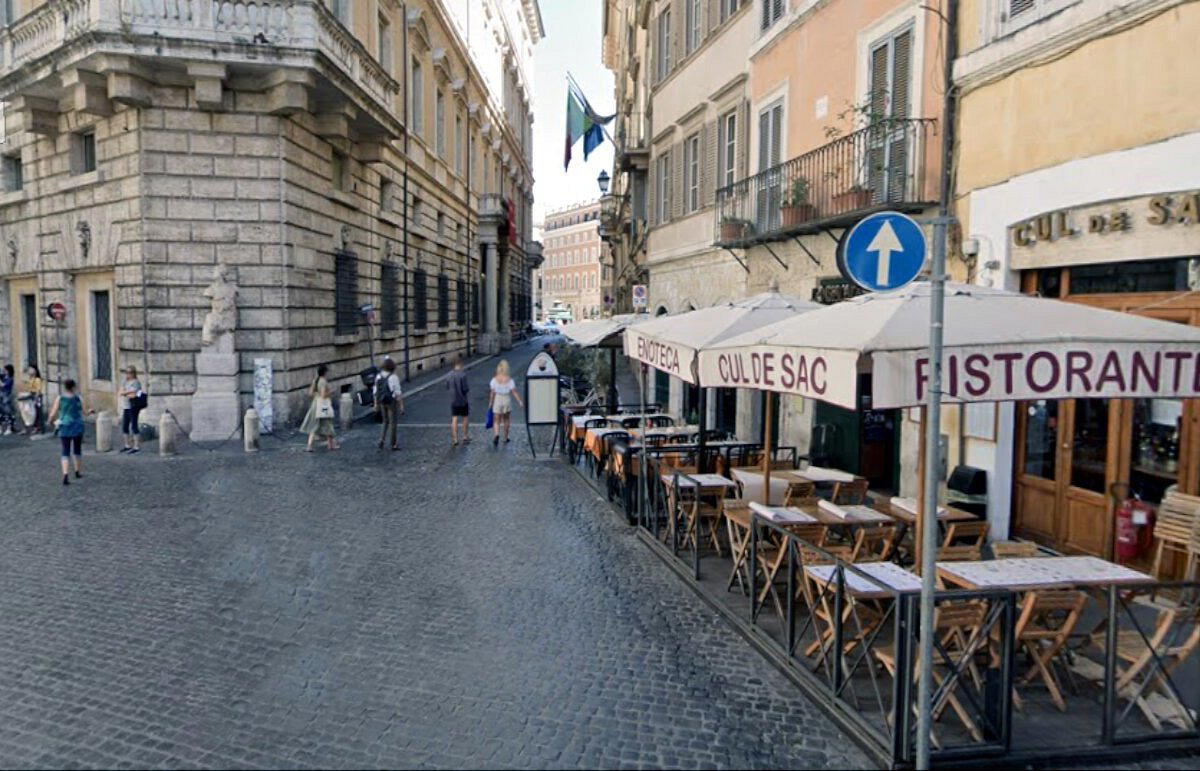
A Corner of Rome That Predates the Wine Bar as a Category
Piazza di Pasquino sits just off Campo de' Fiori in a part of Rome where the streets narrow and the crowds thin. The square takes its name from the 'talking statue' propped against a building wall, one of the city's traditional sites for anonymous political satire. Cul de Sac occupies a position on this square that feels less like a restaurant address and more like an architectural fact, a room that has simply always been there, absorbing the neighbourhood's rhythms across different eras and different uses.
The building's history as a wine-and-oil merchant stretches back to the early 1900s. That commercial function, provisioning Romans with the basics of table and kitchen, was the city's original model of wine retail before specialisation arrived. When the enoteca format emerged in Rome during the 1970s, Cul de Sac was among the first addresses to make the shift, converting a provisioning space into something that invited staying, tasting, and comparing. That transition placed it at the early edge of a movement that would eventually produce Rome's broader wine bar culture.
The Enoteca Tradition and Where Rome Sits Inside It
Italy's enoteca culture developed differently in different cities. Florence had Enoteca Pinchiorri, which moved in a formal, high-service direction that now places it in the same conversation as full fine-dining destinations like Enoteca Pinchiorri in Florence. Milan's wine scene evolved alongside its restaurant culture, visible in addresses like Enrico Bartolini in Milan. Rome took a different path: the city's enoteca tradition stayed closer to the neighbourhood, rooted in accessibility and volume of choice over ceremony.
Cul de Sac represents that Roman tendency directly. Its format has never been about a tasting menu architecture or a single winemaker's vision. The premise is a large, working cellar made available to whoever walks in from the piazza, with food present to support the wine rather than compete with it. This positions it outside the category of Rome's contemporary fine-dining circuit, which runs through addresses like La Pergola, Il Pagliaccio, and Acquolina. It also sits apart from the newer wave of creative Italian restaurants, places like Enoteca La Torre, Achilli al Parlamento, and Il Pagliaccio, that treat the wine list as one component of a larger designed experience. At the restaurant, the wine list is the experience.
What the Room Tells You
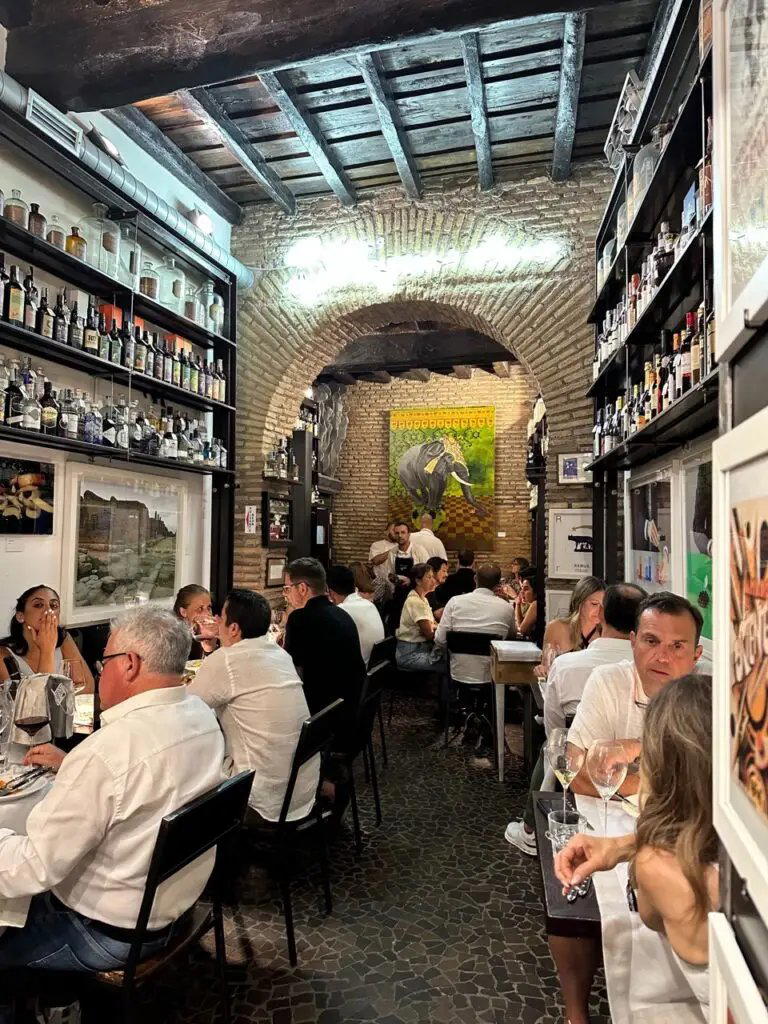
The interior follows the logic of the building: long, narrow, and dense. Bottles line the walls from floor to ceiling in the manner of a serious working cellar rather than a decorative display. Tables are close together. The atmosphere at peak hours is loud in a way specific to rooms where the wine is doing its job, conversation rises as bottles empty, and the space has neither the silence of a formal dining room nor the performance of a cocktail bar. It occupies a middle register that feels specifically Roman: convivial without being casual, knowledgeable without being precious.
Arriving early in the evening secures a table more reliably than arriving at the height of service. Booking ahead is recommended.
Cultural Roots: Wine as Infrastructure, Not Occasion
Understanding the restaurant requires understanding how Romans have historically related to wine. In the Italian capital, wine at lunch was not a special-occasion decision; it was the default accompaniment to the midday meal, poured from unlabelled flasks at neighbourhood trattorie across the city. The 'Wines and Oils' shop of the early twentieth century served the same function as a utility rather than a luxury. When the enoteca model arrived in the 1970s, it did not replace this relationship but formalised it slightly: the same everyday function, now with provenance attached.
That cultural continuity gives the restaurant a different register from wine bars in cities where wine culture arrived more recently or more formally. In London or New York, a wine bar often signals aspiration, a deliberate choice to drink seriously. In Rome, at an address like this one, the act of sitting down with a glass retains its older meaning: a pause, a conversation, an unremarkable pleasure that happens to be available at one of the oldest continuous wine addresses in the city. The bottles on the wall are an archive as much as a menu.
This framing matters when comparing the restaurant to Italy's more formally recognised wine destinations. The country's highest-profile wine-adjacent dining destinations, from Osteria Francescana in Modena to Le Calandre in Rubano or Dal Pescatore in Runate, operate with the full apparatus of the fine-dining experience: long menus, tableside ritual, reservation windows measured in months. The restaurant occupies a position that those places have largely moved away from: the serious wine list in the unpretentious room, available to whoever shows up.
Planning Your Visit
The restaurant sits at Piazza di Pasquino, 73 in Rome's Centro Storico, within easy walking distance of Campo de' Fiori and Piazza Navona. The neighbourhood is dense with competing options, but few of them share this particular combination of institutional age and low-ceremony format. For visitors building a broader picture of Rome's eating and drinking scene, EP Club's full Rome restaurants guide, bars guide, hotels guide, wineries guide, and experiences guide cover the broader circuit. For those extending beyond Rome, the northern Italian fine-dining range runs from Atelier Moessmer Norbert Niederkofler in Brunico to destinations further afield, or internationally, to restaurants like Le Bernardin in New York City and Emeril's in New Orleans for those mapping wine-forward dining across different contexts.
Price Lens
Comparable venues nearby, for context on price, style, and recognition.
| Venue | Cuisine | Price | Notes |
|---|---|---|---|
| Cul de SacThis venue — the venue you are viewing | Parione, Traditional Italian Wine Bar | $$ | Not listed |
| Er Faciolaro | Colonna, Classic Roman Trattoria | $$ | Not listed |
| Ristorante Pizzeria Pasquino | Not listed | $$ | Parione, Traditional Roman Trattoria & Pizzeria |
| Trattoria Nonna Fortunata | Sallustiano, Authentic Roman Trattoria | $$ | Not listed |
| Piatto Romano | Testaccio, Authentic Roman Trattoria | $$ | Not listed |
| Secondo Tradizione | Monte Mario, Modern Roman Trattoria | $$ | Not listed |
Recognition history
Dated appearances from independent guides and award organizations, with the underlying list record or original source where available.
Falstaff Wine Bar - 90 Falstaff Points
Falstaff
Star Wine List
Star Wine List
Continue exploring
More in Rome
Restaurants in Rome
Browse all →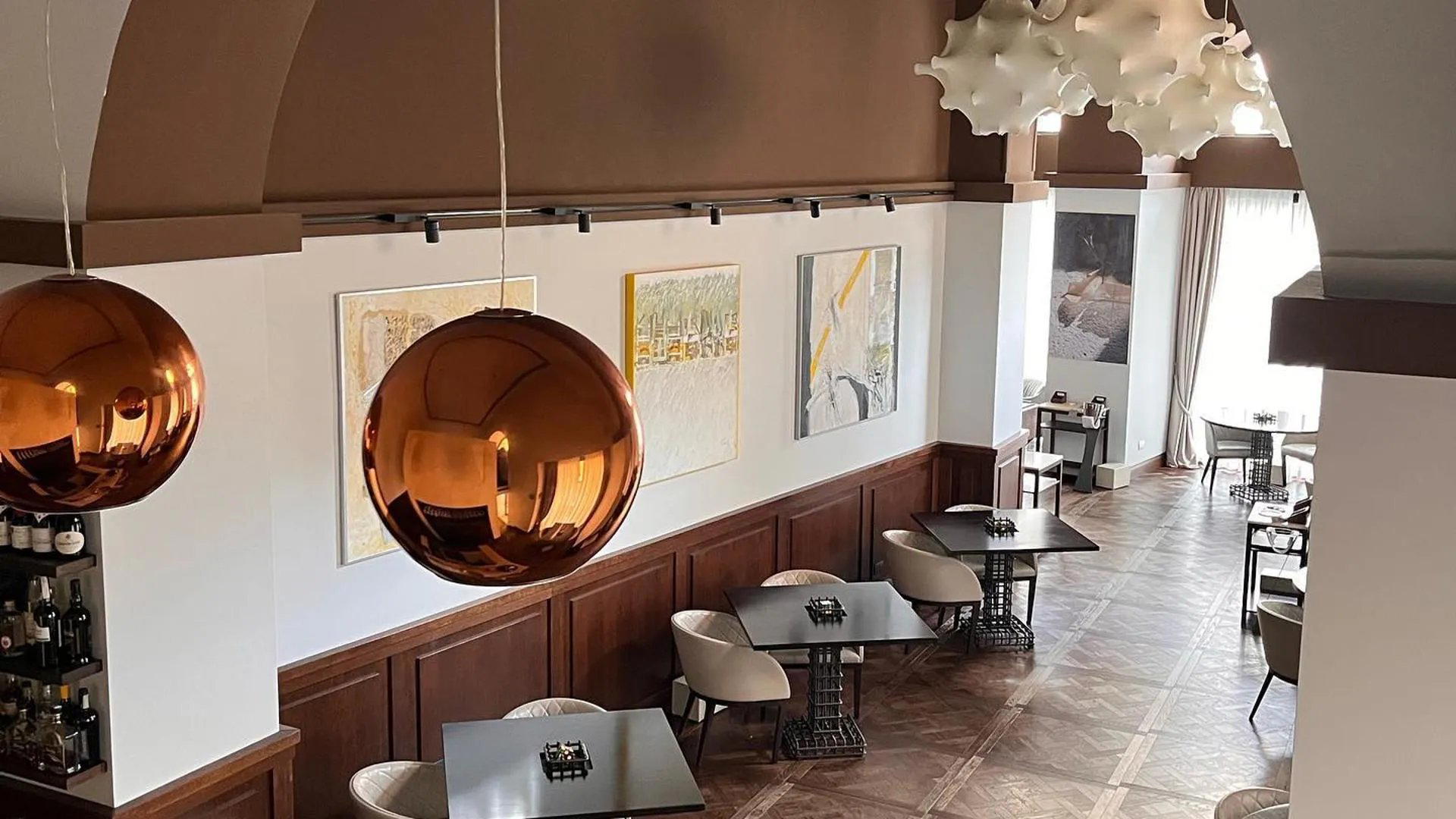
Bars in Rome
Browse all →
Hotels in Rome
Browse all →

At a Glance
- Cozy
- Intimate
- Classic
- Date Night
- Casual Hangout
- Wine Cellar
- Terrace
- Extensive Wine List
- Street Scene
Current opening hours
- Monday
- 12–11:30 PM
- Tuesday
- 12–11:30 PM
- Wednesday
- 12–11:30 PM
- Thursday
- 12–11:30 PM
- Friday
- 12–11:30 PM
- Saturday
- 12–11:30 PM
- Sunday
- 12–11:30 PM
Hours can change for holidays and private events. Last verified .
Warm, friendly, and intimate with cozy indoor seating on hard benches and a small outdoor terrace.