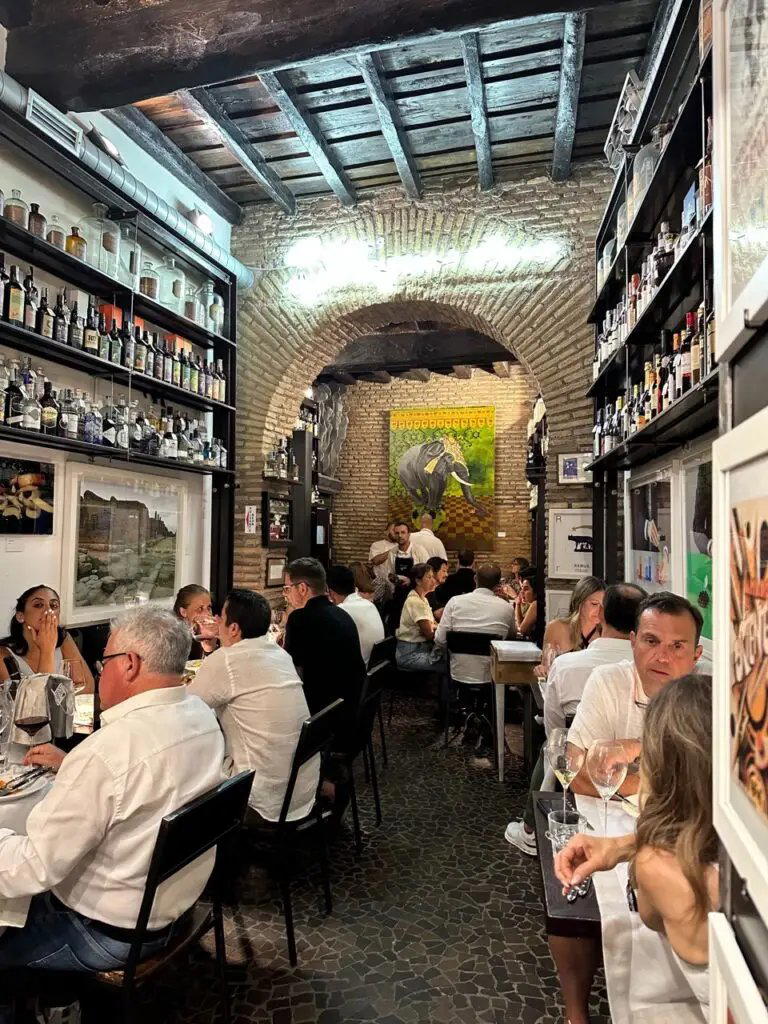
Er Faciolaro sits on Via dei Pastini in Rome's historic centro storico, a short walk from the Pantheon in one of the city's most densely visited dining corridors. In a neighbourhood where tourist traps dominate the pavement, places that hold the attention of both locals and returning visitors occupy a different register entirely. Er Faciolaro is one of those addresses worth tracking down on its own terms.
Pearl is the En Primeur Club membership app — saves, bookings, and concierge access live there. Same editors, same standards.
- Address
- Via dei Pastini, 123, 00186 Roma RM, Italy
- Phone
- +393966783896
- Website
- erfaciolaro.it
- Directions
- Get directions
 Saves & bookings on Pearl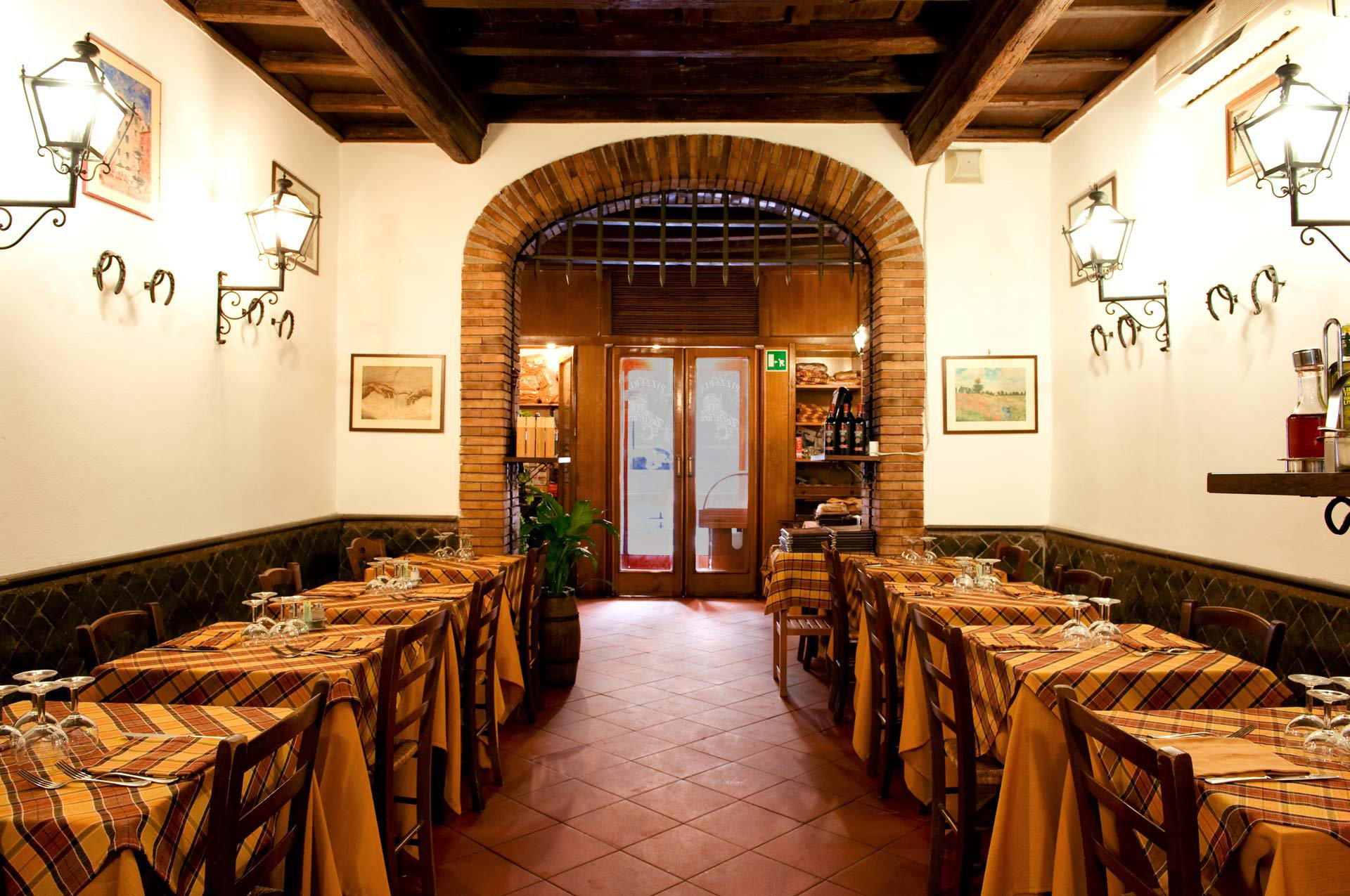
Where the Pantheon's Shadow Falls on Roman Dining
Via dei Pastini runs through the thick of Rome's centro storico, a narrow street that feeds pedestrian traffic between the Pantheon and the surrounding piazzas. It is a busy neighbourhood in which to operate a serious restaurant. The proximity to one of the world's most visited monuments means the street absorbs enormous tourist volume, and the dining options along this corridor skew accordingly: laminated menus, photographs of pasta, and pricing calibrated to the one-time visitor. Er Faciolaro sits at number 123, in the middle of that pressure, and the fact that it draws repeat custom from people who know Rome well is itself a form of credential in a zone where that distinction is hard-won.
Roman restaurants in the centro storico face a structural choice: pitch to the foot traffic, or hold a standard that filters for a different kind of diner. The places that choose the latter tend to do so through menu discipline, a kitchen that understands the local canon, and a room that doesn't perform Italianness for an international audience. How a restaurant behaves across the lunch and dinner divide often reveals which of those two paths it has actually taken.
Lunch and Dinner: Two Different Propositions
In Rome's trattorias and osterie, the lunch service carries a different social logic than dinner. Midday eating in the city has historically been faster, less ceremonial, and more focused on the working rhythm of the neighbourhood. Dinner slows down, lengthens, and becomes the occasion itself. For restaurants on tourist-heavy streets, however, this divide often collapses: lunch becomes as expensive and as theatrically Italian as dinner, because the clientele doesn't change between sittings.
The addresses worth noting are those where the two services retain some distinction in mood, even if the menu overlaps. A lunch at Er Faciolaro, in the light of a Roman afternoon with the Pantheon's piazza audible nearby, occupies a different register than an evening visit when the street quiets and the room becomes its own environment. Neither sitting is the obviously correct choice; they serve different rhythms of travel. Visitors moving quickly through Rome may find the lunch hour more practical, while those with an evening free will get more from a slower dinner without the midday crowd pressure from the surrounding tourist draw.
This dynamic plays out across Rome's centro storico more broadly. Restaurants like Achilli al Parlamento have built a following partly because they understand that the same address can feel like two different places depending on the hour. The full picture of Rome's dining range, from neighbourhood-anchored trattorias to rooms like La Pergola, Il Pagliaccio, and Acquolina, is mapped in our full Rome restaurants guide.
The Roman Trattoria Tradition and Its Pressures
Traditional Roman cooking is a cuisine of economy and precision: offal dishes, cacio e pepe, coda alla vaccinara, supplì. These are not difficult things to execute badly, and in the centro storico, bad execution is the norm rather than the exception. The genuine article requires sourcing discipline and a kitchen that hasn't drifted toward pan-European blandness to please a wider audience. Restaurants in the Pantheon corridor that maintain a recognisably Roman menu are working against commercial gravity, because the path of least resistance is a menu that sells to everyone and pleases no one in particular.
Italy's most celebrated kitchens, from Osteria Francescana in Modena to Enoteca Pinchiorri in Florence and Enrico Bartolini in Milan, have built their reputations on deep commitment to a specific regional or personal culinary logic. Rome's leading creative tables, including Enoteca La Torre, operate at the opposite end of the price and format spectrum from neighbourhood trattorias, but they share a common refusal to dilute. The middle tier, restaurants that hold genuine character without formal dining prices, is where places like Er Faciolaro compete, and where the selection is thinnest in the centro storico.
For context on committed regional cooking elsewhere in Italy, Dal Pescatore in Runate, Uliassi in Senigallia, Reale in Castel di Sangro, and Quattro Passi in Marina del Cantone each demonstrate what happens when a kitchen commits to its specific geography over many years. Piazza Duomo in Alba, Le Calandre in Rubano, and Atelier Moessmer Norbert Niederkofler in Brunico extend the same logic into the northern reaches of Italian fine dining.
What the Address Tells You
Restaurants on tourist-saturated streets in Rome are judged partly by what they don't do. They don't put a host outside pulling in passing trade. They don't translate the menu into six languages on a placard. They don't serve a carbonara that would be unrecognisable to someone who grew up eating it in Testaccio. When a restaurant in this zone avoids those signals, it is making a positioning statement that carries more weight than any single dish.
The location at Via dei Pastini 123 places the restaurant within walking distance of the Pantheon, Campo de' Fiori, and Piazza Navona. That practical geography matters for how to use it: this is a restaurant for folding into a longer day in the neighbourhood, not a destination that warrants rearranging an entire itinerary around.
Internationally, the comparison point for a restaurant holding character in a heavily visited corridor would be a neighbourhood bistro in Paris or a focused izakaya near Shinjuku station. The pressure is the same; the successful examples share a preference for doing a specific thing well over trying to do everything adequately. For reference on how that discipline operates at the highest level of commitment, Le Bernardin in New York City and Lazy Bear in San Francisco each represent what a focused format, held with discipline over time, eventually produces.
Know Before You Go
| Detail | Information |
|---|---|
| Address | Via dei Pastini, 123, 00186 Roma RM, Italy |
| Neighbourhood | Centro Storico, near the Pantheon |
- pasta alla carbonara
- cacio e pepe
- mixed grill
- pizza with beans and sausage
- pizza with rocket and bresaola
- ricotta and spinach stuffed pasta
Comparable Options
Comparable venues nearby, for context on price, style, and recognition.
| Venue | Cuisine | Price | Notes |
|---|---|---|---|
| Er FaciolaroThis venue — the venue you are viewing | Classic Roman Trattoria | $$ | Not listed |
| Ristorante Pizzeria Pasquino | Traditional Roman Trattoria & Pizzeria | $$ | Parione |
| Nino Restaurant | Traditional Tuscan-Roman | $$ | Campo Marzio |
| Misticanza | Italian Vegetarian Nouvelle Cuisine | $$ | Appio-Latino |
| Papa Giovanni | Traditional Roman Trattoria | $$ | San Eustachio |
| La Reginella d'Italia | Roman-Jewish Trattoria | $$ | San Angelo |

At a Glance
- Rustic
- Classic
- Cozy
- Well Known
- Casual Hangout
- Group Dining
- Family
- Solo
- Standalone
- Historic Building
Current opening hours
- Monday
- 12 PM–12 AM
- Tuesday
- 12 PM–12 AM
- Wednesday
- 12 PM–12 AM
- Thursday
- 12 PM–12 AM
- Friday
- 12 PM–12 AM
- Saturday
- 12 PM–12 AM
- Sunday
- 12 PM–12 AM
Hours can change for holidays and private events. Last verified .