Our verdict
Mienoumi occupies a third-floor address in Koto City's Tomioka district, sitting at a considered distance from Tokyo's most-photographed dining corridors.

Pearl is the En Primeur Club membership app — saves, bookings, and concierge access live there. Same editors, same standards.
- Address
- Japan, 〒135-0047 Tokyo, Koto City, Tomioka, 1 Chome−13−8 S. Building, 3F
- Phone
- +81 3 3643 6633
- Hours
- Mon–Fri 5–11 PMSat 5–10 PMSun Closed
- Website
- hotpepper.jp
- Directions
- Get directions
- Booking
- Book on the venue's website
A Different Altitude: Tokyo Dining Beyond the Central Circuit
Tokyo's premium restaurant scene distributes unevenly across the city. Minato, Chiyoda, and Shinjuku absorb the majority of internationally recognised addresses, while pockets of serious cooking operate further from that gravitational centre. Koto City's Tomioka district sits east of the Sumida River, and the third-floor room at S. Building that houses Mienoumi reflects a broader pattern in Japanese fine dining: some of the most considered cooking in any given city occupies space that the reservation economy has not yet fully commodified. Getting there from central Tokyo is a matter of minutes on the Tōzai or Ōedo lines, but the neighbourhood context shifts noticeably — less foot traffic, less theatre in the approachable. The restaurant's address, rather than undermining its standing, reinforces a positioning that prizes sourcing accountability and restraint over proximity to the Michelin-circuit hotels.
The Sustainability Argument in Japanese Fine Dining
Japan's fine-dining tradition has always carried an implicit environmental ethic: the seasonal calendar, respect for ingredient integrity, the practice of using every part of a fish or vegetable before discarding anything. What has changed in the past decade is the degree to which kitchens are making those commitments explicit, building supplier relationships, waste-reduction protocols, and sourcing transparency into the operational architecture rather than treating them as incidental values. Mienoumi sits inside that shift. The restaurant's Tomioka location, away from the high-cost districts that drive volume imperatives, is itself a structural condition that enables sourcing at a different pace — smaller producers, shorter chains, less pressure to standardise. This is the same logic operating at addresses like L'Effervescence in Nishi-Azabu, where Shinobu Namae has made provenance documentation a formal part of the dining experience, or at Crony, where French technique is applied to Japanese ingredient relationships with considerable transparency. Mienoumi belongs to this strand of Tokyo cooking even if its public profile remains quieter than those peers.
The wider Japanese context is useful here. Kitchens at HAJIME in Osaka have made ecosystem thinking a philosophical pillar, with Hajime Yoneda's menus structured around biodiversity data. Gion Sasaki in Kyoto operates within kaiseki's seasonal framework with a discipline that minimises waste by design. Akordu in Nara draws on regional produce relationships that reduce supply-chain complexity. These restaurants demonstrate that the sustainability argument in Japanese fine dining is not a recent import from Scandinavian kitchens, it has indigenous roots, even as contemporary kitchens formalise what was once tacit.
Tomioka in Context: Neighbourhood and Positioning
Koto City is a working waterfront ward with a longer history than its current industrial-residential character suggests. Tomioka specifically sits close to the Tomioka Hachiman-gū shrine, one of Tokyo's largest, which anchors the neighbourhood with a civic gravity absent from purely commercial districts. For a restaurant that emphasises sourcing and considered pace, this is not a neutral choice of address, kitchens that care about the tempo of their supply relationships tend not to prioritise high-footfall corners. The third-floor location inside S. Building is similarly anti-theatrical. There is no ground-floor marquee, no visible branding from the street. This physical modesty is consistent with how a number of Tokyo's more ingredient-focused rooms present themselves, from the understated exteriors of leading counter restaurants in Ginza to the deliberately plain shopfront approaches of some kaiseki rooms in Yanaka.
For context within Tokyo's wider premium dining geography, the city's most-discussed addresses currently cluster around Ginza, Roppongi, and Marunouchi. Harutaka in Ginza operates at the top tier of sushi omakase, while RyuGin and Sézanne anchor the kaiseki and contemporary French ends of the central circuit respectively. Mienoumi operates in a different register, geographically and philosophically east of that cluster, in a part of the city where the dining proposition tends to be built on repeat local clientele and deliberate sourcing rather than international reservation traffic.
The Sourcing Position: What Ethical Commitment Looks Like in Practice
In Japanese fine dining, ethical sourcing is rarely announced in marketing terms. It surfaces instead in the composition of a menu: how many ingredients come from named, traceable producers; whether the kitchen adjusts based on what suppliers have available rather than imposing a fixed menu; how the restaurant handles the parts of an ingredient that a less attentive kitchen would discard. These signals are visible to experienced diners even without explicit documentation. They show up in texture, in the way a dish's secondary elements are as considered as its headline protein, and in the absence of the smoothed-over consistency that volume sourcing produces. Restaurants outside Japan that have made this argument formally include Le Bernardin in New York City, where sustainable seafood sourcing is a documented operational commitment, and Lazy Bear in San Francisco, where the communal format was designed in part to reduce the per-cover waste that conventional service generates. Japan's version of this commitment is often quieter but no less structural.
Across Japan more broadly, this commitment appears in regional addresses far from Tokyo's restaurant economy. Goh in Fukuoka, Abon in Ashiya, affetto akita in Akita, Aji Arai in Oita, Ajidocoro in Yubari District, Akakichi in Imabari, and aki nagao in Sapporo each demonstrate how Japan's regional fine-dining network sustains sourcing relationships that would be structurally impossible inside a high-volume urban operation. Mienoumi's Koto City location places it adjacent to this regional logic, even within a major city.
Planning a Visit
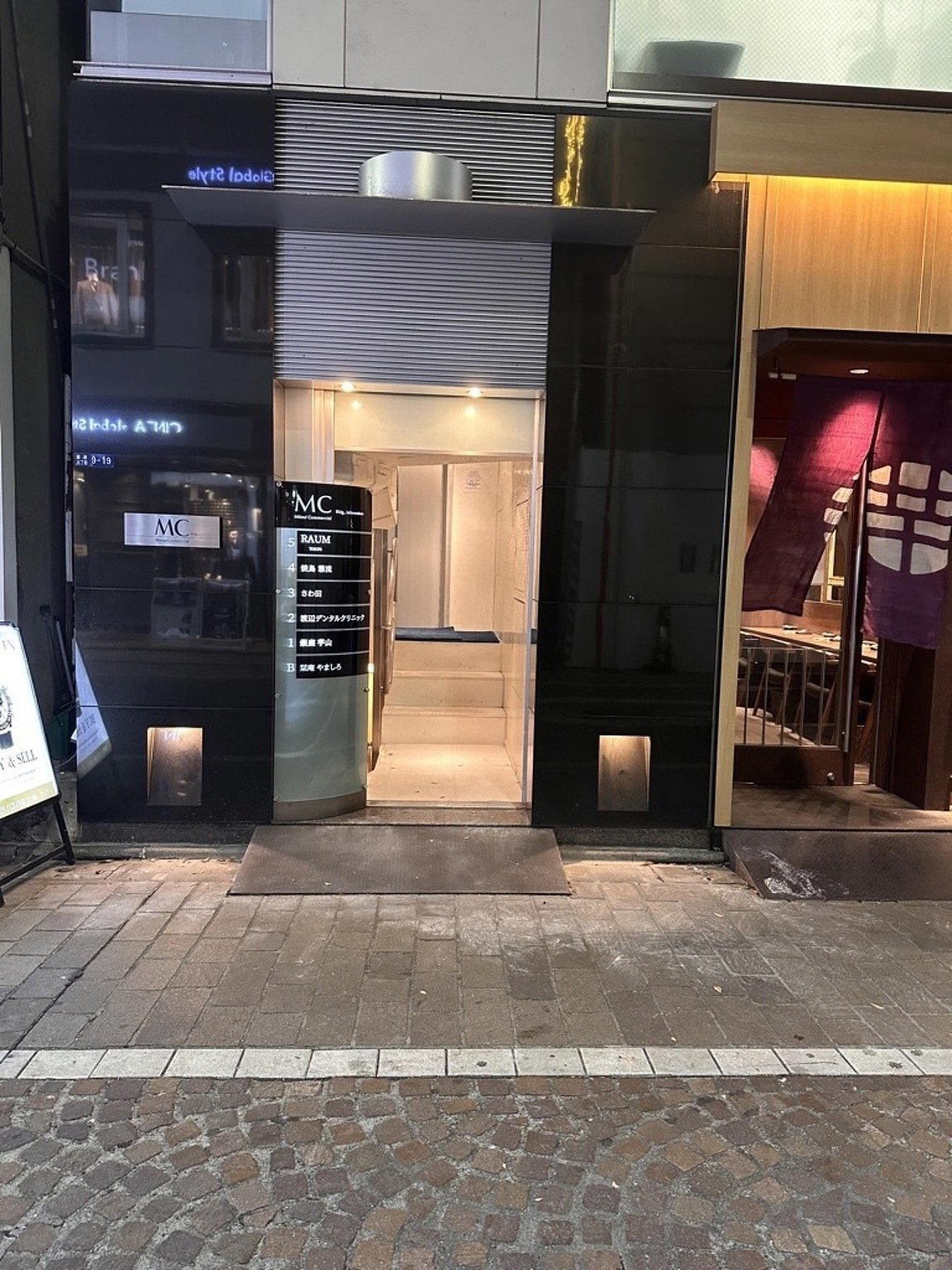
Mienoumi's address, third floor, S. Building, 1 Chome-13-8 Tomioka, Koto City, is specific enough that arriving without prior research on the building and its access will cost time. Tomioka is reachable via the Tōzai Line (Monzen-Nakacho station is the closest major hub) or by a short taxi ride from several Koto City access points. Because the restaurant's booking method, hours, and contact details are not available through public channels at the time of publication, the most reliable approach is to ask a hotel concierge with Tokyo fine-dining relationships to make inquiries on your behalf, this is standard practice for low-profile rooms in the city that operate primarily on recommendation and repeat custom. Visitors approaching Tokyo's wider dining circuit for the first time will find broader orientation in our full Tokyo restaurants guide.
Frequently asked questions
What's the address for Mienoumi?
Mienoumi is located at Japan, 〒135-0047 Tokyo, Koto City, Tomioka, 1 Chome−13−8 S. Building, 3F, Tokyo.
Where exactly is Mienoumi located in Tokyo, and is it easy to find?
Mienoumi is on the third floor of S. Building at 1 Chome-13-8 Tomioka, Koto City — a Koto Ward address that sits outside Tokyo's central dining districts and requires deliberate navigation rather than accidental discovery. The building designation and floor number are specific, but no signage details or landmark references are publicly documented, so arriving without prior research on the exact building is inadvisable. Koto City is accessible from central Tokyo but is not a neighbourhood most international visitors pass through by default.
What should I eat at Mienoumi?
Mienoumi's menu details are not published through conventional channels, which is consistent with the counter-culture approach common among Tokyo's ethically positioned fine-dining venues — the menu shifts with sourcing availability rather than following a fixed format. Arriving with broad dietary flexibility gives you the best read on what the kitchen is working with. The Tomioka address, away from the tourist circuit of Minato and Shinjuku, suggests a kitchen that answers to ingredient supply rather than visitor expectation.
How hard is it to get a table at Mienoumi?
No public booking platform or phone number is listed for Mienoumi, which places it among Tokyo's reservation-by-introduction or low-profile contact venues — a category that typically requires local knowledge or a concierge with existing relationships. The third-floor location in a named building in Koto City's Tomioka district is specific enough that walk-in access is unlikely to be the intended approach. Research the building address — 1 Chome-13-8 Tomioka, Koto City — before visiting.
What's the defining dish or idea at Mienoumi?
Based on the venue's positioning in Tomioka, Koto City — a working waterfront ward with proximity to Tokyo Bay — the kitchen's orientation toward ethical sourcing and ingredient integrity appears to be the organising principle rather than any single signature dish. In Japanese fine dining, that commitment surfaces in menu composition: how many ingredients are sourced directly, how the seasonal calendar is applied, and what the kitchen omits as much as what it includes.
Can Mienoumi adjust for dietary needs?
No menu or dietary policy is published for Mienoumi. In the category of Tokyo fine-dining venues operating without a public website or phone listing, dietary accommodation is best confirmed directly at the point of reservation — and is standard practice to raise at that stage rather than on arrival. If the kitchen follows the sourcing-led model suggested by its neighbourhood positioning, menu flexibility will be constrained by what is available, not by a fixed repertoire.
Is Mienoumi worth it?
Mienoumi holds no publicly listed awards or published price point, so the calculation is different from a Michelin-starred counter where credentials do part of the justification. What it offers instead is a fine-dining address in Koto City's Tomioka — outside the internationally recognised clusters of Minato and Chiyoda — which means the audience is self-selecting rather than internationally routed. For a diner already familiar with Tokyo's central circuit, that positioning is itself a credential worth weighing.
A Lean Comparison
Comparable venues nearby, for context on price, style, and recognition.
| Venue | Cuisine | Price | Awards | Notes |
|---|---|---|---|---|
| MienoumiThis venue — the venue you are viewing | Chanko Nabe (Sumo Wrestler Hot Pot) | $30–50 | Not listed | Not listed |
| 餃子歩兵 | Kyoto-style Gyoza | $10–20 | Not listed | Ginza, Kyoto-style Gyoza |
| Ogura (おぐ羅) | Traditional Oden and Yakitori Izakaya | $30–50 | Not listed | Nihonbashi, Traditional Oden and Yakitori Izakaya |
| Shio Ramen Shinka | Traditional Shio Ramen | $10–20 | Not listed | Machida, Traditional Shio Ramen |
| BUNMEIDO CAFE | Japanese bakery café for castella and yoshoku | $10–20 | Tabelog 100 #30 | Chūō, Japanese bakery café for castella and yoshoku |
| Tamacho Honten Yaesu ten | Nagoya-style miso nikomi udon & Nagoya regional cuisine | $10–20 | Tabelog 100 #78 | Chūō, Nagoya-style miso nikomi udon & Nagoya regional cuisine |
Details
- Classic
- Cozy
- Group Dining
- Casual Hangout
- Standalone
- Sake Program
- A La Carte
Current opening hours
- Monday
- 5–11 PM
- Tuesday
- 5–11 PM
- Wednesday
- 5–11 PM
- Thursday
- 5–11 PM
- Friday
- 5–11 PM
- Saturday
- 5–10 PM
- Sunday
- Closed
Hours can change for holidays and private events. Last verified .
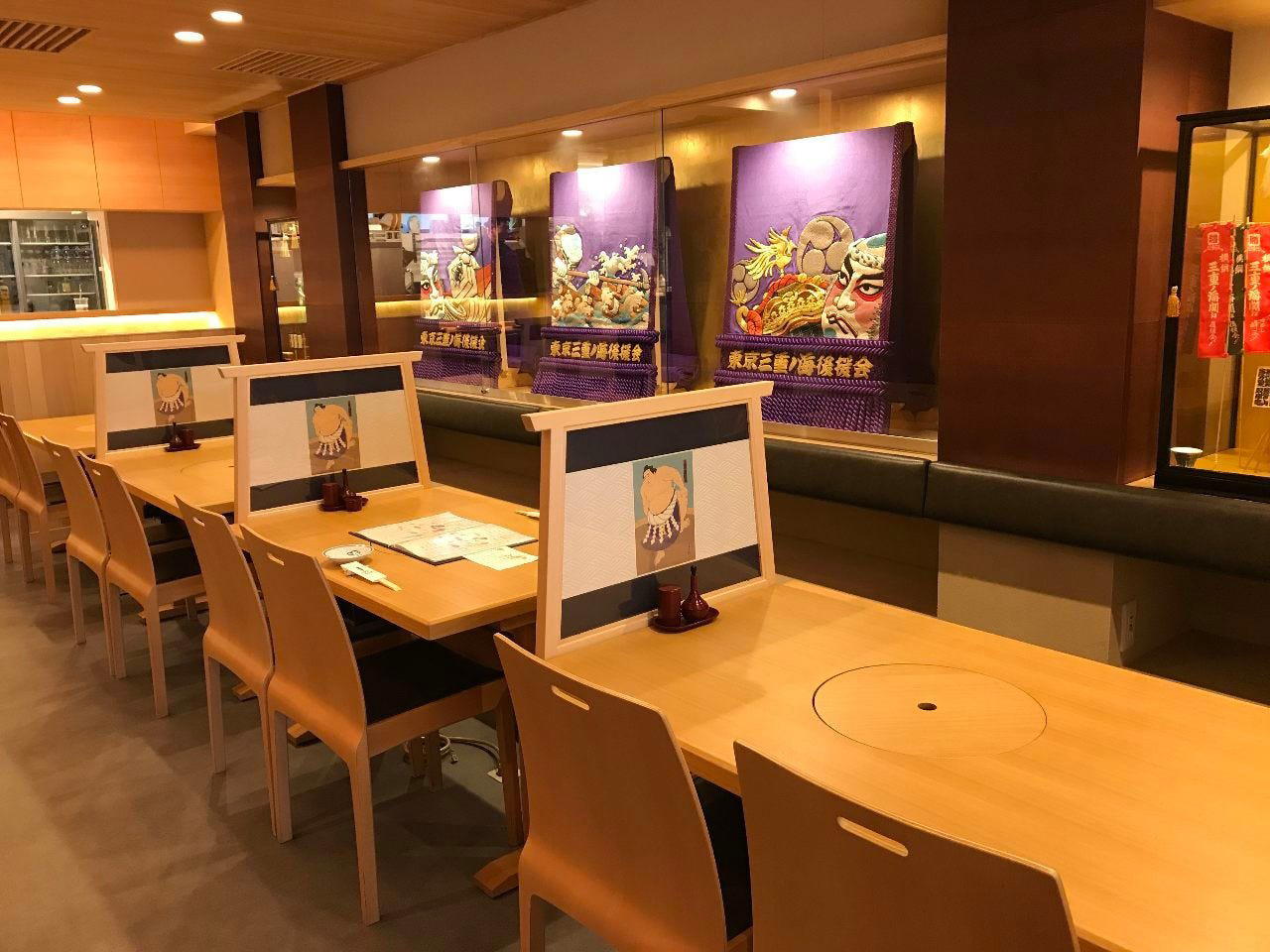
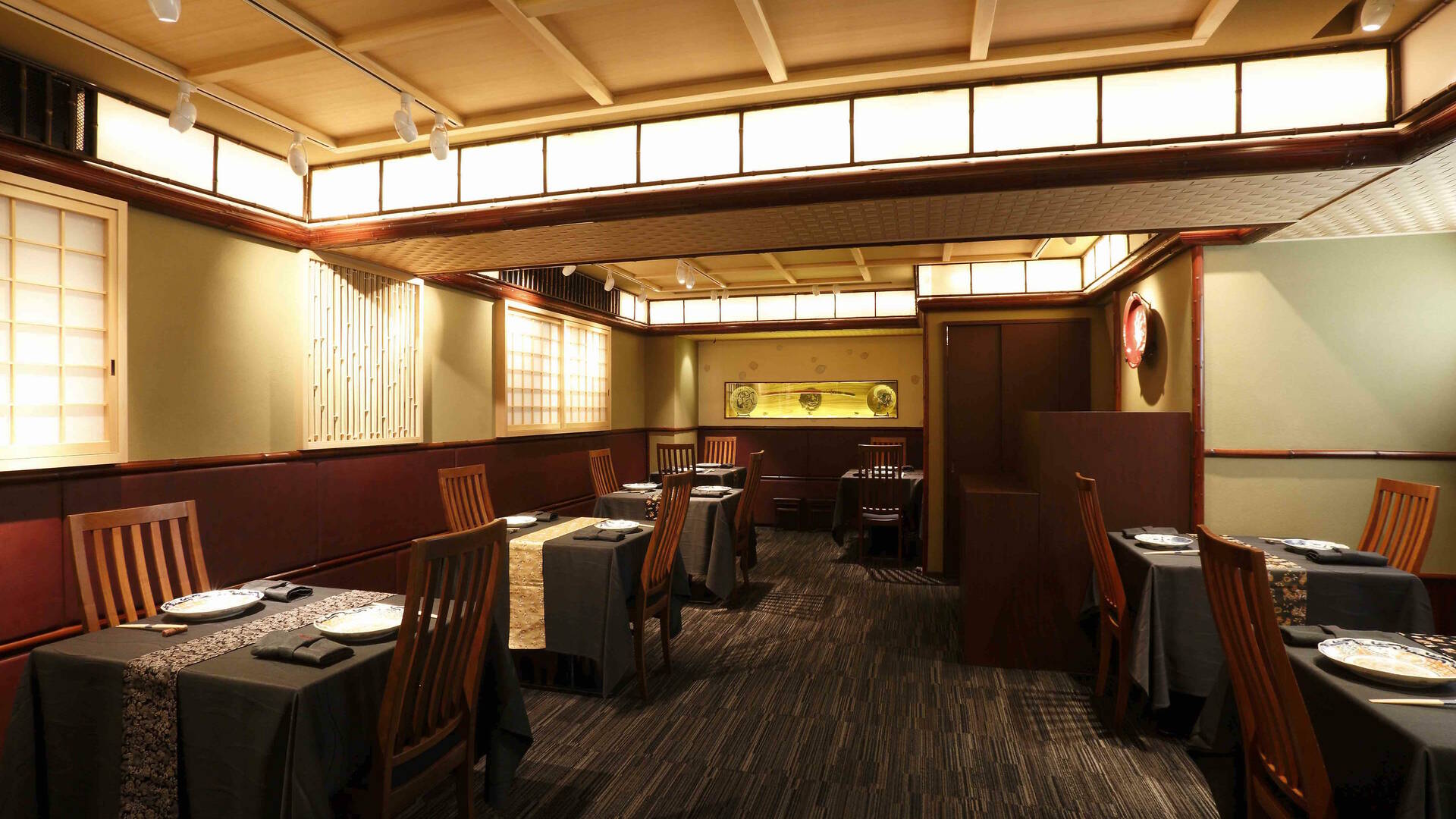
Casual and welcoming atmosphere focused on communal hot pot dining with sumo theme.