Michelin Plate
Our verdict
Member sits in Chengdu's Jinsā commercial district, holding Michelin Plate recognition for 2024 and 2025 at a price point (¥) that keeps it within reach of most visitors. A noodle-focused kitchen in a city that treats bowl culture with serious intent, it earns.

Pearl is the En Primeur Club membership app — saves, bookings, and concierge access live there. Same editors, same standards.
- Address
- 17 Jinfeng Rd, 金沙商圈 Qingyang District, Chengdu, Sichuan, China, 610036
- Phone
- +86 28 8808 2375
- Directions
- Get directions
The menu
What to order
- String bean noodles
- Steamed rice with lard and spiced soy
Noodles at the Serious End of a Casual Tradition
Chengdu has never needed Michelin to validate its noodle culture. Dan dan mian, zhong shui jiao, suanzai ji — the city's bowl-and-chopstick repertoire predates modern restaurant criticism by centuries, and the leading versions have historically lived in cramped storefronts, not dining rooms with ambitions toward the guide. That context matters when reading Member's Michelin Plate recognition in 2024 and again in 2025, because a Plate at the ¥ price tier in Chengdu's noodle category isn't a concession prize — it's the guide acknowledging that a particular kitchen is doing something precise enough to notice, in a genre where precision is easy to obscure behind chili oil and crowd noise.
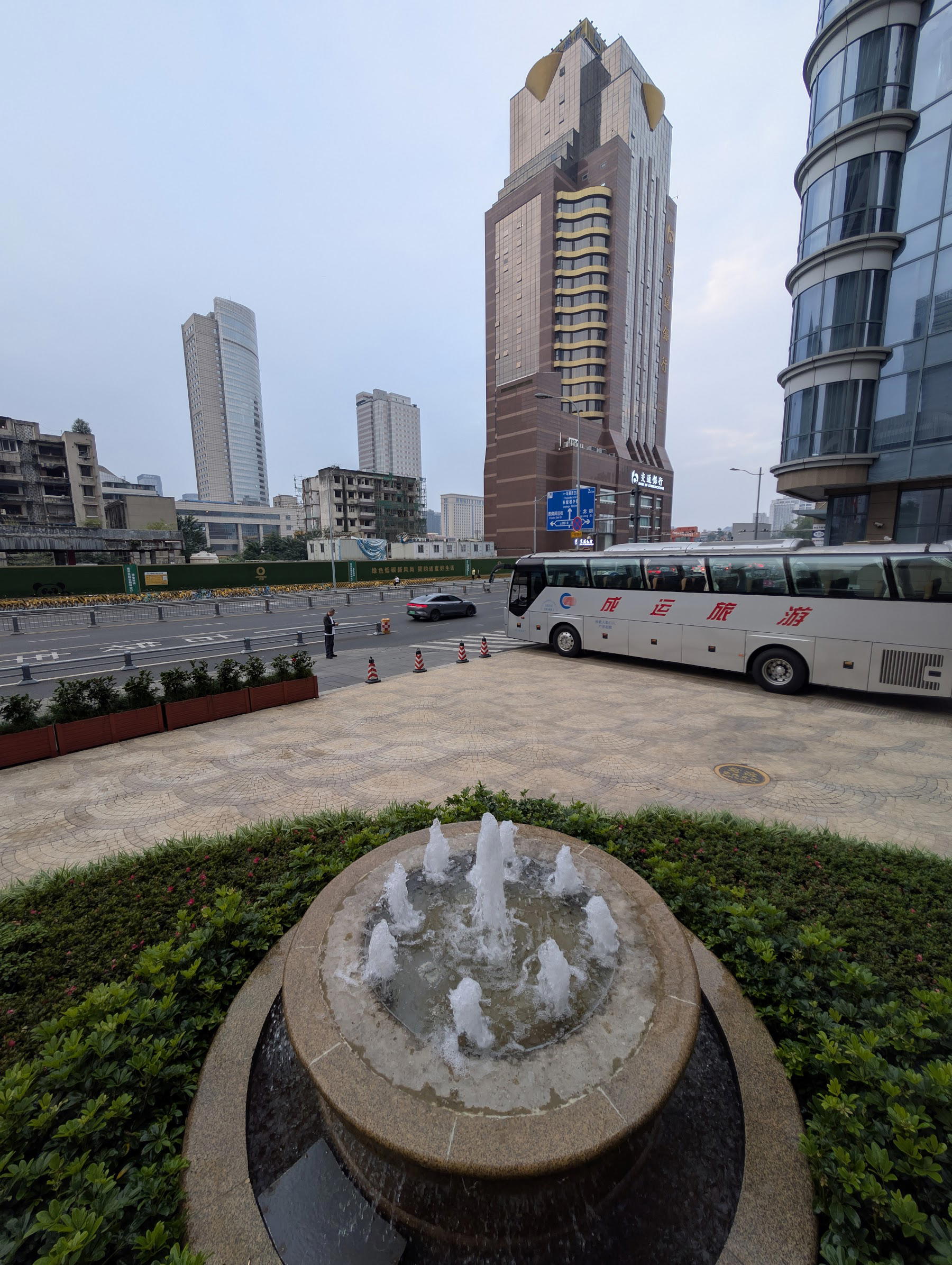
The address, 17 Jinfeng Road in the Jinsha commercial district of Qingyang, places Member inside one of the city's westward-expanding retail and residential corridors, a neighbourhood that has grown quickly enough to attract newer openings without yet accumulating the heritage patina of older quarters like Kuanzhai Xiangzi. That positioning shapes the crowd: a working local clientele alongside residents of the surrounding blocks, with fewer of the heritage-trail tourists who gravitate toward noodle shops closer to the city's older landmarks.
The Bowl as the Structure of the Meal
In cities where the tasting menu is the dominant format for serious eating, the narrative arc of a meal is built into the structure, amuse, appetiser, fish, meat, cheese, dessert. Noodle culture builds its progression differently, and Member operates within that alternative logic. The sequence is compressed: something light to open, the bowl as centrepiece, possibly a side or a snack to close. Michelin's inspectors, accustomed to calibrating against that compressed format in markets like Taipei, Hong Kong, and Tokyo's ramen tier, bring a specific vocabulary to it, cleanliness of broth, integrity of noodle texture across the time it takes to eat, balance of aromatics before and after the chili hit lands.
At ¥ pricing, Member sits at the accessible end of Chengdu's broader dining spectrum. For reference, the city's most ambitious Sichuan kitchens, like Yu Zhi Lan, operate at ¥¥¥¥, where multi-course formats and ingredient sourcing justify a different order of spend. Member's category doesn't compete there; it competes horizontally, within a noodle tier where the differentiator is execution consistency rather than ingredient prestige. The Michelin Plate, awarded twice in succession, suggests that consistency has been maintained across inspector visits in both years, which, in a category prone to quality drift as volume increases, is the operative credential.
Among Chengdu's recognised noodle addresses, Member occupies a position worth mapping. Rongrong Beida Pugaimian and Lao Chengdu San Yang Mian represent the older, neighbourhood-embedded strand of the city's bowl tradition. Wan San Mian Guan in Jinjiang and Gan Ji Fei Chang Fen in Jinniu anchor different districts. Mosnack sits at a slightly different angle, straddling snack and noodle formats. Member in the Jinsha corridor adds another data point to a city-wide pattern: Michelin's Plate category has become a useful calibration tool for visitors trying to orient themselves in a genre where the gap between good and forgettable is real but hard to read from the street.
Comparing Noodle Formats Across Chinese Cities
The noodle category at Michelin recognition level looks different depending on the city. In Hangzhou, A Bing Bao Shan Mian operates within a Zhejiang-inflected bowl tradition that foregrounds lighter, more delicate flavours. In Taichung, A Kun Mian represents Taiwan's beef noodle lineage, a different structural grammar entirely. Chengdu's version is defined by its Sichuan flavour architecture: the mala spectrum, the layering of fermented black bean and sesame paste, the question of how much numbing pepper a bowl can absorb before the other flavours stop registering. Member's recognition within that specific tradition, not within a generalised pan-Chinese noodle category, is the relevant credential for calibrating what to expect.
For context on how Michelin navigates Chinese fine dining more broadly in the region, Xin Rong Ji in Beijing, 102 House in Shanghai, Ru Yuan in Hangzhou, Chef Tam's Seasons in Macau, Imperial Treasure Fine Chinese Cuisine in Guangzhou, and Dai Yuet Heen in Nanjing collectively illustrate the full range of formats the guide recognises, from premium tasting menus to regional specialists. Member's position within that spectrum is firmly in the specialist, accessible-price tier, which is where Chengdu's noodle culture has always belonged.
Planning a Visit
Member is located at 17 Jinfeng Road in Qingyang District, within walking distance of Jinsha commercial amenities. No website or phone number is listed in the public record, so the most reliable approach is to visit directly or check current contact details through a local concierge or mapping platform. Dress code at a ¥-tier noodle house is informal by convention across the category.
For a wider orientation to eating and staying in the city, our full Chengdu restaurants guide covers the range from street-level to multi-star. Our Chengdu hotels guide maps accommodation by district. The bars guide, wineries guide, and experiences guide round out the picture for a longer stay.
Frequently asked questions
Where exactly is Member?
Member is located at 17 Jinfeng Rd, 金沙商圈 Qingyang District, Chengdu, Sichuan, China, 610036, Chengdu.
What's Member known for in terms of accolades?
Member has received recognition including: Michelin Plate (2025); Michelin Plate (2024).
What should I eat at Member?
Member holds a Michelin Plate across 2024 and 2025 specifically for its noodles, placing the bowl at the centre of any visit. Chengdu's noodle canon runs from dan dan mian to suanzai ji, and at ¥ pricing the format is designed for ordering focused and eating attentively rather than working through multiple courses.
What's the cuisine at Member?
Is Member more mid-range or high-end?
Pricing at Member is listed as ¥.
What's the best way to book Member?
At 17 Jinfeng Road in Qingyang District, the location within the Jinsha commercial zone means foot traffic is steady, so arriving outside peak lunch and dinner windows is the practical approach.
What makes Member worth seeking out?
Two consecutive Michelin Plate awards (2024 and 2025) place Member in a small cohort of Chengdu noodle venues that have drawn formal international recognition — a category where Michelin has historically been selective. The ¥ price point means the recognition comes without the spend threshold that accompanies Chengdu's starred tables, making it one of the more accessible data points in the city's Michelin map.
Budget and Context
A small set of peers for context, based on recorded venue fields.
| Venue | Cuisine | Price | Awards | Notes |
|---|---|---|---|---|
| MemberThis venue — the venue you are viewing | Traditional Chengdu Noodles | Not listed | Michelin Plate | Not listed |
| Xin Rong Ji | Taizhou | Not listed | Michelin 2 Star | Not listed |
| Yu Zhi Lan | Modern Sichuan Fine Dining | $200–300 | 2 Michelin Stars · La Liste Top Restaurants | Sichuan |
| Mi Xun Teahouse | Modern Vegetarian Sichuan Chinese | $30–50 | 1 Michelin Star | Vegetarian |
| Chen Mapo Tofu (Qinghua Road) | Authentic Sichuan Mapo Tofu | $10–20 | Michelin Bib Gourmand | Sichuan |
| Co- | Modern French Tasting Menu | $150–200 | 1 Michelin Star · World's 50 Best #69 | Innovative |
Recognition history
Dated appearances from independent guides and award organizations, with the underlying list record or original source where available.
Michelin Plate
Michelin
Full recognition history (2 entries)
Michelin Plate
Michelin