
Kyoto’s station food halls compress the city’s sweet-making culture into a faster, more practical format. Mangetsu JR kyoto isetan ten belongs to that take-out tier: Japanese traditional sweets, a sub-¥999 spend, and selection for Tabelog’s Japanese traditional sweets and sweets-cafe WEST 100 in 2023. It is a smart read on Kyoto wagashi when time is short and the itinerary is rail-led.
Pearl is the En Primeur Club membership app — saves, bookings, and concierge access live there. Same editors, same standards.
- Address
- Japan, 〒600-8216 Kyoto, Shimogyo Ward, Higashishiokojicho, ジェイアール京都伊勢丹 B1F
- Phone
- +81753521111
- Website
- ajyarimochi.com
 Saves & bookings on Pearl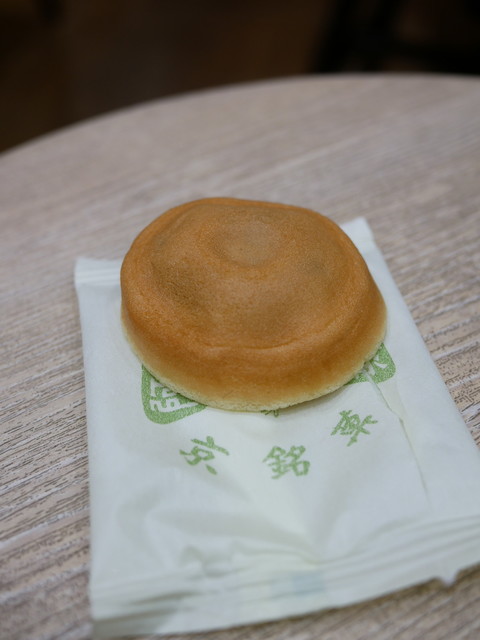
The basement level of JR Kyoto Isetan has its own rhythm: escalators feeding commuters into counters, paper bags moving across glass cases, and the quick, precise transactions that define serious depachika shopping in Japan. Kyoto’s sweet culture is often imagined through tea rooms and old shopfronts, but the station basement tells a different story. Here, wagashi becomes portable, tightly packaged, and timed to the train schedule without losing its link to the city’s gift-giving habits.
Mangetsu JR kyoto isetan ten sits inside that practical Kyoto category. The useful point is not romance; it is compression. A traveller can encounter Japanese traditional sweets in the same building as the rail hub, at a price band listed under JPY 999, and with enough local recognition to have been selected for Tabelog’s Japanese traditional sweets and sweets-cafe WEST 100 in 2023. That combination places it closer to Kyoto’s everyday confectionery economy than to the city’s formal kaiseki or counter-dining circuit.
Kyoto wagashi, translated for the station basement
Wagashi in Kyoto carries social meaning beyond dessert. It functions as a seasonal marker, a tea companion, a household gift, and a small act of regional literacy. In a department-store basement, those meanings become faster and more legible: shoppers compare boxes, travellers buy before departure, and the counter format rewards decisiveness. The take-out model matters because it changes the occasion. This is not a lingering sweets cafe; it is a Kyoto sweets purchase shaped by movement.
That distinction is useful for visitors planning food around Kyoto Station. The same building can support a formal meal, a casual lunch, and a train-ready sweet, but each belongs to a different register. Morita Ya JR kyoto isetan ten, in the same station-department-store orbit, sits in a far higher meal budget band, while Saikyo Yaki Kyoto Yamaroku and FUKUNAGA901 occupy mid-priced dining and cafe territory. Gozan Nozomi and Tempura Tokoro Kyorynsen push the conversation toward destination meals. Against those peers, Mangetsu JR kyoto isetan ten is smaller in spend and narrower in purpose: a focused wagashi stop rather than a dining anchor.
The 2023 Tabelog 100 selection gives the counter a credible signal in a category where casual appearance can hide serious local standards. Tabelog’s Hyakumeiten lists are not Michelin-style star systems; they work more like category recognition within Japan’s user-review culture. For travellers, the value is comparative. A sweets counter selected in the WEST Japanese traditional sweets and sweets-cafe category is being judged within a regional field that includes long-established confectioners and specialist shops, not against restaurants serving full meals.
Why the format suits Kyoto Station
Kyoto Station is not a neutral address. It is where temple itineraries, hotel transfers, day trips to Nara or Osaka, and last-hour shopping collide. Food here has to solve problems: speed, portability, reliability, and gifting. A take-out wagashi counter fits that pressure better than a reservation-only dining room. The sensory experience is also different from a restaurant. The appeal lies in orderly display, wrapping, queue discipline, and the small theatre of choosing sweets while the station continues around it.
This is also where Kyoto’s premium-travel food map becomes more interesting than a list of famous meals. The city rewards contrast. A day can move from contemporary cooking at [ki:] to a compact sweets purchase at the station, or from casual central Kyoto stops such as 3TOKU6MI Shijo karasuma ten and 551蓬莱 to a more classical sweet tradition. For an older Kyoto confectionery reference point, Aburi Mochi Honke Nemoto Kazariya shows how sweets can be tied to place and ritual rather than transport convenience.
That range is the point. Kyoto dining is not only the reservation race. It is also the way small, repeatable formats carry culture through daily use. French-leaning rooms such as Abbesses occupy a different evening register, while station sweets answer a practical question: what can be bought cleanly, carried easily, and understood without turning the afternoon into a full meal? In that context, Mangetsu JR kyoto isetan ten earns attention through fit rather than scale.
How to place it in a Kyoto itinerary
Use this kind of counter with intent. It works before a train, after a hotel checkout, or as a controlled Kyoto gift purchase when a temple-side detour is unrealistic. The department-store setting reduces friction for visitors who want Japanese traditional sweets without building an afternoon around a specialist neighbourhood. Payment flexibility also matters in a station environment, where mixed domestic and international traffic makes card, electronic money, and QR payment acceptance more useful than it sounds on paper.
For broader planning, keep the station stop as one layer in the city rather than the whole story. Our full Kyoto restaurants guide maps the dining range, while our full Kyoto hotels guide, our full Kyoto bars guide, our full Kyoto wineries guide, and our full Kyoto experiences guide help separate station convenience from neighbourhood-led travel. For comparison across Japan and beyond, EP Club also tracks formats as varied as -Grilled beef Sukiyaki- KAMAKURA TANUKIAN 鎌倉 たぬき庵 in Kamakura,. 鮪と炭火焼き うお炭 秋葉原店 in Tokyo,.cafe in Osaka,.know in Kumamoto, (Shoku) Vietnam in Kawasaki, [Curry Senmon Ten] Maruyama Kyoju. in Sapporo, Jōdo Saké Bar in Los Angeles, and Onigiri Time in Pasadena.
The editorial case is clear: this is not where to stage a long Kyoto meal. It is where the city’s sweets tradition becomes efficient, station-adjacent, and credible enough to merit a planned pause. In a city where food travel can become over-scheduled, that kind of precision has its own value.
How It Stacks Up
Comparable venues by cuisine and price in the same metro.
| Venue | Cuisine | Price | Awards | Notes |
|---|---|---|---|---|
| Mangetsu JR kyoto isetan tenThis venue — the venue you are viewing | Traditional Japanese sweets (wagashi) take-out | $ | , | |
| Kansen Do | Traditional Japanese Wagashi & Sweets | $ | , | Higashiyama |
| Kissho Karyo Gion honten | Kinako Japanese sweets cafe | $ | , | Higashiyama |
| 実伶 | japanese | $ | , | Nakagyō |
| Okonomiyaki Yoshino | Traditional Okonomiyaki & Teppanyaki | $ | , | Higashiyama |
| Kamesuehiro | Traditional Kyoto Wagashi (Japanese Sweets) | $ | , | Nakagyō |
Continue exploring
More in Kyoto
Restaurants in Kyoto
Browse all →
Bars in Kyoto
Browse all →
Hotels in Kyoto
Browse all →
Wineries in Kyoto
Browse all →
At a Glance
- Classic
- Quiet
- Cozy
- Solo
- Family
- Casual Hangout
- After Work
- Standalone
Bright department-store basement shop with a clean, traditional feel focused on efficient take-out service rather than sit-down dining.