
Kamesuehiro belongs to Kyoto’s older confectionery culture, where wagashi is less a dessert category than a seasonal language shaped by tea practice, gifting, and temple-city etiquette. Its repeated Tabelog 100 selections for sweets and Japanese traditional sweets place it in a serious regional set, while the take-out format keeps the experience closer to a craft purchase than a café stop.
Pearl is the En Primeur Club membership app — saves, bookings, and concierge access live there. Same editors, same standards.
- Address
- Japan, 〒604-8185 Kyoto, Nakagyo Ward, Kurumayacho
- Phone
- +81 75-221-5110
- Website
- instagram.com
 Saves & bookings on Pearl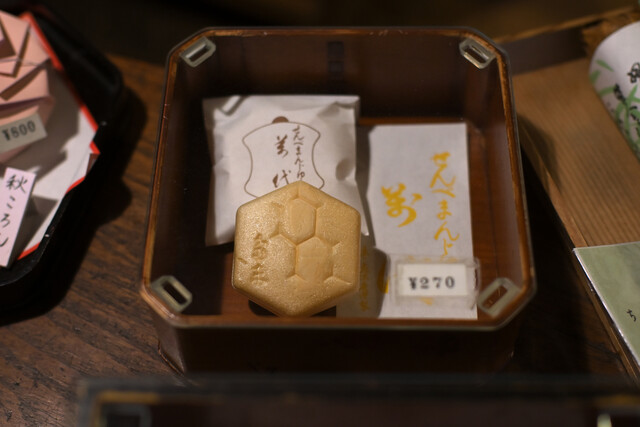
Karasuma Oike is a useful Kyoto address for understanding how the city eats between appointments: office workers, tea students, hotel guests, and old-family errand-runners move through the grid with purpose rather than spectacle. In that setting, wagashi does not behave like a Western dessert course. It is bought for tea, for visits, for seasonal observance, and for the small social obligations that keep Kyoto’s manners intact. Kamesuehiro sits inside that tradition, not as a sit-down indulgence but as a specialist counter where the transaction is part of the ritual.
Kyoto’s sweet shops reward a different kind of attention from restaurants. A kaiseki room can announce its ambition through ceramics, service choreography, and a procession of courses; wagashi often works in a smaller register. Shape, name, wrapping, and season carry much of the meaning. That makes the category unusually resistant to casual ranking. Recognition matters because it filters a crowded field: Kamesuehiro was selected for Tabelog’s Japanese traditional sweets and Japanese sweets café WEST 100 in 2023, with earlier selections in the sweets WEST 100 list in 2018, 2019, 2020, and 2022. For a Kyoto visitor, that pattern is a stronger signal than hype.
Kyoto wagashi as a cultural purchase, not a dessert detour
Wagashi in Kyoto is tied to tea ceremony, calendar motifs, and gift etiquette. The city’s confectionery culture asks the buyer to think about context: who will receive it, when it will be served, and what season it is meant to suggest. A place such as Kamesuehiro is therefore better understood alongside Kyoto’s temples, machiya craft shops, and tea schools than alongside pastry boutiques chasing novelty. The pleasure is intellectual as much as sweet.
This is also why the format matters. A take-out-only confectioner changes the tempo of the visit. There is no café table to soften the decision, no long menu sequence to turn the purchase into entertainment. The buyer enters, chooses, and leaves with something meant to be carried elsewhere. That portability is not incidental; Kyoto’s wagashi economy has long been bound to visiting, gifting, and tea rooms rather than restaurant dining rooms.
The broader Kyoto food map makes that distinction clearer. Visitors often build days around noodles, kaiseki, sushi, coffee, and sweets, but the city’s older rhythm comes from specialist shops doing one category with discipline. For a broader restaurant circuit, Our full Kyoto restaurants guide gives the range, while nearby or citywide contrasts such as 3TOKU6MI Shijo karasuma ten, 551蓬莱, [ki:], and Abbesses show how wide the city’s eating habits become once the frame shifts away from traditional sweets.
Recognition that points to craft consistency
Tabelog’s 100 selections are useful here because Japanese sweets can be difficult for short-stay travelers to judge from the outside. Many shops are modest, some are highly seasonal, and the difference between an ordinary purchase and a serious one may sit in proportion, finish, and timing rather than dramatic flavor. Kamesuehiro’s repeat appearances in the WEST sweets lists place it within a group that local diners and specialist users have returned to across multiple years.
That does not make the shop interchangeable with a temple snack stop. Kyoto has casual sweets traditions too, including grilled mochi, shaved ice, and café formats that invite lingering. Aburi Mochi Honke Nemoto Kazariya, for example, belongs to a different Kyoto pleasure: immediate, site-specific, and strongly linked to shrine-side eating. Kamesuehiro belongs to the boxed-and-carried side of the culture, where restraint, seasonality, and presentation carry more weight than theatrical service.
For travelers staying in Kyoto, the smartest use of a wagashi stop is to treat it as part of the day’s architecture. It can sit before a tea experience, after a museum visit, or as a purchase to bring back to a ryokan or hotel room. The city’s hospitality context matters here: Our full Kyoto hotels guide is useful for pairing traditional sweets with a stay that gives them a proper setting, while Our full Kyoto experiences guide helps place wagashi in the same cultural field as tea, craft, and temple programming. Evening plans belong elsewhere; Our full Kyoto bars guide and Our full Kyoto wineries guide cover drinking routes rather than confectionery rituals.
How to read the counter in a city of specialists
The critical mistake in Kyoto is treating every food stop as a meal. Some of the city’s defining addresses are narrower than that: a rice-cake shop, a pickle seller, a tea merchant, a counter with a single specialty. Kamesuehiro fits that specialist logic. Its value lies in showing how wagashi functions inside daily Kyoto life, not in offering an expansive dining experience.
That distinction also helps visitors compare it with contemporary casual addresses across Japan without flattening the category. A quick-service specialist such as.cafe in Osaka,.know in Kumamoto, (Shoku) Vietnam in Kawasaki, or [Curry Senmon Ten] Maruyama Kyoju. in Sapporo may share a focused format, but Kyoto wagashi carries a heavier ceremonial load. Even overseas Japanese-adjacent venues such as Jōdo Saké Bar in Los Angeles or Onigiri Time in Pasadena operate in a different cultural register, translating Japanese food habits for another dining context.
Within Kyoto, that is the reason to seek out a confectioner like this rather than leaving sweets to the end of dinner. Wagashi has its own grammar. It is shaped by season, social use, and tea culture, and its strongest examples do not need a long explanation to justify themselves. Kamesuehiro earns attention because it gives access to that grammar in a disciplined, compact form.
For broader Japan planning, it helps to keep categories clean. A beef specialist such as -Grilled beef Sukiyaki- KAMAKURA TANUKIAN 鎌倉 たぬき庵 in Kamakura or an izakaya-leaning address such as. 鮪と炭火焼き うお炭 秋葉原店 in Tokyo answers a meal question. Kamesuehiro answers a Kyoto question: how a city turns sweets into etiquette, season, and craft.
Cost Snapshot
Comparable venues to place this listing in its category.
| Venue | Cuisine | Price | Awards | Notes |
|---|---|---|---|---|
| KamesuehiroThis venue — the venue you are viewing | $ | , | ||
| 京ゆば工房 | Higashiyama, Kyoto Yuba Workshop | $ | , | |
| MASH Kyoto | Shimogyō, Kyoto bakery & sweet breads | $ | , | |
| Miyoshiya | Higashiyama, Japanese Traditional Sweets | $ | , | |
| Kono Hana | $ | , | Kamigyō, Traditional Japanese sweets & cafe near Kitano Tenmangu | |
| 京都 鶏白湯そば 純 | $ | , | Nakagyo-ku, Kyoto Creamy Chicken Broth Soba |
Continue exploring
More in Kyoto
Restaurants in Kyoto
Browse all →
Bars in Kyoto
Browse all →

Hotels in Kyoto
Browse all →

Wineries in Kyoto
Browse all →
At a Glance
- Classic
- Iconic
- Quiet
- Cozy
- Hidden Gem
- Solo
- Casual Hangout
- Family
- Historic Building
- Standalone
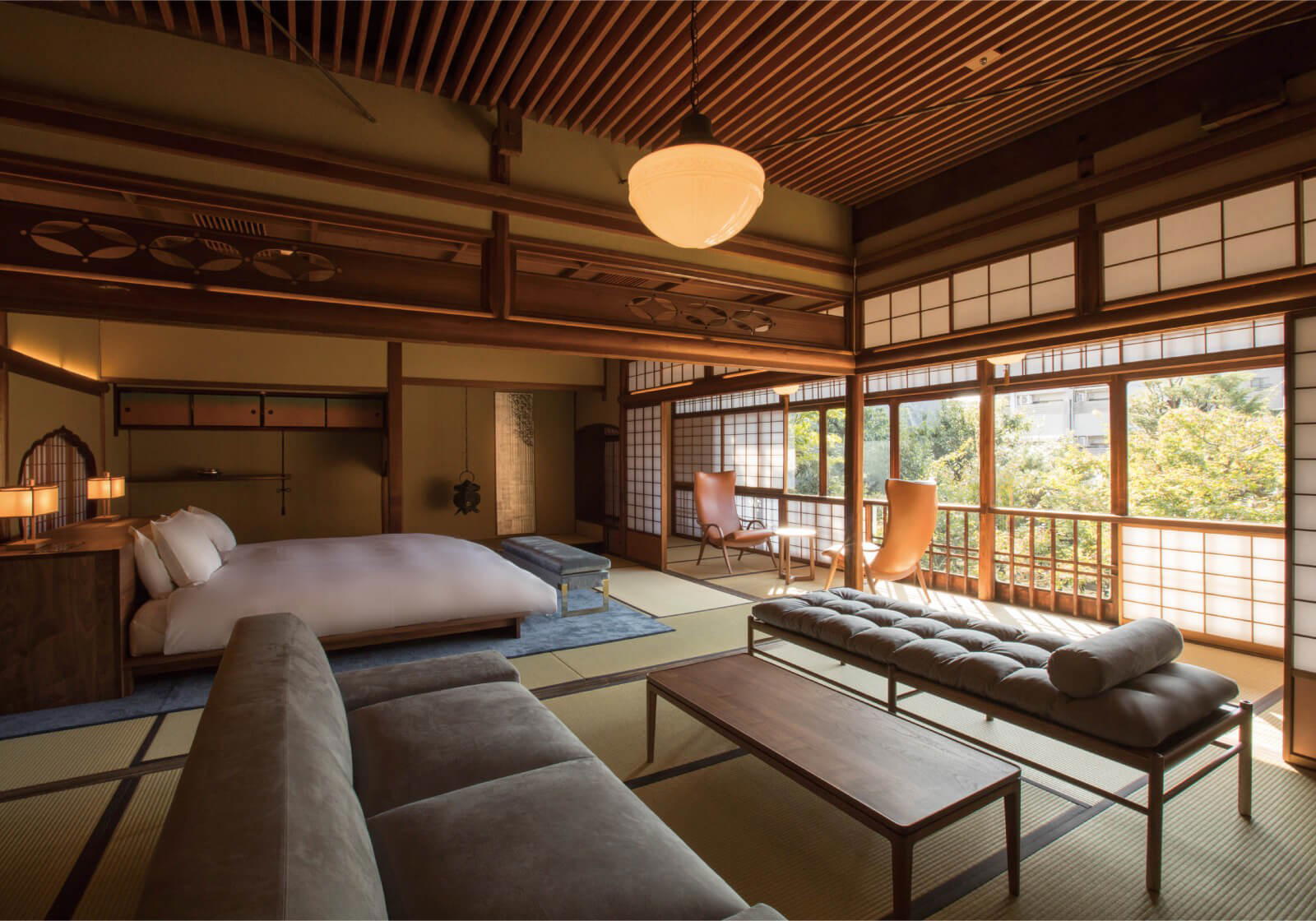
Described in reviews as a quiet, traditional Kyoto confectionery with a classic townhouse feel, focused on take-out sweets rather than sit-down dining, giving it an intimate and understated atmosphere.[1][5][9]