
Kansen Do belongs to Kyoto’s old sweets circuit rather than its kaiseki theatre: a Gion address for Japanese traditional sweets, take-out service, and repeat custom built around habit. Its Tabelog 100 selections across sweets and wagashi categories give it a clear trust signal in a city where confectionery shops are judged by consistency as much as ceremony.
Pearl is the En Primeur Club membership app — saves, bookings, and concierge access live there. Same editors, same standards.
- Address
- 344-6 Gionmachi Kitagawa, Higashiyama Ward, Kyoto, 605-0073, Japan
- Phone
- +81 75-561-2133
- Website
- tabelog.com
 Saves & bookings on Pearl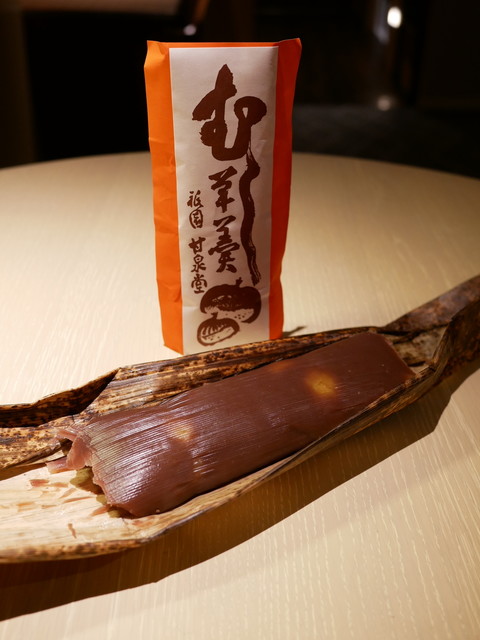
Gion’s northern streets ask for a slower register than Kyoto’s restaurant districts built around long dinners. Tea houses, confectioners, and small counters sit close to the pedestrian flow, and the serious sweets shops work on a different clock: mid-morning purchases, afternoon errands, gifts carried across town, and regulars who know what they came for before they reach the door. Kansen Do fits that rhythm. The point is not spectacle; it is Kyoto wagashi as daily craft, judged by repetition.
That distinction matters in a city where visitors often read food through kaiseki and omakase. Kyoto’s sweets culture has its own hierarchy, and it is less dependent on the performance of a dining room. A shop can matter because locals return, because seasonal gifting habits keep it in circulation, and because the category has formal expectations around restraint, texture, and tea compatibility. Kansen Do’s selection for Tabelog 100 in Japanese traditional sweets and Japanese sweets cafe, WEST 2023, places it inside that evaluated regional field rather than in the casual souvenir tier.
Gion wagashi without the long-dinner machinery
Kyoto’s high-end dining scene often sorts itself by format: kaiseki at places such as Chihana, tempura in the luxury bracket at Enyuan Kobayashi, and modern independent rooms spread through central Kyoto. Wagashi sits adjacent to that world but does not behave like it. It is purchased, carried, shared, and matched to tea; the craft has to survive outside the controlled pace of a tasting menu.
Kansen Do is listed in Japanese traditional sweets, with take-out service rather than private rooms or a full seated format. That makes the regulars’ perspective especially useful. Repeat customers are not returning for a grand room or a chef’s counter narrative. They are returning because the shop answers a specific Kyoto need: a reliable sweet for tea, a gift that reads correctly, or a compact stop in Gion that does not require giving over an evening.
The price band reinforces that role. In a city where a formal dinner can become the day’s main event, this sits in a lower-spend bracket, closer to a deliberate purchase than a luxury reservation. That does not make it casual in standards. Kyoto’s confectionery tradition is exacting precisely because the format is small: sweetness, shape, packaging, and timing do not have the cover of a multi-course meal.
Why regulars matter more than menu theater here
For wagashi, loyalty is a sharper signal than novelty. A changing dessert menu can create noise; a trusted sweets shop earns its place by being useful across seasons and occasions. Kansen Do’s repeated Tabelog recognition supports that reading: selected for Tabelog Sweets 100 in 2017, 2018, 2019, 2020, and 2022, then for the Japanese traditional sweets and Japanese sweets cafe WEST list in 2023. The award history points to sustained category relevance rather than a single burst of attention.
There is also a Kyoto-specific social intelligence at work. The city’s confectionery shops are often evaluated by what they enable beyond immediate eating: the tea table at home, the properly judged host gift, the quiet purchase after a shrine or gallery stop. For a visitor, that can be harder to decode than a tasting menu. The better question is not what the shop is trying to express, but why someone who lives nearby would return with a purpose.
In that context, Kansen Do reads as a Gion sweets address for people who already understand the genre’s rules. The shop’s category, take-out format, and award pattern all point in the same direction: a narrow, traditional lane where consistency carries more weight than novelty. Readers mapping Kyoto through restaurants can pair this kind of stop with broader city research in Our full Kyoto restaurants guide, then separate sweets, bars, stays, and cultural planning through Our full Kyoto hotels guide, Our full Kyoto bars guide, Our full Kyoto wineries guide, and Our full Kyoto experiences guide.
How it fits into a Kyoto day
The strongest use case is not as a substitute for lunch or dinner. It is a short, intentional Gion stop around the city’s tea-and-sweets grammar. Kyoto rewards this kind of pacing: a confectionery purchase before an afternoon walk, a small box carried back to a hotel, or a pause between temple traffic and dinner. The shop is near Gion-Shijo, which keeps it in the practical orbit of Higashiyama without turning it into a full itinerary anchor.
For visitors building a food day, the contrast is useful. Central Kyoto has quick, modern, and casual options such as 3TOKU6MI Shijo karasuma ten, familiar snack culture represented by 551蓬莱, and more contemporary rooms such as [ki:] and Abbesses. Traditional sweets have their own older logic, visible at places such as Aburi Mochi Honke Nemoto Kazariya, where the appeal is bound to repetition, locality, and ritual use rather than menu breadth.
Kansen Do belongs in that latter frame. Its value is clearest for travelers who care about Kyoto’s everyday food customs, not only reservations with ceremony. It is also a useful reminder that Japan’s regional sweets culture is not confined to Kyoto: compare the way everyday formats travel through pages such as.cafe in Osaka,.know in Kumamoto, (Shoku) Vietnam in Kawasaki, [Curry Senmon Ten] Maruyama Kyoju. in Sapporo, -Grilled beef Sukiyaki- KAMAKURA TANUKIAN 鎌倉 たぬき庵 in Kamakura, and. 鮪と炭火焼き うお炭 秋葉原店 in Tokyo. Abroad, Japanese drinking and snack formats take different shapes at Jōdo Saké Bar in Los Angeles and Onigiri Time in Pasadena, but Kyoto’s wagashi culture remains tied to place, gifting, and the discipline of small things done consistently.
Recognition Snapshot
Comparable venues by cuisine and category.
| Venue | Cuisine | Price | Awards | Notes |
|---|---|---|---|---|
| Kansen DoThis venue — the venue you are viewing | Traditional Japanese Wagashi & Sweets | $ | , | |
| Kissho Karyo Gion honten | Kinako Japanese sweets cafe | $ | , | Higashiyama |
| Ramen Tsurumusha | Kyoto-style Ramen Shop | $ | , | Ukyō |
| Okashi Tsukasa Nakamura Ken | Traditional Kyoto Wagashi & Cafe | $ | , | Nishikyō |
| Okonomiyaki Yoshino | Traditional Okonomiyaki & Teppanyaki | $ | , | Higashiyama |
| Honke Daiichi Asahi Honten | Classic Kyoto ramen shop | $ | , | Shimogyō |
Continue exploring
More in Kyoto
Restaurants in Kyoto
Browse all →
Bars in Kyoto
Browse all →
Hotels in Kyoto
Browse all →

Wineries in Kyoto
Browse all →
At a Glance
- Classic
- Cozy
- Hidden Gem
- Solo
- Casual Hangout
- After Work
- Historic Building
- Standalone
A traditional, low‑key wagashi shop tucked in a narrow alley off Shijo Street, with a quiet, hideout feel more like a private house than a storefront; the non‑smoking space emphasizes calm, simple decor where the focus is on beautifully presented Japanese sweets rather than design statements.[1][5]