
Kichijoji’s bread culture rewards everyday usefulness over ceremony, and Linde Kichijouji honten fits that rhythm: bread, sandwiches, café seating, and take-out in a price band under JPY 999. Its Tabelog Bread TOKYO “Tabelog 100” selections in 2020 and 2022 place it among the city’s more closely watched bakeries without pushing it into destination-dining theatre.
Pearl is the En Primeur Club membership app — saves, bookings, and concierge access live there. Same editors, same standards.
- Address
- 1 Chome-11-27 Kichijoji Honcho, Musashino, Tokyo 180-0004, Japan
- Phone
- +81 422-23-1412
- Website
- lindtraud.com
 Saves & bookings on Pearl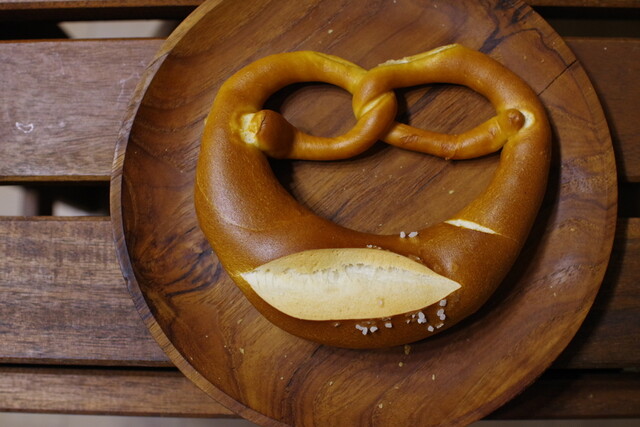
Approaching Kichijoji’s north side, the bakery rhythm differs from central Tokyo’s counter-dining choreography. This neighbourhood is built for shopping streets, park-bound errands, families, commuters, and people buying something good for later rather than staging a long meal. Linde Kichijouji honten fits that practical Tokyo bread culture: a 41-seat bread, sandwich, and café address for take-out or a pause at counter or sofa seating.
Tokyo’s serious bakery scene is not one style. French-leaning pâtisserie counters, Danish-inflected viennoiserie shops, German bread specialists, milk-bread counters, and sandwich cafés compete in a city that treats bread as daily fuel and craft object. Kichijoji usefully frames that spectrum because it is neither hotel-district luxury nor suburban anonymity. It has the foot traffic for specialist bakeries, while customer expectations stay grounded in daily repeat use. That tension explains why price, access, and breadth matter here as much as awards.
Kichijoji bread culture, judged by repeat use rather than ceremony
The strongest signal is category discipline, not chef biography or theatrical format. Linde Kichijouji honten is listed across bread, sandwich, and café, placing it where sourcing and production must meet regularity. A bakery can be inventive for a weekend queue, but a neighbourhood shop has to prove itself every morning through flour, fermentation, fillings, and consistency. Allergy and calorie information are available, a practical detail in a category where ingredients often hide inside laminated dough, spreads, and sandwich fillings.
The Tabelog Bread TOKYO “Tabelog 100” selections in 2020 and 2022 give the bakery a credible public marker in a crowded field. The list is useful because it separates bread from the broader restaurant economy: omakase counters, yakitori rooms, curry shops, and cocktail bars follow different rituals. For travellers comparing Tokyo food time, this bakery sits on another axis from a charcoal seafood meal at . 鮪と炭火焼き うお炭 秋葉原店, a Shinjuku counter such as 12/10 Shinjuku ten, or yakitori at 124. KAGURAZAKA (Yakitori). The question is not a grand dinner slot; it is where a western Tokyo day gets bread, coffee, and portable lunch.
Within Kichijoji, the peer logic is revealing. Wood Berries Marushe, Ozasa, and Amane sit in a similar sub-JPY 999 bracket, while Hikiniku to Kome Kichijouji occupies a higher JPY 1,000 to JPY 1,999 band. The neighbourhood supports both everyday sweets and tightly focused casual meals. Linde Kichijouji honten’s lower-bracket position matters: recognition is not being bought through a luxury tariff, but earned as an accessible bakery-café proposition.
Ingredient transparency is the quiet luxury in a sub-JPY 999 bakery
Ingredient sourcing in Tokyo bakeries is often framed through origin stories, imported flour, butter, yeast, or fermentation. The safer reading here is practical: publishing allergy and calorie information makes ingredients part of the customer decision. That matters for families, repeat local users, and travellers managing dietary constraints in a city where translation can complicate bakery cases. It also changes value assessment. A low price band is not automatically careless casualness; craft can be concentrated in production rather than tableware, service theatre, or wine pairing.
There is a wider Tokyo pattern. The city rewards compact specialists, from curry counters such as 3 Chome no Curry Ya San to visual café formats like 2D Cafe. Bread shops follow the same urban logic: small spaces, high turnover, clear product identity, and little tolerance for weak execution. A bakery with café seating serves two markets at once, those eating immediately and those carrying bread home. The ingredient question becomes operational, not romantic: can the shop make products useful beyond the first bite?
Awards should not dominate the reading. The Tabelog score of 3.74 and Bread TOKYO “Tabelog 100” recognition show sustained local attention, but appeal depends on itinerary. Kichijoji pairs naturally with Inokashira Park, independent retail, and a slower western-Tokyo day. It is less sensible as a cross-city detour between luxury hotel appointments unless the point is understanding how Tokyo eats outside the reservation economy. For that broader map, Our full Tokyo restaurants guide, Our full Tokyo hotels guide, Our full Tokyo bars guide, Our full Tokyo wineries guide, and Our full Tokyo experiences guide give the necessary scale.
How to place it in a Japan food itinerary
The useful comparison is not Tokyo’s expensive tasting menus, but the everyday-specialist tier across Japan: curry in Sapporo at [Curry Senmon Ten] Maruyama Kyoju. café culture in Kansai at.cafe in Osaka, Kyoto’s smaller-format dining at [ki:] in Kyoto, or regional casual cooking at.know in Kumamoto. These are not equivalent cuisines, but they share travel value: showing how Japanese cities organize quality outside formal fine dining.
For Tokyo-based visitors, the bakery works as part of a Kichijoji morning or early afternoon, not necessarily the sole reason to cross town. Published hours run through the day, and the venue is open year-round except for the year-end and New Year holiday period, the seasonal detail that matters in Japan because closures then can disrupt casual food plans. The setting suits mixed groups: children are welcome, the venue is non-smoking, and seating includes counter and sofa options. Parking is unavailable, so rail access through Kichijoji is natural.
There is also an international lens. Japanese casual formats abroad often translate focused, portable food into tighter concepts, from Jōdo Saké Bar in Los Angeles to Onigiri Time in Pasadena. In Japan, the original context is broader and less performative. Bread, sandwiches, curry, grilled beef sukiyaki at -Grilled beef Sukiyaki- KAMAKURA TANUKIAN 鎌倉 たぬき庵 in Kamakura, or Vietnamese cooking at (Shoku) Vietnam in Kawasaki all sit inside a culture where specialization can remain affordable. The restaurant is worth reading that way: not as a grand culinary statement, but as evidence of how Tokyo makes everyday food exacting.
Cuisine and Credentials
Comparable venues for cuisine and category context.
| Venue | Cuisine | Price | Notes |
|---|---|---|---|
| Linde Kichijouji hontenThis venue — the venue you are viewing | Traditional German bakery & café | $ | Not listed |
| Ebisu Banh Mi Bakery | Authentic Vietnamese Banh Mi | $ | Ebisu |
| Umemura | Japanese Soul Food | $ | Koto |
| Pomme de terre | Bagel shop and casual bakery cafe | $ | Suginami |
| Teuchi Mensai Kamei | Handmade Noodle Ramen | $ | Chofu |
| Whole Spice Curry Seiran | Whole-spice Japanese curry | $ | Suginami |
Recognition history
Dated appearances from independent guides and award organizations, with the underlying list record or original source where available.
Tabelog 100 #23 · No. 23
Tabelog · Tabelog 100 - Bread - TOKYO - 2022
Continue exploring
More in Tokyo
Restaurants in Tokyo
Browse all →



Bars in Tokyo
Browse all →



Hotels in Tokyo
Browse all →




Wineries in Tokyo
Browse all →
At a Glance
- Classic
- Cozy
- Solo
- Casual Hangout
- After Work
- Family
- Standalone
- Street Scene
Current opening hours
- Monday
- 10 AM–6 PM
- Tuesday
- 10 AM–6 PM
- Wednesday
- 10 AM–6 PM
- Thursday
- 10 AM–6 PM
- Friday
- 10 AM–6 PM
- Saturday
- 10 AM–6 PM
- Sunday
- 10 AM–6 PM
Hours can change for holidays and private events. Last verified .
A casual, classic bakery-café atmosphere with a bustling street-level shop and a simple, relaxed 2F eat-in area suited to everyday visits.