On Via del Portico d'Ottavia, in the heart of Rome's ancient Jewish Quarter, La Reginella d'Italia sits within one of the city's most historically layered dining districts. The address alone places it inside a tradition of Roman-Jewish cooking that predates the modern restaurant by centuries, where market sourcing and seasonal discipline define the table rather than trend cycles.
- Address
- Via del Portico d'Ottavia, 65, 00186 Roma RM, Italy
- Phone
- +39 06 6880 1607
- Directions
- Get directions
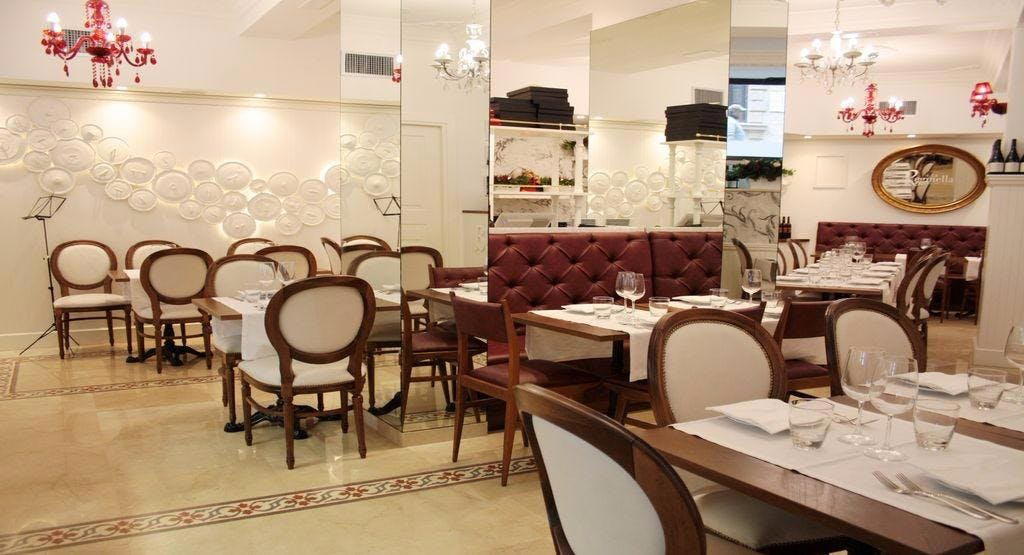
The Jewish Quarter Table: Where Roman Cooking Keeps Its Oldest Commitments
Via del Portico d'Ottavia runs alongside one of Rome's most intact archaeological layers, the ruins of the ancient portico framing the street on one side while trattorias and family-run kitchens line the other. This is the Ghetto, Rome's Jewish Quarter, and the cooking produced here follows a logic that most contemporary Italian restaurants spend considerable effort trying to reconstruct: genuine proximity between source and plate. La Reginella d'Italia sits on this street, at number 65, and its address is the first thing worth understanding about it.
Roman-Jewish cuisine is among the more coherent and historically continuous food traditions in Italy. It developed under conditions of material constraint and cultural isolation across several centuries, producing a repertoire built on seasonal abundance, minimal waste, and an instinctive relationship with the produce arriving daily from the nearby Campo de' Fiori and Testaccio markets. Dishes like carciofi alla giudia, the whole artichoke fried flat and crisp, or fiori di zucca stuffed and battered, did not emerge from a chef's tasting menu logic. They emerged from households taking full advantage of what the Roman agricultural calendar offered each week. That history remains the underlying architecture of what this neighbourhood serves.
Ingredient First: How the Ghetto Kitchen Still Works
The sourcing patterns of the Jewish Quarter have not modernised out of recognition. Restaurants along this stretch of the Centro Storico still orient their menus around what Roman market vendors have available, which means a kitchen operating in late spring looks meaningfully different from one in autumn. Artichokes dominate the winter and early spring months, when the Romanesco variety arrives tight and purple-tipped from Lazio farms. Zucchini flowers appear through summer. Salt cod, a staple of Roman-Jewish cooking since the trade routes of the early modern period, holds across the year.
This is a different sourcing logic from the creative tasting menu restaurants operating elsewhere in Rome, where Acquolina, Enoteca La Torre, and Il Pagliaccio build menus around technical intervention and conceptual arc. The Ghetto kitchen works in the opposite direction: the ingredient is the argument, and preparation exists to clarify rather than complicate. Against that broader Italian fine dining scene, which stretches from Osteria Francescana in Modena to La Pergola at the summit of Rome's Michelin tier, the trattoria format of the Portico d'Ottavia occupies a deliberately different position: no tasting menu, no architectural plating, and a menu that changes with the season rather than the chef's ambition cycle.
The Scene on the Street
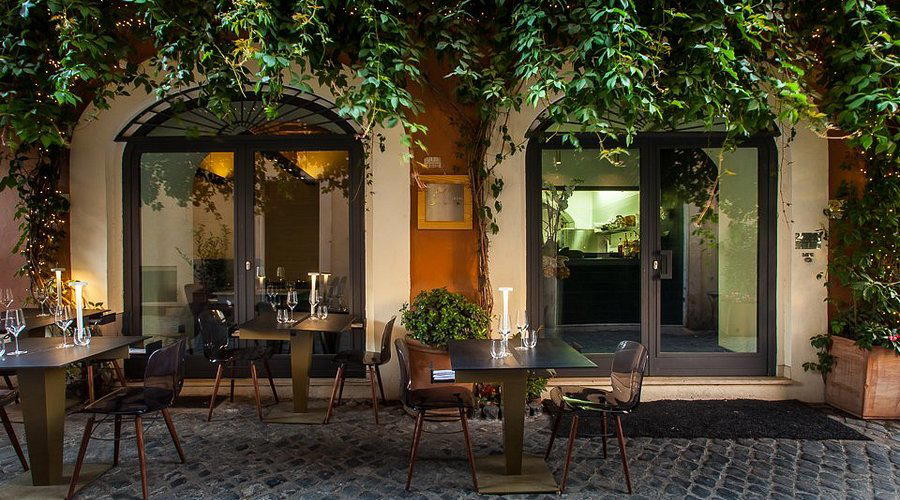
The physical setting of Via del Portico d'Ottavia carries weight that no interior design budget could replicate. Dining outside here in the early evening, with the ruins lit behind you and the street noise of the Centro Storico filtering through, places you inside a city that has been eating in this neighbourhood for longer than most European capitals have existed. It is a context that the cooking on this street either earns or wastes, depending on the kitchen's commitment to its own tradition.
The neighbourhood also anchors a broader Rome dining experience that rewards geographic range. Visitors combining the Ghetto with Rome's more technically ambitious restaurants, say Achilli al Parlamento a short walk north, or considering Italian regional dining more broadly through venues like Uliassi in Senigallia or Reale in Castel di Sangro, will find that the Ghetto holds its own as a counterpoint rather than a lesser alternative. Its argument is a different one about what Italian cooking is for.
For a fuller picture of how Rome's dining scene distributes across neighbourhoods and price points, the EP Club Rome restaurants guide maps the city by category and context.
Roman-Jewish Cooking in Its Wider Italian Frame
Italian cooking at the regional level rewards the kind of attention that most international visitors give only to the Michelin tier. The Roman-Jewish tradition is one of the country's most specific and least diluted regional cooking cultures, comparable in its internal coherence to the country cooking approaches documented at places like Dal Pescatore in Runate or the produce-first logic running through Piazza Duomo in Alba. The difference is that the Ghetto's restaurants serve this tradition without the tasting menu apparatus, in rooms that have been doing the same thing for decades.
That consistency matters for understanding where a restaurant like La Reginella d'Italia fits. It is not competing with Le Calandre in Rubano or Enoteca Pinchiorri in Florence or the technical ambition of Enrico Bartolini in Milan. It occupies a category where the measure is fidelity to a cooking tradition rather than innovation within it, and where the sourcing calendar, not the chef's portfolio, sets the terms.
For those interested in how Italian kitchens handle ingredient provenance at the fine dining tier, Atelier Moessmer Norbert Niederkofler in Brunico and Quattro Passi in Marina del Cantone offer instructive contrasts from opposite ends of the country. The Roman-Jewish kitchen answers the same sourcing question with a different set of tools.
Planning a Visit
La Reginella d'Italia is located at Via del Portico d'Ottavia, 65, in Rome's Centro Storico, within walking distance of the Teatro di Marcello and the Tiber Island. The Jewish Quarter is compact and navigable on foot from most central accommodation. The area around the Portico d'Ottavia is busiest from early spring through late autumn, when outdoor seating fills quickly in the evenings and weekend lunch trade can extend the wait considerably. Arriving early in the evening service or at midweek lunch gives a more relaxed read of the neighbourhood.
A Quick Peer Check
Comparable venues nearby, for context on price, style, and recognition.
| Venue | Cuisine | Price | Notes |
|---|---|---|---|
| La Reginella d'ItaliaThis venue — the venue you are viewing | Roman-Jewish Trattoria | $$ | Not listed |
| Trattoria Der Pallaro | Traditional Roman Trattoria | $$ | Parione |
| Bottega Ciccone | Traditional Roman Italian | $$ | Trastevere |
| Le Caveau | Roman Italian Trattoria | $$ | Esquilino |
| Farro Zero | Organic Heritage Grain Pizza | $$ | Trieste |
| Mamma Angelina | Traditional Roman Trattoria with Fresh Seafood | $$ | Trieste |
Continue exploring
More in Rome
Restaurants in Rome
Browse all →
Bars in Rome
Browse all →
Hotels in Rome
Browse all →




At a Glance
- Rustic
- Cozy
- Historic
- Date Night
- Casual Hangout
- Historic Building
- Street Scene
Warm and welcoming traditional atmosphere in the historic Jewish Ghetto with a focus on authentic Roman-Jewish cuisine.