The Shift That Defines This Category
To understand what Farro Zero represents, it helps to trace a broader arc in Italian fine dining over the past fifteen years. The early 2000s version of ambitious Italian cooking was heavily influenced by northern European technique: precise plating, elaborate reductions, a deference to French structure that sat awkwardly with Italian ingredient culture. By the 2010s, a corrective movement had taken hold. Places like Osteria Francescana in Modena demonstrated that Italian cooking could be conceptually serious without abandoning its own reference points, while coastal destinations like Uliassi in Senigallia and Quattro Passi in Marina del Cantone built reputations on hyper-regional sourcing rather than imported techniques.
The current moment is further downstream from that pivot. The grain-forward, fermentation-aware, producer-credited restaurant has become a recognisable category across Italy, from alpine addresses like Atelier Moessmer Norbert Niederkofler in Brunico to Apennine kitchens like Reale in Castel di Sangro. In Rome specifically, a city whose culinary identity has historically been defined by offal, pasta, and the Sunday lunch table rather than by tasting menus, this evolution carries particular weight. Restaurants that take ancient grains seriously as a culinary anchor, rather than as a garnish or a wellness gesture, are making an argument about where Roman cooking might go next.
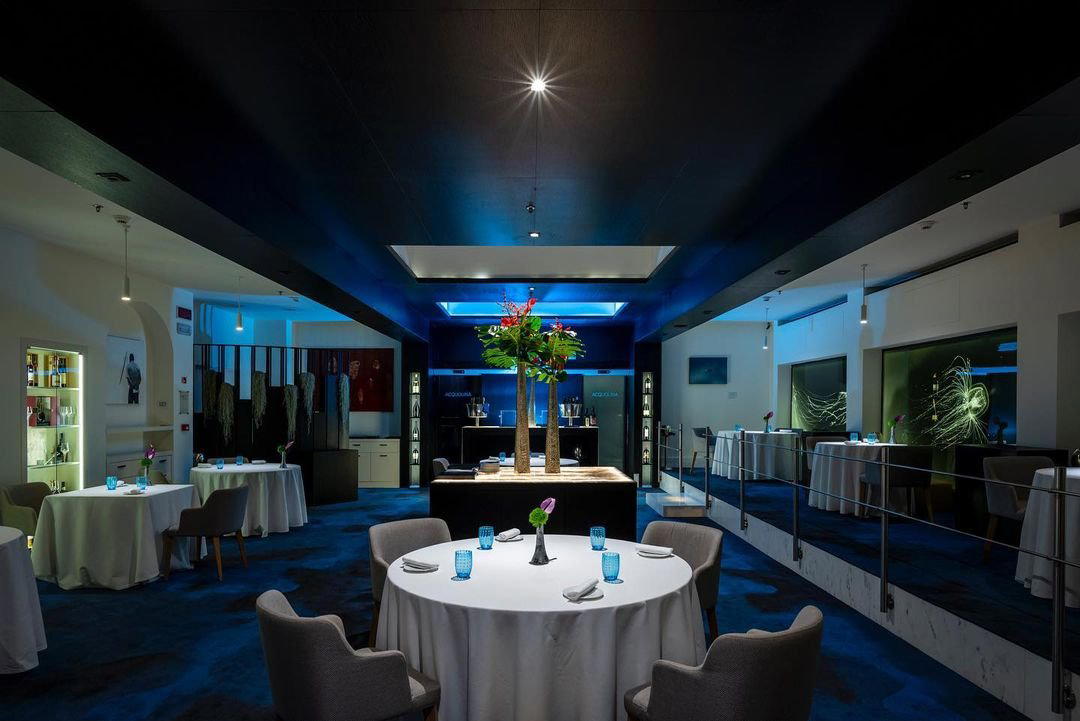
In that context, the restaurant's positioning is more charged than it might initially appear. It is not simply a restaurant with a grain on the menu; it is making a claim about what Roman ingredients can anchor at a certain level of seriousness, and placing itself in a conversation with creative kitchens across the city, including Acquolina, Enoteca La Torre, and Achilli al Parlamento, each of which approaches the question of contemporary Italian cooking from a distinct angle.
What the Address Tells You
Via Alfonso Rendano is a residential street in the northern reaches of the city. Arriving here rather than at a table on the Campo de' Fiori or near the Pantheon is itself a statement of intent: this is a kitchen that expects you to come to it, and that draws a crowd willing to do so. In global dining terms, the neighbourhood-restaurant-with-destination-ambitions is a well-established format: Lazy Bear in San Francisco built its reputation on a similar premise, and even Le Bernardin in New York City occupies a midtown block that rewards deliberate navigation rather than casual foot traffic.
In Rome, the comparison is closer to home. Dal Pescatore in Runate has operated for decades on the logic that diners will travel to the source of serious cooking regardless of location. Parioli is not Runate, but the underlying principle holds: a restaurant on a residential street in a non-tourist district is, by definition, speaking to a visitor who has done their research. That is the audience the restaurant is configured for.
Where It Fits in the City's Creative Register
Rome's creative dining tier has expanded significantly since the mid-2010s. The city that once felt like a laggard relative to Milan, where Enrico Bartolini operates multiple formats across a disciplined culinary empire, or Florence, where Enoteca Pinchiorri has held its position for decades, now has a more textured range of serious kitchens.
The restaurant's grain-centred identity places it in a niche within that tier. It is not the category of white-tablecloth formality that defines rooms like Piazza Duomo in Alba or Le Calandre in Rubano, nor is it the coastal-produce-led format that characterises Italy's leading seafood addresses. It sits in a middle ground that is increasingly occupied across Italian cities: ingredient-led, producer-accountable, technically careful without being technically demonstrative. That position has become more competitive in the past five years, which means the kitchens that hold it convincingly are doing more than following a trend.