In the Oltrarno neighbourhood of Florence, 'l Trippaio di San Frediano is a street-food vendor at Piazza dei Nerli serving lampredotto and tripe in the working-class tradition that shaped the city's food identity. Where fine-dining addresses in Florence increasingly trade on refinement, this spot holds the opposite position: cheap, fast, and inseparable from the ingredient itself. It is one of the more direct encounters with Florentine food culture available to a visitor.
Pearl is the En Primeur Club membership app — saves, bookings, and concierge access live there. Same editors, same standards.
- Address
- Piazza dei Nerli, 50124 Firenze FI, Italy
- Directions
- Get directions
 Saves & bookings on Pearl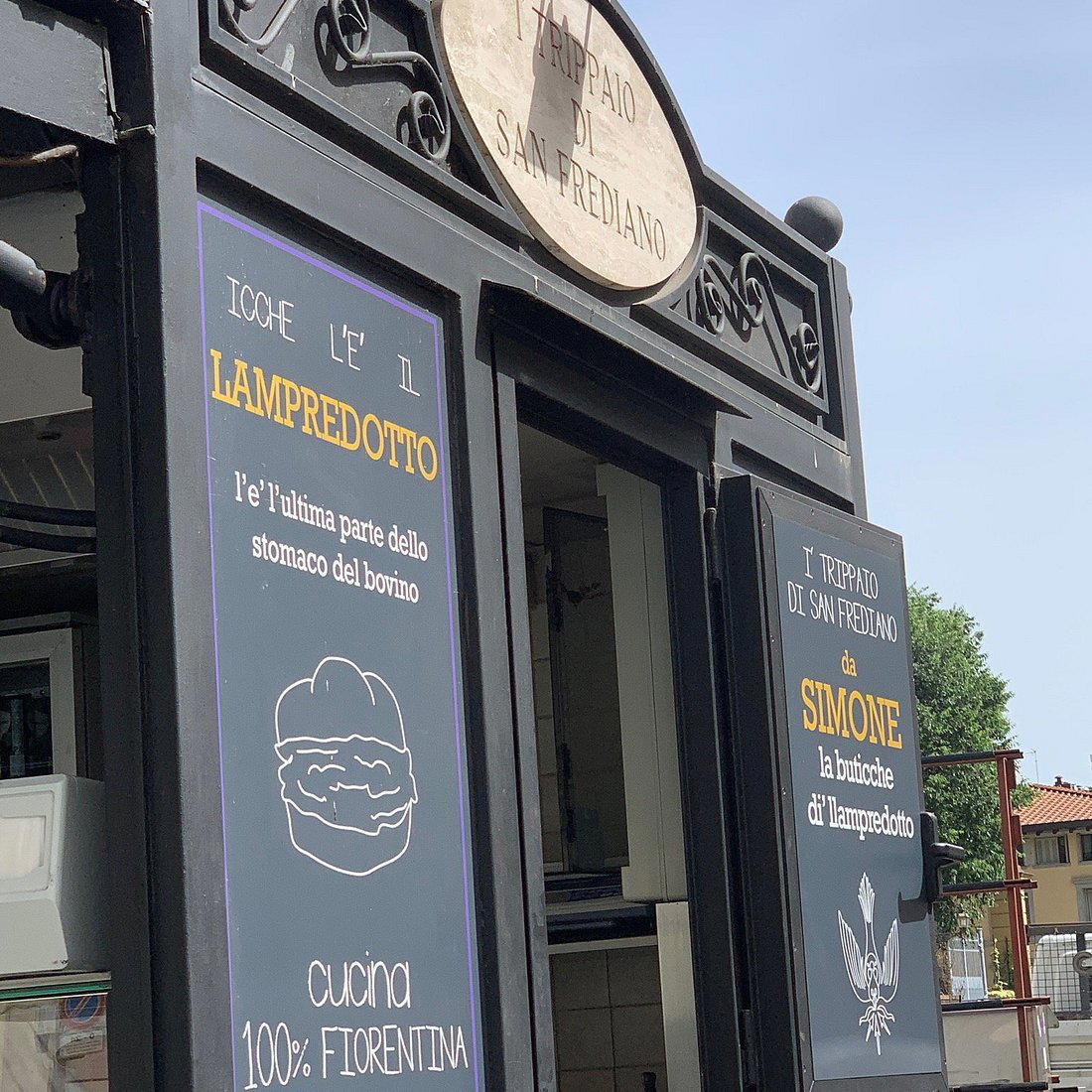
The Oltrarno Food Tradition That Fine Dining Cannot Replace
Walk south across the Ponte Vecchio and Florence gives way to a different city. The Oltrarno has historically been a working neighbourhood, and its food culture reflects it. The alimentari are smaller, the bars older, and on Piazza dei Nerli, a mobile trippaio cart occupies a position that has cultural weight far beyond its physical footprint. Street-level offal vendors, known as trippai, have operated in Florentine piazzas and market corners for centuries. They served a population that could not afford the whole animal and built a cuisine from what the butchers left behind: tripe from the stomach lining, and lampredotto from the fourth stomach of the cow, slow-simmered in broth and served in a roll. 'l Trippaio di San Frediano is a direct continuation of that tradition.
Why the Ingredient Defines the Category
Florence's offal culture is distinguished by its specificity. Unlike the broad category of quinto quarto cooking found across central Italy, Florentine trippaio culture concentrates on a narrow set of cuts prepared in a consistent way that has barely changed in form. The lampredotto, fatty and deeply savoury from long simmering in a broth seasoned with tomato, onion, celery, and parsley, is served in a semelle roll. The bread's leading half is typically dipped in the cooking broth, a practice called bagnato, and the sandwich is dressed with either salsa verde or a spiced chilli sauce. This is not approximated or modernised at serious trippai: the sourcing of the stomach meat, the quality of the broth, and the bread all contribute directly to what ends up in your hand.
That sourcing question is worth pausing on. The quality of offal, more than most ingredients, degrades quickly and reflects the husbandry practices upstream. The leading trippai in Florence have long-standing relationships with specific suppliers, and the difference between a correctly prepared lampredotto and a mediocre one is immediately legible to anyone who has tried both. The ingredient cannot be masked or corrected by technique in the way a less flavourful fish can be improved by a butter sauce. It is either good or it is not, which is why the vendor tradition has always selected for operators who take sourcing seriously.
Piazza dei Nerli and the Neighbourhood It Feeds
The location at Piazza dei Nerli places 'l Trippaio di San Frediano in a part of the Oltrarno that sees considerably less tourist traffic than the Piazza Santo Spirito corridor a few minutes east. The piazza is a functional neighbourhood square, and the trippaio operates there as a food provider for the people who actually live nearby, not primarily as a destination for visitors. That distinction matters for understanding the format: there are no seats, no menu in English, and no accommodations for the hesitant. You arrive, you order, you eat standing or find a spot on nearby steps. The experience is compressed and the transaction is direct.
That positioning also clarifies the price context. Florence's formal dining tier, led by addresses like Enoteca Pinchiorri and the creative Italian menus at Santa Elisabetta, operates at the opposite end of the spectrum. The contemporary kitchens at Atto di Vito Mollica, Borgo San Jacopo, and Gucci Osteria da Massimo Bottura serve food that draws on Florentine tradition but transforms it through technique and presentation. The trippaio does neither. It holds the ingredient at the centre and serves it for a few euros. These are not competing categories. The better framing is that the trippaio tradition exists as the foundation from which the fine-dining expressions depart, and understanding one informs the other.
The Broader Italian Offal Tradition in Context
Offal cookery in Italy is not confined to Florence, but the city's street-vendor format is distinctive. In Rome, the quinto quarto tradition runs through trattoria kitchens. In Milan, the busecca (tripe soup) has moved largely indoors. Florence maintained a mobile cart culture longer and in a more persistent form, partly because the Oltrarno's working-class identity sustained the demand. That tradition connects to a wider Italian seriousness about using the whole animal, evident across the country's serious kitchens from Osteria Francescana in Modena to Reale in Castel di Sangro. At the other end of the Italian fine-dining spectrum, restaurants like Piazza Duomo in Alba, Le Calandre in Rubano, Uliassi in Senigallia, Quattro Passi in Marina del Cantone, Dal Pescatore in Runate, Atelier Moessmer Norbert Niederkofler in Brunico, Casa Perbellini 12 Apostoli in Verona, and Enrico Bartolini in Milan each express Italian ingredient culture through entirely different registers. The trippaio sits at the base of that range, not below it in terms of seriousness, but at a different point on the same continuum. Even visitors who have recently dined at, say, Le Bernardin in New York or Atomix often find the directness of a good lampredotto sandwich a more clarifying food experience than expected.
Planning Your Visit
'l Trippaio di San Frediano operates on Piazza dei Nerli in the San Frediano quarter of the Oltrarno, reached by crossing from the city centre at Ponte alla Carraia or Ponte Amerigo Vespucci rather than the more trafficked Ponte Vecchio. As a street cart, hours and availability follow no fixed schedule published online, and the operation runs without a bookable website or phone number. The practical approach is to arrive mid-morning or around the early lunch hour, when trippai across Florence are traditionally at their busiest and the broth is freshest. Go early in the week if possible, as lighter foot traffic in the neighbourhood means the cart is more likely to be operating at pace. This is a cash-in-hand, walk-up format. There is no reservation mechanism and none is needed. Budget a few euros for a sandwich and consider ordering one bagnato and one without to understand the difference the broth dipping makes. For a broader map of where the restaurant sits relative to the city's full dining range, see our full Florence restaurants guide.
Comparable Venues
Comparable venues nearby, for context on price, style, and recognition.
| Venue | Cuisine | Price | Notes |
|---|---|---|---|
| 'l Trippaio di San FredianoThis venue — the venue you are viewing | Traditional Florentine Offal Street Food | $ | Not listed |
| Semel Street Food | Tuscan Street Food Panini | $ | Ricorboli |
| Gustapizza | Neapolitan Pizza | $ | Santo Spirito |
| Trattoria 4 Leoni | Tuscan Trattoria | $$ | Santo Spirito |
| Trippaio Albergucci Mario | Florentine Tripe and Lampredotto Street Food | $ | Bobolino |
| Cibreo Caffe | Tuscan Bistro | $$ | Santo Spirito |
Continue exploring
More in Florence
Restaurants in Florence
Browse all →
Bars in Florence
Browse all →
Hotels in Florence
Browse all →
At a Glance
- Rustic
- Well Known
- Casual Hangout
- Solo
- Standalone
- Local Sourcing
- Street Scene
Current opening hours
- Monday
- 10:30 AM–6:30 PM
- Tuesday
- 10:30 AM–6:30 PM
- Wednesday
- 10:30 AM–6:30 PM
- Thursday
- 10:30 AM–6:30 PM
- Friday
- 10:30 AM–6:30 PM
- Saturday
- 10:30 AM–6:30 PM
- Sunday
- 10:30 AM–6:30 PM
Hours can change for holidays and private events. Last verified .