

Michelin Bib Gourmand
Our verdict
Cibrèo Trattoria on Via dei Macci operates as the more accessible sibling to the celebrated Cibrèo restaurant next door, serving the same kitchen's Tuscan repertoire at a fraction of the price.

Pearl is the En Primeur Club membership app, where members save venues, book tables and use the concierge.
The menu
What to order
- Chicken Meatballs
- Beef Tartare
- Veal Tripe Salad
- Minestrone
- Rabbit
- Lampredotto
The Room on Via dei Macci
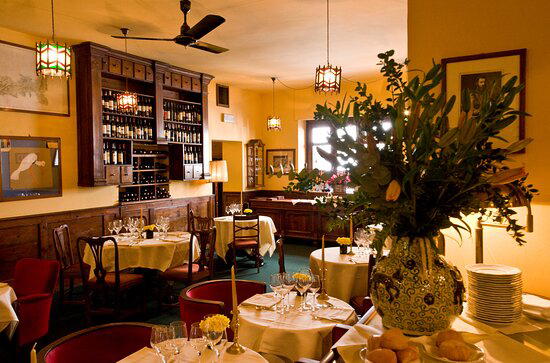
Via dei Macci sits in the Sant'Ambrogio quarter, east of the Duomo and a short walk from the covered market of the same name. The street runs through a neighbourhood that still functions as a working Florentine district rather than a museum of tourism, and the trattoria fits that character. The room reads as something between a private dining room and a neighbourhood sala: contained, simply dressed, and arranged with the kind of casual formality that defines the better end of Tuscan trattoria culture. Service is described, across considerable documentation including the Michelin guide, as pleasantly friendly rather than ceremonially stiff. That distinction matters in Florence, where the gap between warm hospitality and choreographed performance separates the genuine article from the imitation.
Tuscan Trattoria Cooking and What It Actually Means
The label "Tuscan trattoria" does a lot of work in Florence, and not all of it honest. Across the city, the category spans everything from genuinely rooted cucina casalinga to tourist-facing approximations of ribollita and bistecca. Cibrèo Trattoria sits closer to the former end of that spectrum, with a menu that privileges the flavour logic of the Florentine kitchen: offal, legumes, slow-cooked braises, and the kind of starters that front-load a meal with substance rather than decoration.
The Tuscan table has always leaned on cucina povera principles, not as a trend but as a structural feature of the region's cooking history. Dishes built from lesser cuts, dried pulses, and garden vegetables predate the modern restaurant as a concept. The trattoria format, at its most coherent, is the institutional expression of that tradition: an à la carte room where the menu changes with season and supply, and where the kitchen's knowledge shows in technique rather than ingredient provocation. Cibrèo Trattoria holds to that format. There is no tasting menu and no set structure, the à la carte constraint is clearly noted in the venue's own documentation.
The Cibrèo Relationship and What It Signals
Trattoria shares its address cluster and kitchen lineage with the Cibrèo restaurant, which has occupied this corner of Sant'Ambrogio for decades and is associated with chef Giulio Picchi. In Florence's dining structure, this relationship matters for positioning. The trattoria operates at a €€ price point against a comparison set that includes €€€€ addresses like Buca Lapi and the city's Michelin-starred rooms.
Florence carries several institutions in this structural position, restaurants with a recognisable name that run a parallel, lower-priced room for daily eating. Cammillo in the Oltrarno and Alla Vecchia Bettola occupy adjacent territory in the city's mid-tier: affordable, consistent, and rooted in regional tradition without pretence to modernisation. At the other extreme, the city's fine-dining rooms, including the three-Michelin-star Enoteca Pinchiorri and the one-star addresses at Borgo San Jacopo and Il Palagio, operate in a category defined by technique and transformation rather than tradition and repetition. Cibrèo Trattoria belongs emphatically to the first grouping.
Awards and Peer Recognition
The trattoria holds a Michelin Bib Gourmand for both 2024 and 2025, a designation that identifies restaurants offering good cooking at moderate prices. Within Italy's award ecosystem, the Bib Gourmand is a useful signal: it indicates that Michelin inspectors found the quality-to-price ratio compelling, without the expectation of fine-dining elaboration. The venue also appears in Opinionated About Dining's Casual Europe list for 2023, 2024, and 2025, with a ranking of #379 in the 2025 Leading Restaurants in Europe edition and a parallel ranking of #430 in the 2024 Casual Europe list.
For context, the OAD Leading Restaurants in Europe list aggregates votes from a community of serious diners and chefs, weighting towards culinary substance over spectacle. A ranking of #379 in that list places Cibrèo Trattoria in consistent company with regional institutions across the continent, including comparable Tuscan addresses. Compare this with the complexity of Italy's starred restaurants at the summit: Osteria Francescana in Modena, Le Calandre in Rubano, and Piazza Duomo in Alba operate at the apex of Italy's creative cooking tradition. Cibrèo Trattoria is not in that conversation, nor does it try to be. Its recognition is specifically for what it does: direct Tuscan cooking executed with consistency at a price that does not require special occasion justification.
What to Order
The venue's own documentation specifically recommends the "Vassoio del Cibrèo" among the starters. A vassoio is a tray or board, and in this context it signals a selection-format start to the meal rather than a single composed plate. The format is consistent with traditional Florentine antipasto service, where variety and abundance take precedence over architectural presentation. This is the point of entry the kitchen endorses, and given the à la carte constraint, it is the logical way to read the kitchen's range before committing to a direction for the rest of the meal.
Florence's Trattoria Tier in Broader Italian Context
Italy's dining culture has maintained a cleaner separation between its trattoria tier and its fine-dining tier than most European countries. In France or the UK, mid-market dining has been largely absorbed into casual concepts that often reference fine-dining vocabulary without the execution. In Italy, the trattoria remains a distinct institution with its own logic: family-style service, regional specificity, seasonal menus, and a price architecture that assumes repeat visits rather than annual pilgrimages.
Within that national pattern, Florence's trattorie carry particular weight because the city's culinary identity is so closely tied to its peasant cooking heritage. Ribollita, lampredotto, peposo, and fagioli all'uccelletto are dishes that achieved their forms through centuries of resourcefulness rather than culinary school curriculum. Restaurants like Da Ruggero, Club Culinario Toscano da Osvaldo, and Cibrèo Trattoria operate as custodians of that logic rather than interpreters of it. The distinction from Italy's more experimental rooms, whether Enrico Bartolini in Milan or Atelier Moessmer Norbert Niederkofler in Brunico, is not merely one of price but of intent.
Planning a Visit
The trattoria is open seven days a week for both lunch (12:30 to 2:30 pm) and dinner (7:00 to 10:30 pm), which makes it one of the more flexible addresses in this tier of Florence dining. The Sant'Ambrogio location is walkable from the city centre and sits near the morning market, making a lunch booking logistically direct for visitors staying in the historic districts. Given the consistent award recognition and the 765-review Google profile, securing a table in advance is advisable, particularly for dinner. The address is Via dei Macci, 122r, Firenze.
For those building a broader Florence itinerary, the full city guides for restaurants, hotels, bars, wineries, and experiences cover the full range of the city's premium offer. For a counterpoint at the far end of Italy's dining spectrum, the tasting-menu precision of Dal Pescatore in Runate or the modernist ambition of Le Bernardin in New York City and Atomix in New York City illustrate how far the Cibrèo Trattoria sits from the global fine-dining axis, and why that distance is precisely the point.
Frequently asked questions
What price level is Cibrèo Trattoria?
Pricing at Cibrèo Trattoria is listed as €€.
When is Cibrèo Trattoria open?
Hours at Cibrèo Trattoria: Hours: Monday 12:30–2:30 pm, 7–10:30 pm Tuesday 12:30–2:30 pm, 7–10:30 pm Wednesday 12:30–2:30 pm, 7–10:30 pm Thursday 12:30–2:30 pm, 7–10:30 pm Friday 12:30–2:30 pm, 7–10:30 pm Saturday 12:30–2:30 pm, 7–10:30 pm Sunday 12:30–2:30 pm, 7–10:30 pm.
Recognition, Side-by-Side
A short peer table to compare basics side-by-side.
| Venue | Cuisine | Price | Awards | Notes |
|---|---|---|---|---|
| Cibrèo TrattoriaThis venue (the venue you are viewing) | Traditional Tuscan Trattoria | $20–30 | Michelin Bib Gourmand | Not listed |
| Enoteca Pinchiorri | Contemporary Italian Fine Dining | $200–300 | 3 Michelin Stars · World's 50 Best #32 | Italian - French, Italian Contemporary |
| Santa Elisabetta | Modern Italian Fine Dining with Seafood Focus | $200–300 | 2 Michelin Stars · La Liste Top Restaurants | Italian, Creative |
| Borgo San Jacopo | Michelin-starred Modern Tuscan & Italian Fine Dining | $150–200 | 1 Michelin Star · Falstaff Restaurant - 94 Falstaff Points | Italian, Modern Cuisine |
| Gucci Osteria da Massimo Bottura | Contemporary Italian with Japanese and Mexican Influences | $200–300 | 1 Michelin Star · Wine Spectator Best of Award of Excellence | Modern Italian, Italian Contemporary |
| Il Palagio | Modern Tuscan Fine Dining | $100–150 | 1 Michelin Star · Star Wine List | Italian Contemporary |
Recognition history
Dated appearances from independent guides and award organizations, with the underlying list record or original source where available.
Michelin Bib Gourmand
Michelin
Opinionated About Dining Top Restaurants in Europe Ranked #379
Opinionated About Dining
Full recognition history (8 entries)
Michelin Plate
Michelin
Michelin Bib Gourmand
Michelin
Opinionated About Dining Casual in Europe
Opinionated About Dining
Michelin Bib Gourmand
Michelin
Opinionated About Dining Casual in Europe Ranked #430
Opinionated About Dining
Opinionated About Dining Casual in Europe Recommended
Opinionated About Dining
Cibrèo Trattoria
Featured Guides
Continue exploring
More in Florence
Restaurants in Florence
All restaurants in Florence →
Bars in Florence
All bars in Florence →
Hotels in Florence
All hotels in Florence →

Details
- Rustic
- Cozy
- Classic
- Casual Hangout
- Family
- Group Dining
- Standalone
- Beer Program
- Local Sourcing
- A La Carte
- House Wine
- Chianti
- Vegetarian Friendly
- Allergy Accommodating
Current opening hours
- Monday
- 12:30–2:30 PM, 7–10:30 PM
- Tuesday
- 12:30–2:30 PM, 7–10:30 PM
- Wednesday
- 12:30–2:30 PM, 7–10:30 PM
- Thursday
- 12:30–2:30 PM, 7–10:30 PM
- Friday
- 12:30–2:30 PM, 7–10:30 PM
- Saturday
- 12:30–2:30 PM, 7–10:30 PM
- Sunday
- 12:30–2:30 PM, 7–10:30 PM
Hours can change for holidays and private events. Hours as of .
Warm and welcoming with a simple, traditional Florentine atmosphere; casual and unpretentious with rustic charm, though can become crowded and warm without air conditioning.