Cibreo Caffe sits on Via de' Vecchietti in central Florence, serving Tuscan cooking in a register that sits well below the city's Michelin-starred tier without sacrificing seriousness. Recommended by Pearl in 2025 and carrying, it occupies the middle ground between tourist-facing trattorias and the formal tasting-menu houses that now dominate Florence's upper bracket.
Pearl is the En Primeur Club membership app — saves, bookings, and concierge access live there. Same editors, same standards.
- Address
- Via de' Vecchietti, 5, 50123 Firenze FI, Italy
- Phone
- +39 055 234 1100
- Website
- cibreo.com
- Directions
- Get directions
 Saves & bookings on Pearl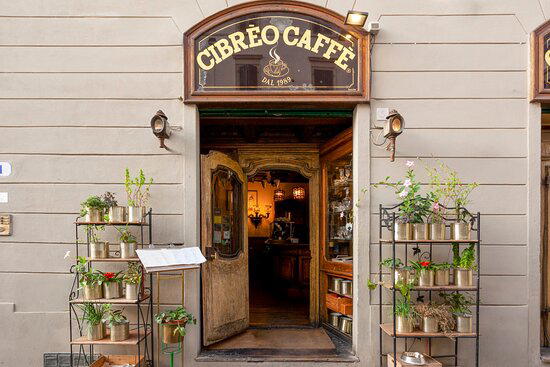
Where Florence Eats Without the Theatre
The stretch of central Florence between the Duomo and the Arno has become increasingly split between two dining modes: the grand-gesture tasting menus of places like Enoteca Pinchiorri and Santa Elisabetta, carrying three and two Michelin stars respectively, and the casual tables aimed at visitors who want pasta and a view. The middle register, serious Tuscan cooking served without ceremony or a multi-course commitment, is harder to find than it should be in a city of this culinary weight. Cibreo Caffe, on Via de' Vecchietti 5, sits in that gap. The address places it close to the historic centre but away from the heaviest foot traffic around Piazza della Repubblica, which says something about the kind of clientele it is calibrated for.
Approaching the address, the physical proposition is immediately legible: a café format that signals informality without signalling disinterest. In Florentine dining terms, the caffe designation historically denoted a place where you could eat well at counter or table without the choreography of a full ristorante service. That tradition has become rarer as the city's hospitality economy has polarised.
Tuscan Cooking and the Question of Sourcing
The editorial angle that matters most when assessing a Tuscan kitchen at this price tier is not the technique, it is the provenance of what arrives on the plate. Tuscan cuisine draws its authority from a specific agricultural geography: the river valleys that produce its olive oil, the hill towns whose butchers still work with Chianina and Cinta Senese breeds, the market gardeners supplying cavolo nero and fagioli that form the base of the region's most instructive dishes. A kitchen in central Florence either connects to those supply chains or it substitutes with generic Italian produce, and the difference shows.
Cibreo as a brand has long been associated with this sourcing seriousness. The original Cibreo restaurant, established by Fabio Picchi in the Sant'Ambrogio neighbourhood near the Mercato di Sant'Ambrogio, built its reputation on working directly with that market's producers over decades. The caffe format is a lighter expression of that same kitchen logic, reaching a broader audience at a lower price point without abandoning the ingredient standards that gave the name its credibility. For visitors exploring Tuscan cooking at the table rather than on a tour, this is a meaningful distinction. The dishes most associated with the Cibreo kitchen, offal preparations, dense bean soups, bread-thickened sauces, are only convincing when the base materials are right. When they are not, those same dishes read as heavy and dated.
Comparing this positioning to Alle Logge di Piazza in Siena or Campo del Drago at Rosewood Castiglion del Bosco, both of which interpret Tuscan ingredients through different lenses, clarifies where Cibreo Caffe sits: it is not trying to reinterpret the region's cooking, it is trying to present it faithfully at a format that allows daily repetition. That is a different and more demanding task.
The Florentine Caffe in Its Competitive Context
Florence's mid-market dining has undergone pressure from both ends in recent years. From above, the Michelin-flagged tables, including Atto di Vito Mollica and Chic Nonna di Vito Mollica, have absorbed the spending of visitors willing to treat a single dinner as an event. From below, the city's trattoria stock has increasingly fragmented into tourist-facing operations whose relationship to Florentine cooking is largely cosmetic. The Pearl-recommended tier, where Cibreo Caffe now sits, represents venues that have retained credibility without scaling into the tasting-menu format. That is a deliberate choice, and it carries trade-offs: less ceremony, less theatre, but also less of the booking complexity and price compression that the starred houses now operate under.
For readers who have already covered the formal end of Florence's dining spectrum, or who are pairing a Florence stay with broader Italian travel that includes visits to Osteria Francescana in Modena, Le Calandre in Rubano, or Piazza Duomo in Alba, Cibreo Caffe offers a register change that serves a different kind of meal. It is the kind of place where the point is the food and the neighbourhood, not the service architecture around it. That suits a certain mode of travel well. Coquinarius Fiesole occupies a comparable niche from a different starting point, making the two useful comparators if you are trying to map Florence's serious-but-informal middle tier.
Planning Your Visit
Cibreo Caffe's Via de' Vecchietti address places it in the historic centre, walkable from most central Florence hotels. The central location means it is easiest reached on foot from accommodation in the Duomo or Oltrarno areas; for those arriving from further out, the nearest major landmarks serve as direct orientation points. Booking details and current hours are best confirmed directly, as these are not centrally published. For a broader map of Florence's dining options across price points and formats, our full Florence restaurants guide covers the city by neighbourhood and tier. Those pairing a restaurant visit with other parts of the city can use our Florence hotels guide, Florence bars guide, Florence wineries guide, and Florence experiences guide to round out the trip. For readers whose Italian itinerary extends into the north, Enrico Bartolini in Milan, Dal Pescatore in Runate, and Atelier Moessmer Norbert Niederkofler in Brunico each represent different expressions of Italian regional cooking worth adding to the programme.
A Tight Comparison
Comparable venues nearby, for context on price, style, and recognition.
| Venue | Cuisine | Price | Notes |
|---|---|---|---|
| Cibreo Caffe | Santo Spirito, Tuscan Bistro | $$ | Not listed |
| Il Vecchio e il Mare | Ricorboli, Neapolitan Pizza and Seafood | $$ | Not listed |
| C.BIO - Cibo, buono italiano e onesto | Ricorboli, Organic Italian Deli | $$ | Not listed |
| Trattoria 4 Leoni | Santo Spirito, Tuscan Trattoria | $$ | Not listed |
| Pitti Gola e Cantina | Santo Spirito, Tuscan Wine Bar | $$ | Not listed |
| Ditta Artigianale | Not listed | $$ | San Niccolo, Specialty Coffee & Gin Bar with Italian Cafe |
Continue exploring
More in Florence
Restaurants in Florence
Browse all →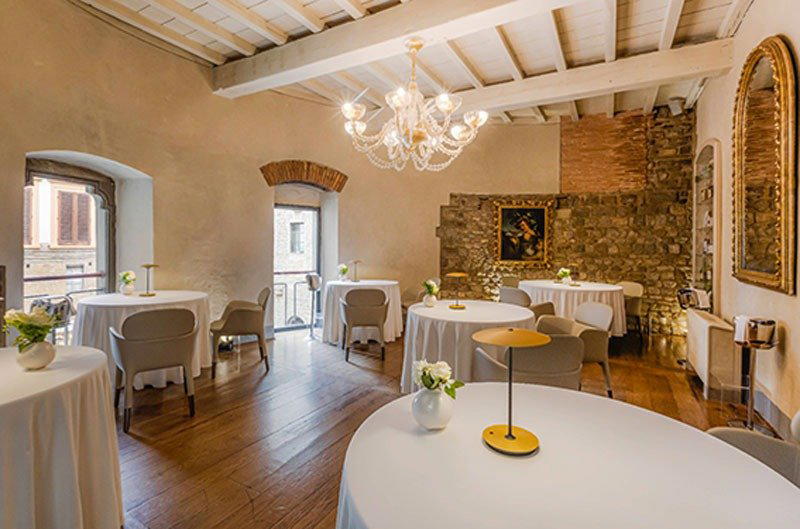
Bars in Florence
Browse all →
Hotels in Florence
Browse all →
At a Glance
- Cozy
- Classic
- Bohemian
- Elegant
- Casual Hangout
- Family
- Date Night
- Historic Building
- Extensive Wine List
- Street Scene
Current opening hours
- Monday
- Closed
- Tuesday
- 6:30 PM–1 AM
- Wednesday
- 6:30 PM–1 AM
- Thursday
- 6:30 PM–1 AM
- Friday
- 6:30 PM–1 AM
- Saturday
- 6:30 PM–1 AM
- Sunday
- Closed
Hours can change for holidays and private events. Last verified .
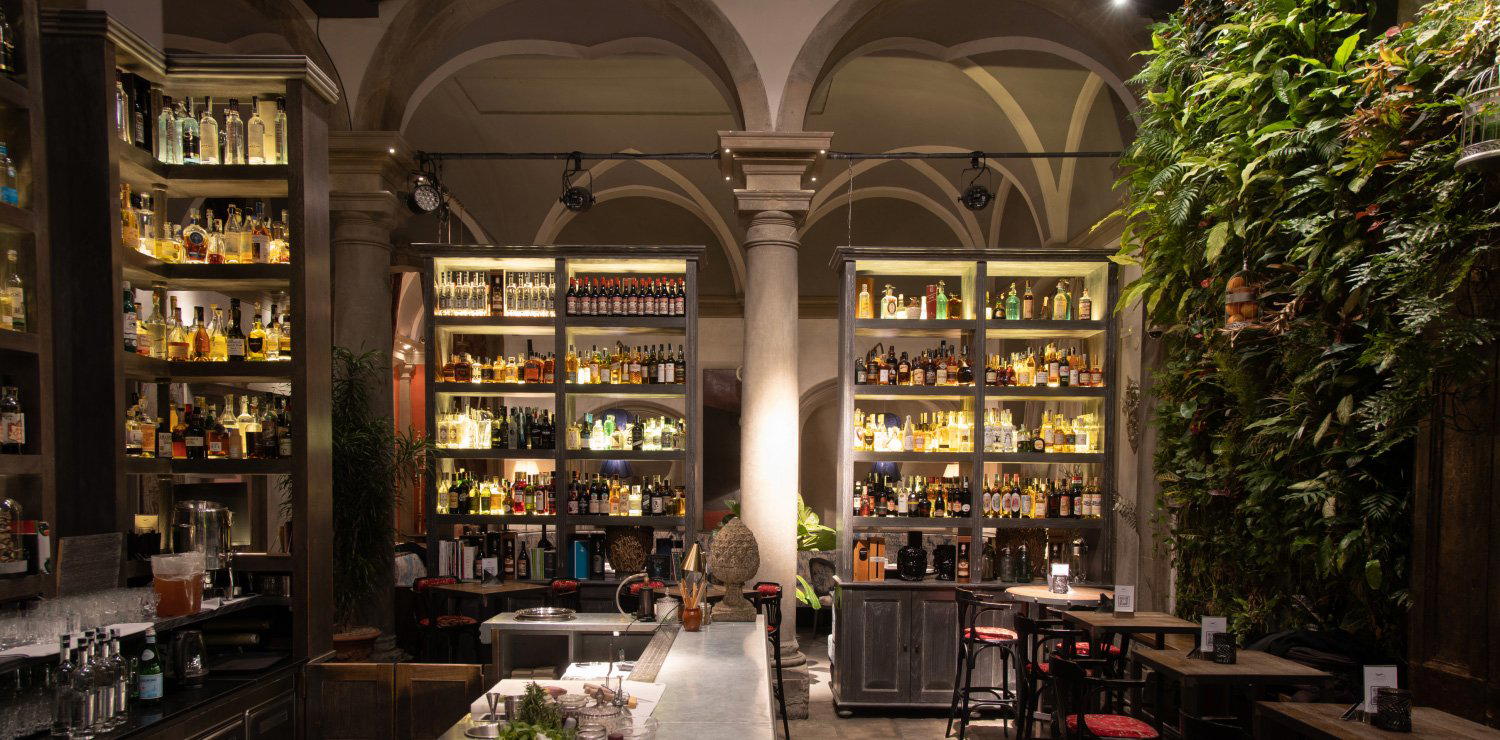
Charming bistro atmosphere with red velvet interiors, relaxed yet elegant vibe, and terrace seating; some notes of bright lighting.