Michelin Plate
Our verdict
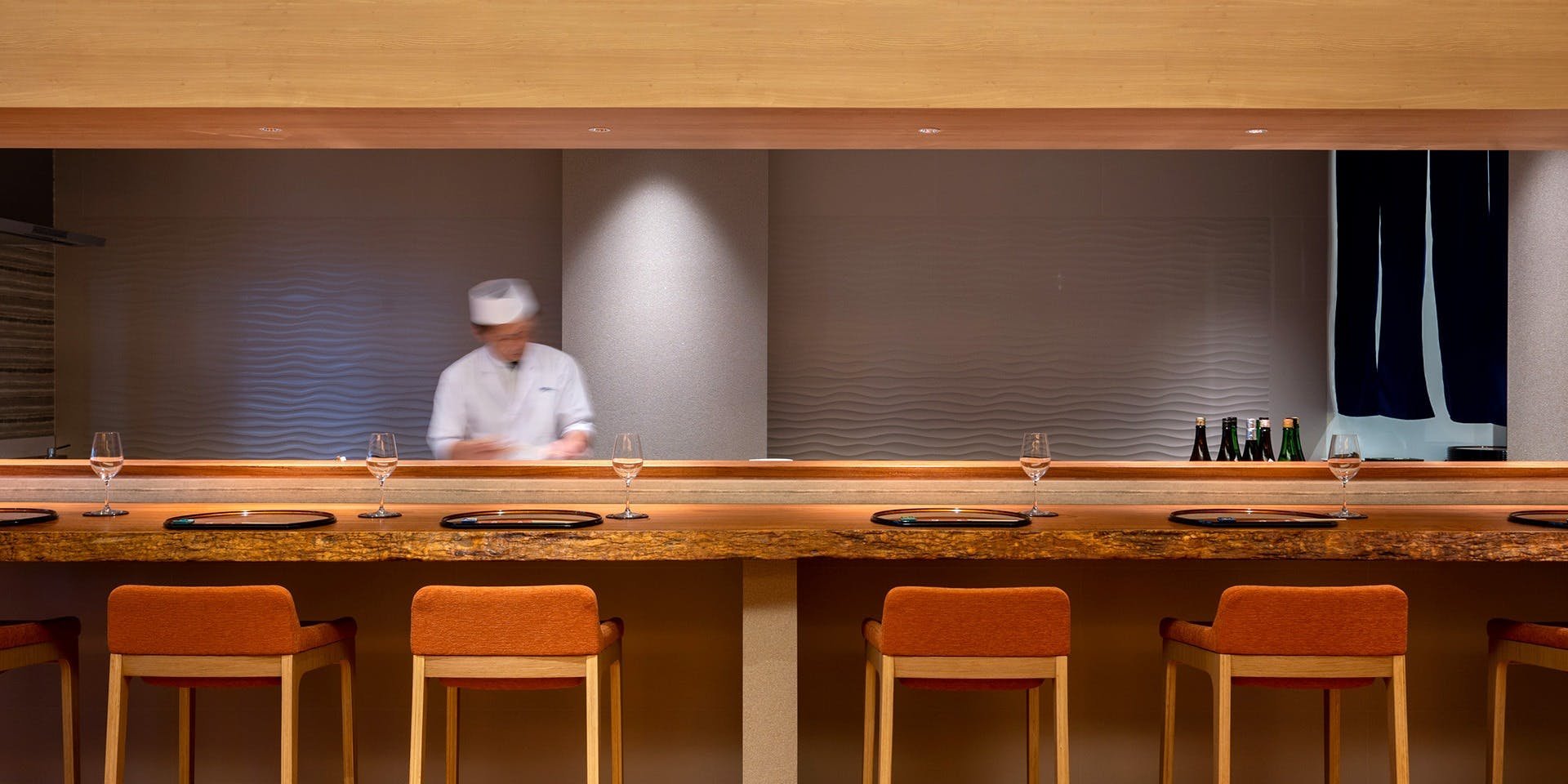
Kuramoto Ryori Maruto Shoyu sits in Tawaramoto, a town in Nara Prefecture historically defined by sake brewing, and translates that identity directly into its cooking. Holding a Michelin Plate in both 2024 and 2025, the restaurant builds Japanese cuisine around the fermented flavours and regional ingredients that have shaped this corner of the Yamato basin for centuries. For visitors exploring Nara's serious dining scene, it occupies a category few restaurants in the region attempt.

Pearl is the En Primeur Club membership app, where members save venues, book tables and use the concierge.
The menu
What to order
- Miwa Somen with Soy Sauce Espuma
- Takikomi-Gohan with Unrefined Soy Powder
Where Sake Brewing and Japanese Cooking Share the Same Root
In Japan, the deepest expressions of regional cuisine rarely happen in prefectural capitals. They happen in the towns that supplied the capital, the farming settlements, the river ports, the brewery districts. Tawaramoto, a compact town in Nara's Shiki District, spent centuries producing sake from the clean groundwater that filters through the Yamato basin. That brewing history is not incidental background at Kuramoto Ryori Maruto Shoyu. It is the premise. The name itself signals the concept: kuramoto ryori means brewery cuisine, a style of cooking developed to complement sake production and use the byproducts of fermentation, rice lees, koji, aged soy, as culinary tools rather than afterthoughts.
Nara Prefecture holds a particular position in Japan's culinary geography. Landlocked and historically self-sufficient, it developed fermentation techniques that other regions imported or imitated. Narazuke, the sake-lees-pickled vegetables specific to this prefecture, is among Japan's oldest documented preserved foods. Maruto Shoyu, the soy sauce producer linked to this address, represents a parallel tradition: slow-fermented, barrel-aged shoyu produced in the same town where the restaurant now operates. What visitors encounter at Kuramoto Ryori Maruto Shoyu is a cooking format in which the beverage programme and the kitchen are not separate departments drawing from separate supply chains. They are, in effect, co-productions of the same fermentation culture.
The Beverage Frame: Sake as Architecture, Not Accompaniment
The editorial angle that most clearly distinguishes this restaurant from Nara's broader Japanese dining tier is the integration of sake into the meal's structure. In most Japanese restaurants at the ¥¥¥ price level, sake is a menu column: you order from a list and the pairing is largely self-directed. At a brewery-cuisine restaurant built around a specific regional identity, the logic runs differently. The drinks are not curated to match the food after the fact. The food is, in significant part, built around the flavour grammar of fermentation, umami-dense, subtly acidic, layered with the kind of depth that comes from patience rather than heat.
Nara's sake tradition predates Edo-period brewing in ways that affect how regional producers approach the craft. The prefecture's breweries historically supplied the imperial court at Nara and later competed with the Nada and Fushimi districts that now dominate volume production. What survived in the Yamato basin is a smaller-scale, often more experimental brewing culture, with producers willing to work with ancient rice varieties and lower-intervention fermentation. For a comparison in how beverage provenance reshapes a restaurant's positioning, consider how Gion Sasaki in Kyoto uses hyper-local sourcing as a narrative frame, or how HAJIME in Osaka treats ingredient origin as a structural element of the dining experience rather than a marketing point.
Recognition, Peers, and the Nara Dining Tier
Michelin has acknowledged Kuramoto Ryori Maruto Shoyu with a Plate in both 2024 and 2025, the Guide's recognition that a restaurant deserves attention for quality cooking without yet placing it in the starred tiers. Within Nara Prefecture, that places it in a notable cohort. NARA NIKON, one of the prefecture's most decorated addresses, holds two Michelin stars and operates at the upper end of what the region offers. The Plate designation positions Maruto Shoyu in the tier below that ceiling: restaurants where the cooking is demonstrably serious, the concept is coherent, and the experience rewards planning, without the allocation difficulty or formality of starred dining.
Among Nara's Japanese cuisine addresses at a similar price and recognition level, peers include Oryori Hanagaki, Tsukumo, Ajinokaze Nishimura, and Ajinotabibito Roman. What separates Maruto Shoyu from that peer group is the specificity of its conceptual frame. Most kaiseki-influenced restaurants in the region present seasonal Japanese cuisine in a broadly understood format. A brewery-cuisine restaurant tied to a named soy sauce producer in a historic brewing town is making a narrower, more specific argument about what Nara cooking actually is. For travellers with a genuine interest in fermentation culture, the same instinct that sends people to Myojaku in Tokyo or Azabu Kadowaki, this is a more pointed destination than its Michelin grade alone might suggest.
Getting There and Planning the Visit
Tawaramoto is accessible from Nara city by Kintetsu Osaka Line train, a journey of approximately 20 minutes from Kintetsu Nara Station to Tawaramoto Station. The restaurant's address, 170 Iyodo, Tawaramoto, places it in a town that receives far fewer foreign visitors than Nara's central deer park and temple precincts, which means the visit itself is a meaningful departure from the standard Nara itinerary. For travellers building a Kansai circuit, Tawaramoto sits between Nara and Osaka on the Kintetsu network, making it a plausible stop rather than a dedicated detour.
Given the Michelin Plate recognition and the specialist nature of the concept, advance reservations are the prudent approach. The ¥¥¥ pricing tier indicates a mid-to-upper spend relative to Japanese restaurant categories, appropriate for a multi-course meal with sake pairing built into the experience. For broader context on dining, lodging, and what to do while in the prefecture, consult our full Nara restaurants guide, our full Nara hotels guide, our full Nara bars guide, our full Nara experiences guide, and our full Nara wineries guide.
For those building a wider Japan itinerary, the Kansai region offers a range of high-recognition Japanese dining addresses worth considering in sequence: Harutaka in Tokyo, Goh in Fukuoka, 1000 in Yokohama, and 6 in Okinawa each represent distinct regional cooking traditions worth mapping against what Nara's fermentation-led cuisine offers.
Frequently asked questions
What should I expect cuisine-wise at Kuramoto Ryori Maruto Shoyu?
What's the price range at Kuramoto Ryori Maruto Shoyu?
Pricing at Kuramoto Ryori Maruto Shoyu is listed as ¥¥¥.
Is Kuramoto Ryori Maruto Shoyu Michelin-listed?
Kuramoto Ryori Maruto Shoyu has received recognition including: Michelin Plate (2025); Michelin Plate (2024).
What do regulars order at Kuramoto Ryori Maruto Shoyu?
Specific menu items are not published in advance, which is consistent with the kuramoto ryori format, dishes tend to reflect seasonal produce and the house's brewing-derived pantry of shoyu, sake, and fermented condiments. Given the ¥¥¥ price tier, the kitchen is operating at a level where a multi-course structure is standard. Contacting the restaurant directly before visiting is the most reliable way to understand current offerings.
What's the address for Kuramoto Ryori Maruto Shoyu?
Kuramoto Ryori Maruto Shoyu is located at 170 Iyodo, Tawaramoto, Shiki District, Nara 636-0243, Japan, Nara.
Can I walk in to Kuramoto Ryori Maruto Shoyu?
At the ¥¥¥ price range and with two consecutive Michelin Plate recognitions, walk-in availability is unlikely on most evenings. The restaurant is located at 170 Iyodo, Tawaramoto, Shiki District, a small town roughly 20 minutes from Kintetsu Nara Station on the Kintetsu Osaka Line, so advance planning is practical regardless. No booking phone or website is currently listed in public records; reaching out through local concierge services or the Kintetsu area tourism network is advisable.
What is Kuramoto Ryori Maruto Shoyu known for?
The restaurant takes its name and culinary identity from kuramoto ryori, the cooking tradition that developed inside Japanese brewing houses, where shoyu and sake production shaped how ingredients were selected, preserved, and prepared. Michelin awarded the restaurant a Plate in both 2024 and 2025, placing it among the Nara-region addresses the Guide considers worthy of attention. The location in Tawaramoto, a historic supply town rather than a prefectural capital, is part of the premise: this is regional Japanese cuisine grounded in fermentation craft.
A small set of peers for context, based on recorded venue fields.
| Venue | Cuisine | Price | Awards | Notes |
|---|---|---|---|---|
| Kuramoto Ryori Maruto ShoyuThis venue (the venue you are viewing) | Modern Japanese Soy-Forward Tasting Menu | $150–200 | Michelin Plate | Not listed |
| akordu | Modern Spanish with Nara Influences | $150–200 | 2 Michelin Stars · La Liste Top Restaurants | Spanish, Innovative |
| Wa Yamamura | Traditional Kaiseki | $100–150 | 1 Michelin Star | Kaiseki, Japanese |
| Araki | Seasonal Japanese Tempura and Kaiseki | $100–150 | Michelin Plate · Tabelog Bronze #23 | Sushi, Japanese |
| Tama | French with Local Nara Ingredients | $50–100 | Michelin Plate | Okinawan, French |
| NARA NIKON | Kaiseki | $150–200 | 2 Michelin Stars · La Liste Top Restaurants | Japanese |
Recognition history
Dated appearances from independent guides and award organizations, with the underlying list record or original source where available.
Michelin Plate
Michelin
Full recognition history (3 entries)
Michelin Plate
Michelin
Michelin Plate
Michelin