

Wa Yamamura holds a Michelin star and a ranked position in Opinionated About Dining's Top Restaurants in Japan, making it one of the more credentialed kaiseki addresses in Nara. Chef Nobuharu Yamamura works within the Kansai tradition, where seasonal restraint and ingredient provenance carry more weight than technique display. Lunch and dinner service run most days of the week, with Monday reserved for closure.
 Discover on Pearl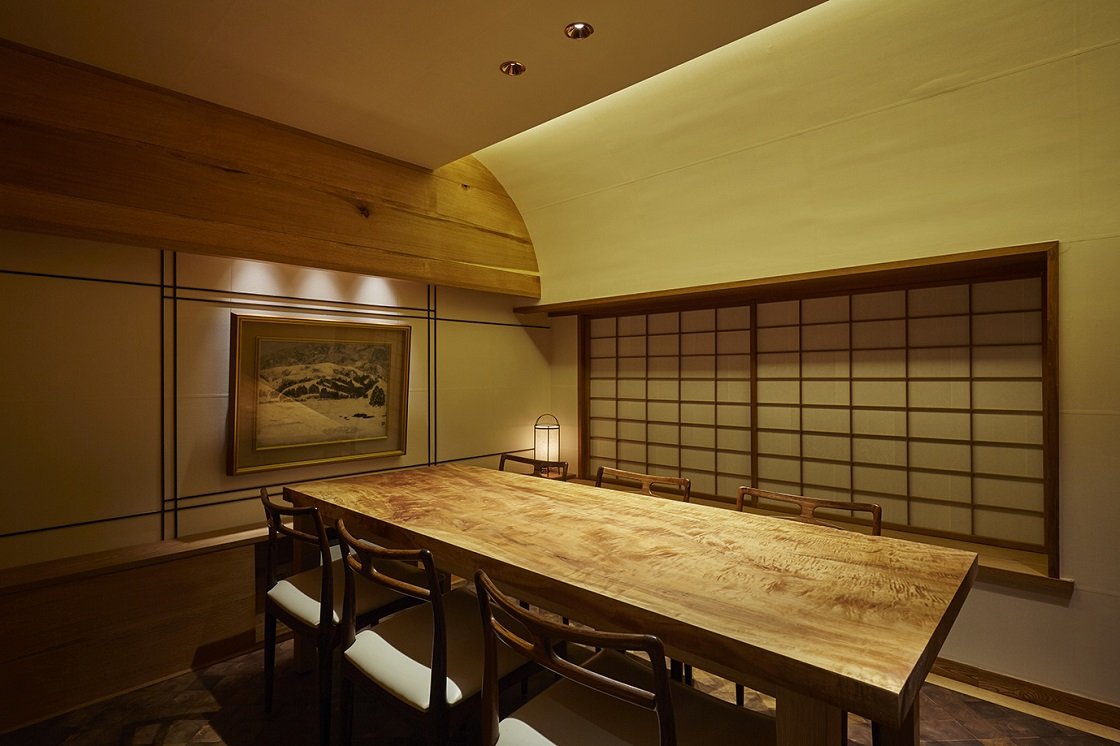
Kaiseki in Nara: The Context That Matters
Nara sits in a culinary position that is easy to underestimate. Between Kyoto's entrenched kaiseki establishment and Osaka's appetite-first brasserie culture, the city has developed a quieter register: fewer grand dining rooms, more considered small operators who rely on proximity to the Yamato highlands, Yoshino cedar forests, and river fisheries that Kyoto restaurants also source but at one remove. Kaiseki in this setting tends toward the austere end of the Kansai spectrum, where dashi clarity and ingredient seasonality do the argumentative work that plating and theater might handle elsewhere.
Wa Yamamura, located in the Shibatsujicho district, operates inside that tradition. The address is residential in character, the kind of street where a kaiseki counter reads as a neighbourhood fixture rather than a dining destination engineered for inbound tourism. That positioning is itself a signal: the room is not designed to announce itself, which in Kansai fine dining carries a certain weight.
The shortlist, unlocked.
Hard-to-book tables, cellar releases, and concierge-planned trips.
Get Exclusive Access →Where Wa Yamamura Sits in the Nara Fine Dining Tier
Nara's ¥¥¥ restaurant tier is relatively compact. Within it, the range spans from contemporary Spanish innovation at akordu to more traditional Japanese formats including NARA NIKON, Oryori Hanagaki, Tsukumo, and Ajinokaze Nishimura. Wa Yamamura's Michelin one-star status, held consecutively in 2024 and 2025, and its ranked positions on Opinionated About Dining's Japan list (no. 195 in 2024, no. 205 in 2025) place it in the upper band of that tier. The OAD ranking is particularly useful as a peer-set indicator: the list is diner-sourced and skews toward repeat visitors with comparative experience across multiple cities, which means placement reflects sustained performance rather than a single strong season.
For comparison, kaiseki counters operating at this credentialing level in Kansai typically sit within a competitive set that includes Kyoto institutions such as Hyotei and high-profile operators in Osaka such as HAJIME. Wa Yamamura's recognition within that broader regional field, from a Nara address with a smaller platform, represents a meaningful credential rather than a local accommodation.
The Kansai Kaiseki Register
Understanding what Wa Yamamura is doing requires some grounding in what distinguishes Kansai kaiseki from its Kanto counterpart. Tokyo's kaiseki and haute Japanese dining tends to absorb French influence more readily: sharper plating geometry, richer reduction sauces, a willingness to present individual ingredients as the headline rather than the ensemble. Kansai kaiseki, rooted in Kyoto's honzen and cha-kaiseki lineage, tends to position restraint as the operating principle. Dashi is foundational rather than decorative. Courses are paced to accumulate rather than to dazzle individually. The seasonal progression (hashun ingredients at precise points in the calendar) matters as a structural logic, not just a marketing note.
In Nara specifically, this Kansai orientation is inflected by local agricultural specificity. Yamato vegetables, a formally designated category of traditional cultivars grown in the Nara basin, appear on menus here in ways that would be unusual outside the immediate region. Miwa somen, the thin wheat noodles produced near the Omiwa Shrine, and Yoshino kuzu, the high-grade arrowroot starch used as a thickener and in wagashi, represent ingredients with both local identity and real culinary functionality. A kaiseki kitchen in Nara that takes its sourcing seriously is working with a different pantry than its Kyoto counterpart, even when the structural grammar of the meal is similar.
For readers who want to position Wa Yamamura against the broader Japanese kaiseki map, Gion Sasaki in Kyoto and RyuGin in Tokyo represent different points on the spectrum, and the contrast is instructive.
Chef Nobuharu Yamamura and the Kitchen's Approach
The restaurant takes its name from Chef Nobuharu Yamamura, and the naming convention itself is conventional for a certain tier of Japanese kappo and kaiseki operator: it signals personal accountability for the counter rather than a branded concept. Beyond the name and the recognition record in the database, biographical detail is not available for this profile. What the credential trail does indicate is consistent recognition across three consecutive assessment cycles (OAD Highly Recommended in 2023, starred and ranked in 2024 and 2025), which in the Japanese fine dining context suggests a stable kitchen philosophy rather than a single breakout moment.
Scheduling and Practical Access
Wa Yamamura runs a schedule that is fairly accessible by the standards of top-tier Japanese kaiseki. The kitchen is closed on Mondays. Tuesday and Thursday follow a split-service format: lunch from noon to 3 pm and dinner from 5:30 to 9:30 pm. Wednesday, Friday, Saturday, and Sunday run as continuous service from noon to 9:30 pm. The extended midweek and weekend hours make it more viable for visitors combining a Nara day trip with a longer Kansai itinerary.
Nara is connected to both Kyoto and Osaka by regular rail service, with journey times in the 35-to-50-minute range depending on origin and line. Day-trip visitors from either city can reach a lunchtime seating without significant planning complexity. For those building a Nara-specific stay, the hotel landscape is covered in our full Nara hotels guide. Complementary resources for the broader Nara scene can be found in our full Nara restaurants guide, our full Nara bars guide, our full Nara wineries guide, and our full Nara experiences guide.
Placing Wa Yamamura in a Japan-Wide Itinerary
Japan's fine dining circuit tends to concentrate attention on Tokyo, Kyoto, and Osaka, with secondary awareness of Fukuoka addresses like Goh and outlier destinations such as 6 in Okinawa or 1000 in Yokohama. Nara sits close enough to Kyoto and Osaka to be practical but is not yet on the itinerary of most first-visit travelers to Japan. That gap between accessibility and visitor awareness accounts for why a Michelin-starred, OAD-ranked kaiseki counter in this city attracts a more local and repeat-visitor clientele than its credential level might suggest. For readers who have exhausted the obvious Kansai circuit, or who want to experience kaiseki at this level without the booking friction that applies to comparable Kyoto addresses, Wa Yamamura represents a practical alternative with substantive recognition behind it. Readers building broader Tokyo itineraries might also consider Harutaka in Tokyo as a reference point for the capital's equivalent tier.
Google reviewers currently rate the restaurant 4.5 from 278 reviews, a figure that in this city and format suggests a predominantly experienced dining audience.
Know Before You Go
- Cuisine: Kaiseki, Japanese
- Price range: ¥¥¥
- Chef: Nobuharu Yamamura
- Awards: Michelin 1 Star (2024, 2025); OAD Leading Restaurants in Japan Ranked #195 (2024), #205 (2025); OAD Highly Recommended (2023)
- Google rating: 4.5 (278 reviews)
- Address: 2 Chome-11-15 Shibatsujicho, Nara, 630-8114, Japan
- Hours: Monday closed; Tuesday and Thursday lunch 12–3 pm, dinner 5:30–9:30 pm; Wednesday, Friday, Saturday, Sunday 12–9:30 pm (continuous)
- Booking: Contact details not publicly listed in this record; direct inquiry recommended
2 Chome-11-15 Shibatsujicho, Nara, 630-8114, Japan
+81 742-33-0102
Category Peers
Comparable venues for orientation, based on our database fields.
| Venue | Cuisine | Awards | Notes |
|---|---|---|---|
| Wa Yamamura | Kaiseki, Japanese | Michelin 1 Star | This venue |
| akordu | Spanish, Innovative | Michelin 2 Star | Spanish, Innovative, ¥¥¥ |
| Araki | Sushi, Japanese | Sushi, Japanese, ¥¥¥ | |
| Tama | Okinawan, French | Okinawan, French, ¥¥¥ | |
| NARA NIKON | Japanese | Michelin 2 Star | Japanese, ¥¥¥ |
| Chugokusai Naramachi Kuko | Chinese | Michelin 1 Star | Chinese, ¥¥¥ |
Need a table?
Our members enjoy priority alerts and concierge-led booking support for the world's most difficult tables.
Get Exclusive AccessThe shortlist, unlocked.
Hard-to-book tables, cellar releases, and concierge-planned trips.
Get Exclusive Access →