Our verdict
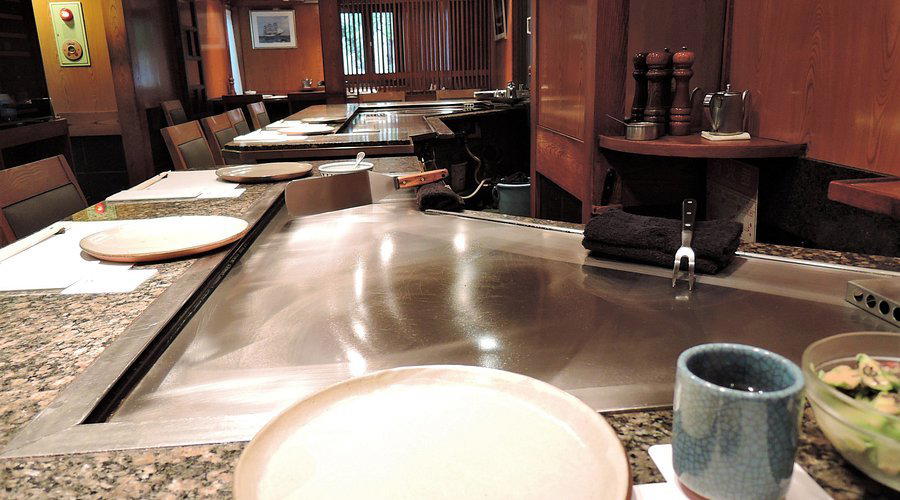
In Kobe's Chuo Ward, Kikusui Teppanyaki occupies a second-floor room above Kitanagasadori, one of the city's most concentrated dining corridors. The format is teppanyaki, which in Kobe carries a specific weight: this is the city that gave the world its most copied beef category, and restaurants here operate with that provenance as a baseline, not a selling point.

Pearl is the En Primeur Club membership app — saves, bookings, and concierge access live there. Same editors, same standards.
- Address
- Japan, 〒650-0012 Hyogo, Kobe, Chuo Ward, Kitanagasadori, 1 Chome−20−13 2F
- Phone
- +81 78-392-0048
- Hours
- Mon–Sat 11:30 AM–2:30 PM, 5–9 PMSun 11:30 AM–8:30 PM
- Website
- kobe-kikusui.com
- Directions
- Get directions
- Booking
- Book on TableCheck
The menu
What to order
- A5 Kobe Beef Sirloin
- Kobe Beef Teppanyaki
Where Kobe Beef Is Actually From
Teppanyaki as a format has been exported, diluted, and theatricalized beyond recognition in most international markets. The original logic, however, is still intact in Kobe itself: a flat iron surface, beef from cattle raised in Hyogo Prefecture, and a cook who controls the heat rather than the spectacle. Kobe Kikusui Teppanyaki Restaurant, on the second floor of a building along Kitanagasadori in Chuo Ward, operates within that tradition. The address places it in one of the city's densest concentrations of mid-to-upper-tier dining, a corridor that runs through central Kobe and draws both local regulars and visitors who have done their research before arriving.
The sourcing question matters more in Kobe than almost anywhere else in Japan's beef culture. Wagyu is now a widely used term across multiple prefectures and grades, but Kobe beef carries a specific protected designation: the cattle must be Tajima-strain black Wagyu, raised in Hyogo Prefecture, and the carcass must meet strict marbling, weight, and yield thresholds set by the Kobe Beef Marketing and Distribution Promotion Association. Restaurants using the certified product are registered and traceable. This is not a marketing claim — it is a supply chain with documentation. Any teppanyaki address in Kobe worth considering operates within that framework or makes its sourcing position explicit. The ingredient is the editorial fact that the format exists to showcase.
The Teppanyaki Format in Its Home City
Outside Japan, teppanyaki is frequently associated with performance: knives spinning, flames rising, onion volcanoes assembled tableside. Inside Kobe, the format reads differently. The emphasis falls on heat management and timing — how long the beef rests before the first cut, at what point fat begins to render without losing moisture, whether the surface char is controlled or accidental. These are craft questions, not entertainment ones. Restaurants in Kobe's teppanyaki tier are assessed on those technical grounds by the people who eat at them regularly, not on the theatrics that international versions export.
Kikusui sits in Kitanagasadori's mid-block stretch, a second-floor room that separates it physically from street-level foot traffic. That positioning is common among the city's more considered dining addresses: the ground floor is retail and casual, and the rooms above it operate with a different register. Arriving involves a staircase and a deliberate choice, which tends to filter the clientele toward the intentional rather than the spontaneous. Whether this constitutes atmosphere or function depends on what you are looking for, but it signals the format's orientation clearly enough.
For broader context on how Kobe's dining scene is structured across formats and price tiers, the full Kobe restaurants guide maps the city's key corridors and category leaders.
Ingredient Sourcing as the Central Argument
The case for eating teppanyaki specifically in Kobe rather than Tokyo or Osaka is, at its core, a sourcing argument. Proximity to the production region means shorter cold chain, tighter relationships between restaurants and suppliers, and in some cases access to grades and cuts that do not make it further afield in consistent volume. Hyogo Prefecture's Tajima cattle are raised in a specific agricultural geography, and the prefecture's certification body maintains records on every carcass that meets its standards. Restaurants in Kobe's certified network can and do reference those records. This is the supply-side context that makes the city's teppanyaki addresses more than a delivery mechanism for a generic luxury ingredient.
Comparison venues operating in adjacent categories in Kobe include Fushin and fuxing, while beef-focused formats overlap in intent with Aragawa, which operates at the far upper end of the city's beef restaurant tier. Ash Restaurant and Ca Sento represent the city's European-influenced dining alongside these Japanese formats, illustrating how Kobe's dining culture has historically run parallel tracks between imported and domestic traditions.
Kobe's regional position within the Kansai dining circuit also warrants noting. Visitors moving between cities often combine Kobe with Osaka and Kyoto itineraries. The Kansai belt includes addresses at the level of HAJIME in Osaka and Gion Sasaki in Kyoto, both operating at Michelin three-star level. Kobe's own teppanyaki category occupies a different register, ingredient-led and format-specific rather than kaiseki-broad, but it belongs to the same regional conversation about sourcing discipline and product quality.
Planning a Visit
Kikusui's address in Chuo Ward's Kitanagasadori corridor is accessible by rail and on foot from central Kobe. The second-floor positioning means the entrance is set back from the main pedestrian flow. No phone number or direct booking URL is confirmed in publicly available data for this listing, so advance contact through hotel concierge services or Japanese restaurant reservation platforms is the practical approach for visitors who prefer confirmed seating. Teppanyaki formats in this tier generally operate on a set-course basis at dinner, with shorter lunch formats where offered, though specific hours and menu structures for Kikusui should be verified closer to travel dates. Dress is typically smart casual at addresses in this corridor, though no formal dress code is documented specifically.
For reference points across Japan's wider teppanyaki and premium dining formats, addresses including Harutaka in Tokyo, akordu in Nara, and Goh in Fukuoka offer useful comparisons for understanding how premium Japanese dining formats calibrate across cities and categories. Regional addresses such as 一本木 肴川制 in Nanao, 夕佳亭山乃 in Sapporo, 湖魚庵冨 in Takashima, and 庄羽屋 in Nishikawa Machi show how ingredient-led formats extend across Japan's non-metropolitan dining circuit. Birdland in Sakai provides a point of reference for format-specific sourcing discipline in a different protein category. For international comparison on ingredient-led precision at the premium end, Le Bernardin in New York City and Atomix in New York City represent the western hemisphere's most cited examples of sourcing-as-editorial-argument dining.
Frequently asked questions
What's Kobe Kikusui Teppanyaki Restaurant's location?
Kobe Kikusui Teppanyaki Restaurant is located at Japan, 〒650-0012 Hyogo, Kobe, Chuo Ward, Kitanagasadori, 1 Chome−20−13 キングストンビル 2F, Kobe.
Why eat Kobe beef teppanyaki in Kobe itself rather than at a Kobe beef restaurant in Tokyo or abroad?
Kobe beef is a protected designation tied specifically to Tajima-strain Wagyu cattle raised in Hyogo Prefecture — the same prefecture in which Kikusui operates in Chuo Ward, Kobe. Supply chain distance and handling time between slaughter and service is materially shorter for restaurants sourcing within the prefecture than for those importing to Tokyo or internationally. That compression in logistics is a direct argument for eating the product at its origin city, not a marketing claim.
What's the signature dish at Kobe Kikusui Teppanyaki Restaurant?
Kikusui's core argument is Kobe beef cooked on a teppan iron plate — the format for which the city itself is the point of origin. In Kobe's Chuo Ward, proximity to the Tajima cattle production region in Hyogo Prefecture is the defining advantage. Specific cuts and current menu compositions should be confirmed directly with the restaurant before visiting.
Can I walk in to Kobe Kikusui Teppanyaki Restaurant?
Kikusui is located on the second floor of a building along Kitanagasadori in Kobe's Chuo Ward, which means it operates as a discrete dining room rather than a street-level drop-in venue. Teppanyaki restaurants of this format in Kobe routinely require advance reservations, particularly for evening seatings. Contacting the restaurant directly to confirm availability before arriving is advisable.
What's the signature at Kobe Kikusui Teppanyaki Restaurant?
The central offer is teppanyaki preparation of Kobe beef in the city where the designation originates — Hyogo Prefecture. That sourcing proximity is what separates a Kobe teppanyaki sitting from the same format served in Tokyo or internationally. The second-floor setting in Kitanagasadori gives the dining room a degree of separation from street traffic that shapes the pace of the meal.
Is Kobe Kikusui Teppanyaki Restaurant good for vegetarians?
Kikusui's format is built around Kobe beef teppanyaki, which places animal protein at the centre of the menu structure. Teppanyaki restaurants in Japan occasionally offer vegetable iron-plate courses, but these are typically supplementary rather than standalone. Vegetarians should contact the restaurant in advance to establish whether alternatives are available on any given service.
Comparable Spots, Quickly
Comparable venues nearby, for context on price, style, and recognition.
| Venue | Cuisine | Price | Awards | Notes |
|---|---|---|---|---|
| Kobe Kikusui Teppanyaki RestaurantThis venue — the venue you are viewing | Teppanyaki Kobe Beef Steakhouse | $100–150 | Not listed | Not listed |
| Kobe beef Daichi | Teppanyaki Kobe Beef Steakhouse | $100–150 | Not listed | Chūō |
| Aburi Niku Kobo Wakkoqu Kitano Sakamoto Ten | Kobe beef teppanyaki steakhouse | $100–150 | Tabelog 100 #62 | Chūō |
| Onjiki | Authentic Japanese Kaiseki | Not listed | Not listed | Chūō |
| Kobe Beef Steak Restaurant Royal Mouriya | Teppanyaki Kobe Beef | $150–200 | Not listed | Chūō |
| Yuzaburo | Japanese Yakiniku & Wagyu Steak | $150–200 | Tabelog 100 #20 | Chūō |
Continue exploring
More in Kobe
Restaurants in Kobe
Browse all →
Bars in Kobe
Browse all →



Hotels in Kobe
Browse all →


Details
- Elegant
- Sophisticated
- Special Occasion
- Business Dinner
- Group Dining
- Chefs Counter
- Open Kitchen
- Sake Program
- A La Carte
- Counter Dining
Current opening hours
- Monday
- 11:30 AM–2:30 PM, 5–9 PM
- Tuesday
- 11:30 AM–2:30 PM, 5–9 PM
- Wednesday
- 11:30 AM–2:30 PM, 5–9 PM
- Thursday
- 11:30 AM–2:30 PM, 5–9 PM
- Friday
- 11:30 AM–2:30 PM, 5–9 PM
- Saturday
- 11:30 AM–2:30 PM, 5–9 PM
- Sunday
- 11:30 AM–8:30 PM
Hours can change for holidays and private events. Last verified .
Warm and inviting with interactive table-side cooking by focused chefs.