
Aoiya Yakimochi Sohonpo belongs to Kyoto’s quieter wagashi circuit: low-cost, tradition-led, and rooted in the shrine-side rhythms of Kamigamo rather than central dining spectacle. Its Tabelog 100 selection for Japanese traditional sweets and cafés in West Japan in 2023 gives it a clear quality signal within a category where small purchases often reveal more than formal meals.
Pearl is the En Primeur Club membership app — saves, bookings, and concierge access live there. Same editors, same standards.
- Address
- Japan, 〒603-8047 Kyoto, Kita Ward, Kamigamo Motoyama, 339番地 明神会館内
- Phone
- +81 75-366-2463
- Website
- aoiya.jp
 Saves & bookings on Pearl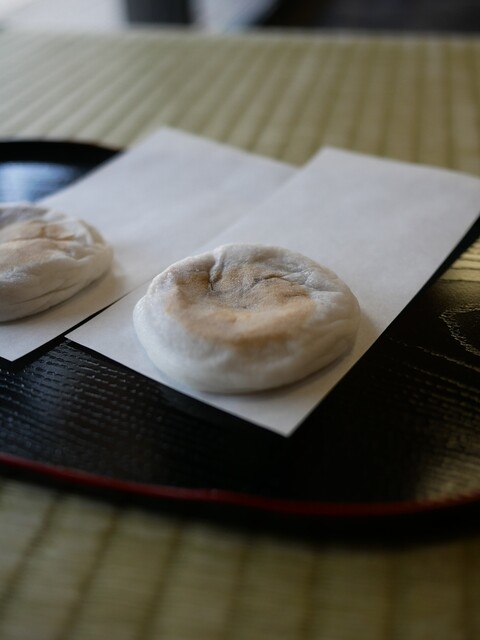
Approaching Kamigamo, Kyoto changes register. The city’s central grid gives way to a softer northern rhythm: shrine approaches, residential streets, watercourses, and shops whose purpose is narrower than a modern café’s but often more durable. In that setting, wagashi is not dessert in the Western restaurant sense. It is a calendar, a gift economy, a tea companion, and a way of reading regional ingredients through rice, beans, sugar, and heat.
Aoiya Yakimochi Sohonpo sits inside that tradition of small-format Kyoto sweets houses, where the purchase is modest but the cultural stakes are high. Its selection for the Tabelog 100 Japanese traditional sweets / Japanese sweets café list for West Japan in 2023 places it among a documented group of specialist addresses rather than the city’s broader restaurant circuit. That matters because Kyoto’s wagashi field is dense: long-established makers, shrine-adjacent shops, department-store counters, tea rooms, and seasonal confectioners compete on restraint as much as novelty.
Kamigamo wagashi is about place, not pastry-shop theatre
The northern edge of Kyoto has a different food grammar from Gion or downtown Karasuma. Around Kamigamo, the meal is often secondary to the route: shrine visits, family errands, seasonal ceremonies, and take-home sweets. A yakimochi shop belongs naturally to that pattern. The format rewards immediacy, portability, and repetition, not long tasting-menu pacing.
Ingredient sourcing is the right lens for this category because wagashi depends on few elements and little disguise. Rice flour, bean paste, sugar, and grilling technique leave less room for excess than a plated dessert kitchen. The point is balance: sweetness held in check, texture shaped by the rice, and heat used to mark the surface rather than overwhelm the confection. In Kyoto, that discipline has an audience trained by tea culture and by centuries of temple and shrine provisioning.
The comparison set around Kamigamo shows the split clearly. Jinba Do and Mikura Ya sit in the same low-cost sweets bracket, while Shichiku Kiko and Kamigamo Akiyama point toward more meal-driven Japanese dining at higher spend. Ninshurou, as a Chinese restaurant in the area, underlines how neighbourhood demand is not confined to Kyoto tradition. Aoiya Yakimochi Sohonpo is useful to understand because it occupies the narrower lane: traditional Japanese sweets, take-out service, and a price tier that keeps the experience closer to daily custom than special-occasion dining.
A low-cost specialist with a serious quality signal
Kyoto can make visitors overpay for atmosphere. Wagashi counters are a useful corrective because the better ones compress craft into a small purchase. A Tabelog score of 3.62 and inclusion in the 2023 West Japan Tabelog 100 for Japanese traditional sweets and cafés are not decoration; they indicate recognition within a field where regional regulars and category specialists weigh heavily.
The venue’s opening date, 1950, also matters. Postwar Kyoto food culture produced many businesses that are now old enough to feel established without needing grand origin stories. In sweets, continuity is less about a chef’s public persona than about whether the shop remains legible to local customers across generations. The format here is take-out, non-smoking, family-friendly, and built for a short transaction rather than a lingering restaurant meal.
For travellers building a Kyoto food day, this is a counterpoint to reservations-led dining. It pairs naturally with temple and shrine routes in the north, then leaves room for a more formal meal elsewhere in the city. For broader Kyoto planning, EP Club’s city pages are useful context: Our full Kyoto Shi restaurants guide, Our full Kyoto Shi hotels guide, Our full Kyoto Shi bars guide, Our full Kyoto Shi wineries guide, and Our full Kyoto Shi experiences guide.
How to place it inside a Kyoto itinerary
Aoiya Yakimochi Sohonpo makes strongest editorial sense as a northern Kyoto stop rather than a destination meal. The nearest rail reference is Kitayama Station, with bus access to Kamigamo-area stops and limited parking listed for three cars. That logistical profile suits a shrine-side morning or afternoon route more than a spontaneous downtown detour.
The practical appeal is also financial. In a city where kaiseki, counter sushi, and hotel dining can absorb a full day’s budget, a sub-JPY 999 wagashi stop offers a different kind of precision. The decision is not about luxury signalling; it is about reading Kyoto through a craft category that locals use regularly and visitors often reduce to souvenir shopping.
For a fuller Kyoto eating map, nearby editorial contrasts matter. Café MALDA reads through the lens of café culture, while Hyōto Shijō Karasuma, JAPANESE RESTAURANT 'ZUIENTEI', Junsei, and Kanga-an Temple show how formal Japanese dining, temple dining, and Kyoto hospitality occupy different registers. Outside Kyoto, the contrast broadens further through -Grilled beef Sukiyaki- KAMAKURA TANUKIAN 鎌倉 たぬき庵 in Kamakura,. 鮪と炭火焼き うお炭 秋葉原店 in Tokyo,.cafe in Osaka,.know in Kumamoto, (Shoku) Vietnam in Kawasaki, [Curry Senmon Ten] Maruyama Kyoju. in Sapporo, Jōdo Saké Bar in Los Angeles, and Onigiri Time in Pasadena.
The editorial call is clear: treat this as a concise Kyoto food stop with credible category recognition, not as a substitute for a seated restaurant. Its value lies in how much of the city’s sweet-making discipline can be understood through a small, ingredient-led purchase near Kamigamo.
How It Stacks Up
Comparable venues by cuisine and price in the same metro.
| Venue | Cuisine | Price | Awards | Notes |
|---|---|---|---|---|
| Aoiya Yakimochi SohonpoThis venue — the venue you are viewing | Japanese Sweets | $ | , | |
| Kyoto Handicraft Center | Seasonal Japanese Kaiseki | $$ | , | Takano |
| Menbaka Fire Ramen | Fire Ramen | $$ | , | Kamigyo Ward |
| Junsei | Kyoto Kaiseki Yudofu | $$$ | , | Sakyo-ku |
| Kiharu | Modern Western Brasserie with Kyoto Influences | $$ | , | Nakagyo-ku |
| Wabiya Korekido | Traditional Yakitori & Oyakodon | $$$ | , | Gion |
Continue exploring
More in Kyoto Shi
Restaurants in Kyoto Shi
Browse all →
Bars in Kyoto Shi
Browse all →
Hotels in Kyoto Shi
Browse all →
Wineries in Kyoto Shi
Browse all →
At a Glance
- Classic
- Cozy
- Hidden Gem
- Casual Hangout
- Family
- Solo
- Standalone
- Street Scene
A modest, traditional confectionery shop atmosphere focused on takeout and gift purchases rather than full-service dining.