Our verdict
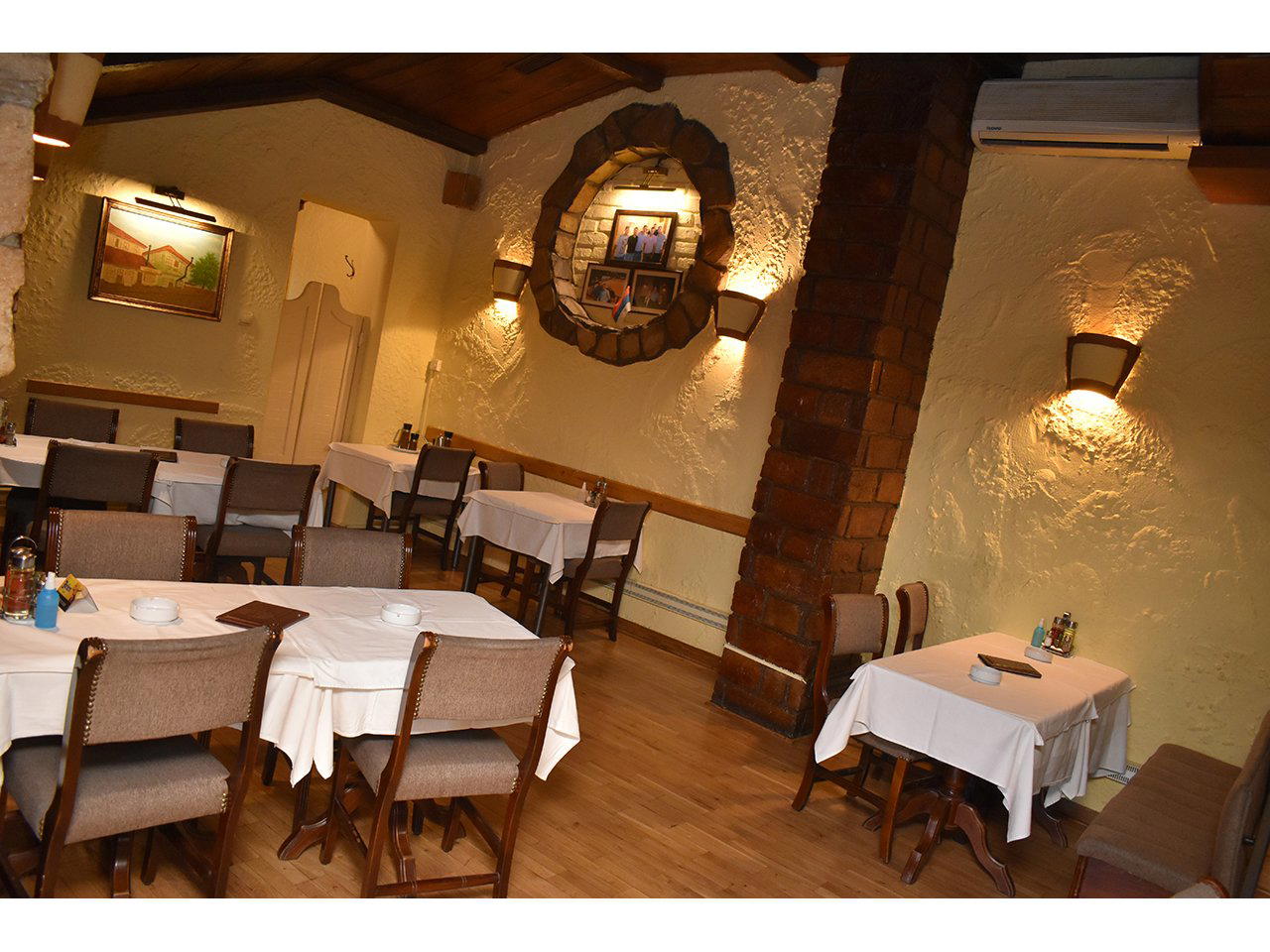
JB Pivnica occupies a spot on Južni bulevar in Belgrade's residential south, where the city's pivnica tradition — the neighbourhood tavern built around slow food and local drink — operates largely outside the tourist circuit. The address alone signals a local crowd, a grounded atmosphere, and the kind of cooking that reads as honest rather than performative. For visitors tracing Serbian dining beyond the centre, it represents a different register entirely.

Pearl is the En Primeur Club membership app — saves, bookings, and concierge access live there. Same editors, same standards.
The menu
What to order
- Cevapi
- Grilled meats
South of the Centre: Belgrade's Neighbourhood Pivnica Tradition
Belgrade's dining identity is often mapped through its riverfront splav restaurants, its Skadarlija kafanas, and a newer tier of modern kitchens concentrated in Savamala and Dorćol. What that map tends to underrepresent is the pivnica format: the neighbourhood tavern anchored in a residential district, drawing a regular crowd that walks rather than rides. JB Pivnica, addressed at Južni bulevar 144, sits in that quieter register, in the southern residential belt of the city rather than its performing centre. In Belgrade, this placement is itself a statement about intent and audience.
The pivnica tradition in Serbian cities is not a heritage concept manufactured for visitors. It developed as a functional form: a place for local food, draft beer, and the kind of extended table that works better in a residential setting than in a high-footfall street. The format rewards regulars, operates on familiarity, and tends to price for the neighbourhood rather than for destination traffic. For context, Belgrade's more formal modern restaurants, including Langouste and The Square, operate at entirely different price points and pitch themselves toward a different kind of visit. JB Pivnica belongs to a separate tier, one defined less by culinary ambition and more by social function.
The Physical Register: What the Approach Signals
Južni bulevar is a long arterial road in Belgrade's southern neighbourhoods, lined with apartment blocks and local commerce that serves residents rather than visitors. Approaching JB Pivnica from the street, the context is immediately domestic: the surroundings read as a city living for itself rather than performing for guests. In Serbian pivnica culture, this is not a concession to mediocrity but a reflection of where the format actually works. The atmosphere of this kind of space is typically defined by ambient noise from conversation rather than music programming, by the smell of draft beer and grilled meat rather than composed kitchen aromas, and by lighting calibrated to function rather than mood.
These sensory cues matter in a city that has increasingly produced designed hospitality experiences in its central districts. The neighbourhood pivnica sits in deliberate contrast: it does not ask the visitor to adjust their expectations upward, but it does ask them to adjust their frame of reference. The experience is social before it is gastronomic, and the atmosphere it generates is a byproduct of its regulars rather than its design brief. For travellers accustomed to the atmosphere of places like Ambar or Avala, which operate with more deliberate hospitality architecture, JB Pivnica occupies a different register entirely.
Serbian Tavern Cooking: The Format and Its Logic
Pivnica menus in Belgrade follow a fairly consistent grammar. Grilled meats, roast dishes, bean and vegetable stews, and cold cuts sit alongside draft and bottled beer, with wine offered in a supporting role. The cooking is not understated in any refined sense; it is direct, built around protein and heat, and designed to accompany extended drinking rather than to anchor a composed meal. Across Serbia, this format is replicated in cities and towns at very different distances from Belgrade: Kod Brana in Cacak, Lovački dom in Valjevo, and KAFANA DUKAT in Pirot all reflect versions of this tradition, adapted to their local contexts.
What distinguishes the Belgrade neighbourhood pivnica from its rural or small-town equivalents is density: the city has enough of them that the format has sub-categories, from the purely functional to the more carefully maintained. Without specific menu data for JB Pivnica, it would be inaccurate to position it within that spectrum. What its address on Južni bulevar does indicate is that it serves a residential catchment, which in Belgrade's south typically means a crowd of regulars with consistent expectations rather than visitors exploring the city. That consistency shapes the cooking: the menu is likely narrow, seasonal in a practical rather than a curated sense, and priced to encourage frequency rather than occasion.
For comparison with the wider Serbian dining picture beyond Belgrade, venues like Etno Kuća Dinar in Vrsac and ČARDA ZLATNA KRUNA in Apatin represent regional inflections of Serbian tavern cooking, each shaped by proximity to specific agricultural or geographic conditions. Belgrade's version of the format is more urban in its rhythms, and the pivnica on Južni bulevar reflects the southern residential city rather than the pastoral Serbia that some of those regional venues embody.
Where JB Pivnica Sits in Belgrade's Broader Dining Picture
Belgrade's restaurant coverage by international platforms tends to concentrate on the centre and on the newer hospitality districts. The residential south receives significantly less attention, which means that venues like JB Pivnica are effectively outside the city's curated dining circuit even when operating at a consistent level. This is a structural feature of how Belgrade is covered, not a comment on individual venues. Barrel House occupies a different part of the city's beer-and-food spectrum, with a format more explicitly oriented toward craft beverage programming. JB Pivnica, as a pivnica by name and location, operates with the traditional draft-beer-and-kitchen model rather than the craft overlay.
For a fuller picture of where JB Pivnica fits within Belgrade's overall dining options, our full Belgrade restaurants guide covers the range from the city's modern kitchens to its traditional formats across multiple neighbourhoods. Beyond Belgrade, the Serbian dining scene extends through a set of regional venues worth considering alongside any visit to the capital, from Windmill in Pancevo to Aleksandar Gold in Uzice and Grand in Kopaonik. Further afield, for reference on how different dining formats perform at higher investment levels, Le Bernardin and Atomix in New York City represent the kind of formal dining architecture that sits at the opposite end of the spectrum from the neighbourhood tavern format.
Travellers looking for Serbian dining beyond Belgrade's south should also consider Kafe Restoran Maša in Novi Sad and Kod poštara in Aran Elovac as part of a wider regional itinerary.
Planning a Visit
JB Pivnica is located at Južni bulevar 144 in Belgrade's southern residential district, accessible by tram or bus from the city centre. The venue's residential context means parking is generally available on surrounding streets, unlike the central districts where traffic and parking are more constrained. Pricing is expected to reflect the neighbourhood format rather than destination-dining tariffs, though specific price data has not been confirmed.
Frequently asked questions
Is JB Pivnica suitable for children?
Pivnicas in Belgrade are family-oriented by tradition, and JB Pivnica's position on Južni bulevar 144 in a residential district reinforces that profile. The format — grilled meats, stews, shared plates — suits tables of mixed ages. Confirm current seating arrangements directly before visiting, as no booking contact is publicly listed.
What kind of setting is JB Pivnica?
JB Pivnica sits on Južni bulevar, a long arterial road in Belgrade's southern residential quarters, surrounded by apartment blocks and local commerce rather than tourist infrastructure. The setting is a neighbourhood pivnica serving residents, not visitors passing through the centre. Expect a functional, low-formality room consistent with that tradition.
Is JB Pivnica worth visiting if I'm staying in central Belgrade?
JB Pivnica on Južni bulevar 144 is not within walking distance of central Belgrade, so the visit requires a tram or bus ride into the southern residential districts. That makes it a deliberate detour rather than an incidental stop, but it gives access to a pivnica operating for a local rather than visitor clientele — a different register from the kafanas of Skadarlija or the riverfront restaurants most visitors default to.
What should I eat at JB Pivnica?
Belgrade pivnica menus run to grilled meats, roast dishes, bean and vegetable stews, and cold cuts alongside draft beer. JB Pivnica operates within that format.
Where is JB Pivnica in Belgrade?
JB Pivnica is located at Južni bulevar 144, Beograd, Serbia, Belgrade.
Should I book JB Pivnica in advance?
No phone number or booking platform is publicly listed for JB Pivnica at this time. Walk-in is the practical approach. Evening visits mid-week tend to be quieter at residential Belgrade pivnicas than weekend sittings, though conditions vary.
What's the signature at JB Pivnica?
The signature of the pivnica format itself — draft beer alongside grilled and roasted Serbian cooking — is the consistent draw at addresses like Južni bulevar 144. That pairing is what the format is built around.
Similar Picks
Comparable venues nearby, for context on price, style, and recognition.
| Venue | Cuisine | Price | Notes |
|---|---|---|---|
| JB PivnicaThis venue — the venue you are viewing | Traditional Serbian Family Restaurant | $10–20 | Not listed |
| Petar at Tikas | Modern Serbian Cuisine | $20–30 | Palilula |
| Trandafilović | Traditional Serbian Bistro | $10–20 | Vračar |
| Avala | Traditional Serbian | $20–30 | Savski Venac |
| KAFE POSLASTIČARNICA FINI | Serbian Pastry Cafe | Not listed | city center |
| Filter | Modern Cafe & Breakfast | $10–20 | Belgrade |
Continue exploring
More in Belgrade
Restaurants in Belgrade
All restaurants in Belgrade →

Bars in Belgrade
All bars in Belgrade →
Details
- Cozy
- Rustic
- Family
- Casual Hangout
- Beer Program
- A La Carte
- Beer
Current opening hours
- Monday
- 10 AM–10 PM
- Tuesday
- 10 AM–10 PM
- Wednesday
- 10 AM–10 PM
- Thursday
- 10 AM–10 PM
- Friday
- 10 AM–10 PM
- Saturday
- 10 AM–10 PM
- Sunday
- Closed
Hours can change for holidays and private events. Last verified .
Traditional family atmosphere with friendly service.