
Isoya sits in Hachioji’s counter-service udon culture rather than central Tokyo’s tasting-menu economy. Recognition in Tabelog 100 Udon EAST 2024, counter-only seating, sake-bar crossover, and sub-¥1,000 listed pricing place it in a practical, repeat-visit bracket where regulars matter more than occasion dining.
Pearl is the En Primeur Club membership app — saves, bookings, and concierge access live there. Same editors, same standards.
- Address
- 東京都八王子市元横山町2-1-14 中島ビル 1F
- Phone
- +81426425586
- Website
- tabelog.com
 Saves & bookings on Pearl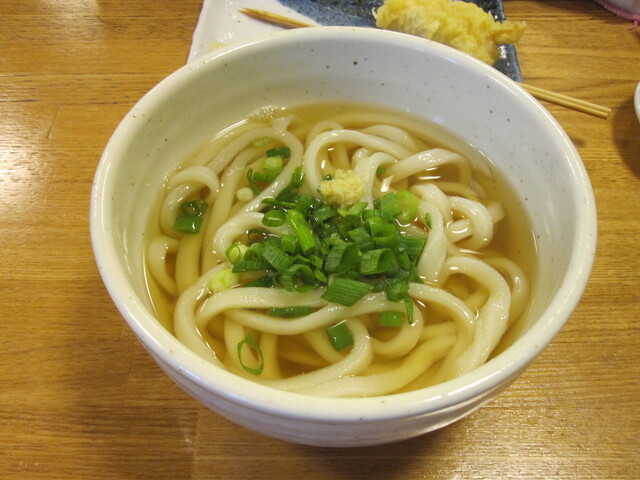
Approaching a serious udon counter in outer Tokyo is a different act from entering a Ginza sushi room or an Aoyama dining room. The cues are smaller: a compact frontage, the rhythm of solo diners, the quick turnover of bowls, and a room arranged around the counter rather than ceremony. Hachioji rewards that kind of attention. Its stronger everyday addresses tend to work through repetition, not theatre, and Isoya belongs to that category of Tokyo dining where the regular customer is the real critic.
That matters because udon in Tokyo is often misread by visitors as a casual fallback between sushi, ramen, and tempura appointments. In practice, the city’s better udon rooms occupy a precise lane: flour, texture, broth, pace, and affordability are judged with the same seriousness that ramen obsessives apply to tare and noodle thickness. Selection for Tabelog 100 Udon EAST 2024 gives Isoya an external signal, but the more useful clue is format. A 13-seat, counter-only room changes the meal’s tempo. It suits quick solo eating, repeat local use, and the kind of order familiarity that builds over multiple visits rather than one grand sitting.
Hachioji's udon counter culture runs on regulars, not spectacle
Central Tokyo dining often asks the visitor to plan around scarcity: fixed menus, advance bookings, set seating times, and rooms designed for destination eating. Hachioji’s appeal is more grounded. It is a city within Tokyo’s western spread, tied to commuter lines and neighbourhood routines, where a strong noodle shop can become part of weekly life. That context explains the appeal of a compact Sanuki-style udon counter far better than a conventional restaurant profile would.
Sanuki udon, associated with Kagawa, is judged first by noodle structure. Tokyo interpretations vary, but the genre usually gives diners a narrow set of questions: how much chew the noodle carries, how clearly the broth supports it, and whether the room can serve a steady flow without turning lunch into a performance. Isoya’s placement among Tabelog’s 2024 EAST udon selections puts it within a larger conversation about regional noodle craft in eastern Japan, not merely within Hachioji’s local lunch map.
The comparison set around Hachioji reinforces the point. Niboshi Iwashi Ramen En Hachioji honten sits in the city’s fish-forward ramen lane, while TAKUMA and Boule Beurre Boulangerie occupy different low-price everyday categories. Honkaku Teuchi Udon Arata provides the closer udon comparison, with a similar sub-¥1,000 signal. The takeaway is not that one address replaces another; it is that western Tokyo has a mature everyday-dining tier where price, craft, and repeat use intersect. Isoya’s role is inside that tier, with udon rather than ramen or bakery culture as the anchor.
The sake-bar detail changes the rhythm of an inexpensive udon meal
The category listing matters: udon and Japanese sake bar. That combination shifts expectations. A pure lunch counter can be judged by speed alone, while a noodle shop with nihonshu and shochu in the frame allows a slower evening grammar. The room does not need elaborate tasting-menu architecture to create range. It can serve a solo diner quickly, then support a friend-to-friend meal built around noodles and drinks.
For regulars, that flexibility is the point. Some Tokyo restaurants become habit-forming because they reduce friction: counter seating, a tight format, and pricing that does not turn each visit into an event. Others build loyalty through breadth, giving diners enough variation across drink and noodle choices to return without needing a new concept each time. Isoya work in that second, low-key register. The repeat appeal is not about novelty; it is about a room calibrated for routine.
That regulars’ perspective also explains why children and solo diners can coexist in the same category note without contradiction. A counter-only setting might sound narrow, but Tokyo’s everyday restaurants are often more adaptable than their footprints suggest. Children are welcome, solo dining is part of the use case, and take-out adds another practical layer. Those details mark the restaurant as part of local life rather than an imported luxury format.
How to read Isoya within Tokyo's wider dining map
For a traveller building a Tokyo itinerary, the decision is less about chasing a single bowl and more about assigning time intelligently. Hachioji is not a casual detour from every hotel base, but it makes sense for travellers already exploring western Tokyo or those who care about noodle craft beyond the central wards. The city’s dining map expands sharply once the focus moves outside Shinjuku, Ginza, and Roppongi; neighbourhoods such as Hachioji show how much of Tokyo’s serious eating happens at modest counters.
Readers comparing categories can place this stop beside other Tokyo registers rather than forcing it into a luxury template. For seafood and charcoal cooking, . 鮪と炭火焼き うお炭 秋葉原店 points toward a different urban appetite. 12/10 Shinjuku ten, 124. KAGURAZAKA (Yakitori), 2D Cafe, and 3 Chome no Curry Ya San each show how sharply Tokyo dining changes by format, neighbourhood, and price. For broader planning, use Our full Tokyo restaurants guide, then pair meals with Our full Tokyo hotels guide, Our full Tokyo bars guide, Our full Tokyo wineries guide, and Our full Tokyo experiences guide.
Japan’s casual-specialist dining scene also travels well beyond Tokyo. -Grilled beef Sukiyaki- KAMAKURA TANUKIAN 鎌倉 たぬき庵 in Kamakura.cafe in Osaka.know in Kumamoto, (Shoku) Vietnam in Kawasaki, [Curry Senmon Ten] Maruyama Kyoju. in Sapporo, and [ki:] in Kyoto underline the same editorial lesson: modest price does not mean shallow food culture. Across the Pacific, Jōdo Saké Bar in Los Angeles and Onigiri Time in Pasadena show how Japanese drinking and everyday-food formats get reinterpreted abroad.
The editorial case for Isoya is therefore specific but not fragile. It is a Hachioji udon counter with Tabelog 100 Udon EAST 2024 recognition, low listed pricing, counter-only seating, and a sake-bar dimension. That combination makes it strongest for travellers who value Tokyo’s everyday specialists and understand that some of the city’s sharpest food decisions happen in rooms designed for repeat customers.
Recognition, Side-by-Side
Comparable venues by cuisine and price in the same metro.
| Venue | Cuisine | Price | Notes |
|---|---|---|---|
| IsoyaThis venue — the venue you are viewing | Sanuki udon & Japanese sake bar | $ | Not listed |
| Ramen Koike | Modern ramen noodle bar | $ | Setagaya |
| CURRY SHOP Kujira Kouenji | Japanese Curry | $ | Suginami |
| Kyogashi Misakiya | Traditional Japanese Wagashi (Japanese Sweets) | $ | Shibuya |
| Kashiwagi | Ramen shop | $ | Nakano |
| Mendokoro Bigiya Gakugei daigaku honten | Classic Tokyo shoyu ramen shop | $ | Meguro |
Recognition history
Dated appearances from independent guides and award organizations, with the underlying list record or original source where available.
Tabelog 100 #46 · No. 46
Tabelog · Tabelog 100 - Udon - EAST - 2024
Continue exploring
More in Tokyo
Restaurants in Tokyo
Browse all →




Bars in Tokyo
Browse all →




Hotels in Tokyo
Browse all →



Wineries in Tokyo
Browse all →
At a Glance
- Cozy
- Lively
- Intimate
- Solo
- Family
- Casual Hangout
- After Work
- Standalone
- Sake Program
- Beer Program
A compact, counter-only space with a casual, bustling feel; guests sit side by side at the counter watching bowls of udon and tempura being prepared, creating a cozy yet energetic atmosphere suited to quick, satisfying meals rather than lingering dining.