
Mendokoro Bigiya Gakugei daigaku honten belongs to Tokyo’s serious neighborhood ramen tier: small-format, low-priced, and judged by repeat local attention rather than hotel-dining polish. Its Tabelog Ramen TOKYO 100 selections from 2017 through 2025, compact 11-seat setup, and ramen-tsukemen focus make it a useful marker for how Meguro’s everyday dining culture can carry national-level scrutiny.
Pearl is the En Primeur Club membership app — saves, bookings, and concierge access live there. Same editors, same standards.
- Address
- 2 Chome-4-9 Takaban, Meguro City, Tokyo 152-0004, Japan
- Phone
- +81 3-5722-1669
- Website
- bigiya.com
 Saves & bookings on Pearl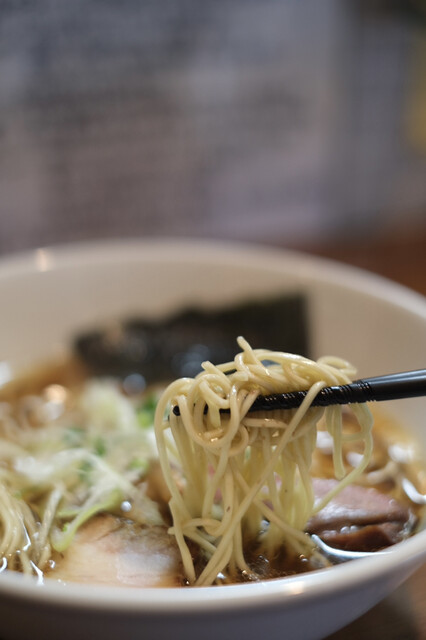
Gakugei Daigaku is not Tokyo hotel-lobby dining or choreographed tasting menus. Around the station, food is compressed into small rooms, short menus, and commuter rhythm: disciplined lunch, efficient after-work service. Mendokoro Bigiya Gakugei daigaku honten fits that world with 11 seats, a counter-led room, and prices inside the city’s everyday ramen economy, not premium omakase.
That matters because Tokyo ramen culture is built on repetition: broth, noodles, tare, toppings, timing, queue behavior, and making the same weekday decision worthwhile. Recognition from Tabelog’s Ramen TOKYO 100 carries weight because it places a shop among a narrow slice of specialist ramen addresses. This one has appeared across 2017, 2018, 2019, 2020, 2022, 2023, 2024, and 2025, a stronger signal than a single-year spike.
Meguro ramen with the discipline of a small-room format
Tokyo’s ramen hierarchy is not driven by luxury signals. A low-price shop can still be treated with the seriousness reserved for costlier counters. Evaluation happens in the bowl and format: whether the kitchen holds focus through two service windows, seating supports turnover without rushing, and the menu stays close enough to its identity to build a following.
Here, the category is ramen and tsukemen, one of Tokyo’s densest competitive fields. Tsukemen puts more structural burden on noodles; dipping broth must hold concentration, and temperature matters. Ramen asks for balance in one bowl. Without theatrical plating or luxury ingredients, both expose sourcing and preparation quickly, so small ramen rooms can be judged as closely as restaurants charging ten times more.
Sourcing is not producer-name display. In ramen, it shows through flour quality, treatment of animal or seafood bases, soy or salt seasoning, aromatic oils, and toppings that do not collapse under hot broth. Shops in the Tabelog 100 conversation are generally not rewarded for novelty alone; they last because base materials and calibration hold under repeat scrutiny. Mendokoro Bigiya Gakugei daigaku honten’s long run in that selection is the evidence.
Price context is revealing. M Size sits in a sub-¥999 bracket, OVERWHELM HAMBURGER & BAR STAND in ¥2,000 to ¥2,999 casual dining, and Spice Kurashi at ¥3,000 to ¥3,999. Ramen at this level has a sharper value equation: modest spend, high technical expectations. At the other end of Tokyo counter culture, Yakitori Uu. operates at ¥10,000 to ¥14,999, showing how far ramen can travel critically without becoming high-ticket.
Why Gakugei Daigaku changes the read
Neighborhood matters in Tokyo ramen. Central districts draw destination diners planning around one meal; residential-commercial stations like Gakugei Daigaku rely on locals, office traffic, and repeat visitors who notice lost precision. The area’s strength is not spectacle but small restaurants embedded in daily routes, making sustained recognition harder to fake.
The shop opened on 7 July 2009, giving it a longer runway than many trend-led ramen counters. Longevity alone is not a credential, but longevity paired with selection from 2017 through 2025 suggests consistency across shifts in Tokyo preferences. The city has cycled through heavier broths, lighter chintan styles, seafood-led bowls, handmade-noodle emphasis, and hybrids; durable shops tend not to act like pop-ups to keep attention.
The physical setup reinforces that reading. Seven counter seats and four table seats keep the kitchen close, with little room for hospitality theater. For ramen, that is practical: preparation-to-eating distance is short, turnover stays natural, and the counter keeps focus on timing rather than ceremony. Private rooms and private use are not part of the format; here, privacy matters less than pace and consistency.
Payment flexibility shows how everyday Tokyo dining has modernized. Credit cards, transport IC cards, electronic money, QR payments, Alipay, and WeChat Pay are accepted, removing old small-shop friction for visitors. That does not make the experience less local; it makes it easier to fold into a broader Tokyo dining day, especially for travelers moving between neighborhoods rather than staying inside the hotel-restaurant circuit.
How to place it in a Tokyo food itinerary
This is not a long, wine-paired evening. Its value is sharper: a compact ramen or tsukemen stop in Meguro showing how Tokyo treats low-cost specialist food. Pair it with a Toyoko Line or western-neighborhood day rather than forcing it into Ginza or Marunouchi. Access is five minutes on foot from Gakugei Daigaku Station, making it a targeted detour, not a cross-city sprint.
Reservations are unavailable, normal for many ramen shops, so plan for a flexible window rather than a secured table. Lunch is shorter than dinner, and both services use fixed opening blocks, not all-day availability. Hours can vary and closed days are not fixed, so check current operating updates before committing a route.
For a broader Tokyo dining map, this sits between specialist casual shops and higher-spend counters. Browse Our full Tokyo restaurants guide for that spread, then compare other city moods through Our full Tokyo hotels guide, Our full Tokyo bars guide, Our full Tokyo wineries guide, and Our full Tokyo experiences guide. Nearby and cross-category references sharpen the itinerary: 鮪と炭火焼き うお炭 秋葉原店, 12/10 Shinjuku ten, 124. KAGURAZAKA (Yakitori), 2D Cafe, and 3 Chome no Curry Ya San show how broad the city’s casual formats become.
Japan-wide context adds another layer. A traveler tracing value-led dining beyond Tokyo could compare it with -Grilled beef Sukiyaki- KAMAKURA TANUKIAN 鎌倉 たぬき庵 in Kamakura.cafe in Osaka.know in Kumamoto, (Shoku) Vietnam in Kawasaki, [Curry Senmon Ten] Maruyama Kyoju. in Sapporo, and [ki:] in Kyoto. For a trans-Pacific contrast in Japanese casual culture, Jōdo Saké Bar in Los Angeles and Onigiri Time in Pasadena show how Japanese formats change once they leave the station-neighborhood logic defining much of Tokyo.
The editorial case for Mendokoro Bigiya Gakugei daigaku honten is not that it turns ramen into luxury. It is that Tokyo does not need luxury to make a meal worth scrutiny. A small Meguro shop, a sub-¥2,000 dinner band, repeated Tabelog Ramen TOKYO 100 selection, and no-reservations format say something precise: technical food culture often hides in plain sight, priced for regular use and judged with uncommon severity.
At a Glance
Nearby venues at a similar price tier for orientation.
| Venue | Cuisine | Price | Notes |
|---|---|---|---|
| Mendokoro Bigiya Gakugei daigaku hontenThis venue — the venue you are viewing | Meguro, Classic Tokyo shoyu ramen shop | $ | Not listed |
| TOUJOURS DEBUTER | Not listed | $ | Shinagawa, Traditional Japanese kissaten cafe |
| Kyogashi Misakiya | Not listed | $ | Shibuya, Traditional Japanese Wagashi (Japanese Sweets) |
| Curry Rice Senmon Ten Brother | Shinjuku, Japanese Curry Counter | $ | Not listed |
| Yoshoku GOTOO | Not listed | $ | Toshima, Yoshoku (Japanese‑style Western) restaurant |
| Caligari Akihabara | Not listed | $ | Chiyoda, Japanese curry house specializing in coconut curry |
Recognition history
Dated appearances from independent guides and award organizations, with the underlying list record or original source where available.
Tabelog 100 #85 · No. 85
Tabelog · Tabelog 100 - Ramen - TOKYO - 2025












At a Glance
- Cozy
- Lively
- Solo
- Casual Hangout
- After Work
- Late Night
- Chefs Counter
- Standalone
Current opening hours
- Monday
- 11:30 AM–2:45 PM, 6–9 PM
- Tuesday
- 11:30 AM–2:45 PM, 6–9 PM
- Wednesday
- 11:30 AM–2:45 PM, 6–9 PM
- Thursday
- 11:30 AM–2:45 PM, 6–9 PM
- Friday
- 11:30 AM–2:45 PM, 6–9 PM
- Saturday
- 11:30 AM–2:45 PM, 6–9 PM
- Sunday
- 11:30 AM–2:45 PM, 6–9 PM
Hours can change for holidays and private events. Last verified .
Compact, non-smoking neighborhood ramen shop with just 11 seats, centered on a counter facing the open kitchen; atmosphere is casual and bustling at peak times, with a focus on quick, serious ramen rather than lingering.