
1 Michelin Star
Our verdict
A countertop French restaurant housed in a Kyoto merchant's townhouse, ima anchors classic French technique to a wood-burning brick oven with roots in Spanish woodfire cooking. Shiitake mushroom and shrimp wrapped in pie pastry is a signature of the format. The menu is defined by smoke, reduction, and the specific moment when heat transforms an ingredient.

Pearl is the En Primeur Club membership app, where members save venues, book tables and use the concierge.
The menu
What to order
- Beltfish with fennel puree
- Oyster with leek puree
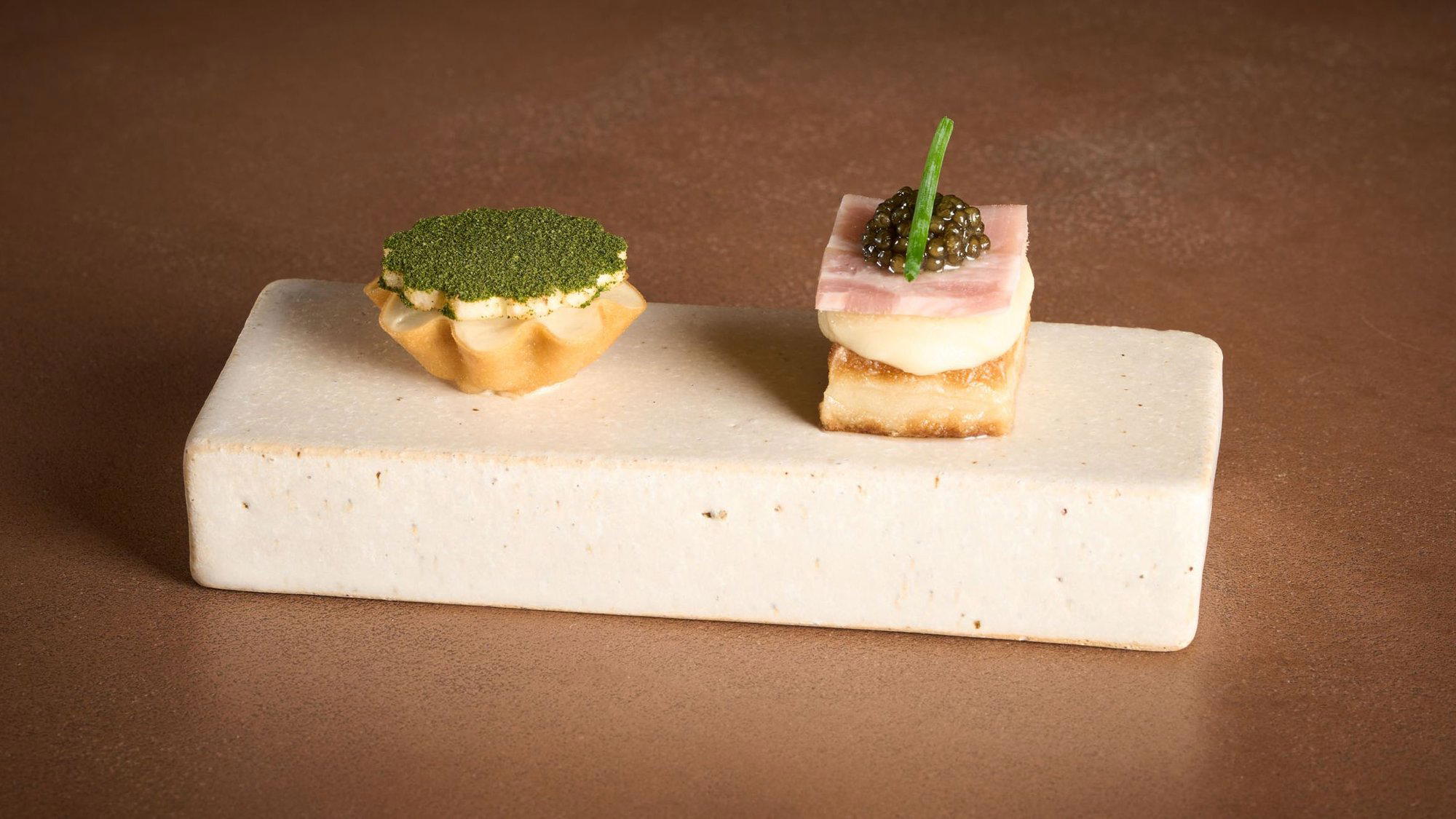
- Pithivier with shiitake and shrimp mousse
- Kyoto duck
- Icefish rice
- Fire-wood ice cream
There is a particular kind of Kyoto restaurant that announces itself through architecture before anything reaches the table. The merchant townhouses of Nakagyo Ward, their narrow facades, interior courtyards, and layered timber, carry a specific quality of compressed silence, a sense that the building is doing meaningful work before anyone lights the stove. ima occupies one of these structures at 183-4 Fudocho, and the setting does what good dining rooms should: it frames the meal without narrating it.
Where French Technique Meets the Open Flame
Kyoto's high-end dining conversation has long been dominated by the kaiseki tradition, the careful sequencing of seasonal ingredients through a refined set of techniques that venues like Gion Sasaki, Hyotei, Kikunoi Honten, and Mizai have refined across generations. ima operates in a different register. The kitchen is oriented around classic French cuisine, not kaiseki progression, and the tool shaping that cuisine is a brick oven fired with wood, a technique absorbed through training in Spain rather than through Japanese culinary lineage.
That crossover is not incidental to ima's identity; it is the entire logic of the place. Spanish woodfire cooking, at its most disciplined, treats fire as a flavour rather than a heat source. Embers are managed, not merely maintained. Smoke is read as an ingredient with its own behaviour and duration. The result, as practiced at ima, is French classical structure, reductions, pastry work, protein-centric plating, delivered with a combustion intensity that no gas burner can replicate. Among the small cohort of European-inflected countertop restaurants operating in Japan, this wood-and-fire foundation places ima in a distinct category, closer in spirit to akordu in Nara than to the kaiseki houses down the street.
The Counter, the Oven, and What Returns
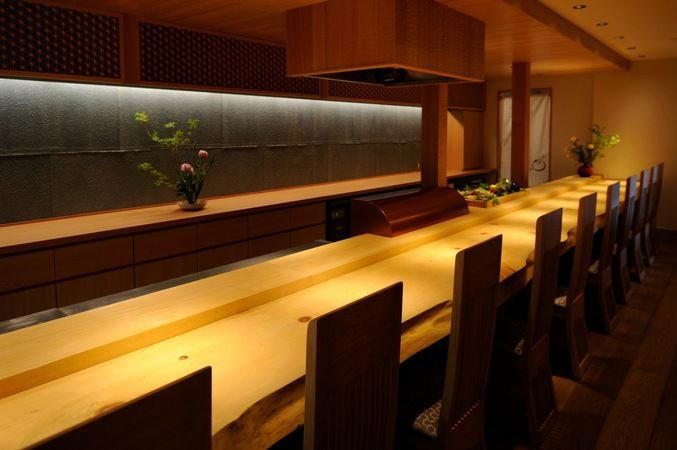
The countertop format has become the delivery mechanism of choice for Japan's most focused cooking. It eliminates the negotiation of large dining rooms and keeps the gap between kitchen and guest narrow enough that smoke, sound, and the smell of reduction arrive in real time. At ima, the counter does something specific: it turns the brick oven into part of the theatre without making the theatre the point. The fire is visible. The reduction process, sauce built over embers, wreathed in smoke until it concentrates past the point most kitchens would consider finished, is audible as much as it is visible.
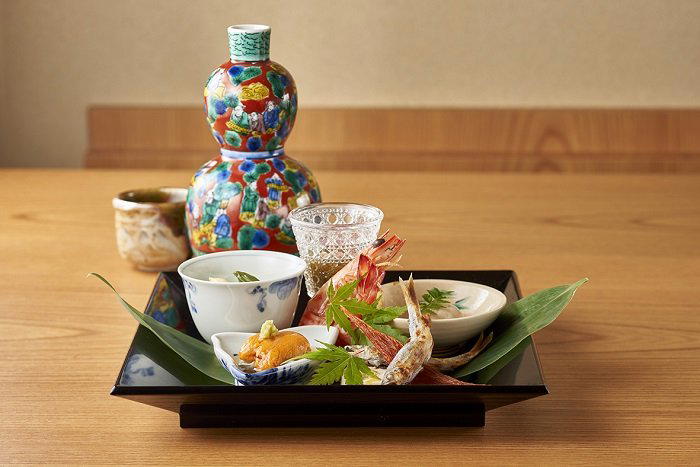
Regulars at countertop restaurants of this intensity tend to return for the moment before the plate arrives: the compression of attention that comes when the kitchen commits fully to a single passage of heat. The feature menu item at ima, shiitake mushroom and shrimp wrapped in pie pastry, illustrates the format's logic. The pastry shell disciplines the filling, the mushroom adds depth, and the shrimp adds resistance. It is not a complex concept, but it requires precise oven management to achieve the right result: a crust that has taken colour from radiant heat without the interior overcooking. Executed correctly, it is the kind of dish that reads differently in the context of the kitchen that produced it than it would from a conventional oven.
What keeps a regular returning to a counter like this is rarely the menu description. It is the consistency of execution under conditions that are harder to control than a controlled kitchen environment. Wood burns differently on different days. Humidity changes how pastry behaves. The reduction that took forty minutes on one visit may need fifty on the next. Guests who return frequently enough develop a calibrated sense of these variations, they are, in effect, following the fire across seasons.
The Name as Editorial Statement
Ima translates directly as "now" in Japanese. That framing is not decorative. Woodfire cooking is the most present-tense technique in a serious kitchen: fire cannot be paused, smoke cannot be undone, and reduction cannot be reversed once it has gone too far. The name imposes a discipline on how to read the food. Every dish is timed to a specific moment of readiness, not approximate readiness, but the precise interval when the flavour of an ingredient resolves under heat into something it could not have been before the fire touched it.
Kyoto's French Counter in Context
Kyoto is not the obvious city for French countertop dining. The kaiseki houses at the top of the market, including Isshisoden Nakamura, have set a standard that shapes what serious dining means to the city's most committed restaurant guests. The Italian presence is smaller but established, with venues like cenci (one Michelin star) demonstrating that European cuisine can operate with full seriousness in Kyoto's competitive environment. French cuisine at the countertop level, inflected with woodfire technique rather than classical brigade structure, occupies a narrower niche. ima is one of the few restaurants in the city that holds that specific position.
For guests whose reference points include Le Bernardin in New York City or Atomix, the comparison that matters is not the formality of those rooms but the degree to which ima's kitchen has thought carefully about its own constraints and worked within them rather than around them. The brick oven is not a gesture toward rusticity; it is the central technical commitment of the restaurant.
Guests planning a broader Kyoto visit can reference our full Kyoto restaurants guide, or extend their planning to hotels, bars, wineries, and experiences across the city. For those tracking woodfire-influenced cooking across Japan, 1000 in Yokohama, 6 in Okinawa, and Harutaka in Tokyo offer different expressions of the same broader shift toward elemental technique in Japanese fine dining.
Know Before You Go
- Address: 183-4 Fudocho, Nakagyo Ward, Kyoto, 604-8215, Japan
- Format: Countertop French dining in a converted merchant's townhouse
- Cooking method: Wood-fired brick oven; technique rooted in Spanish woodfire practice
- Signature dish: Shiitake mushroom and shrimp wrapped in pie pastry
- Booking: Contact details not publicly listed at time of publication; approach via local concierge or specialist travel service
- Price range: Not publicly listed; countertop French restaurants in Kyoto's Nakagyo Ward typically operate at the ¥¥¥ to ¥¥¥¥ tier
Frequently asked questions
What is the must-try dish at ima?
The shiitake mushroom and shrimp wrapped in pie pastry is the dish most closely associated with the kitchen's approach. It combines woodfire pastry technique with the kind of precise timing the brick oven demands. Order it with the understanding that the sauce accompanying it has been reduced over the embers, that process is what gives it its depth and smoke character.
What is the ideal way to book ima?
Contact details and an online booking system are not publicly listed at time of publication. In Kyoto, restaurants operating at the countertop level with limited seating often prioritise reservations made through Japanese-speaking contacts or hotel concierge networks. If you are travelling from outside Japan, a specialist travel service with Kyoto restaurant access will typically have the most reliable route to a booking. Seat count is not confirmed, but countertop formats of this type in Kyoto's Nakagyo Ward rarely seat more than twelve to sixteen guests.
What is the defining idea at ima?
The name gives the clearest answer: ima means "now," and the kitchen is organised around the principle that woodfire cooking demands complete attention to the present moment. Sauce cannot be held; pastry cannot be paused; smoke cannot be recalled once it has done its work. The defining idea is that French classical technique, when practiced over a wood-burning brick oven with Spanish-trained discipline, produces a quality of flavour that is specific to that exact moment of cooking. That is the argument the restaurant makes, and it is the reason guests who understand it return.
The Short List
Comparable venues nearby, for context on price, style, and recognition.
| Venue | Cuisine | Price | Awards | Notes |
|---|---|---|---|---|
| imaThis venue (the venue you are viewing) | Modern French with Wood-Fire Cooking | $150–200 | 1 Michelin Star | Not listed |
| Les Chandelles | Classic French Fine Dining | Not listed | Tabelog Bronze | Nakagyō, Classic French Fine Dining |
| ドロワ | Michelin-Star French Fine Dining | $200–300 | Not listed | 左京区, Michelin-Star French Fine Dining |
| Ryoriya Stephan Pantel | French-Japanese Fusion Fine Dining | Not listed | Michelin Plate · Tabelog Bronze #376 | Nakagyō, French-Japanese Fusion Fine Dining |
| Grill French | Kyoto Yoshoku Grill French | $50–100 | Tabelog 100 #64 | Nakagyō, Kyoto Yoshoku Grill French |
| Kawaguchi | Exclusive Kaiseki | $300–500 | Tabelog Silver #52 | Higashiyama, Exclusive Kaiseki |
Recognition history
Dated appearances from independent guides and award organizations, with the underlying list record or original source where available.
Michelin 1 Star
Michelin

Continue exploring
More in Kyoto
Restaurants in Kyoto
All restaurants in Kyoto →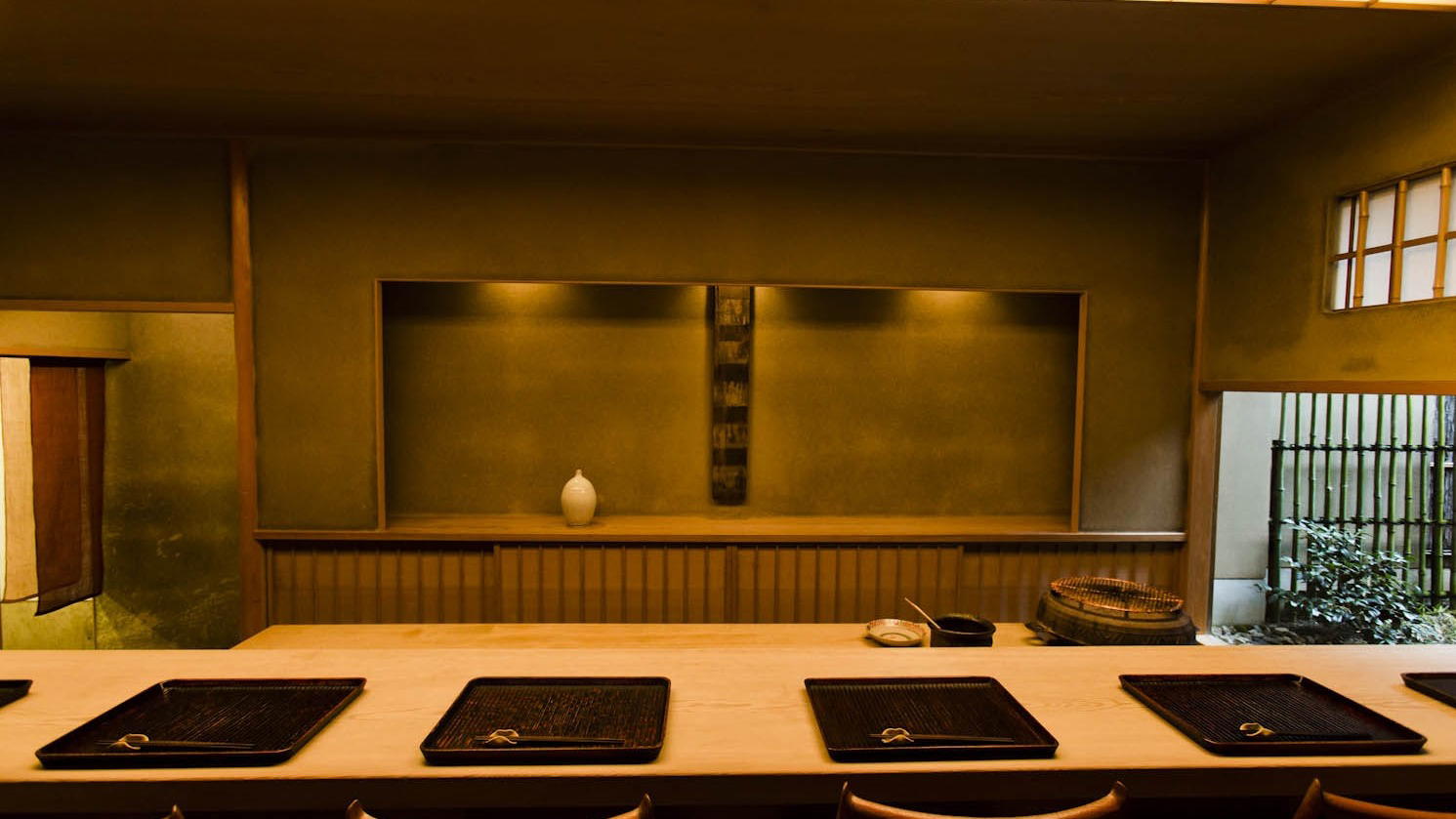
Bars in Kyoto
All bars in Kyoto →
Hotels in Kyoto
All hotels in Kyoto →
Wineries in Kyoto
Browse all →
Details
- Intimate
- Elegant
- Rustic
- Modern
- Date Night
- Special Occasion
- Celebration
- Chefs Counter
- Open Kitchen
- Historic Building
- Design Destination
- Natural Wine
- Zero Proof
- Sommelier Led
- Local Sourcing
- Tasting Menu
- Counter Dining
- Natural Wine
- Non Alcoholic Pairings
- House Made Limoncello
- Vegetarian Friendly
Current opening hours
- Monday
- Closed
- Tuesday
- 6:30–9:30 PM
- Wednesday
- 6:30–9:30 PM
- Thursday
- 12–2:30 PM, 6:30–9:30 PM
- Friday
- 12–2:30 PM, 6:30–9:30 PM
- Saturday
- 12–2:30 PM, 6:30–9:30 PM
- Sunday
- Closed
Hours can change for holidays and private events. Hours as of .
Warm, tranquil atmosphere with exposed pipes and light-colored wood throughout; the open hearth with oak firewood from Miyami forest serves as a focal point, creating a mix of time-worn and contemporary aesthetics with soft, ambient lighting.